
Your AC dies in June when it’s 112°F outside. You’re scrambling for quotes. Half the contractors who show up sound sketchy. One won’t give you a written estimate. Another pressures you to sign today or “lose this price.” A third quotes half what everyone else does but won’t explain why. How do you know who to trust when you need fast AC repair?
What are red flags when hiring an HVAC contractor? Red flags include no visible license or insurance proof, verbal-only estimates without written contracts, pressure to decide immediately, unusually low bids compared to competitors, reluctance to pull permits, and vague pricing with “we’ll know more once we start” language. Arizona homeowners should verify ROC licenses, confirm EPA Section 608 certification for refrigerant work, and insist on itemized quotes with equipment model numbers and warranty terms before signing.
Here are the red flags that separate honest professionals from contractors who will cost you more in the long run. When you need our HVAC repair and installation services, knowing what to look for protects your budget and your family’s comfort.
Why Vetting Your HVAC Contractor Matters in Arizona
Arizona heat makes HVAC failures urgent, which unethical contractors exploit. When your AC quits in July, you’re desperate. That urgency is exactly what high-pressure salespeople count on to rush you into bad decisions. Summer in Mesa demands fast AC repair, but speed should never mean sacrificing quality or oversight.
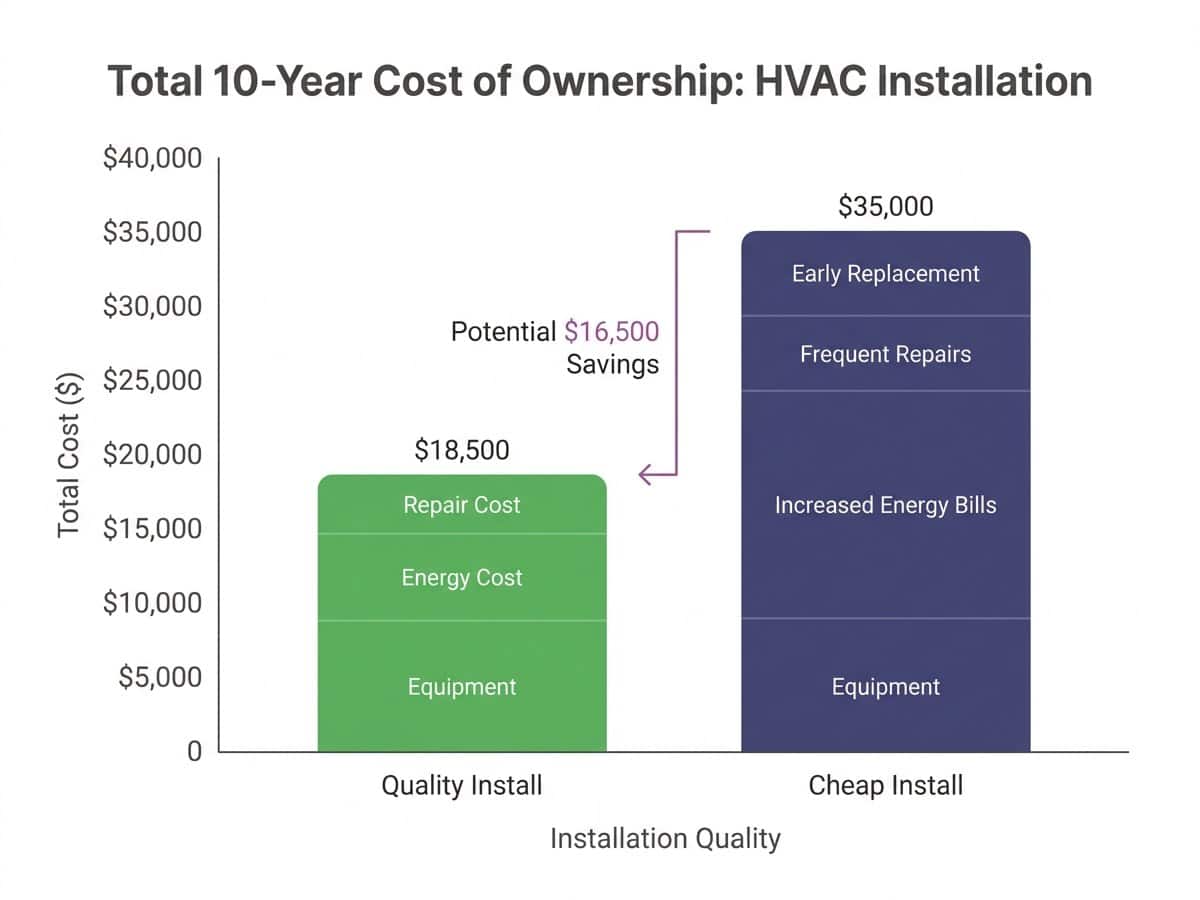
Quality work versus shoddy installation isn’t just about comfort. A poorly installed system reduces lifespan and increases energy costs by 10 to 30 percent. Equipment that should last 15 years fails in 8. Your utility bills stay high even with a new system because the ductwork leaks or the unit is incorrectly sized. Refrigerant leaks pose safety risks and environmental violations.
Large franchises train salespeople to upsell. Owner-led companies like JLM put Bill Milbourn on the job site, ensuring every install meets professional standards. Bill’s hands-on approach means you get the same level of care on every job, not a rotating crew of subcontractors you’ve never met. That difference shows up in your energy bills for the next decade.
Red Flag #1: No License or Proof of Insurance
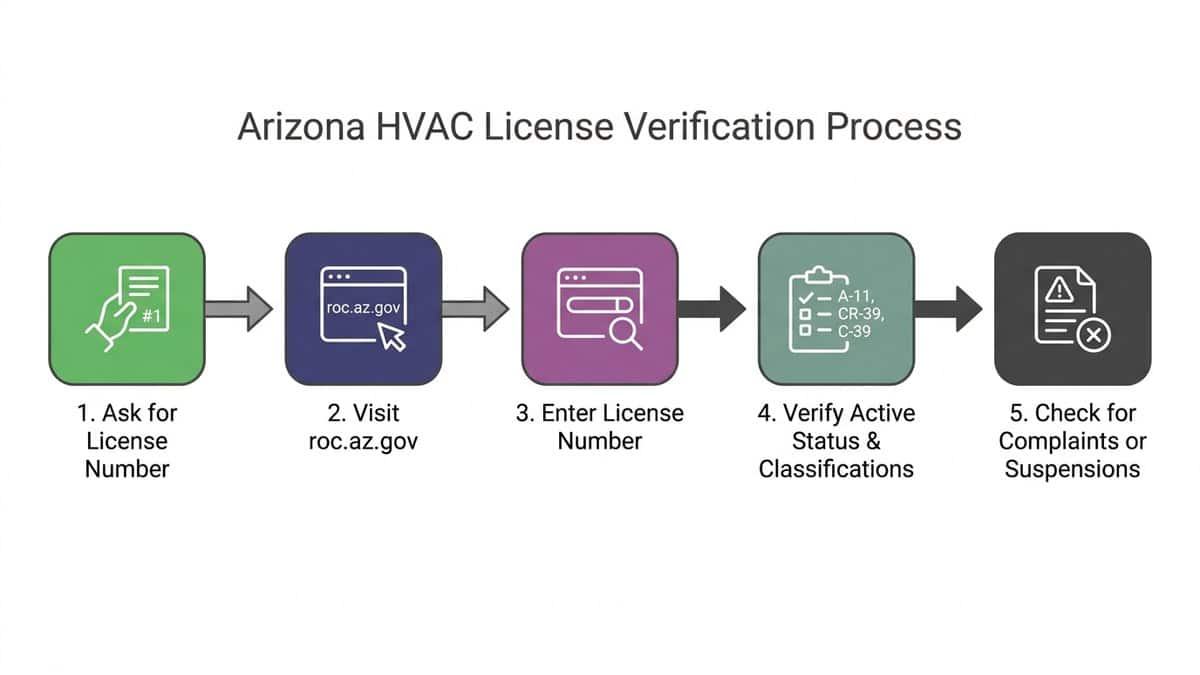
Arizona law requires HVAC contractors to hold a Registrar of Contractors (ROC) license with the appropriate classification: A-11 (General Commercial Contractor), CR-39 (Refrigeration Contractor), or C-39 (Air Conditioning and Refrigeration Contractor). You can verify any license via the public ROC lookup in under three minutes. If they dodge this question or say “my guy handles that,” walk away.
EPA Section 608 certification is required for any technician handling refrigerants. This isn’t optional. Contractors who skip certification put you at risk for improper refrigerant disposal and system contamination. Ask to see proof before work begins.
Bond and insurance are non-negotiable. A bonded contractor has financial backing if they fail to complete the job or violate code. General liability insurance protects you if a worker is injured on your property or damages your home during the install.
JLM carries full ROC licensing, EPA certifications for all technicians, and comprehensive insurance. Our A+ BBB rating reflects hundreds of completed installs across the East Valley with zero unresolved complaints.
Red Flag #2: Verbal Estimates Without Written Contracts
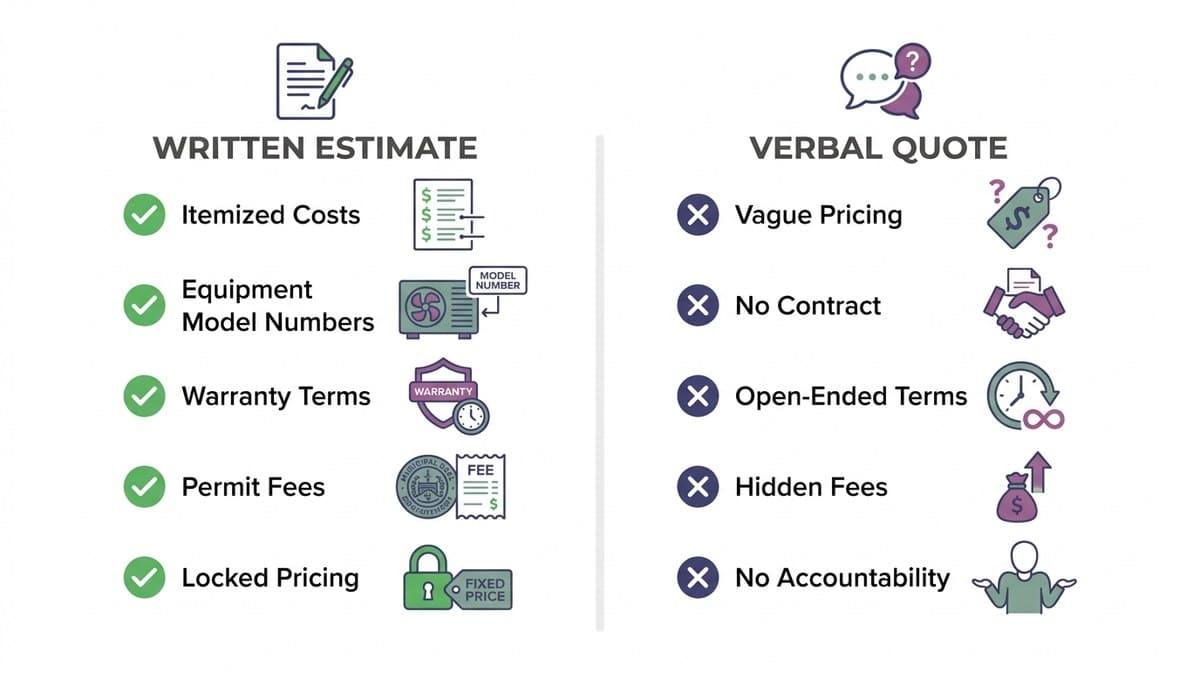
Professional contractors provide itemized, written quotes before starting work. The estimate should include equipment model and serial numbers, SEER2 and EER2 ratings, labor costs broken out separately, materials, permit fees, and warranty terms for both parts and labor.
“We’ll figure it out as we go” is a budget disaster. Load calculations should follow ACCA Manual J methodology to size equipment correctly. Oversized units cycle on and off rapidly, wasting energy and reducing lifespan. Undersized units run constantly and never cool adequately. Your contractor should show you the load calculation and explain why they’re recommending a specific tonnage and SEER rating.
Written contracts protect both parties. They lock in pricing, specify equipment, and establish timelines. If a contractor says “trust me” instead of putting it in writing, they’re asking you to gamble with thousands of dollars.
When you’re deciding how to choose between repair and replacement, a written estimate should specify whether the job is a repair or full replacement, with clear reasoning. JLM provides free consultations and transparent written quotes. You know the cost before we start, and the final invoice matches the estimate. No hidden fees.
Red Flag #3: High-Pressure Sales Tactics
Scarcity urgency is a classic manipulation tactic. “Sign today or lose this price.” “We’re running a special that expires tonight.” “I can only hold this discount if you decide right now.” Legitimate contractors give you time to compare quotes and check references.
Corporate franchises train salespeople to upsell. The initial quote is low to get in the door, then they pitch premium filters, extended warranties, duct cleaning, UV lights, and smart thermostats you don’t need. By the time they’re done, the bill is double the original estimate.
JLM’s no-pressure, educational approach means Bill explains what’s needed versus what’s optional. If your ductwork is fine, we tell you. If you can get another two years out of your current system with a repair, we say that instead of pushing a replacement. Bill answers his own phone, and when you call, you’re talking to the person who will oversee your install.
If a contractor makes you feel rushed or uncomfortable, listen to your gut. Quality contractors earn your business by showing competence and integrity, not by pressuring you.
Red Flag #4: Suspiciously Low Bids
If one quote comes in far below competitors, ask why. Used equipment sold as new? Unlicensed labor cutting corners? No permit costs because they’re skipping that step? You get what you pay for.
Bottom-dollar contractors cut costs somewhere. Maybe they skip the load calculation and guess at equipment size. Maybe they reuse old refrigerant. Maybe they don’t insulate ductwork or seal connections properly. Those shortcuts show up in your utility bills and repair frequency within the first year.
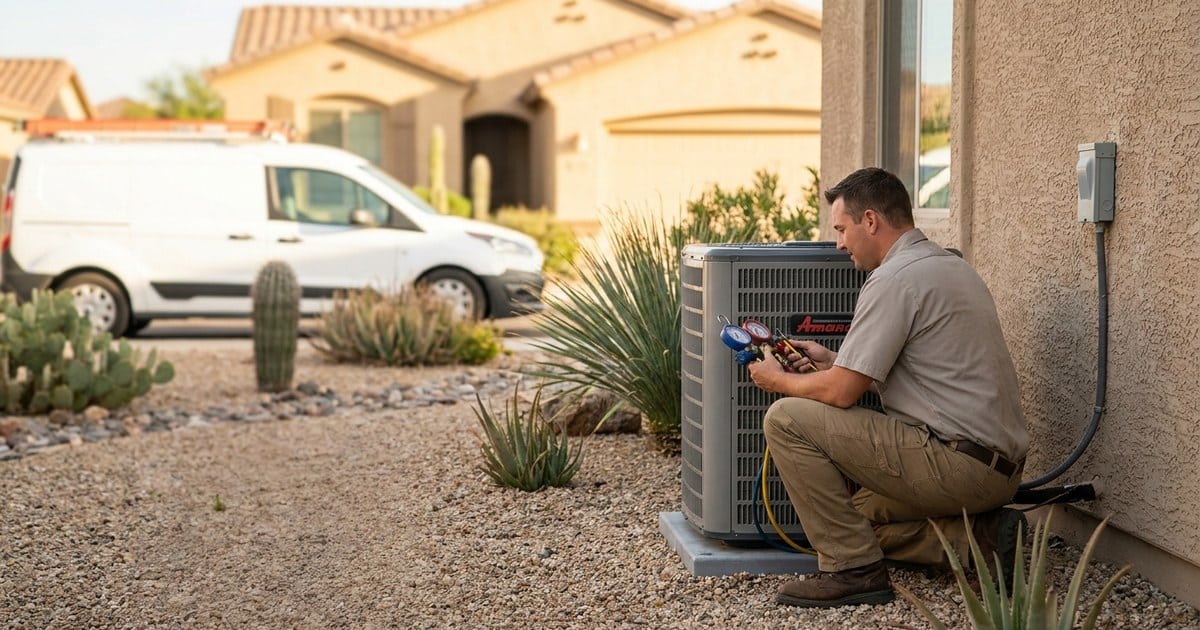
Quality equipment costs more because it performs better and lasts longer. JLM partners with Amana because their systems deliver reliable performance in Arizona’s extreme heat. Our installs include proper load calculations, sealed ductwork, correct refrigerant charge, and code-compliant electrical connections. That’s why our customers’ systems run efficiently for 15 years or more instead of failing in 8.
When you’re understanding AC replacement costs and financing options, compare the total cost of ownership, not just the upfront price. Flexible financing plans let you invest in quality work without the risk of a bottom-dollar install that fails early.
Red Flag #5: Won’t Pull Permits or Says Permits Are Your Responsibility
Arizona municipal and county codes require permits for HVAC installs and major repairs. Permits ensure work meets safety and energy codes. Inspectors verify refrigerant handling, electrical connections, ductwork installation, and equipment sizing. Contractors who skip permits to save time or cost are shifting liability to you.
If the city discovers unpermitted work during a home sale or insurance claim, you’re responsible for bringing it up to code. That means paying a licensed contractor to redo the job correctly, plus fines and inspection fees.
Professional contractors handle permitting as part of the job. They submit plans, schedule inspections, and ensure the work passes code review. When a contractor says “permits are your responsibility,” they’re telling you they don’t want their work inspected by the city. That should alarm you.
Emergency repairs like fixing a frozen evaporator coil still require proper diagnosis and EPA-certified technicians. JLM pulls permits for every install and major repair. Our work passes inspection because we do it right the first time.
Red Flag #6: Vague Pricing With Open-Ended Language
Honest contractors can provide accurate estimates after a site inspection. They assess your existing system, measure your home’s square footage, evaluate ductwork condition, check electrical capacity, and calculate heating and cooling loads.
“We’ll know more once we start” is contractor-speak for “I’m keeping my options open to charge you more later.” Open-ended pricing creates scope creep. The job that was quoted at $6,000 becomes $8,500 because “we discovered issues once we opened things up.”
Itemized breakdowns prevent surprise bills. Your quote should list equipment costs separately from labor, specify materials and quantities, include permit and disposal fees, and state warranty coverage in plain terms. If a line item says “miscellaneous charges” or “additional services as needed,” ask for specifics.
JLM’s transparent pricing model means no hidden fees. Our written estimates break down every cost: equipment model and price, labor hours and rate, refrigerant and materials, permit fees, and disposal charges for old equipment. The final invoice matches the estimate unless you approve a change order in writing.
Red Flag #7: No References, Reviews, or Verifiable Track Record
Check Google reviews, BBB rating, and ask for recent customer references. Contractors with no online presence or who are evasive about references are risks you don’t need to take. Real reviews from real customers tell you how the contractor handles problems, communicates during the job, and stands behind their work after installation.
A+ BBB rating means the company resolves complaints and maintains ethical business practices. JLM has earned that rating through years of serving Gilbert, Mesa, Queen Creek, and the broader East Valley. Our referral program reflects long-term customer satisfaction. Families recommend us to their neighbors because we show up, do quality work, and stay accountable. When comparing AC companies near you and evaluating local versus franchise options, customer reviews and local reputation matter more than brand recognition.
Ask for references from jobs completed in the last six months. Call those customers and ask about communication, timeliness, cleanliness, and whether the final bill matched the estimate. Ask if they would hire the contractor again.
Contractors who’ve been in business locally for years have a reputation to protect. National franchises rotate through sales reps and subcontractors. When you work with JLM, Bill answers the phone, and you’re talking directly to the person who oversees every aspect of your project.
What to Ask Before You Hire
Empower yourself by asking these questions before signing any contract:
What’s your ROC license number? Write it down and verify it on the ROC website. Check for complaints, suspensions, or expired status.
Will you pull permits for this job? The answer must be yes. Ask who schedules the inspection and what happens if the work doesn’t pass.
Can I see an itemized quote? It should list equipment model, SEER2 rating, labor, materials, permits, and disposal fees separately. No “miscellaneous charges” or lump-sum line items.
What’s the warranty on parts and labor? Manufacturer warranties cover equipment defects. Contractor warranties cover installation workmanship. Both should be in writing with clear terms and contact information.
Who will be on-site during the install? Will it be the owner, employees, or subcontractors? Ask for names and EPA certification proof for anyone handling refrigerants. Specialized systems like mini-split installations require specific expertise and proper certification.
How long have you been in business locally? Established local contractors have verifiable track records and community reputations. Ask for references from customers in your neighborhood.
What happens if there’s a problem after installation? Know the process for warranty claims, emergency callbacks, and dispute resolution before work begins.
These questions separate professional contractors from opportunists. Honest professionals answer confidently because they have nothing to hide.
Protect Your Investment With Transparent Service
Transparent pricing, proper licensing, written contracts, and no-pressure consultations are non-negotiable. You deserve a contractor who shows up, does quality work, and stands behind it for years.
JLM Air Conditioning & Heating has served East Valley families with honest service since 2020. Bill Milbourn is licensed, on-site for every major install, and directly accessible when you call. We’ve earned an A+ BBB rating and built a referral network of satisfied customers who trust us with their neighbors’ comfort.
We don’t play pricing games or pressure you into upgrades you don’t need. Our written estimates are transparent and accurate. Our installs pass inspection because we follow code and use professional-grade equipment. Browse our full range of services to see how we support East Valley homeowners year-round. The EPA provides resources on safe refrigerant practices that all certified contractors must follow.
Ready for a free, no-obligation estimate from a contractor who lives in your community and answers his own phone?
Call now: 602-619-3609 to schedule your free consultation.
For more HVAC maintenance and buying tips, explore our blog of HVAC tips for East Valley homeowners.