
Amana air conditioning systems deliver strong reliability, industry-leading warranty coverage (lifetime compressor, 10-year parts), and proven performance in Arizona’s extreme heat, making them a smart choice for East Valley homeowners replacing aging AC units. While premium brands like Trane and Carrier offer comparable efficiency, Amana’s combination of competitive pricing ($9,000–$14,000 installed for a quality system), robust warranty protection, and availability through experienced local installers gives you dependable comfort without corporate markup. This guide compares Amana to top competitors on the criteria that matter most: reliability, warranty, efficiency, and fit for Arizona climate.
Choosing the right AC brand for your home isn’t about picking a name you’ve heard before. When you’re facing a $9,000–$20,000 investment and Arizona summers that push systems to their limits, you need confidence that your choice will keep your family comfortable for the next 12–15 years. Professional installation and service support makes the difference between a system that performs reliably and one that disappoints.
The East Valley’s 110°F heat doesn’t forgive shortcuts or weak equipment. Homeowners researching system replacement need decision-support grounded in real Arizona experience, not marketing spin from franchise operations or call-center dispatchers. Thousands of local installations have shown which systems perform and which disappoint when heat pushes equipment to its limits month after month. Proper ductwork and installation form the foundation of any reliable AC system.
What Makes a Great AC System for Arizona’s Climate
Arizona heat is unforgiving. National brand rankings don’t weight for climate extremes or local service support, but those factors determine whether your $12,000 investment keeps you comfortable or leaves you sweating while waiting for a call-center dispatch. A great system for Arizona must handle sustained high-heat operation from May through October, deliver efficiency that controls summer energy bills, come with warranty coverage that protects your investment, and have local installer support you can reach same-day.
Reliability in Extreme Heat
Compressor and coil quality matter because sustained 110°F operation tests durability. Your AC doesn’t get a break during Arizona summers. It runs hard for five months straight, cycling constantly to maintain indoor comfort. Systems built for milder climates fail faster here. The compressor handles the heaviest workload, and coil design determines how effectively your system transfers heat.
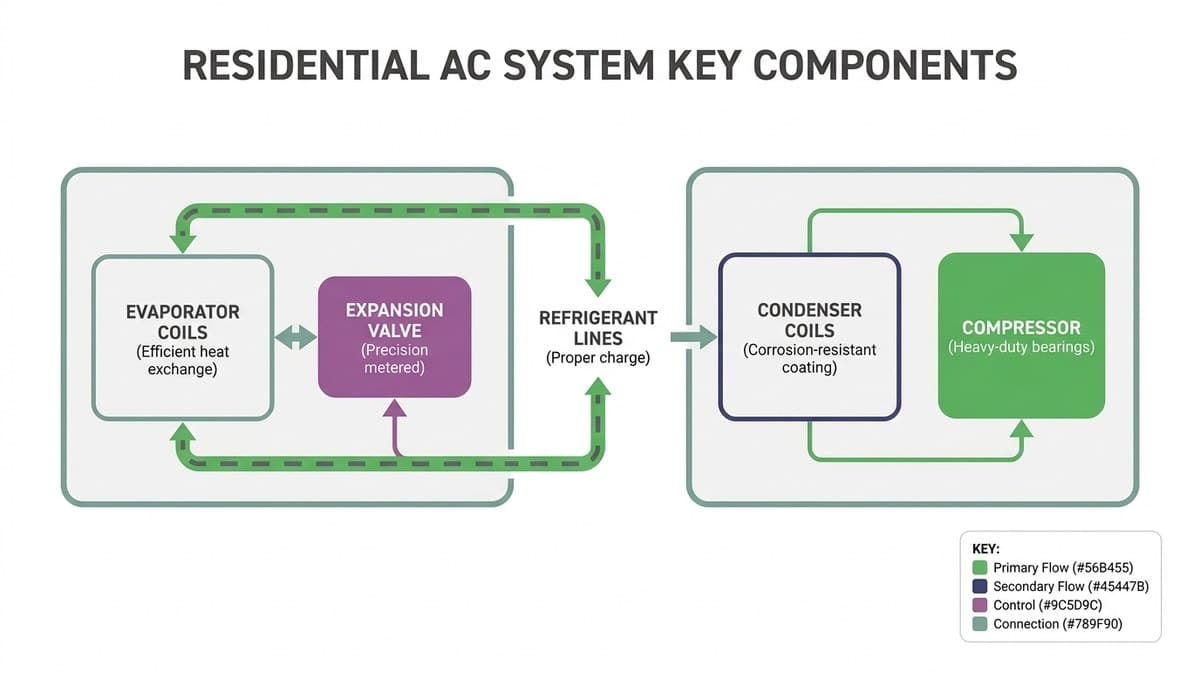
High-quality residential systems use scroll compressors with robust bearings, heavy-duty coils with corrosion-resistant coating, and electrical components rated for sustained heat exposure. Entry-level systems skimp on these fundamentals to hit lower price points.
Warranty Protection
Lifetime compressor coverage versus 10-year parts protection makes a significant difference when you’re planning to stay in your home for more than five years. Parts coverage protects other expensive components like coils, heat exchangers, and control boards. Standard 10-year parts warranties are common across all brands, but the fine print varies. Some exclude labor, refrigerant, and diagnostic fees. Others require annual maintenance receipts to remain valid.
Energy Efficiency (SEER2 Ratings)
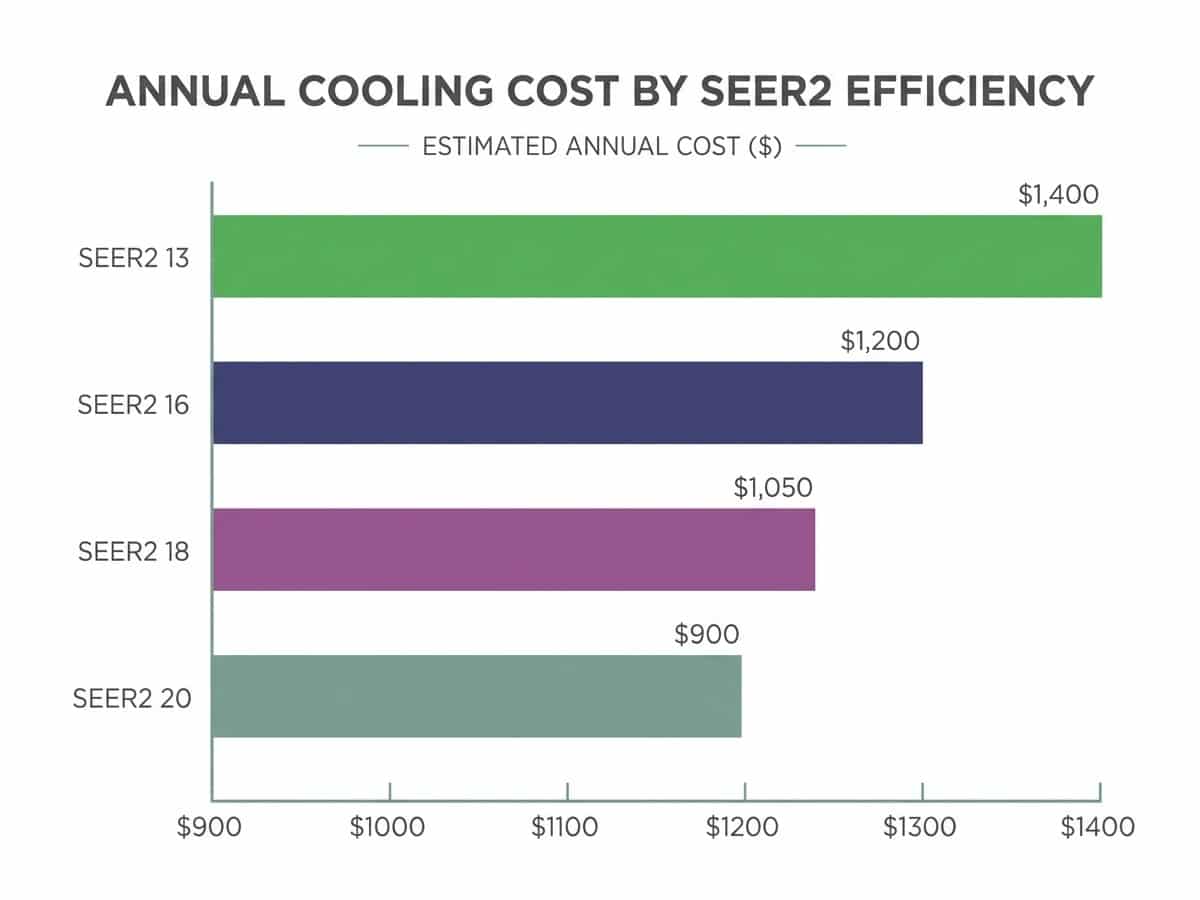
Higher SEER2 ratings impact summer bills, but there are diminishing returns above SEER2 16–17 for most East Valley homes. SEER2 (Seasonal Energy Efficiency Ratio, version 2) measures how efficiently your system converts electricity into cooling. Upgrading from a 10-year-old system (typically SEER 10–13) to a modern SEER2 16 system can reduce cooling costs by 30–40%.
Most homeowners recover their investment faster with SEER2 16–17 systems rather than chasing the highest efficiency tier available.
Local Service and Installation Quality
Brand performance depends on installer expertise and same-day service availability. The best equipment in the world will underperform if installed incorrectly: improper refrigerant charge, undersized ductwork, skipped load calculations, or rushed connections all degrade performance and shorten lifespan. Installation quality directly impacts warranty validity, energy efficiency, and long-term reliability.
Working with a local, owner-operated installer means direct accountability. When you call with an issue, you reach the same team that installed your system. No call-center queue, no subcontractor dispatch, no finger-pointing between manufacturer and installer.
Amana AC Systems: Reliability, Warranty & Performance
Amana is a Daikin-owned brand built on proven compressor and coil technology. It’s not a discount brand. It’s a value brand that delivers premium reliability without the corporate markup you pay for Trane or Carrier. Amana air conditioning systems comparison to competitors consistently shows strong performance across the criteria that matter most to homeowners: reliability, warranty, and fit for Arizona climate.
Local installations demonstrate consistent performance: Amana systems routinely deliver 12–15+ years of reliable service when properly maintained. The lifetime compressor warranty (backed by Daikin, one of the largest HVAC manufacturers globally) gives you protection that rivals or beats Carrier and Lennox.
Warranty Coverage
Amana’s residential warranty includes a lifetime compressor warranty and 10-year parts coverage when you register your system within 60 days of installation. The lifetime compressor protection covers the most expensive component for as long as you own your home. The 10-year parts warranty protects coils, heat exchangers, control boards, and other major components.
What’s not covered: labor, refrigerant, maintenance-related failures, and issues caused by improper installation or unauthorized modifications. That’s industry standard across all brands. The Amana AC warranty remains valid as long as you maintain your system annually and use a licensed installer for any repairs.
Reliability and Durability
Daikin-owned engineering means Amana systems share core technology with Goodman but use slightly higher-grade coils and compressors. In sustained Arizona heat, that quality difference shows up in callback frequency and component longevity. Properly installed Amana systems handle May–October operation without the refrigerant leaks and coil degradation seen in budget-tier equipment.
Scroll compressors with robust bearings, coil designs with corrosion-resistant coating, and electrical components rated for sustained heat exposure all contribute to consistent cooling performance. This AC brand reliability shows up most clearly when comparing systems after 8–10 years of Arizona service.
Efficiency and Performance (SEER2 Ratings)
Amana’s SEER2 16–20 range positions the brand squarely in the value tier: high enough to deliver meaningful energy savings compared to older systems, but not so high that you’re paying thousands extra for marginal efficiency gains. For most East Valley homes, a SEER2 16 Amana system provides the optimal balance of upfront cost and operating efficiency.
Pricing and Value
Amana systems typically install for $9,000–$14,000 for a complete 3-ton system, depending on ductwork condition, home size, and efficiency tier selected. When homeowners compare best HVAC brands Arizona has to offer, pricing becomes a key differentiator. Amana delivers lifetime compressor protection, proven reliability in Arizona heat, and efficient cooling without overpaying for brand cachet.
How Amana Compares to Trane, Carrier, Lennox & Other Top Brands
Premium brands like Trane and Carrier charge for marketing and franchise overhead, not just equipment quality. If you’re comparing a $9,500 Amana installation (with lifetime compressor warranty) to a $14,000 Trane installation (with 10-year warranty), you’re paying extra for brand cachet and slightly quieter operation. When it comes to Amana air conditioning systems comparison to premium brands, the reliability and efficiency gains don’t justify that premium for the typical 1,600–2,200 square foot East Valley home.
| Brand | Compressor Warranty | SEER2 Range | Typical Installed Cost (3-ton) | Best For |
|---|---|---|---|---|
| Amana | Lifetime | 16–20 | $9,000–$14,000 | Best value: solid reliability + strong warranty + mid-tier pricing |
| Trane | 10-year | 16–22 | $11,000–$18,000 | Ultra-quiet operation, large homes (2,500+ sq ft) |
| Carrier | 10-year | 16–21 | $12,000–$20,000 | Premium smart-home integration (Infinity series) |
| Lennox | 10-year | 16–26 | $13,000–$21,000 | Highest efficiency tiers, solar-ready, ultra-quiet premium models |
| Goodman | 10-year | 14–18 | $8,500–$13,000 | Budget-conscious, shorter warranty than Amana |
| Rheem/Ruud | 10-year | 14–20 | $9,000–$15,000 | Comparable value to Amana, slightly less distributor network |
Amana vs. Trane
Reliability is comparable between Amana and Trane when both are properly installed. Trane systems use heavier-gauge cabinet construction and slightly more robust compressor mounts, which contributes to quieter operation. Trane units typically run 2–4 decibels quieter than Amana at the same efficiency tier.
Warranty advantage goes to Amana: lifetime compressor coverage versus Trane’s 10-year compressor warranty. Over a 15-year ownership period, that’s a meaningful protection difference.
Efficiency is comparable: Amana SEER2 16–20 versus Trane SEER2 16–22. Trane offers higher-tier models for customers prioritizing maximum efficiency, but the cost premium rarely pays back in energy savings within the system’s lifespan.
Amana vs. Carrier
Warranty advantage goes to Amana: lifetime compressor coverage versus Carrier’s 10-year compressor and parts warranty. Carrier’s Infinity series offers the industry’s best smart-home integration, with advanced zoning, humidity control, and compatibility with Nest, Ecobee, and proprietary Carrier thermostats. If whole-home automation and multi-zone climate control are priorities, Carrier justifies the premium.
Efficiency is comparable: Amana SEER2 16–20 versus Carrier SEER2 16–21. Carrier’s Infinity series tops out at SEER2 21 (versus Amana’s SEER2 20 maximum), but the real-world efficiency difference in East Valley heat is negligible.
Pricing reflects Carrier’s premium positioning and smart-home features: $12,000–$20,000 installed versus Amana’s $9,000–$14,000. For most homeowners without complex zoning needs, that premium doesn’t deliver proportional value.
Amana vs. Lennox
Premium features define Lennox’s positioning: SunSource solar-ready systems, SilentComfort technology (industry-leading low noise), and SEER2 ratings up to 26. Lennox targets customers prioritizing ultra-quiet operation, maximum efficiency, and future-ready features like solar integration.
Warranty advantage goes to Amana: lifetime compressor coverage versus Lennox’s 10-year coverage. Lennox offers excellent customer service and a strong dealer network, but the warranty protection doesn’t match Amana’s lifetime commitment.
Efficiency spans a wider range for Lennox: SEER2 16–26 versus Amana’s SEER2 16–20. For most East Valley homes, SEER2 16–18 delivers the best cost-to-benefit ratio.
Amana vs. Goodman
Reliability is slightly better with Amana despite sharing the same parent company (Daikin). Amana uses higher-grade coils and compressor components, which shows up in warranty length and long-term performance. Goodman positions as the budget-friendly option within the Daikin family, while Amana sits one tier higher in quality and warranty protection.
Warranty advantage goes to Amana: lifetime compressor coverage versus Goodman’s 10-year compressor and parts warranty. That’s the primary differentiator between the two brands. For homeowners planning to sell within 5–7 years, Goodman delivers solid value. For long-term ownership, Amana’s lifetime compressor warranty justifies the modest premium.
Amana vs. Rheem/Ruud
Reliability and efficiency are comparable between Amana and Rheem/Ruud across similar SEER2 tiers. Rheem and Ruud offer solid mid-tier systems with 10-year compressor and parts warranties. Performance in Arizona heat is comparable, with similar callback frequency and component longevity.
Warranty advantage goes to Amana: lifetime compressor coverage versus Rheem/Ruud’s 10-year coverage. That’s the primary reason to choose Amana over Rheem when installed costs are similar.
Real-World Performance: What to Expect from Amana in Arizona Heat
Properly maintained Amana systems routinely deliver 12–15+ years of reliable service in East Valley installations. The lifetime compressor warranty means that even if you do have a compressor failure (rare, but it happens), you’re covered without a substantial replacement bill. The most common service calls are air-filter neglect and thermostat issues, not equipment failure.
When you pair a quality Amana system with preventive maintenance, catching small issues before they become expensive breakdowns, you get predictable, worry-free cooling. Gilbert, Mesa, Chandler, Queen Creek, and San Tan Valley installations demonstrate this pattern consistently across different home sizes and ages.
Typical Lifespan
Twelve to fifteen years with regular maintenance is the expected lifespan for Amana systems in Arizona’s climate. That matches or exceeds the industry average for quality mid-tier equipment. Systems installed in the early 2010s are still performing well today when homeowners followed the recommended annual maintenance schedule.
Arizona heat impacts longevity by increasing compressor runtime and thermal cycling. Your AC runs harder and longer here than in milder climates, which accelerates wear on moving parts and electrical components. Quality systems account for this in their engineering.
Common Issues and How to Avoid Them
Air-filter neglect is the leading cause of preventable AC problems. Dirty filters restrict airflow, which forces your system to work harder and reduces efficiency. In extreme cases, restricted airflow causes coils to freeze. Replacing filters every 30–60 days during peak cooling season (May–October) prevents most airflow-related issues. When your system does freeze up, quick solutions when your AC freezes up in Mesa can help you restore cooling fast.
Refrigerant leaks develop over time as vibration and thermal cycling stress connections and joints. Slow leaks reduce cooling capacity and efficiency before causing complete failure. Annual maintenance includes refrigerant charge checks, which catch leaks early when they’re inexpensive to repair.
Thermostat settings and programming errors cause unnecessary service calls. Professional installation and a quick walkthrough of proper settings prevent most of these callbacks.
Preventive maintenance catches capacitor failures, contactor wear, electrical connection issues, and condensate drain clogs before they cause breakdowns.
How Installation Quality Affects Brand Performance
The best AC system in the world will underperform or fail early if installed incorrectly. Improper refrigerant charge, undersized ductwork, skipped load calculations, or rushed connections all degrade performance and shorten lifespan. Installation quality directly impacts warranty validity, energy efficiency, and long-term reliability.
Homeowners frequently call for help with 2-year-old systems that already struggle because the original installer (often a low-bid, unlicensed operator) didn’t size the unit correctly or left duct leaks unsealed. Owner-led installation teams demonstrate the expertise and accountability that franchise operations can’t match.
Common Installation Mistakes
Improper refrigerant charge is the most common installation error. Too little refrigerant reduces cooling capacity and forces the compressor to run longer. Too much refrigerant increases head pressure and stresses the compressor, shortening its lifespan.
Duct leaks waste conditioned air in typical installations. Unsealed connections, damaged ductwork, and undersized return plenums all reduce airflow and efficiency. Understanding air duct installation helps you recognize quality work when you see it.
Wrong system size undermines efficiency and comfort. Oversized systems cycle on and off too frequently, which wastes energy and fails to dehumidify properly. Undersized systems run constantly without reaching target temperature. Professional load calculations account for home size, insulation, window area, orientation, and occupancy to determine correct equipment size.
Before you commit to any installation, learning how to install central air conditioner helps you understand what proper installation looks like.
Choosing the Right Amana System for Your East Valley Home
Sizing and efficiency should match your home and budget, not what a salesperson wants to upsell. For most 1,600–2,200 square foot East Valley homes, an Amana SEER2 16–17 system (properly sized via professional load calculation) delivers excellent comfort and efficiency without overpaying for features you won’t use.
A free on-site consultation includes measuring your home, checking ductwork condition, reviewing your current energy bills, and showing you the return on investment for different efficiency tiers. That transparency helps you make an informed choice based on your actual needs and budget.
System Size (Tonnage)
Two-ton systems (24,000 BTU) cool homes up to approximately 1,000–1,200 square feet in Arizona’s climate. That’s suitable for smaller single-level homes, condos, and townhouses with good insulation and minimal window area.
Two-and-a-half-ton systems (30,000 BTU) handle 1,200–1,500 square feet. This size works for typical East Valley starter homes and smaller ranch-style properties.
Three-ton systems (36,000 BTU) are the most common choice for 1,500–2,000 square feet. This matches the typical single-family home in Gilbert, Mesa, and Chandler subdivisions built in the 1990s–2010s.
Four-ton systems (48,000 BTU) cool homes 2,000–2,500 square feet. Larger two-story homes, properties with extensive window area, or homes with high ceilings frequently require this capacity.
Professional load calculations determine the correct size by accounting for insulation levels, window area and orientation, ceiling height, occupancy, and local climate data. Rules of thumb don’t account for your specific home’s characteristics and often result in oversized equipment that short-cycles and wastes energy.
Efficiency (SEER2) Tiers
SEER2 14–15 systems (budget tier) meet minimum federal efficiency standards and cost the least upfront. These work for homeowners planning to sell within 3–5 years or rental properties where upfront cost is the primary concern.
SEER2 16–17 systems (best value for most homes) deliver the optimal balance of efficiency, comfort, and cost for East Valley homeowners planning to stay 5+ years. SEER2 16 systems save substantially on cooling costs compared to older equipment. Payback period is typically 5–7 years through energy savings.
SEER2 18–20 systems (premium efficiency) deliver maximum energy savings. These make sense for large homes (2,200+ square feet), homeowners with high cooling bills, or those planning very long-term ownership (10+ years).
Single-Stage vs. Variable-Speed
Single-stage systems are the most common and affordable configuration. Comfort is good, efficiency is solid, and reliability is excellent because fewer components means fewer potential failure points.
Two-stage systems provide better humidity control, more even temperatures, and slightly better efficiency than single-stage. The added complexity increases purchase price but delivers noticeable comfort improvements for households sensitive to temperature swings.
Variable-speed systems provide the best comfort (minimal temperature variation), lowest noise levels, and highest efficiency. Variable-speed makes sense for large homes, households with family members who have different temperature preferences, or homeowners prioritizing whisper-quiet operation. For budget-conscious homeowners or typical 1,600–2,000 square foot homes, single-stage or two-stage systems deliver excellent value without the variable-speed premium.
For homeowners considering supplemental cooling for garages or additions, how mini split installation works explains ductless options that work independently of your central system. If you’re in the Gilbert area specifically, mini split installation in Gilbert offers local expertise and same-day service.
Making the Right Choice for Your Arizona Home
Brand choice matters, but installer quality and warranty support matter more. Amana gives you premium reliability without premium pricing, and when you work with a local, owner-operated installer, you get same-day service, transparent pricing, and accountability you won’t find at a franchise.
Comparing Amana to Trane, Carrier, Lennox, and other premium brands shows where value really lives: in lifetime compressor warranties, proven Arizona heat performance, and honest pricing without corporate markup. For most East Valley homeowners replacing an aging AC system, Amana delivers the best combination of reliability, warranty protection, and cost.
Understanding all you need to know about new furnace and air conditioner cost helps you make that decision with confidence. When a repair costs more than 30% of a new system’s installed price or your system is over 15 years old, replacement usually makes more sense financially.
If you’re ready to replace your AC system and want an honest assessment of what’s right for your home, request a free consultation for transparent pricing with no pressure and no hidden fees. Professional installation support ensures your investment delivers the comfort and efficiency you deserve.