
Replacing your air conditioner in Arizona’s East Valley isn’t a decision any homeowner takes lightly. The summer heat makes a functioning AC essential, and the investment is significant. How much does AC replacement cost? AC replacement in the East Valley typically costs between $9,000 and $20,000, depending on system size, efficiency rating (SEER), and installation complexity. A standard 3-ton, 14-16 SEER system averages around $11,000 installed. Financing options (0% APR promotions, monthly payment plans) make replacement affordable for most homeowners without upfront cash.
If you’re seeing wildly different quotes, wondering whether a premium system is worth the extra cost, or worried about how to afford the upfront expense, you’ll find answers here. We’ll break down exactly what drives replacement costs, how to choose the right system for your home and budget, what financing options exist, and how to avoid the most common mistakes. At JLM Air Conditioning & Heating, we’ve completed over 3,000 installations across Gilbert, Mesa, Queen Creek, and Apache Junction. Our owner-led approach means you get straight answers, transparent pricing, and no pressure to buy more than you need. Ready to understand what you’re really paying for? Let’s start with the HVAC Replacement & New Installation fundamentals.
What Drives AC Replacement Cost in Arizona?
Four primary variables determine what you’ll pay to replace your air conditioner: the equipment tier you select, the size of the system your home requires, the complexity of the installation, and the labor and permitting involved. Understanding each component helps you evaluate quotes and make informed decisions.
According to the U.S. Department of Energy, choosing an energy-efficient system can significantly impact both upfront cost and long-term operating expenses. High-efficiency models cost more initially but deliver measurable savings over their 15-20 year lifespan.
Equipment Tier: Standard vs. High-Efficiency Systems
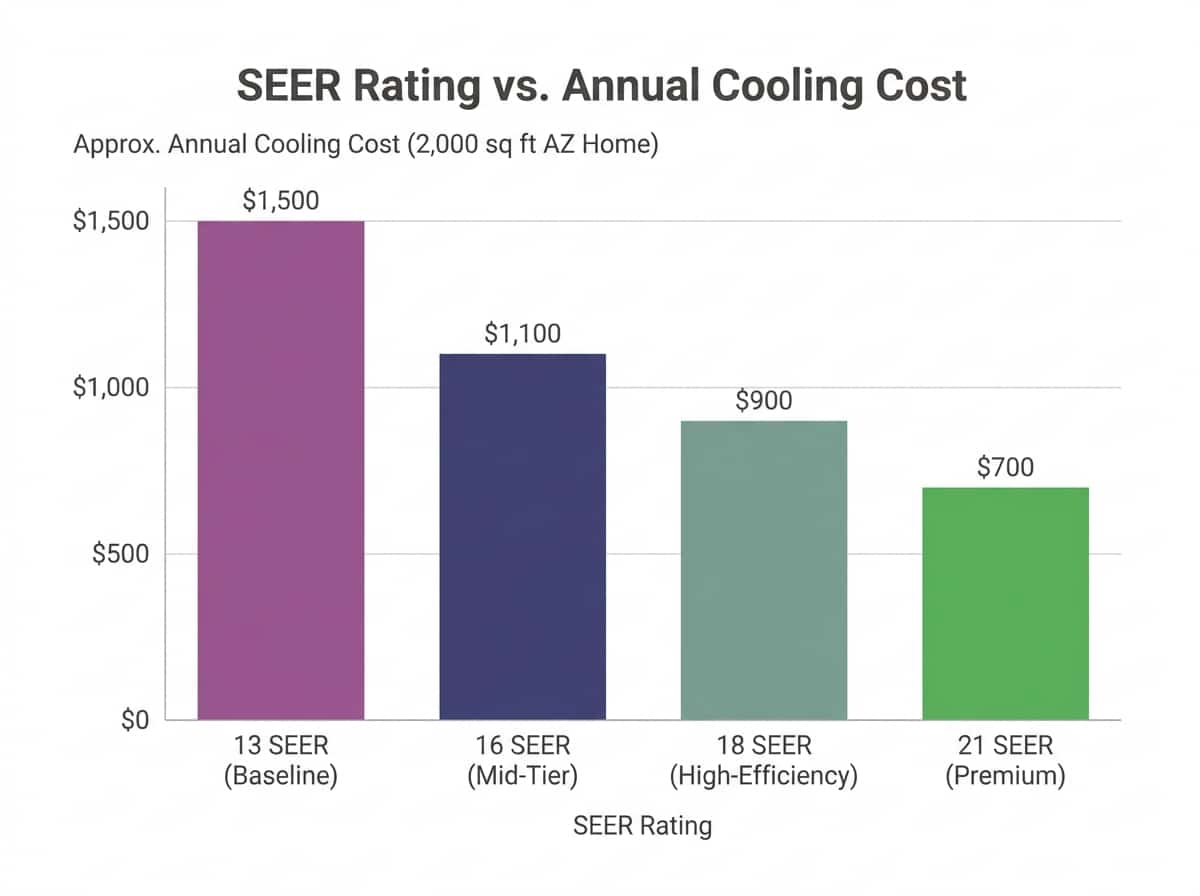
Air conditioners are rated by SEER (Seasonal Energy Efficiency Ratio). The higher the SEER, the less energy the system uses to produce the same cooling. Standard-efficiency systems (14-16 SEER) typically cost $4,000-$7,000 for the equipment alone. High-efficiency models (17-21 SEER) range from $6,000-$10,000+. Premium tier units (22+ SEER, variable-speed compressors, advanced humidity control) can exceed $12,000.
The price difference reflects engineering: high-efficiency systems use variable-speed compressors, advanced refrigerant management, and multi-stage operation to reduce energy waste. Modernize reports that upgrading from a 10 SEER system (common in pre-2006 homes) to a 16 SEER model can cut cooling costs by 30-40%. For an Arizona household spending $200-$300/month on summer cooling, that’s $60-$120 back in your pocket every month.
EnergyStar-certified systems meet strict federal efficiency guidelines and often qualify for utility rebates from SRP or APS. The EnergyStar Heating and Cooling Guide details how these systems reduce environmental impact while lowering operating costs. Rebates can offset $200-$500 of the upfront premium for high-efficiency equipment.
At JLM, our average install cost across 3,000+ lifetime installations sits around $11,000. This reflects mid-tier efficiency systems (16 SEER) that balance upfront affordability with long-term savings. We work primarily with Amana equipment, known for durability and competitive warranties.
System Size: Matching Tonnage to Your Home
Air conditioners are sized in tons (one ton = 12,000 BTU of cooling capacity). Residential systems typically range from 1.5 to 5 tons. The right size depends on your home’s square footage, insulation quality, window count and orientation, ceiling height, and Arizona’s extreme heat load.
A 1,500 sq ft home usually needs a 2-2.5 ton system. A 2,000-2,500 sq ft home typically requires 3-3.5 tons. Homes over 3,000 sq ft may need 4-5 tons or a multi-zone setup. Pricing scales with size: a 2-ton system costs roughly $1,000-$1,500 less than a 3-ton; a 5-ton system can add $2,000-$3,000 over a 3-ton.
Bigger is not better. An oversized AC cycles on and off rapidly, failing to dehumidify properly and wearing out components faster. An undersized system runs constantly, struggling to keep up on 115-degree days and driving energy bills through the roof. The correct approach is a Manual J load calculation: a room-by-room analysis of heat gain and loss. Reputable contractors (including JLM) perform this calculation before quoting. Avoid any contractor who sizes your system based solely on square footage rules of thumb. For deeper insight into HVAC System sizing and performance, explore our technical resources.
Installation Complexity: Ductwork, Electrical & Add-Ons
Labor and materials beyond the core equipment can add $2,000-$6,000+ to your total. Key factors include:
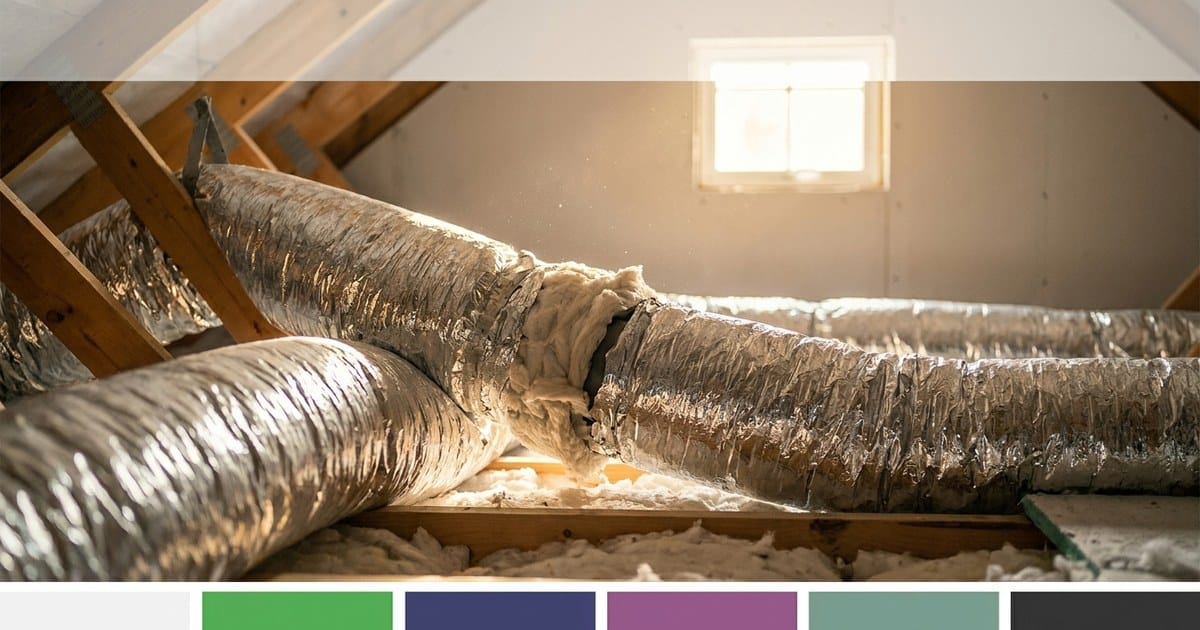
- Ductwork condition: If your existing ducts are leaky, improperly sized, or deteriorated, sealing or replacing them is essential. Leaky ducts waste 20-30% of cooled air. Duct sealing adds $500-$1,500; full duct replacement can add $3,000-$5,000.
- Electrical upgrades: Modern high-efficiency systems may require a dedicated 220V circuit or panel upgrades if your home’s electrical service is outdated. Budget $500-$2,000 for electrical work.
- Thermostat: A programmable or smart thermostat (Nest, Ecobee) costs $150-$400 installed and improves efficiency by learning your schedule and adjusting automatically.
- Attic access and crane lifts: If your air handler or condenser sits in a hard-to-reach attic or requires a crane to lift into place (common in two-story homes), add $500-$1,500 for equipment and labor.
- Refrigerant line sets: If line sets need replacement or extension (moving the outdoor condenser to a different location), expect $400-$1,000 in additional materials and labor.
Mini-split installation offers an alternative for homes without existing ductwork or for adding cooling to garages, sunrooms, or bonus spaces. These ductless systems require less invasive installation but involve different cost structures.
At JLM, our owner Bill Milbourn is on-site for every install, ensuring quality control from start to finish. We assess ductwork, electrical, and structural factors during the free estimate so there are no surprise charges on installation day.
Labor, Permits & Arizona-Specific Considerations
Labor accounts for 30-40% of total replacement cost. HVAC technicians earn a median hourly wage of approximately $25/hour according to the Bureau of Labor Statistics, though Arizona rates can run higher due to demand and extreme working conditions (attics in summer exceed 140°F). A standard replacement takes 1-2 days depending on complexity. Labor for a straightforward swap-out runs $2,000-$3,500; complex jobs (duct modifications, electrical upgrades, multi-zone systems) can reach $5,000-$7,000.
Arizona requires permits for AC replacement. Florida’s licensing board and California’s Contractors State License Board both emphasize the critical importance of proper permitting to protect homeowners from code violations and warranty issues. Permit fees typically cost $100-$300 and cover inspections to ensure safe installation, proper refrigerant handling, and code compliance. Reputable contractors pull permits automatically; if a contractor offers to skip permitting to save money, walk away. Unpermitted work voids warranties and creates liability.
Arizona’s climate also demands specific considerations. Outdoor condensers sit in direct sun and endure dust storms, so protective shading and regular coil cleaning extend lifespan. High summer demand means longer lead times during peak season (May-August); scheduling in spring or fall can sometimes reduce wait times. For local expertise and same-day availability during emergencies, check out our Air Conditioning services.
How to Choose the Right AC System for Your Home (And Your Budget)
Selecting the right air conditioner isn’t just about cost. It’s about matching efficiency, capacity, and features to your home’s needs and your long-term budget. The cheapest system upfront often costs more over 15 years of operation. Here’s how to make a smart choice.
SEER Ratings Explained: When Higher Efficiency Pays Off
SEER measures how much cooling a system delivers per watt of electricity consumed. Think of it like miles per gallon for your car. A 14 SEER system is the current federal minimum; 16-18 SEER represents mid-tier efficiency; 20+ SEER is premium.
Should you pay the premium for higher SEER? It depends on usage and payback. If you run your AC heavily (May through October in Arizona, 8+ hours/day), a high-efficiency system pays for itself faster. A household spending $250/month on cooling in summer could save $75-$100/month by upgrading from 13 SEER to 18 SEER. Over 15 years, that’s $13,500-$18,000 in savings, well above the $2,000-$3,000 equipment premium.
However, if you use AC sparingly or plan to sell your home within 5-7 years, the payback period may exceed your ownership timeline. In that case, a mid-tier 16 SEER system offers a better balance.
EnergyStar certification guarantees the system meets efficiency thresholds and qualifies for rebates. Variable-speed compressors (found in 17+ SEER models) adjust output to match demand rather than cycling on/off, improving comfort and humidity control. If you have family members with allergies or respiratory issues, the enhanced dehumidification of a variable-speed system is worth considering.
At JLM, we walk you through the efficiency-vs-cost trade-off during your free estimate. We show projected energy savings over 5, 10, and 15 years so you can decide based on your budget and timeline.
Sizing Your System Correctly (Why Bigger Isn’t Always Better)
As mentioned earlier, proper sizing requires a Manual J load calculation. This engineering standard accounts for your home’s insulation, air sealing, window quality, orientation, and occupancy. The result is a precise tonnage recommendation.
Oversizing is one of the most common (and costly) mistakes. A 4-ton system in a home that needs 3 tons will cool the space too quickly, shutting off before removing humidity. You’ll end up with a cold, clammy house and mold risk. The frequent cycling also stresses the compressor, shortening system life. Undersizing is equally problematic: the system runs nonstop on hot days, can’t maintain temperature, and burns out prematurely.
Insist on seeing the load calculation. If a contractor quotes a system size without measuring your home and asking about insulation and windows, that’s a red flag. The calculation takes 30-60 minutes and is non-negotiable for quality work.
Brand & Warranty Considerations
Brand choice affects reliability, parts availability, and warranty coverage. Major brands (Carrier, Trane, Lennox, Amana, Rheem, Goodman) all produce solid mid-tier and premium systems. Amana, our primary line at JLM, offers competitive lifetime compressor warranties and strong parts support.
Warranties typically cover the compressor (10 years to lifetime) and parts (5-10 years). Labor warranties vary by contractor. JLM provides a 1-year labor warranty on all installations. Extended warranties and maintenance plans can add protection. Enrolling in seasonal maintenance plans preserves your warranty and catches issues before they become expensive failures.
Avoid ultra-budget brands with limited service networks. If your system fails and replacement parts take weeks to arrive, you’re stuck in 110-degree heat waiting. Stick with established brands serviced by local contractors.
Understanding AC Replacement Financing Options
The upfront cost of AC replacement ($9,000 to $20,000) can strain most household budgets. Fortunately, multiple financing options exist to spread the cost over time. The key is understanding the trade-offs between interest, monthly payments, and total cost.
0% APR Promotions: How They Work & What to Watch For
Many HVAC manufacturers and financing partners (GoodLeap, Synchrony, Wells Fargo) offer 0% APR promotions for 12-60 months, contingent on credit approval. These deals can be excellent if you qualify and pay off the balance within the promotional period.
How it works: You finance the full cost at 0% interest. If you pay the balance in full before the promotion expires, you pay zero interest (effectively an interest-free loan). However, if any balance remains after the promotional period, deferred interest kicks in retroactively on the original amount at rates often exceeding 20% APR. A $12,000 system financed at 0% for 24 months becomes a $15,000+ debt if you miss the deadline by even one day.
To use 0% promotions safely:
- Calculate the monthly payment required to pay off the balance before expiration. For a $12,000 system with 24 months 0% APR, you need to pay $500/month.
- Set up automatic payments to ensure you never miss a month or underpay.
- Avoid using the card for other purchases; additional charges can muddy payoff tracking.
- Confirm the promotion terms in writing before signing.
If you have the discipline and cashflow to meet the monthly requirement, 0% APR is the most cost-effective financing option. If you’re uncertain about maintaining the payment schedule, explore fixed-rate loans instead.
Monthly Payment Plans: Low-Interest & Deferred-Interest Financing
Fixed-rate financing (5-10% APR over 5-10 years) offers predictable monthly payments without the deferred-interest risk. A $12,000 system financed at 7% APR over 7 years costs roughly $185/month and totals $15,500 paid over the loan term. You pay $3,500 in interest, but the payment is manageable and doesn’t carry the retroactive penalty risk.
According to Workyard’s HVAC industry statistics, financing usage in the HVAC sector has grown significantly as homeowners prioritize monthly affordability over upfront cost. Contractors offering transparent financing options see higher conversion rates and customer satisfaction.
Deferred-interest financing (sometimes marketed as “same as cash”) allows you to delay payments for 6-12 months. If you pay the full balance within the deferral period, no interest accrues. If you don’t, interest is charged retroactively from day one at high rates (18-25% APR). This structure is riskier than 0% APR promotions; use it only if you’re certain you’ll have the lump sum available within the deferral window.
At JLM, we offer transparent financing consultations during your estimate. We walk through monthly payment scenarios, explain the fine print, and help you choose a plan that fits your budget without hidden traps.
Home Equity & Cash Payment: Pros & Cons
If you own your home and have equity, a home equity loan or HELOC (home equity line of credit) can provide lower interest rates (currently 6-9% APR) than HVAC-specific financing. You borrow against your home’s value, and because the loan is secured by real estate, lenders offer better terms. A $12,000 HELOC at 7% APR over 7 years costs roughly the same as HVAC financing but may offer tax-deductible interest (consult your accountant).
The downside: your home is collateral. Defaulting on a home equity loan can lead to foreclosure. Use this option only if you’re confident in your repayment ability.
Paying cash upfront avoids interest entirely. If you have $12,000 in savings earmarked for home improvements and won’t deplete your emergency fund, cash is the cheapest option. However, most financial advisors recommend maintaining 3-6 months of expenses in liquid savings. Don’t drain your emergency fund to avoid financing. Unexpected medical bills or job loss matter more than saving $2,000 in interest.
How to Choose the Right Financing Option for Your Situation
Match the financing structure to your financial profile:
- Strong credit + disciplined budgeting: 0% APR promotion (pay off within the promo period)
- Moderate credit + prefer predictable payments: Fixed-rate loan (5-10% APR, 5-7 year term)
- Homeowner with equity + want lowest rate: Home equity loan or HELOC
- Cash available + no emergency fund impact: Pay upfront, avoid interest entirely
- Uncertain cashflow + need lowest monthly payment: Extended-term fixed-rate loan (10 years, higher total interest but manageable monthly cost)
Avoid payday loans, credit card cash advances, or any financing with rates above 15% APR unless it’s truly an emergency. The cost of expensive debt quickly outweighs the benefit of replacing your AC.
For homeowners exploring creative cooling solutions in smaller spaces, check out our guide to Garage AC Options That Don’t Overwhelm Small Spaces that fit tight budgets.
What to Expect During the Replacement Process (Timeline, Disruption & Next Steps)
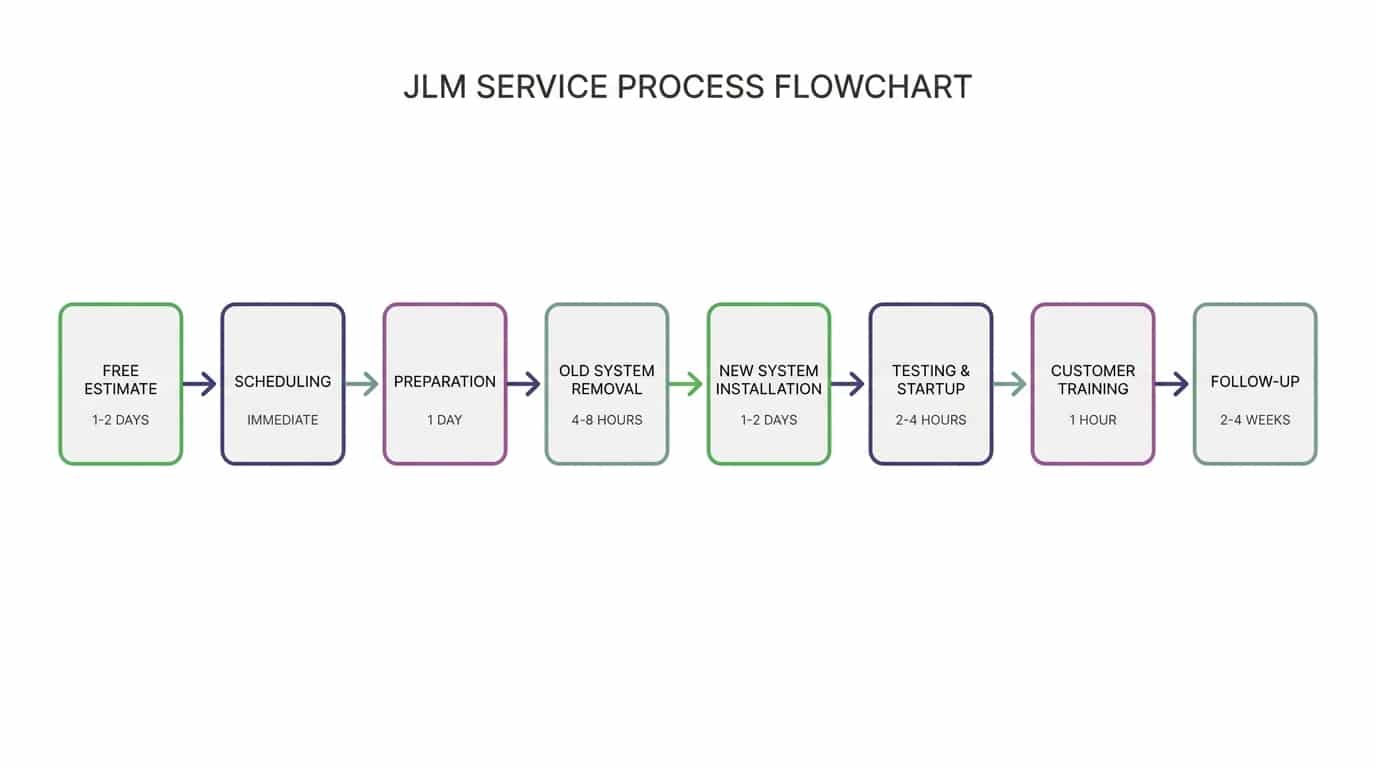
Understanding the replacement process reduces anxiety and helps you prepare. Most JLM replacements take 1-2 days from start to finish, depending on ductwork and electrical complexity. Here’s what happens at each stage.
The Free Estimate: What JLM Assesses On-Site
Your replacement journey begins with a free on-site consultation. During this visit (typically 60-90 minutes), we:
- Inspect your existing system: age, condition, refrigerant type, ductwork integrity
- Perform a Manual J load calculation to determine proper sizing
- Assess electrical capacity and discuss any needed upgrades
- Evaluate attic access, condenser placement, and installation logistics
- Discuss efficiency options (SEER ratings, variable-speed vs. single-stage)
- Review financing and provide a transparent, itemized quote
You’ll receive a written estimate breaking down equipment cost, labor, materials, permits, and optional add-ons (smart thermostat, duct sealing, air quality upgrades). No pressure, no bait-and-switch. If you choose to move forward, we schedule installation at your convenience. Bill Milbourn, our owner, leads every estimate personally. You’re dealing with the decision-maker from day one, not a commissioned sales rep.
Installation Day: What Happens & How Long It Takes
Installation day typically follows this sequence:
- Preparation (1-2 hours): The crew arrives, protects your floors and furniture, and disconnects the old system. Refrigerant is safely recovered per EPA regulations.
- Removal (1-2 hours): The old indoor air handler and outdoor condenser are removed. If ductwork modifications are needed, they happen now.
- Installation (3-5 hours): The new air handler is positioned and secured in the attic or closet. The outdoor condenser is set on a reinforced pad, leveled, and connected. Refrigerant lines, electrical wiring, condensate drainage, and thermostat wiring are installed and tested.
- System startup & testing (1-2 hours): Refrigerant is charged to manufacturer specifications. Airflow is measured and balanced across all vents. The system runs through multiple cycles to verify proper operation, temperature drop, and humidity control.
- Customer walkthrough (30 minutes): We show you how to operate the new thermostat, explain filter replacement schedules, and answer questions.
Total elapsed time for a straightforward replacement: 6-10 hours (one full day). Complex jobs (duct replacement, electrical panel upgrades, multi-zone systems) may extend into a second day.
Your home will be without AC during installation. We recommend scheduling in spring or fall when temperatures are milder, if possible. If you must replace during peak summer, we work efficiently to minimize downtime. Most homes are cooling again by late afternoon.
Post-Install: Testing, Training & Maintenance Plan Enrollment
After installation, JLM performs a final quality check:
- Verify refrigerant charge and leak-test all connections
- Measure airflow at each register to ensure balanced distribution
- Test the thermostat’s heating and cooling modes
- Inspect ductwork for leaks and proper insulation
- Confirm condensate drainage is functioning
We provide a brief training session: how to adjust your thermostat, when to change filters (every 1-3 months depending on usage and filter type), and what sounds or behaviors are normal vs. concerning. You’ll also receive a maintenance schedule recommendation. Enrolling in our Air Conditioning Maintenance plan preserves your warranty, catches small issues before they escalate, and extends system life by 3-5 years on average.
Within 7 days of installation, Bill or a team lead follows up to ensure you’re satisfied and address any questions. We stand behind our work. Our A+ BBB rating and referral-driven growth depend on it.
For additional Blog | HVAC Tips & Updates for Gilbert, AZ Residents, subscribe to our blog.
Repair vs. Replace: When Replacement Makes Financial Sense
Not every aging or malfunctioning AC needs replacement. Sometimes repair is the smarter move. Here’s how to decide.
The $5,000 Rule: Repair Cost vs. Replacement Value
A common industry guideline: if the repair cost multiplied by the system’s age (in years) exceeds $5,000, replacement is the better long-term investment. For example, a $600 compressor repair on a 6-year-old system = $3,600 (6 × $600). That’s below the threshold; repair makes sense. But a $1,200 repair on a 12-year-old system = $14,400 (12 × $1,200). That’s well above $5,000; replace.
The logic: older systems require more frequent repairs. Spending $1,200 today on a 12-year-old AC doesn’t guarantee another 5 years of service. You may face another $800 repair next summer, then $1,500 the following year. At that point, you’ve spent $3,500 in repairs over three years on a system that’s 15 years old and still inefficient. You’d have been better off replacing at year 12 and enjoying a new, efficient system for 15-20 years.
For guidance on Do You Really Need Professional AC Repair in Mesa?, explore our repair decision framework.
Age, Efficiency & Refrigerant: Red Flags for Replacement
Three factors strongly indicate it’s time to replace rather than repair:
Age over 12 years: The average AC lifespan in Arizona’s harsh climate is 12-15 years. Systems nearing or exceeding this age are statistically more likely to fail and less efficient than modern units. Even if a repair is technically feasible, you’re pouring money into a declining asset.
Low SEER rating (10 or below): Pre-2006 systems averaged 8-10 SEER. Modern minimums are 14 SEER. Running a 9 SEER system costs 35-50% more in electricity than a 16 SEER replacement. Over 5 years, that’s $3,000-$5,000 in wasted energy, enough to partially offset replacement cost.
R-22 refrigerant: The EPA phased out R-22 (Freon) production in 2020 due to environmental harm. According to the EPA’s refrigerant phase-out guidance, R-22 is now scarce and expensive. A refrigerant recharge that cost $300 in 2015 can exceed $1,500 today. If your system uses R-22 and needs a refrigerant leak repair, replacement with a modern R-410A system is almost always more cost-effective.
Proactive maintenance extends system life. The Smart Way to Prep AC for Gilbert’s Hot Summer through spring tune-ups can add 2-3 years of reliable service, delaying replacement until you’re financially ready.
How JLM Helps You Make the Right Call (Honest Estimates, No Pressure)
At JLM, we don’t push replacement if repair is the smarter choice. When you call for service, Bill or a licensed technician diagnoses the issue, explains what failed and why, provides repair cost, and (if the system is old or inefficient) also provides replacement cost for comparison. You get both options (repair vs. replace) with transparent pricing and honest recommendations.
If repair is viable and extends your system’s life by 3-5 years, we’ll tell you. If the system is on its last legs and you’re better off replacing now, we’ll explain why. We’re local, family-owned, and referral-driven. Our business grows through trust, not upselling. During peak summer emergencies, explore Why Summer in Mesa Demands Fast AC Repair to understand our same-day response commitment.
How to Avoid Common AC Replacement Mistakes
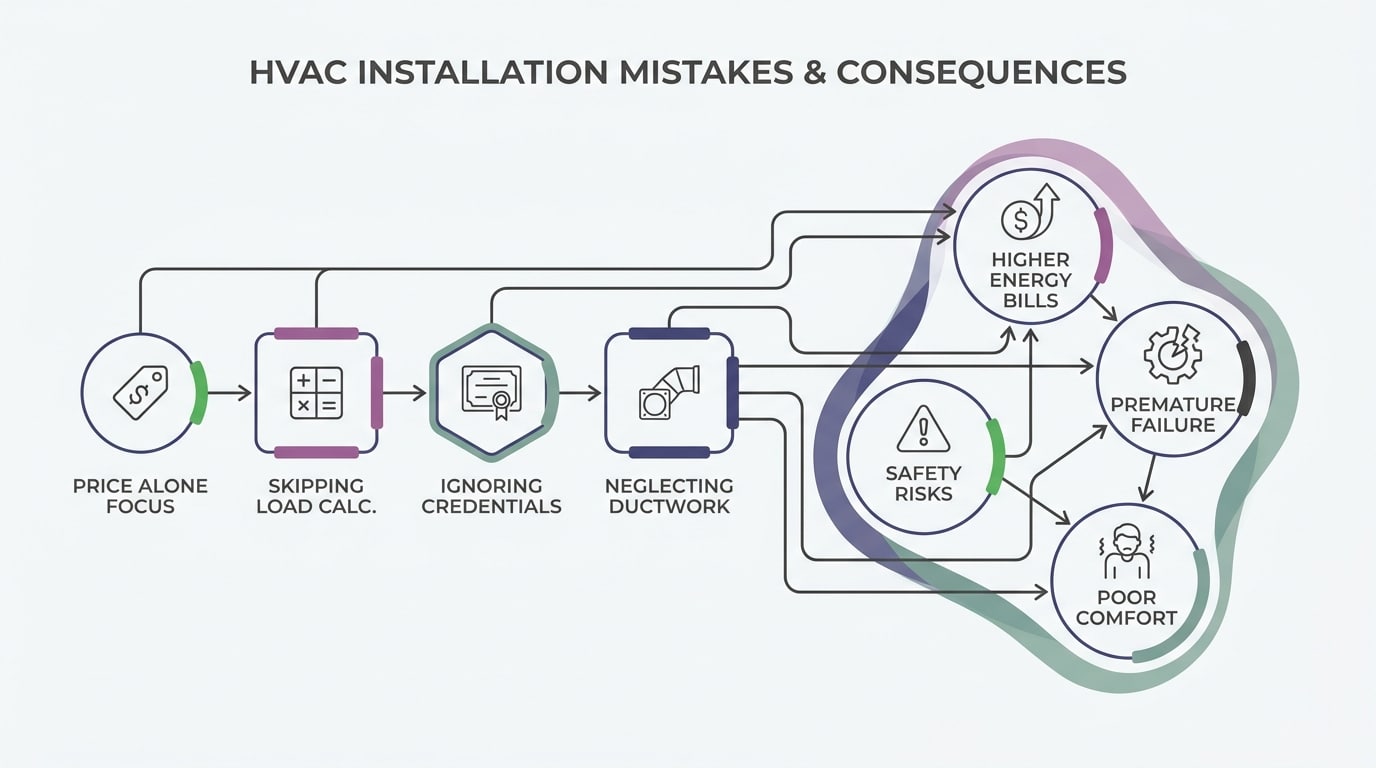
Replacing your AC is a major investment. Avoid these pitfalls to ensure you get quality equipment, proper installation, and long-term value.
Don’t Choose on Price Alone: Why Quality Installation Matters
The lowest bid is rarely the best deal. A $7,000 quote may seem attractive compared to $11,000, but if the cheaper contractor skips load calculations, uses substandard materials, or rushes the installation, you’ll pay more in the long run through higher energy bills, frequent repairs, and premature system failure.
According to the Air Conditioning Contractors of America (ACCA) quality standards, proper installation is as important as equipment quality. A high-efficiency 18 SEER system installed poorly (leaky ducts, improper refrigerant charge, undersized return air) will perform no better than a 14 SEER system installed correctly. You’ll lose the efficiency premium you paid for.
Quality installation includes:
- Accurate load calculation and right-sizing
- Proper refrigerant charge (measured, not guessed)
- Sealed and insulated ductwork
- Adequate return air pathways
- Correct condensate drainage with traps and cleanouts
- Secure electrical connections and disconnect switches
- Testing airflow, temperature drop, and humidity removal
At JLM, Bill is on every job site to oversee these details. We don’t subcontract installations to untrained crews. Our A+ BBB rating and 3,000+ successful installs reflect our commitment to doing it right the first time.
Insist on a Manual J Load Calculation (Not Square-Footage Guessing)
This point bears repeating: any contractor who sizes your system based solely on square footage (“Your house is 2,000 sq ft, so you need a 3-ton unit”) is cutting corners. Homes vary widely in insulation, window quality, orientation, ceiling height, and occupancy. A 2,000 sq ft home with poor insulation and west-facing windows may need 3.5 tons; a well-insulated 2,000 sq ft home with mature shade trees may need only 2.5 tons.
Manual J load calculations follow an industry-standard protocol that accounts for these variables. The calculation takes 30-60 minutes and costs the contractor nothing but time. If they skip it, they’re gambling with your comfort and money. Insist on seeing the load calculation report. Reputable contractors provide it without hesitation.
Check Contractor Credentials: Licensing, BBB Rating & Reviews
Arizona requires HVAC contractors to hold a valid license issued by the Arizona Registrar of Contractors (ROC). You can verify any contractor’s license status, complaint history, and bonding at roc.az.gov. According to the Institute for Justice’s licensing research, HVAC contractor licensing requirements vary significantly by state but consistently serve to protect consumers from unqualified practitioners. Never hire an unlicensed contractor, no matter how cheap the quote. Unlicensed work voids equipment warranties, violates building codes, and leaves you with zero recourse if something goes wrong.
Beyond licensing, check:
- BBB rating: JLM maintains an A+ rating. Look for contractors with A or A+ ratings and read complaint details.
- Online reviews: Yelp, Google, Angi, and similar platforms host contractor reviews. Read recent reviews (within 12 months) and look for patterns. One bad review isn’t disqualifying; consistent complaints about upselling, poor workmanship, or billing disputes are red flags.
- References: Ask for 3-5 references from recent installations similar to yours (same size home, same type of system). Call them and ask about communication, timeliness, cleanup, and post-install support.
- Insurance: Confirm the contractor carries liability insurance and workers’ compensation. If a technician is injured on your property and the contractor lacks workers’ comp, you could be liable.
Homeowners who verify licensing, check reviews, and obtain multiple quotes report significantly higher satisfaction and fewer post-install issues.
Frequently Asked Questions About AC Replacement Costs
How long does a new AC system last? A properly installed and maintained AC system lasts 15-20 years in Arizona. Regular seasonal maintenance (filter changes, coil cleaning, refrigerant checks) extends lifespan; neglect shortens it.
Does higher SEER always save money? Not always. Higher SEER systems cost more upfront. The savings depend on usage. Heavy users (8+ hours/day, May-October) see faster payback. Light users may not recoup the premium within a typical ownership timeline. Run the numbers based on your actual cooling costs.
What rebates and tax credits are available? Arizona utilities (SRP, APS) offer rebates for high-efficiency systems, typically $200-$500. Federal tax credits (Section 25C) provide up to $300 for qualifying EnergyStar systems. Check EnergyStar.gov and your utility provider’s rebate page for current programs.
Does ductwork replacement add cost? Yes. Full duct replacement adds $3,000-$6,000 depending on home size and complexity. Duct sealing and minor repairs cost $500-$1,500. Many homes don’t need full replacement; targeted sealing suffices.
How do I get an accurate estimate? Schedule a free on-site consultation with a licensed contractor. Expect them to inspect your current system, measure your home, assess ductwork and electrical, and provide a detailed, itemized quote. Avoid phone quotes or estimates based solely on square footage.
Can I finance an AC replacement with bad credit? Some financing programs accept lower credit scores, though rates and terms are less favorable. Explore co-signer options, secured loans (home equity), or payment plans directly through the contractor. Improve your credit score before applying if time permits.
Protect Your Comfort: Schedule Your Free AC Replacement Estimate Today
Replacing your air conditioner is a significant investment, but it’s also an opportunity to improve comfort, reduce energy costs, and gain peace of mind. The cost ($9,000 to $20,000 in the East Valley) depends on equipment tier, system size, installation complexity, and labor. Choosing the right system means balancing efficiency (SEER rating), proper sizing (Manual J calculation), brand reliability, and warranty coverage. According to Rheem’s business growth strategies for HVAC contractors, transparent pricing and customer education are key differentiators that drive both satisfaction and referrals. Financing options from 0% APR promotions to fixed-rate loans make replacement accessible without draining savings.
At JLM Air Conditioning & Heating, we’ve completed over 3,000 installations across Gilbert, Mesa, Queen Creek, and Apache Junction. Our owner-led approach ensures transparent pricing, quality workmanship, and honest recommendations. We’ll never pressure you into a system you don’t need or financing you can’t afford. Our goal is to protect your comfort and your budget.
Ready to get a transparent, no-pressure estimate? Visit our HVAC Replacement & New Installation page or call us directly to schedule your free consultation. We’ll walk you through your options, answer your questions, and help you find the right system and financing plan for your home and budget. Don’t wait until your system fails during the hottest week of summer. Take the first step toward reliable, efficient cooling today.
— By JLM