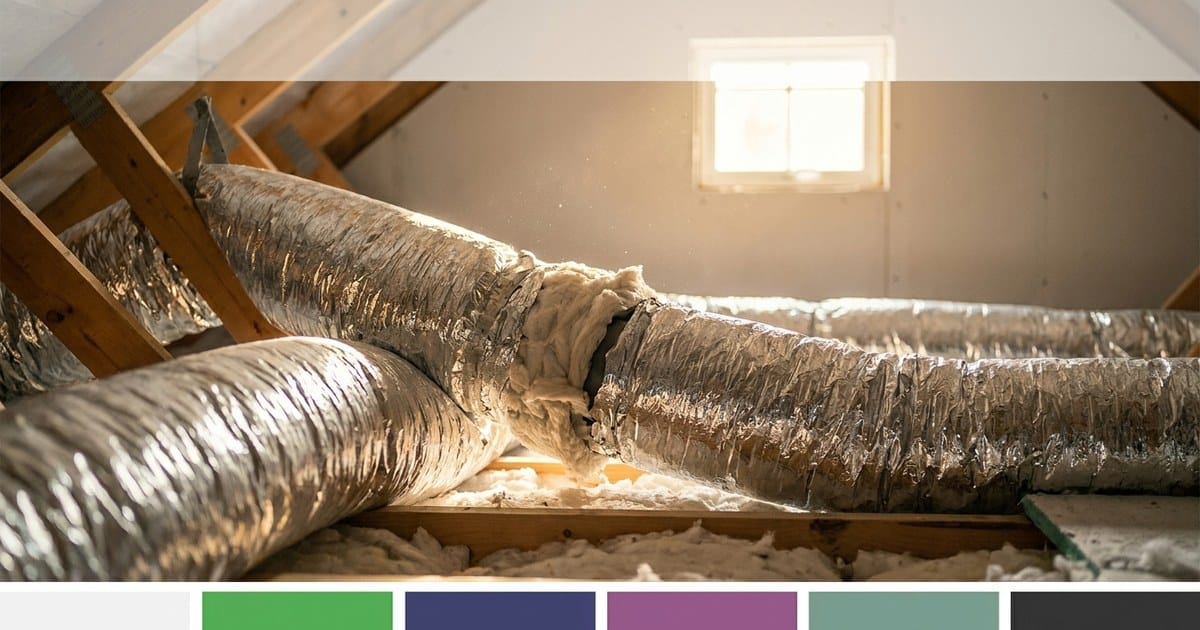

Clean ductwork improves indoor air quality by removing accumulated dust, allergens, mold spores, and debris that recirculate through your HVAC system every time it runs. Over time, ducts collect particles from outdoor air, construction residue, pet dander, and household activity; when your AC or furnace cycles, these contaminants blow into living spaces. Professional duct cleaning extracts this buildup, reduces airborne irritants, and helps your HVAC filter work more effectively, delivering measurably cleaner air for families with allergies, asthma, or respiratory sensitivity.
You’ve probably heard conflicting advice. Some sources say duct cleaning is essential for healthy indoor air; others call it oversold or even a scam. The truth sits in between: duct cleaning makes a real difference when genuinely needed, but it’s not a cure-all, and it’s not necessary for every home. This guide walks through the science behind the duct-to-IAQ connection, how to tell if your ducts need cleaning, what a professional service entails, and when the investment delivers measurable health benefits. By the end, you’ll know exactly what to expect and whether duct cleaning is worth it for your East Valley home.
JLM Air Conditioning & Heating has completed 3,000+ HVAC installs and maintains an A+ BBB rating serving families across Gilbert, Mesa, Queen Creek, Chandler, and San Tan Valley. We’ll give you a straight answer about what’s needed and what’s not, because transparent diagnostics and owner-led service are what set us apart from corporate franchises. Explore our full range of HVAC System Repairs & Upgrades to see how we support healthy, efficient home comfort year-round.
Why Indoor Air Quality Matters for East Valley Families
Indoor air quality directly affects your family’s respiratory health, comfort, and overall wellbeing. According to the EPA, indoor pollutant concentrations are often 2–5 times higher than outdoor levels, and in extreme cases, 100 times higher. That’s because homes trap dust, allergens, and chemical vapors with limited ventilation, while outdoor air at least disperses contaminants.
Arizona’s desert climate amplifies the problem. Monsoon dust events deposit significant particulate loads within hours, and year-round air conditioning means your HVAC system runs almost constantly, recirculating whatever’s inside your ductwork. Dust infiltration through windows, doors, and attic bypasses brings pollen, PM10 and PM2.5 fine particulate, and outdoor allergens into your home. When your AC cycles on, the blower pulls air through return vents, pushes it through your ducts, and distributes it into every room. If those ducts hold accumulated debris, you’re breathing it.
For families with allergies, asthma, or respiratory sensitivity, poor indoor air quality translates to persistent sneezing, coughing, eye and throat irritation, and difficulty breathing. Kids and older adults are especially vulnerable. Research published in the National Center for Biotechnology Information links long-term exposure to indoor pollutants with worsening asthma symptoms and increased respiratory infections. Clean air isn’t a luxury; it’s a health necessity.
That’s why understanding how your ductwork affects IAQ is critical. Your ducts are the lungs of your home: they deliver conditioned air to every room, but if they’re filled with dust, mold, or construction residue, they also deliver contaminants. Addressing duct cleanliness is one piece of a comprehensive IAQ strategy that includes filtration, sealing, and regular maintenance. Learn more about Indoor Air Quality: How HVAC Systems Impact Your Health to see the full picture of how your HVAC system shapes the air you breathe.
Common Indoor Air Pollutants in Arizona Homes
East Valley homes face a unique mix of indoor pollutants. Dust is the most visible: fine particulate from desert winds, construction activity, and daily household traffic settles on surfaces and gets drawn into return vents. Pollen from mesquite, olive, and mulberry trees spikes seasonally, infiltrating through open windows and HVAC fresh-air intakes. Pet dander from cats and dogs circulates constantly in homes with animals, triggering allergic reactions even in rooms the pet rarely enters.
Mold spores thrive wherever moisture accumulates: leaky ductwork near evaporator coils, condensation around poorly insulated supply vents, and water damage from monsoon roof leaks. Once mold establishes itself inside ducts, it releases spores every time the blower runs. Volatile organic compounds (VOCs) come from cleaning products, paints, adhesives, and new carpeting or furniture. These chemicals off-gas over time, and without adequate ventilation, they build up indoors. Bacteria and viruses spread through airborne droplets, especially in homes with poor ventilation or recirculated air.
If you notice dust resettling on furniture hours after cleaning, or if allergy symptoms worsen indoors but improve when you leave the house, your ductwork may be recirculating pollutants. Musty odors near vents signal mold or mildew growth. Visible debris around supply registers or inside return vents indicates accumulated buildup. These are the warning signs that your ducts need attention. For targeted strategies on managing Arizona’s seasonal dust and allergen challenges, see Indoor Air Quality in Arizona: Monsoon Dust & Allergen Control with HVAC Upgrades.
How Ductwork Becomes a Source of Indoor Air Pollution
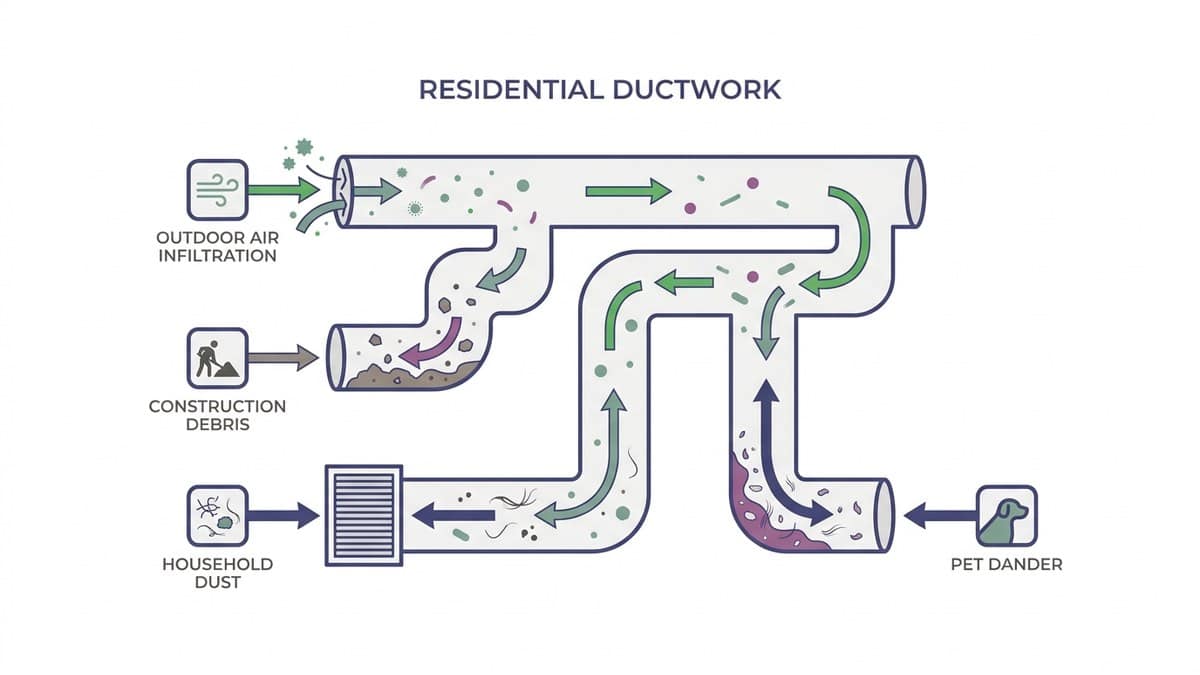
Ductwork collects dust and debris over time through several pathways. Outdoor air infiltration is the biggest culprit: leaky duct seams and poorly sealed connections allow unconditioned air (and the particulate it carries) to enter the system. According to Energy Star, duct leakage can waste 20–30% of conditioned air and compromise indoor air quality by drawing in attic dust, insulation fibers, and outdoor pollutants. Every time your AC or furnace runs, negative pressure in the return ducts pulls air from wherever it can find it, including crawl spaces, attics, and wall cavities.
Construction and renovation work leaves behind drywall dust, sawdust, and debris that settles in ducts if the system runs during or immediately after the project. Even new homes aren’t exempt: builders often run HVAC systems before ductwork is properly sealed, allowing construction residue to coat the interior surfaces. Household sources contribute daily: skin cells, lint from laundry, pet hair, and cooking smoke all get drawn into return vents. HVAC filters catch most of this material, but when filters are undersized, improperly installed, or not replaced regularly, particles bypass the filter and accumulate in ducts.
Over time, this buildup restricts airflow, creating uneven temperatures and forcing your blower motor to work harder. But the bigger problem is recirculation: every cooling or heating cycle stirs the accumulated dust and redistributes it into your living spaces. You end up breathing the same contaminants over and over. Sealing leaks and cleaning ducts work together to break this cycle. Ductwork Cleaning: How Clean Ducts Save 10–15% on Cooling Costs in Arizona explains how addressing both buildup and leaks improves efficiency and air quality simultaneously.
Signs Your Ducts May Need Cleaning
Several observable signals indicate your ductwork has accumulated enough debris to warrant professional cleaning. Visible mold or a musty odor near supply vents is the clearest red flag: mold growth inside ducts poses a health risk and will continue spreading until removed. Excessive dust buildup around registers, especially if you clean them regularly and they’re dusty again within days, points to contamination inside the system. If you can see debris when you look into supply vents with a flashlight, that’s a sign deeper buildup exists.
Recent remodeling or new construction is another strong indicator. Drywall dust and sawdust penetrate ductwork easily, and running your HVAC system during construction coats the interior surfaces. Unexplained allergy symptoms that improve when you leave the house suggest indoor air quality problems, often linked to duct contamination. Pest infestation evidence, such as rodent droppings or insect nests near vents or inside ducts, requires immediate cleaning and sealing to prevent further contamination.
Condensation around vents, peeling paint on walls near registers, or warped wood near supply ducts can indicate moisture problems that promote mold growth inside the system. Asthma flare-ups, persistent sneezing, eye irritation, or breathing difficulties that worsen indoors are health symptoms tied to poor IAQ. If you’ve never had your ducts inspected and your system is more than five years old, a professional assessment makes sense, especially in Arizona’s high-dust environment.
JLM provides free HVAC consultations and ductwork inspections as part of our diagnostic process. We use camera inspections and airflow testing to determine whether duct cleaning will deliver measurable benefits or whether your IAQ problem has a different root cause, such as inadequate filtration or envelope leaks. You’ll know exactly what’s needed before committing to any service.
What Professional Duct Cleaning Involves (and What It Doesn’t)
Professional duct cleaning removes accumulated debris using a HEPA-filtered vacuum system connected to your ductwork. The process starts with a camera inspection to assess contamination levels and identify mold, debris, or damage. Technicians then create access panels at strategic points in the duct runs, allowing them to insert agitation tools (rotating brushes or compressed air nozzles) that dislodge dust, mold, and buildup from the interior surfaces. A powerful negative-pressure vacuum simultaneously extracts loosened material, preventing it from spreading into your home. This is called source removal: physically removing contaminants rather than just blowing them around.
The vacuum system typically connects to the main trunk line, and technicians work through each branch to clean supply and return ducts. Access panels are sealed with metal patches after cleaning to maintain system integrity. The entire process takes 2–4 hours for a standard residential system; larger homes or severe contamination may require more time. Registers and grilles are removed, cleaned, and reinstalled. Blower compartments, evaporator coils, and drip pans may also be cleaned if accessible and contaminated.
Professional cleaning does NOT involve unnecessary antimicrobial treatments. According to guidance from the EPA and CDC, routine antimicrobial application is not recommended unless there’s documented mold contamination that can’t be removed mechanically. Ozone generators, which some disreputable contractors push, are ineffective and can produce harmful byproducts. A legitimate duct cleaning service focuses on physical extraction, not chemical treatments.
Scam tactics include bait-and-switch pricing (advertising a low base price, then claiming “additional contamination” was discovered mid-job and charging hundreds more), aggressive upsells on unverified mold remediation, and unqualified subcontractors using underpowered equipment. Transparent pricing and no hidden fees are non-negotiable: you should receive a clear scope of work and a straightforward quote before any work begins.
At JLM, you’re working with a licensed technician (often Bill himself, the owner), not a subcontractor or commission-driven sales team. We provide on-site estimates so you know the cost upfront. Our ductwork cleaning and sealing services follow industry best practices, focusing on measurable results rather than upselling treatments you don’t need.
The Role of HVAC Filters and Air Purifiers
Duct cleaning removes existing buildup, but high-efficiency filtration prevents future accumulation. Standard 1-inch fiberglass filters (MERV 1–4) capture only large particles like lint and visible dust. They do almost nothing for pollen, mold spores, or fine particulate. Upgrading to MERV 11–13 pleated filters significantly improves particle capture, trapping smaller allergens and dust that would otherwise coat your ductwork. In Arizona’s high-dust environment, MERV 11–13 is the recommended minimum.
Filters must be replaced every 1–3 months depending on type, household occupancy, and whether you have pets. A clogged filter restricts airflow, reduces system efficiency, and allows particles to bypass the filter and enter ducts. Check your filter monthly; if it looks dirty, replace it regardless of the manufacturer’s recommended interval. Thicker 4–5 inch media filters (MERV 13–16) last longer and provide even better filtration but require compatible filter cabinets.
Whole-house air purifiers work alongside clean ducts to capture contaminants that filters miss. UV disinfection systems installed in the ductwork kill bacteria, viruses, and mold spores as air passes through. Electronic air cleaners use electrostatic charges to capture fine particulate. HEPA filtration systems (true HEPA captures 99.97% of particles ≥0.3 microns) offer the highest level of particle removal but require professional installation and regular maintenance. According to the EPA, combining mechanical filtration with air cleaning technologies provides the most comprehensive IAQ protection.
JLM offers whole-house air purification systems that capture allergens, dust, and contaminants as part of our indoor air quality services. Pairing clean ducts with upgraded filtration delivers the best long-term results: ducts stay cleaner longer, and the air circulating through your home is filtered at the source.
Health Benefits of Clean Ductwork
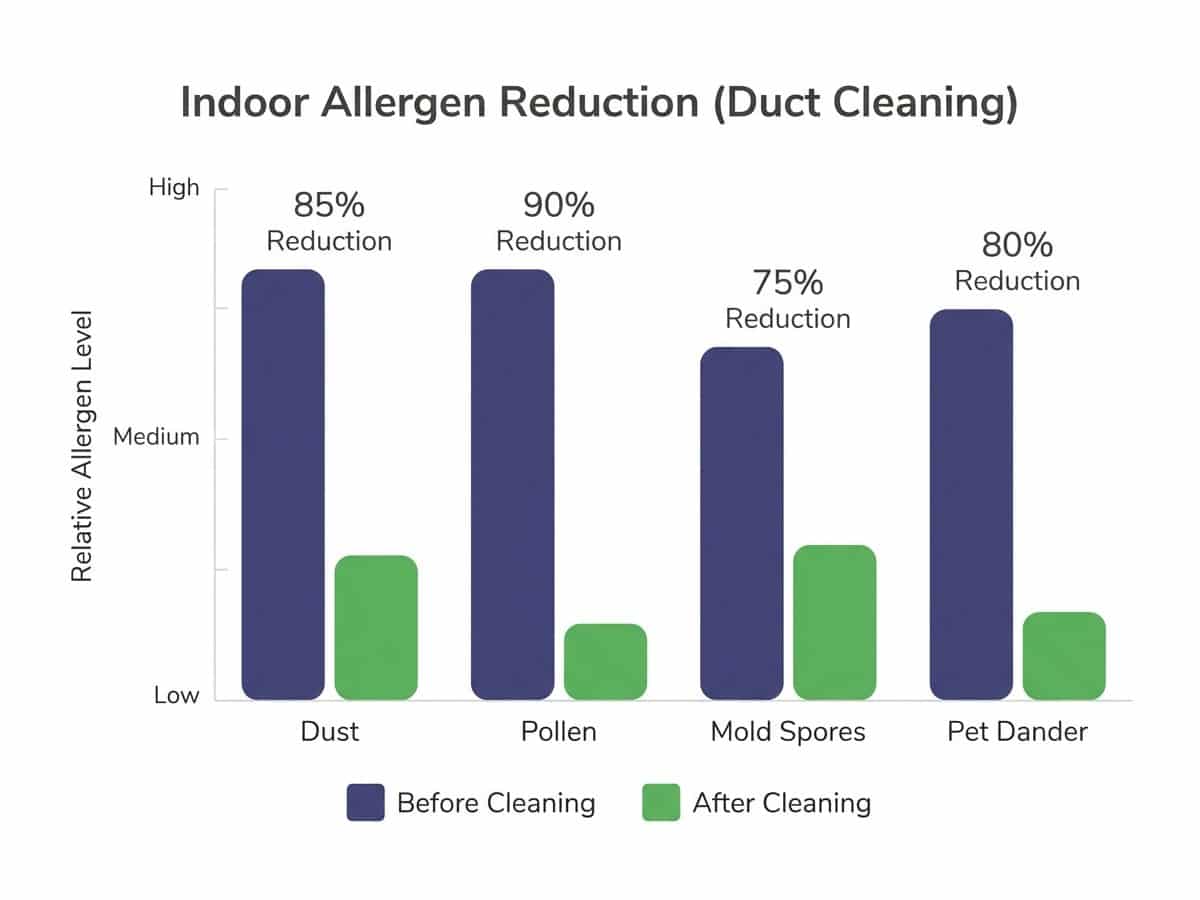
Clean ductwork translates directly into health improvements for families with respiratory sensitivities. Removing accumulated dust, pollen, and pet dander from ducts reduces the airborne allergen load in your home, which means fewer sneezing episodes, less nasal congestion, and reduced eye irritation. For children and adults with asthma, eliminating mold spores and particulate triggers can reduce the frequency and severity of attacks. Studies published in the National Center for Biotechnology Information show that improving indoor air quality lowers respiratory symptom severity and decreases reliance on rescue inhalers.
Musty odors disappear when mold and mildew are removed from ductwork. If your home has smelled stale or damp despite surface cleaning, contaminated ducts are often the source. Once the mold is extracted and the ducts are sealed to prevent moisture intrusion, the air smells noticeably fresher. Peace of mind is another benefit: knowing your HVAC system isn’t recirculating construction dust, pest debris, or mold spores gives you confidence that the air your family breathes is as clean as possible.
In our 3,000+ HVAC installs and service calls across the East Valley, we’ve seen how duct sealing and cleaning improve both comfort and air quality. Homeowners report that allergy symptoms ease within a week or two after cleaning, and dust accumulation on furniture slows noticeably. These aren’t dramatic overnight transformations, but they’re measurable improvements that accumulate over time. Duct cleaning is most effective when paired with regular filter replacement and whole-house IAQ upgrades. Learn more about system-wide strategies at Indoor Air Quality: How HVAC Systems Impact Your Health.
When Duct Cleaning Is Worth the Investment (and When It’s Not)
Duct cleaning is worth the investment in specific situations where contamination is documented or symptoms are clear. Visible mold inside ducts or near vents requires immediate cleaning and remediation: mold spreads through spores, and leaving it in place compromises your family’s health. Post-construction or post-renovation cleaning is essential if your HVAC system ran during the project. Drywall dust and sawdust coat ductwork quickly, and running your AC or furnace without addressing it means breathing that debris for months.
Pest infestation (rodent droppings, insect nests, or animal remains inside ducts) is a health hazard and a strong indicator for professional cleaning. Unexplained allergy or asthma symptoms that worsen indoors but improve outside suggest your ductwork is recirculating allergens. If your system hasn’t been inspected in five years or more, especially in Arizona’s dusty climate, an assessment makes sense. Recent home purchase is another trigger: you don’t know the previous owner’s maintenance history, and a duct inspection gives you a baseline.
Duct cleaning is probably NOT necessary if you replace filters regularly (every 1–3 months), there’s no visible contamination when you inspect registers, your system is less than three years old with proper filtration, and no one in your household experiences IAQ-related health complaints. In these cases, your money is better spent on higher-MERV filters, sealing envelope leaks, or upgrading to a whole-house air purifier rather than cleaning ducts that aren’t significantly contaminated.
The duct cleaning industry has a reputation problem because some companies oversell the service, using scare tactics or inflated claims about mold and health risks. We believe in transparency: JLM will tell you if duct cleaning is genuinely needed or if your IAQ problem has a different root cause. That’s part of our owner-led approach to honest HVAC diagnostics. If your ducts are reasonably clean and the real issue is a clogged filter or leaky envelope, we’ll tell you that instead of upselling a service you don’t need.
What to Expect: Cost, Timeline, and Results
Professional duct cleaning costs between $300 and $2,000+, depending on your home’s size, ductwork complexity, and contamination level. A typical 1,500–2,000 square-foot home with standard ductwork runs $400–$800. Larger homes, multi-story layouts, or severe mold contamination increase the price. JLM provides free on-site estimates so you know the exact cost before we start. No hidden fees, no surprise charges for “additional contamination” discovered mid-job.
The cleaning process takes 2–4 hours for most residential systems. Larger homes or extensive contamination may require 4–6 hours. We schedule the work at your convenience, and you can remain in the house during the service (we contain dust and debris with negative-pressure equipment). Results appear gradually: you’ll notice an immediate reduction in visible dust around vents within the first day or two. Airborne particulate levels drop over the following 1–2 weeks as residual particles settle and your filter captures what’s left.
If airflow was restricted by debris buildup, you may also see a modest energy efficiency gain once ducts are clean and sealed. Clean ducts paired with duct sealing can deliver 10–15% cooling cost savings by eliminating leaks and improving airflow. Results vary by home: the more contaminated your ducts were before cleaning, the more noticeable the improvement. Homes with severe mold or post-construction dust see the biggest air quality gains.
Duct cleaning is most effective when combined with sealing leaks and upgrading filtration. Cleaning removes the existing buildup; sealing prevents outdoor dust infiltration; upgraded filters capture particles before they reach ducts. Together, these steps form a comprehensive IAQ solution rather than a one-time fix. We’ll walk you through what makes sense for your home and budget during the free consultation. For year-round comfort optimization, consider pairing duct cleaning with smart thermostat installation to manage both air quality and efficiency seamlessly.
Maintaining Clean Ducts and Healthy Indoor Air Long-Term
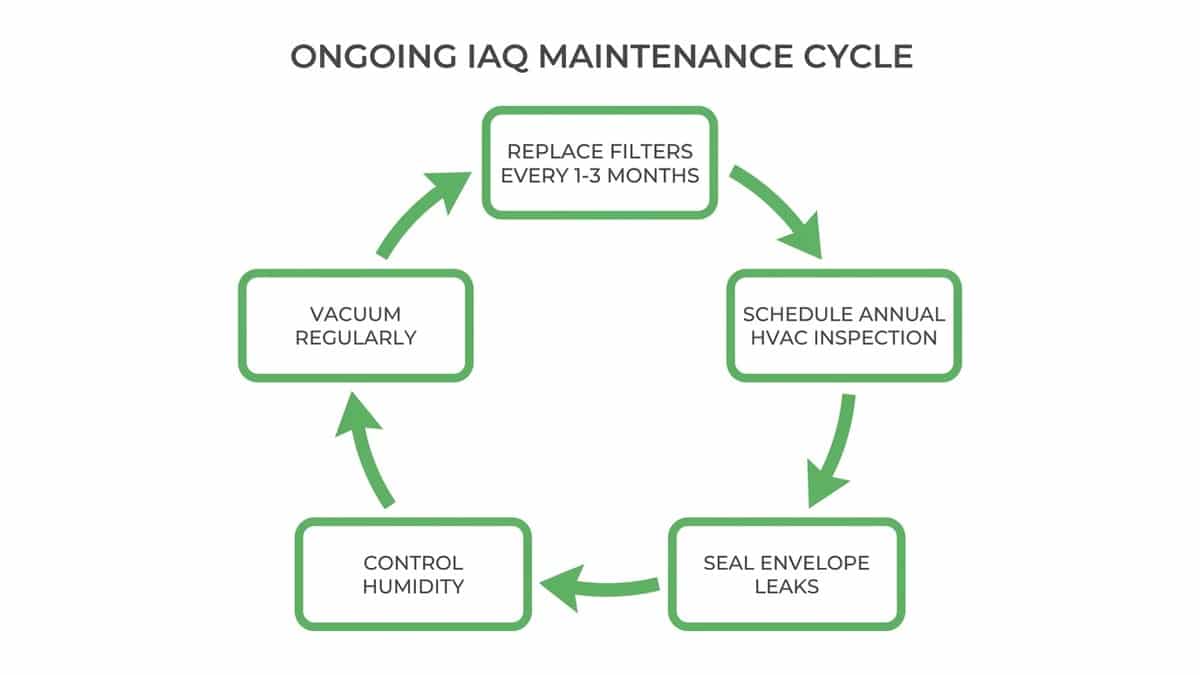
Keeping ducts clean and indoor air healthy requires ongoing habits, not just a one-time service. Replace HVAC filters every 1–3 months, using MERV 11–13 pleated filters for Arizona’s dust levels. Check your filter monthly: if it looks dirty before the replacement interval, change it early. Clogged filters force your system to work harder and allow particles to bypass the filter, recontaminating your ducts.
Schedule annual HVAC maintenance to catch duct issues early and keep your system running efficiently. JLM’s 50-point inspection includes a ductwork assessment, checking for leaks, debris, and airflow restrictions. Regular tune-ups reduce the risk of emergency breakdowns that can compromise air quality, such as mold growth from refrigerant leaks or dust infiltration from blower failures.
Seal envelope leaks around windows, doors, and attic bypasses to reduce outdoor dust infiltration. The tighter your building envelope, the less particulate enters your home and gets drawn into ducts. Control indoor humidity with a dehumidifier if needed (especially during monsoon season) to prevent mold growth in ducts and on evaporator coils. Vacuum and dust regularly using a HEPA-filtered vacuum to reduce the particle load on your return vents.
For year-round IAQ protection tailored to Arizona’s monsoon and dust-storm cycles, see seasonal IAQ strategies for Arizona’s climate challenges. Pairing clean ducts with proactive maintenance is the most effective way to protect your family’s respiratory health long-term. When AC issues arise that could compromise air quality, explore quick solutions when your AC freezes up to prevent moisture and mold problems before they contaminate your ductwork.
Keep Your Family Breathing Clean Air
Clean ductwork is one critical component of a comprehensive indoor air quality strategy. It delivers real health benefits when genuinely needed, removing hidden reservoirs of allergens, mold, and debris that recirculate through your home. But it’s not a magic fix: filtration, sealing, and regular HVAC maintenance work together to keep your air clean long-term.
You deserve a straight answer, not a sales pitch. At JLM Air Conditioning & Heating, we provide transparent assessments backed by 3,000+ installs and an A+ BBB rating. If duct cleaning will improve your home’s air quality, we’ll tell you exactly what to expect. If your money is better spent on a filter upgrade or envelope sealing, we’ll tell you that instead. Owner-led service means you’re working directly with the person accountable for the quality of the work, not a subcontractor or call-center team.
Ready to find out if duct cleaning will improve your home’s air quality? Call now: 602-619-3609 for a free, no-obligation ductwork inspection and honest assessment. We’ll tell you exactly what’s needed and what’s not, so you can make the best choice for your family’s health and budget.