By JLM
How does duct sealing improve energy efficiency? Duct sealing closes the cracks, gaps, and loose joints that let cooled air escape into your attic before it reaches your rooms. In a leaky system, up to 20–30% of that air can be lost, per ENERGY STAR. Sealing means shorter run times, lower summer bills, and more even temperatures.
Picture a July afternoon in Gilbert. The AC has run for hours. The thermostat says 78, and the back bedroom still feels like a sauna. The cold air you paid for may be leaking into the attic.
That is the problem this guide tackles. Duct sealing energy efficiency is a simple idea with a lot of hidden detail. We cover how to spot leaks, what the fix costs, when DIY works, and when sealing is not the answer.
We are JLM, a family-owned, owner-led HVAC company serving Gilbert, Mesa, Chandler, and Queen Creek. We have installed more than 3,000 systems and hold an A+ rating with the BBB. Along the way we learned that ducts matter as much as the AC itself. Sealing helps when ducts are sound but leaky. If yours need something else, we will tell you. And if you want a second set of eyes first, you can schedule a duct inspection with our team.
How does duct sealing improve energy efficiency?
Sealed ducts deliver the air your AC already cooled to the rooms that need it, instead of dumping it into the attic. Your system runs less to reach the thermostat setting, which cuts energy use and wear. Far-away rooms finally cool off.
Picture a garden hose with a few holes in it. You turn the water on full, but less reaches the end. Ducts work the same way. The fan pushes cooled air through a network of metal or flexible tubes, and every gap lets some of it out.
The 20–30% figure is a typical-to-high number for leaky systems. It is not a promise for your house. A tight, well-built system loses far less. An older one with loose joints and torn flex duct can lose more. Only a test tells you which one you own. [CITATION_NEEDED: DOE Energy Saver or Lawrence Berkeley National Laboratory duct leakage research confirming the typical 20–30% loss range]
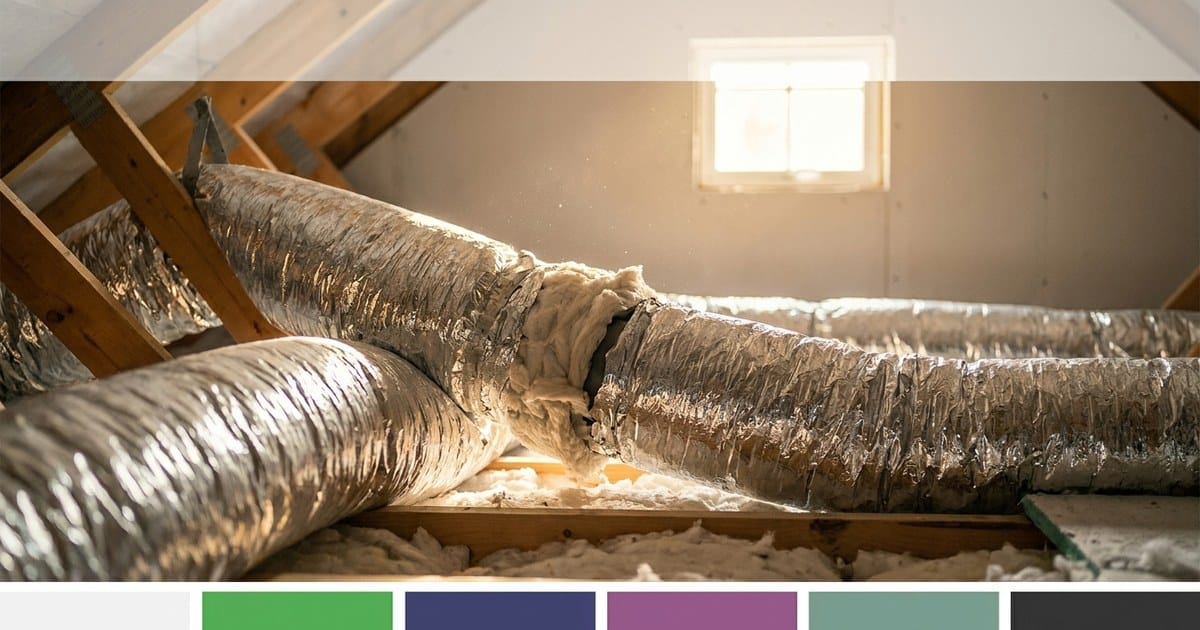
Gilbert homes often feel this more than most. In many East Valley houses, the ducts run through the attic, and a summer attic gets brutally hot. Every leak on the supply side lets cold air out. Every leak on the return side pulls hot attic air in. Your AC then works against itself, re-cooling air that was just heated. The hotter the attic, the more each small gap costs you.
Airflow matters too. Dusty, clogged ducts make the system work harder, which is why we also wrote about how clean ducts cut cooling costs in Arizona. Sealing and cleaning solve different problems. A home may need one, both, or neither.
There is an air-quality side as well. Leaks on the return side can pull attic dust and debris into the system and spread it through your rooms. Research on indoor air quality and health, like this PubMed Central study, is a reminder that what moves through your ducts ends up where your family breathes.
This is the idea behind getting more from the system you already own. Before you replace a working AC, check that its ducts are not holding it back. Sealing also stacks well with other ways to lower your summer HVAC bill.
Takeaway: Duct sealing energy efficiency starts with a simple idea: the cooling you pay for should reach your rooms.
How do I know if my ducts are leaking cooled air?
Common signs include rooms that stay hot, an AC that runs almost nonstop, high summer bills, and dusty air. A duct leakage test confirms it, because most leaks hide behind attic insulation or inside walls and ceilings.
Here are five signs you can spot without tools:
- Rooms that never cool. The back bedroom or upstairs office stays warm while the room near the thermostat feels fine. Leaks often drain air before it reaches the far end of the system.
- An AC that runs almost nonstop. If the system barely shuts off on a typical summer day, it may be chasing air it already lost.
- Summer bills that keep climbing. Rates matter, but if usage rises and nothing else changed, leaky ducts are a fair suspect.
- Dust that returns fast. Return-side leaks pull dusty attic air into the system.
- Visible damage in the attic. Look for ducts that are crushed, sagging, or pulled apart at a joint. Dark dust streaks around a seam can show where air escapes. Go early in the morning, and only if you are comfortable. Attics get dangerously hot by midday.
Poor airflow can cause other trouble, too. Restricted air can make the coil ice over, and a frozen coil can look a lot like a duct problem. Our guide on what to do when your AC freezes up explains the steps to take first.
Dust is the sign people mix up most. It can come from leaks, from dirty ducts, or from a clogged filter. Our guide on how ducts affect the air you breathe at home helps you sort out which one you have.
What a professional test adds. Your eyes can only check what you can see. A duct leakage test measures what you cannot. In general, a technician seals off the registers, pressurizes the system with a calibrated fan, and measures how much air escapes. Some pros add a thermal camera or a smoke pencil to find the exact spots. Ask any contractor whether they test, and how they confirm results afterward.
That is why our first step is a free on-site consultation. We look for the root cause, whether it is the ducts, the thermostat, or the system itself. Then you get an estimate before any work starts. If sealing is not the fix, we say so.
Takeaway: Five simple signs tell you when to look closer, but only a test tells you where the air is going.
Where do ducts leak, and how are they sealed?
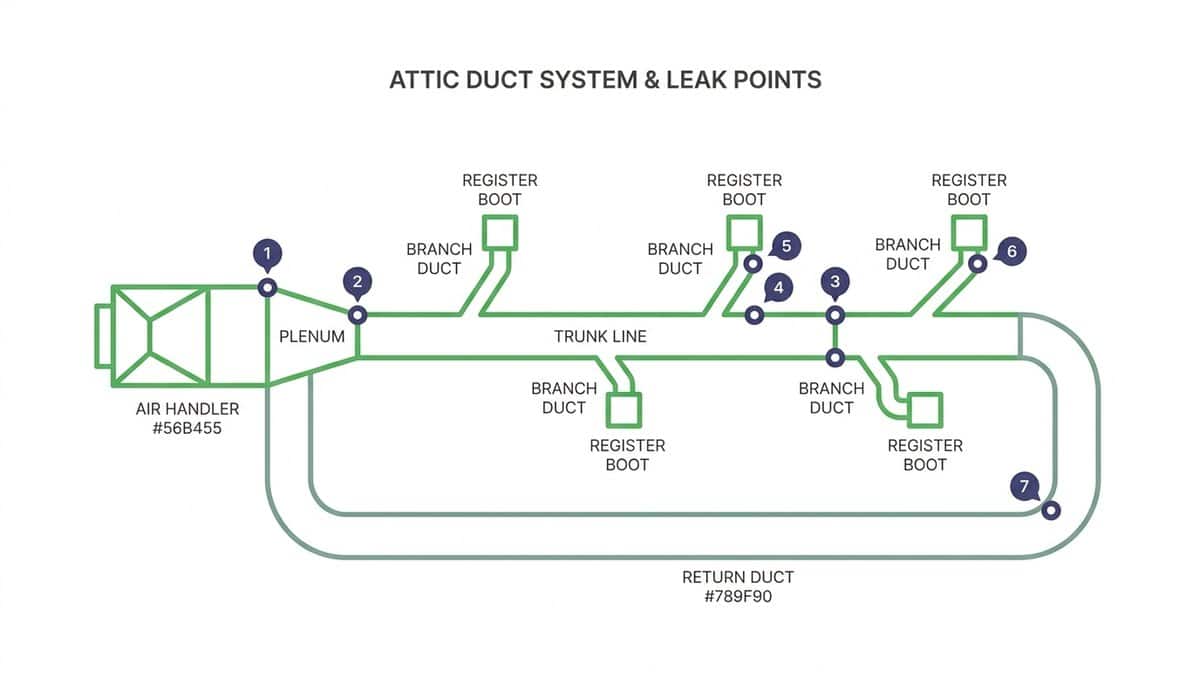
Leaks usually form at joints, the air handler connection, register boots, and the return side. Pros seal them with mastic (a thick, paste-like sealant) or UL 181-rated foil tape, and repair sections that are torn, crushed, or disconnected. Standard cloth duct tape is not a lasting fix. ENERGY STAR covers the benefits of repairing duct air leaks, and the method matters as much as the decision to do it.
The usual leak points
- The plenum and air handler. The air handler is the indoor unit with the fan that pushes air through your ducts. The plenum is the box attached to it. Where they meet the ducts, seams and connections can loosen over time.
- Trunk and branch joints. Long runs have many connections. Each one is a chance for a gap.
- Register boots. The boot is the fitting where a duct meets the vent in your ceiling or floor. It is easy to leave loose, and easy to miss.
- The return side. Return ducts pull air back to the system. Leaks here draw in hot, dusty attic air.
An owner-led crew sees these spots up close. The person who quotes your job is often the person standing in your attic with you. That is how you learn the difference between a tidy install and a rushed one. If a section needs more than sealing, see our HVAC repair and upgrade options.
Mastic and UL 181 foil tape vs. cloth duct tape
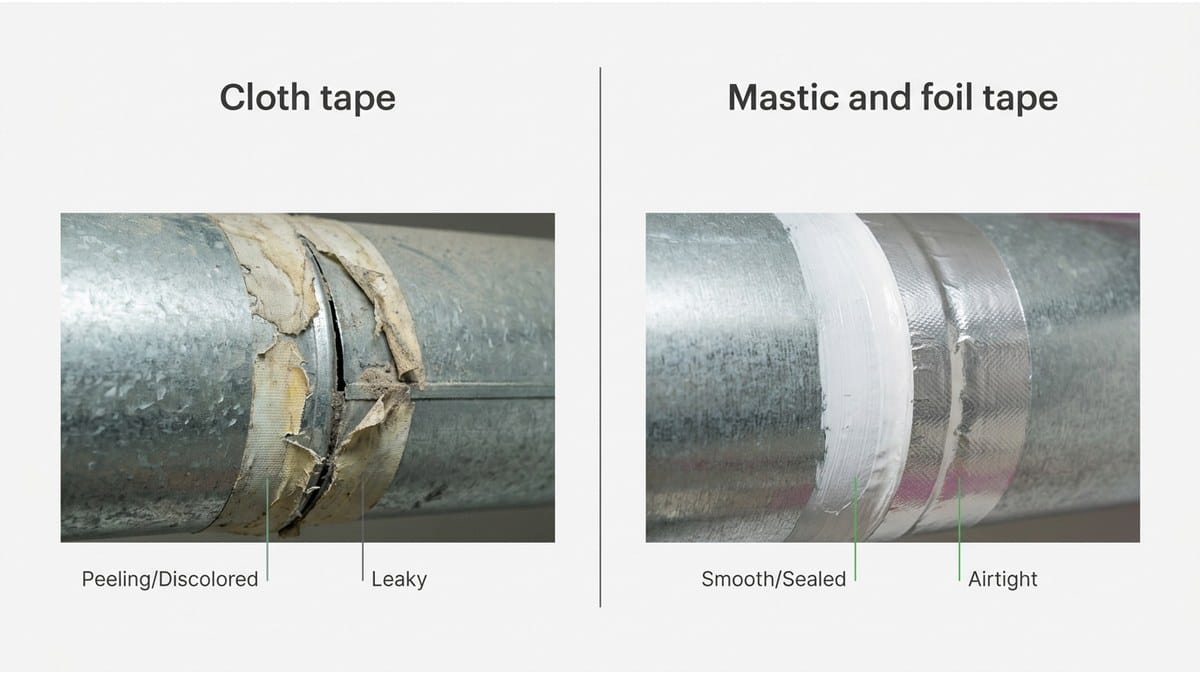
UL 181 is a safety standard for duct tapes and sealants. Mastic and UL 181 foil tape are built to stay stuck. Mastic is brushed over seams and dries into a flexible seal. Foil tape bonds to clean metal and holds up to heat.
Cloth duct tape was not designed for this job. In a hot attic, its adhesive dries out, and the tape peels and lets go. The leak comes back, and you may not know it did.
When a section needs repair or replacement
Sealing works on ducts that are sound. It does not fix ducts that are crushed, torn, badly aged, or too small for the system. Sealing over a failing duct wastes money. A good tech will mark those sections and quote the repair or replacement as a separate line.
Homeowners here read reviews and ask neighbors before they call anyone. We would rather earn that trust with a straight answer than a bigger invoice.
Takeaway: A quality sealing job uses the right materials at the right spots and repairs what sealing cannot save.
How much does duct sealing cost in Gilbert?
Cost depends on how many leaks there are, how easy the attic is to reach, and whether any ducts need repair or replacement. JLM’s ductwork work typically runs from about $300 to $2,000 or more, and we quote after an on-site look so you know the number first. [CITATION_NEEDED: strategist to confirm the $300 to $2,000+ ductwork range is publishable and applies to sealing, not only installation]
What moves the price
Five things drive ductwork sealing cost:
- Attic access. A roomy, walkable attic is faster to work in than a tight crawl space.
- Number and size of leaks. More gaps, more time and materials.
- Duct material. Flexible duct, sheet metal, and duct board each need different handling.
- Testing. Checking leakage before and after adds time but proves the result.
- Repairs. Any torn, crushed, or disconnected section is extra.
How to read a quote
A good quote is specific. It should say which leak points will be sealed and with what material. It should say whether testing is included. Repairs should be listed on their own lines, and there should be no hidden fees. Our approach is a free consultation, an on-site estimate, and a quote before any work starts.
Watch for quotes that bundle sealing and cleaning without saying why. They are different jobs. Our breakdown of Duct Sealing vs. Duct Cleaning: Which Do You Need? shows how to tell them apart.
If filter or air-quality upgrades show up in the quote, they should be separate items. HVAC filtration is a real part of the indoor air quality conversation (see the EPA indoor air quality briefing paper, 2025). It is still a different job from sealing, and it should be priced that way.
Payback framing
We will not hand you a made-up payback number. Payback depends on how leaky your ducts are, how hot your attic runs, your electric rate, and how hard your AC works. A fairer test is to compare the same month’s bill this year and last year, adjusted for weather.
Sealing also pairs well with adding a smart thermostat to stack the savings. Ducts keep the cooled air in. A better thermostat controls when the system runs.
Takeaway: A fair sealing quote is specific, itemized, and given after someone has looked at your attic.
Is professional or DIY duct sealing better?
DIY can handle a few visible, easy-to-reach joints with the right materials. Most leaks in Arizona homes are hidden in a hot attic, so a pro can test, find them, seal them correctly, and confirm the result.
What DIY can handle
If you can see a joint, reach it safely, and clean it, you can seal it. Use mastic or UL 181 foil tape, not cloth tape. Wear gloves, a mask, and eye protection. Work in the cool early morning, and let someone know you are in the attic. These small jobs are worth doing, and we will not talk you out of them.
What DIY can’t do
Most of the leaks that cost you money are not the ones you can see. They sit behind insulation, under platforms, or in tight spots near the air handler. You also cannot verify your own work without testing equipment. Attic heat adds risk, and so does disturbing old insulation or dust. The home environment is tied to health, as research from NIH's PubMed Central discusses. A sloppy job can leave you with more dust in your rooms than before.
We back our work with experience: more than 3,000 installs, an A+ BBB rating, and an owner on the job. If you would rather have a professional take a look, Call now: 602-619-3609.
Questions to ask any contractor, including us
- Do you test duct leakage before and after sealing?
- What materials do you use, and are they UL 181-rated?
- What exactly is included in the quote, and what is extra?
- Who will be on site, and who is responsible for the work?
- What happens if a section needs repair or replacement?
Ask us the same questions. You can also see the full list of JLM's HVAC services to understand what else we can help with once the ducts are sorted.
Takeaway: DIY suits small, visible fixes, but a pro wins on hidden leaks and on proving the job worked.
Should I seal, clean, or replace my ductwork?
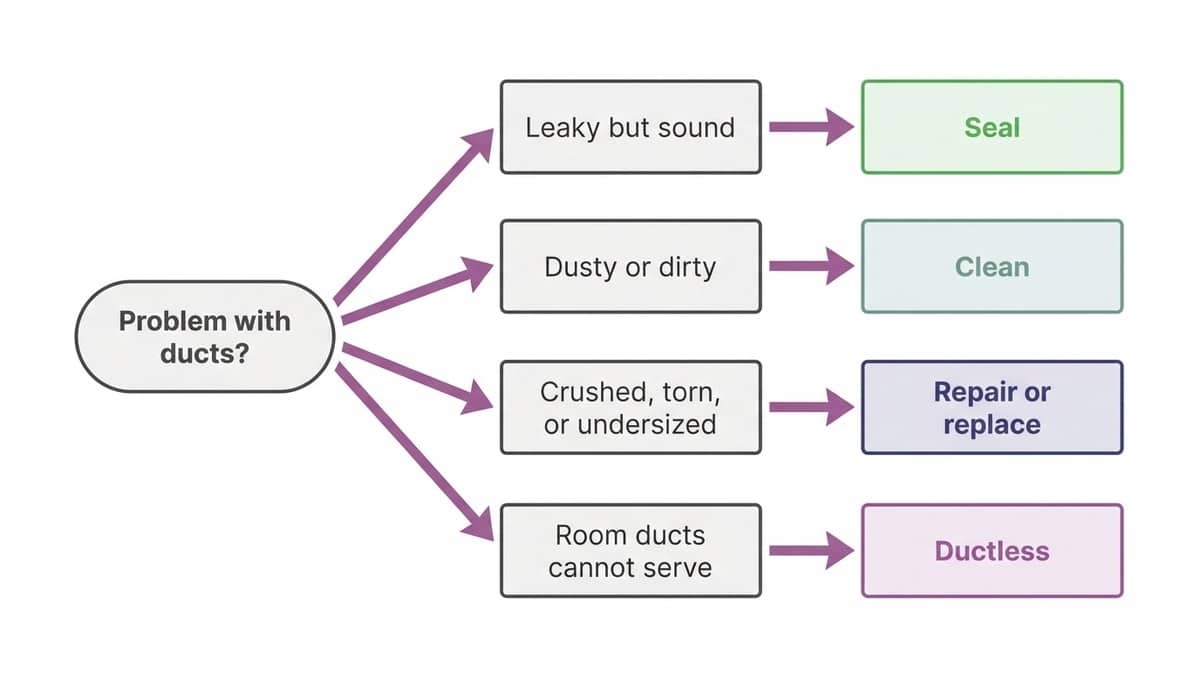
Seal when ducts are sound but leaky. Clean when dust, debris, or air quality is the concern. Replace when ducts are crushed, torn, undersized, or badly aged. Here is a simple way to decide:
- Seal if your ducts are in good shape but air is escaping at joints and connections.
- Clean if you see heavy dust, debris, or buildup, or if air quality is your main worry.
- Repair or replace if sections are crushed, torn, disconnected, undersized, or very old.
- Consider ductless if a room cannot be served well by ducts at all.
Basic indoor air quality steps, such as source control, ventilation, and filtration, are laid out in the EPA's guidance on improving indoor air quality. Sealing supports that work but does not replace it.
If you plan to replace your AC, look at the ducts first. Leaky ducts can undercut even a high-efficiency system. Fixing them during an install is often easier, because the crew is already working in the attic. Our guide to new AC installation in Gilbert, with sizing and financing covers what to expect.
Some rooms are just hard for ducts to serve, like a converted garage or a sunroom. A ductless mini-split for rooms ducts can't serve can be the cleaner answer. We only suggest it when it fits. Our job is fixing what is truly needed, not selling what is not.
Takeaway: Match the fix to the problem: seal leaks, clean dirt, replace damage, and go ductless when ducts cannot do the job.
Duct sealing FAQs
Does duct sealing help indoor air quality?
A little, and indirectly. Sealing return-side leaks keeps attic dust and debris from being pulled into your system. But sealing is not an air purifier. Cleaner air mostly comes from source control, ventilation, and filtration, as CDC NIOSH guidance on air cleanliness describes in its ventilation context. If air quality is your main worry, pair sealing with the right filter and, if needed, a duct cleaning.
Do I need duct sealing if I’m replacing my AC?
You should at least have the ducts checked. A new system can only work as well as the ducts that carry its air. Leaky or undersized ducts can undercut even a high-efficiency unit. Sealing or repairing them during an install is often easier because the crew is already in the attic. Ask your installer to check them before you sign.
Will sealing fix rooms that won’t cool?
Sometimes. Leaks are a common cause, so sealing can help when ducts are sound. But rooms can also stay hot because of poor duct design, an undersized system, blocked returns, or heavy sun exposure. A proper look finds the cause before you spend money. If ducts cannot serve a room well, a ductless option may be the better fix.
The bottom line on sealing your ducts
Here is the short version:
- Leaky ducts can waste a large share of the air your AC cools, so finding the leaks comes first.
- Sealing with the right materials works when ducts are sound. When they are not, repair or replacement is the honest answer.
- DIY handles small, visible fixes. A pro finds hidden leaks and proves the job worked.
We are a family-owned, owner-led crew. We would rather give you a straight answer than a bigger invoice. Get an honest look at your ducts and a straight answer on what, if anything, needs fixing.