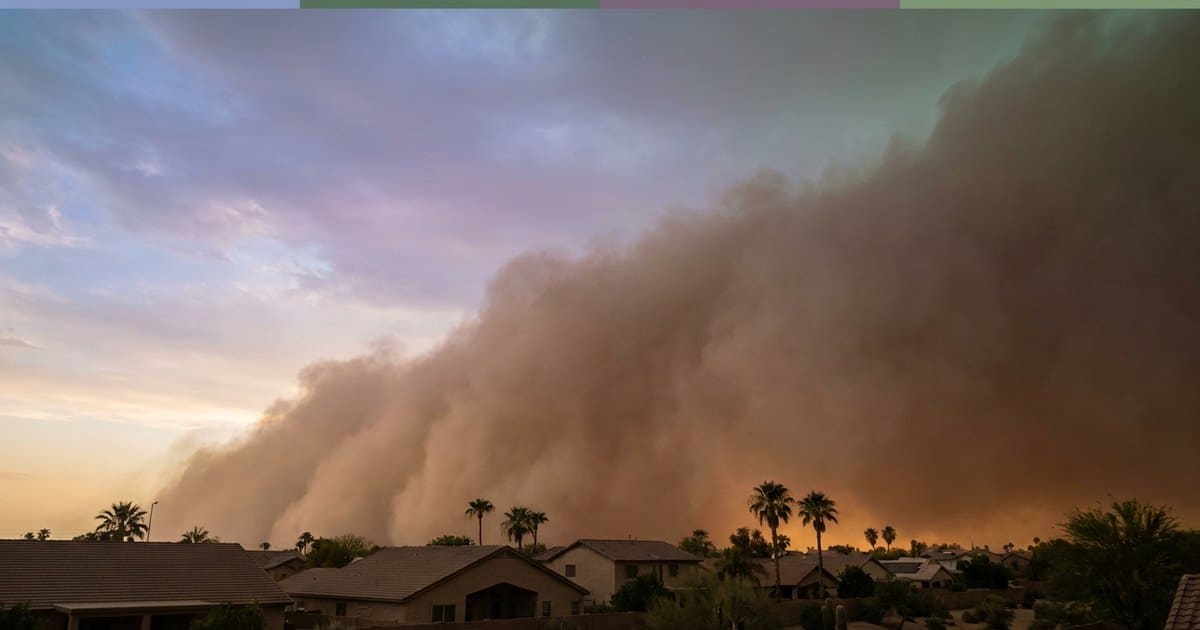
Picture this: a massive haboob rolls across Gilbert at sunset, turning the sky brown and dropping visibility to zero. You close your windows, seal your doors, and wait it out. But two days later, your furniture is coated in fine dust, your kids are coughing, and your allergy medication isn’t touching the irritation in your throat. You wonder: if everything was closed up, how did all that dust get inside?
Arizona’s extreme desert climate creates indoor air quality challenges not found in temperate regions. Monsoon dust storms (haboobs), low humidity, high pollen counts, and temperature swings drive dust, allergens, and pollutants into homes through HVAC systems. High-efficiency filtration (MERV 11–13), sealed ductwork, whole-home air purifiers, and humidity control (humidifiers in winter, dehumidifiers post-monsoon) reduce particulate loads and protect respiratory health year-round.
Your HVAC system is the primary gateway for outdoor air into your home. When that air carries desert dust, pollen, and mold spores, standard HVAC equipment designed for milder climates can’t keep up. The good news: targeted upgrades turn your HVAC system from a dust distribution network into an effective Indoor Air Quality: How HVAC Systems Impact Your Health defense system. This guide explains which upgrades address which problems, what’s essential versus optional, and what Arizona homeowners actually see after making changes. No pressure, no upselling: just the facts you need to breathe easier.
The Four Environmental Pressures That Degrade Indoor Air Quality in Arizona
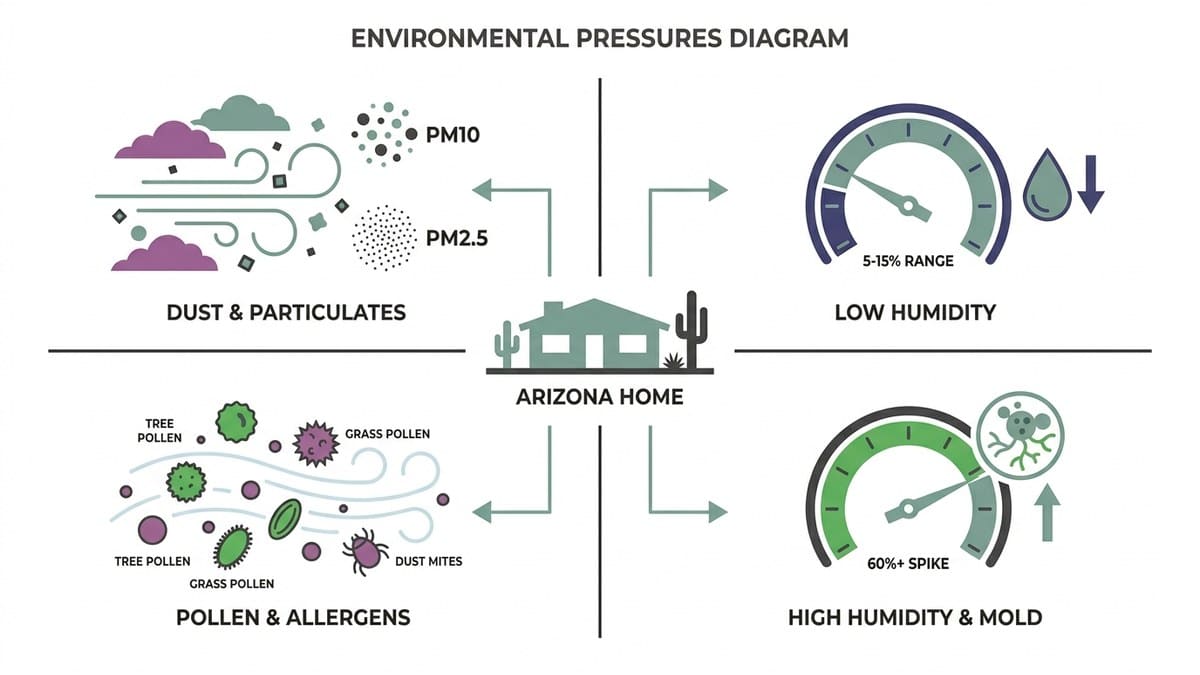
Arizona’s desert climate isn’t just hot. It creates a unique combination of environmental stressors that standard HVAC systems weren’t designed to handle. Understanding these four pressures helps you prioritize which upgrades will make the biggest difference in your home.
Monsoon Dust Storms (Haboobs) and Ambient Particulate Matter
Haboob season (June through September) brings walls of dust that can reach 10,000 feet high and travel at 60 mph. These storms carry PM10 and PM2.5 particulate matter: fine dust particles small enough to penetrate deep into your lungs. According to research on indoor air quality, indoor air pollutant concentrations can spike 2 to 5 times higher than outdoor levels during dust events, and in extreme cases reach 100 times higher in homes with poor filtration.
What most people don’t realize: your HVAC system pulls in outdoor air constantly. If you’re running a standard 1-inch fiberglass filter (MERV 6 to 8), it’s designed to protect your equipment from large debris, not to capture microscopic desert dust. Those fine particles sail through the filter, circulate through your ductwork, and settle on every surface in your home. Worse, they stay airborne for hours, triggering respiratory irritation, asthma attacks, and allergy symptoms even after the storm passes.
Low Outdoor Humidity (Winter Dryness)
Arizona’s winter humidity routinely drops into single digits. This bone-dry air causes immediate discomfort: nosebleeds, cracked skin, static shocks, and irritated sinuses. But it also worsens indoor air quality in a less obvious way. Studies on home health show that low humidity increases particulate suspension. Dust doesn’t settle when the air is too dry, so it stays airborne longer and you breathe more of it.
Your HVAC system moves air but doesn’t add moisture unless you install a whole-home humidifier. Most Arizona homes rely on portable units that struggle to humidify more than one room. The result: winter air that’s so dry it amplifies dust problems and makes respiratory irritation worse, especially for children and elderly family members.
High Pollen and Allergen Counts (Spring and Fall)
Desert plants like palo verde, mesquite, and olive trees produce heavy pollen loads during Arizona’s spring (February to May) and fall (September to November) bloom cycles. Post-monsoon, mold spores spike as standing water and increased humidity create growth conditions. Standard HVAC filters (MERV 6 to 8) can’t capture pollen grains or mold spores: they’re too small. Allergy sufferers experience worse symptoms indoors than outdoors because the HVAC system concentrates these allergens and recirculates them throughout the home. Our guide on HVAC Air Purification: Reduce Allergens, Dust & Contaminants explains how upgraded filtration blocks these particles before they reach your living spaces.
Monsoon Humidity Spikes and Biological Growth Risk
Arizona’s humidity is usually low, but monsoon rains (July to September) create temporary spikes. Outdoor humidity can jump from 15% to 60% within hours after a storm. Homes with evaporative coolers or poorly sealed ductwork become vulnerable to mold growth on coils, in drain pans, and inside ductwork. According to EPA guidance on HVAC filtration, biological contaminants thrive in these conditions if systems lack proper drainage and humidity control. That musty smell after monsoon season isn’t just unpleasant: it’s a sign that mold is colonizing somewhere in your HVAC system.
How Standard HVAC Systems Fail to Protect Arizona Homes from Poor Indoor Air Quality in Arizona Dust
Most HVAC systems installed in Arizona homes are designed to cool (and occasionally heat) your living spaces. Indoor air quality is an afterthought. Here’s why stock equipment falls short when faced with desert dust, allergens, and humidity extremes.
Low-MERV Filtration Can’t Capture Desert Particulates
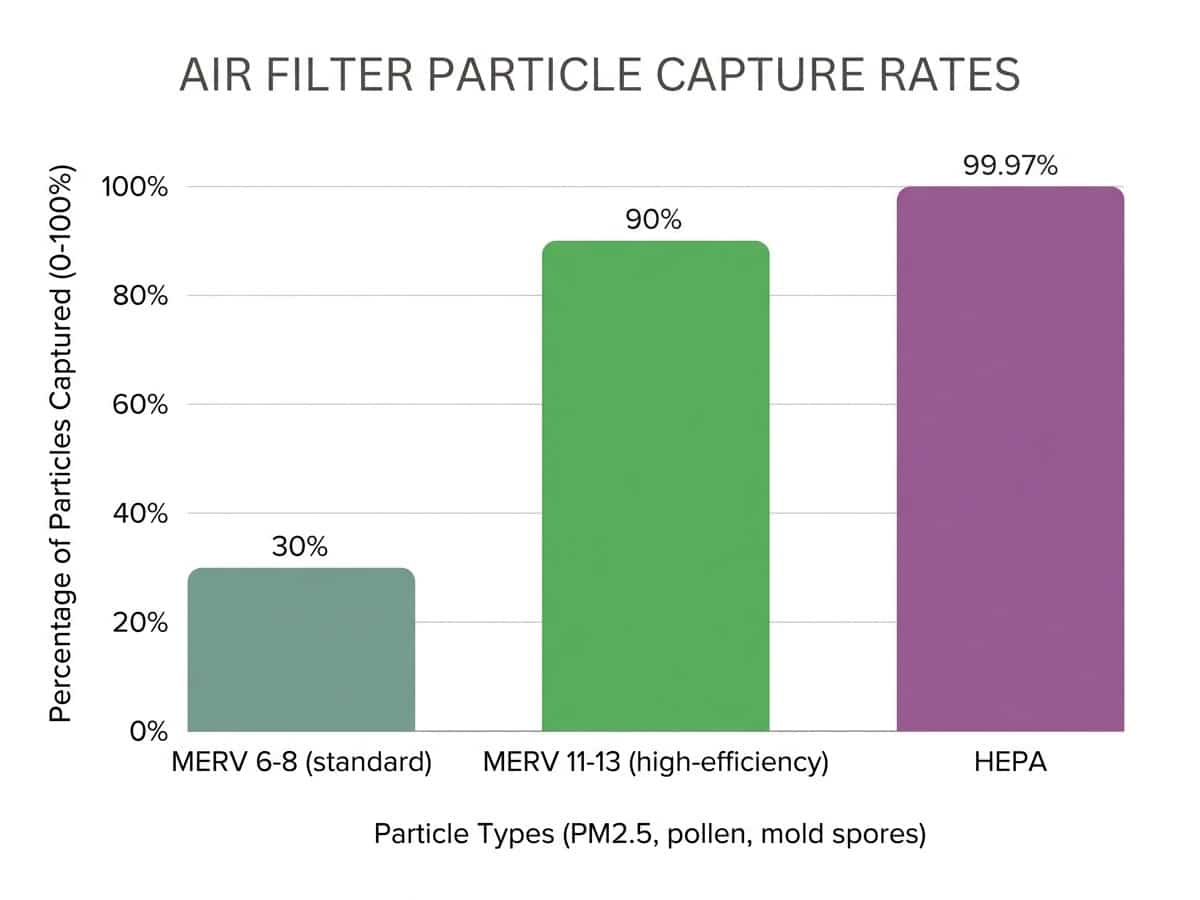
Your system probably shipped with a MERV 6 or MERV 8 filter: a thin fiberglass or pleated panel designed to keep large debris (dirt clods, insulation fibers, pet hair) out of your blower motor. According to EPA research on particulate filtration, standard filters in this range capture only a small fraction of harmful particles. This means most of the dust, pollen, and mold spores pulled in by your HVAC system circulate freely through your home.
MERV ratings measure a filter’s ability to capture particles of different sizes. MERV 6 to 8 filters catch particles larger than 10 microns (visible dust). PM2.5 (the fine dust in haboobs) is 2.5 microns or smaller: it sails right through. Pollen grains (5 to 10 microns) and mold spores (3 to 10 microns) fare only slightly better.
For Arizona’s air quality challenges, MERV 11 to 13 is the baseline. According to research on filtration effectiveness cited by the CDC, filters in this range capture the majority of particles down to 1 micron, including PM2.5, pollen, and most mold spores. The tradeoff: higher MERV ratings create more airflow resistance, so your system’s blower has to work harder. If your system wasn’t designed for high-efficiency filtration, upgrading the filter alone can strain the blower motor or reduce airflow too much. That’s why a professional assessment matters. We check static pressure and airflow before recommending a filter upgrade to make sure your system can handle it.
Leaky Ductwork Bypasses Filtration Entirely
Arizona’s building codes require airtight envelopes to reduce cooling costs, but older homes (pre-2000s) often have ductwork that leaks. Gaps at seams, disconnected joints, and holes worn by rodents allow unfiltered attic air to get sucked into your system every time the blower runs. That attic air carries dust, insulation fibers, rodent dander, and outdoor pollutants: none of which pass through your filter.
According to Energy Star data on air leak repair, homes with leaky ducts can lose 20 to 30% of conditioned air before it reaches living spaces. More relevant to indoor air quality in Arizona dust: those same leaks pull in contaminants that bypass filtration entirely. Sealing your ducts with mastic (not tape, which fails in Arizona heat) is a prerequisite for filtration upgrades to work. You can install a MERV 13 filter, but if 25% of your supply air is coming from unfiltered attic leaks, you’ll still see dust accumulation and allergy symptoms.
No Humidity Control Means Seasonal Extremes
Your HVAC system cools and heats air. It doesn’t add or remove moisture unless you’ve installed a humidifier or dehumidifier. Both extremes degrade indoor air quality in Arizona dust conditions, but standard HVAC systems do nothing to address them.
Winter dryness keeps dust airborne, irritates respiratory passages, and causes static shocks. Post-monsoon humidity creates mold growth conditions on coils, in drain pans, and inside ductwork.
Six HVAC Upgrades That Improve Indoor Air Quality in Arizona Dust
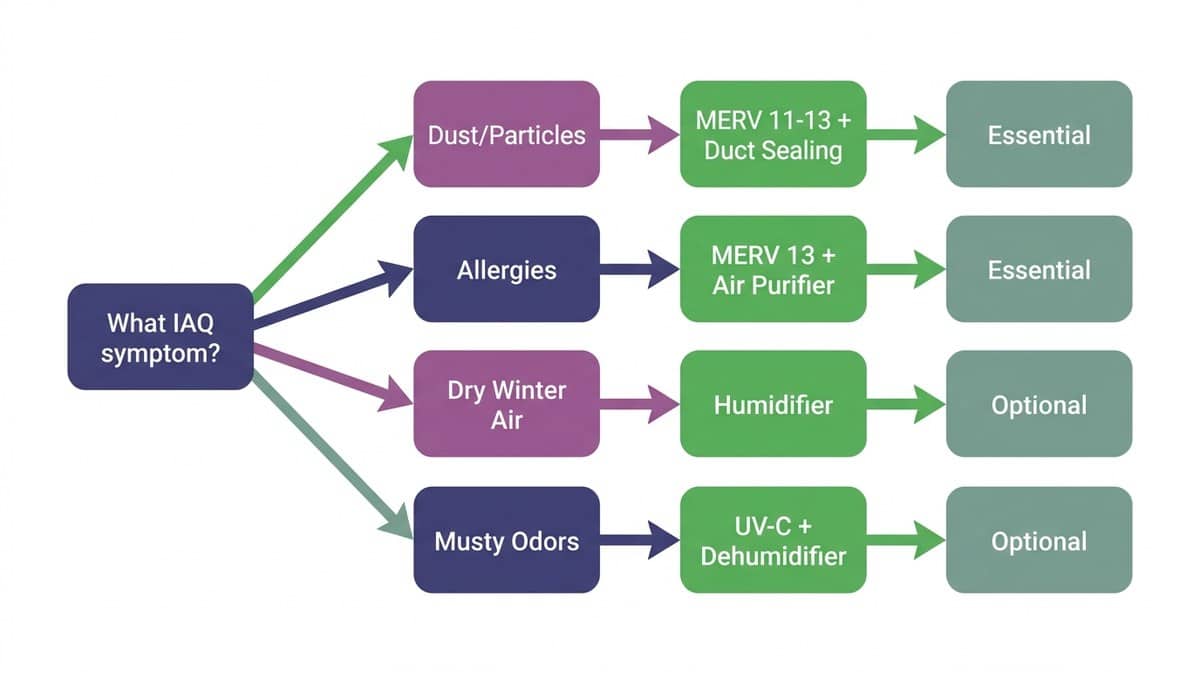
Not every home needs every upgrade. Your symptoms, your home’s age, and your family’s health profile determine what’s essential versus optional. Here’s what each solution does, which IAQ problem it solves, and who needs it.
High-Efficiency Filtration (MERV 11 to 13 or HEPA)
What it does: Replaces your builder-grade 1-inch filter with a pleated MERV 11 to 13 filter or a whole-home HEPA system. HEPA filtration (used in hospitals and cleanrooms) captures particles down to 0.3 microns, including bacteria and viruses.
Which problem it solves: Dust accumulation, respiratory irritation, allergy symptoms, asthma flare-ups triggered by airborne particulates.
Who needs it: Everyone in Arizona. This is the baseline upgrade. If you’re dusting your furniture more than once a week, experiencing allergy symptoms indoors, or have children or elderly family members with respiratory sensitivities, upgrade to MERV 11 to 13 immediately. HEPA is optional for most homes: it’s essential only for immune-compromised occupants or severe allergy sufferers who need hospital-grade filtration.
Whole-Home Air Purifiers (UV-C or Ionization)
What it does: UV-C lights installed in your ductwork or on your evaporator coil emit ultraviolet radiation that kills mold, bacteria, and viruses on contact. Ionization systems (also called needlepoint bipolar ionization or photocatalytic oxidation) release charged particles into the airstream that attach to and neutralize VOCs (volatile organic compounds), odors, and some airborne pathogens.
Which problem it solves: Biological contaminants (mold, bacteria, viruses), chemical odors from cooking or cleaning, musty smells from monsoon humidity.
Who needs it: Optional for most Arizona homes. Essential if you have persistent mold issues (visible growth, musty odors that don’t go away after cleaning), immune-compromised family members, or if your home uses an evaporative cooler (which increases mold colonization risk). UV-C is highly effective at preventing mold growth on coils and in drain pans. Ionization is better for neutralizing odors and VOCs.
The tradeoff: UV-C lights require annual bulb replacement (the UV output degrades over time). Research from the CDC on air cleanliness confirms that UV-C and ionization reduce biological loads, but they don’t replace filtration: they work alongside it. Our team at Air Conditioning | AC Technician Near Me can assess whether your home’s IAQ challenges justify adding a purifier or if filtration alone will get you where you need to be.
Duct Sealing and Cleaning
What it does: Sealing uses mastic (a sticky adhesive coating) or metal-backed tape to close gaps, seams, and disconnected joints in your ductwork. Cleaning removes accumulated dust, debris, mold, and contaminants from inside the ducts using specialized vacuums and brushes.
Which problem it solves: Unfiltered attic air infiltration, dust accumulation even with high-efficiency filters, musty odors, visible mold or debris in ducts.
Who needs it: Duct sealing is high-ROI for any Arizona home with ducts in the attic or crawlspace. If you see visible dust coating on supply registers, experience uneven temperatures between rooms, or smell musty odors when the system runs, your ducts probably leak. Duct cleaning is situational: only necessary if you see visible mold, heavy dust buildup, rodent contamination, or debris (construction dust, insulation fibers) inside the ducts. It’s not a routine maintenance task like changing filters. Most homes need sealing; some need cleaning.
The tradeoff: According to EPA guidance on improving indoor air quality, duct cleaning should be done only when contamination is confirmed. We inspect your ducts with a camera before recommending cleaning so you’re not paying for a service you don’t need. Our detailed post on Ductwork Cleaning: How Clean Ducts Save 10–15% on Cooling Costs in Arizona covers when cleaning makes sense and when it’s unnecessary.
Whole-Home Humidifiers (Winter)
What it does: A bypass or fan-powered humidifier installs on your HVAC supply plenum and adds moisture to dry winter air.
Which problem it solves: Winter dryness: nosebleeds, cracked skin, static shocks, irritated sinuses, increased airborne dust (particles don’t settle in low humidity).
Who needs it: Families with young children or elderly members who experience winter respiratory discomfort. If your family uses nasal saline sprays daily or you wake up with nosebleeds from November to March, a whole-home humidifier will make a noticeable difference. It’s optional if you don’t have symptoms, but it improves comfort and reduces particulate suspension year-round.
Whole-Home Dehumidifiers (Post-Monsoon)
What it does: A whole-home dehumidifier installs alongside your HVAC system and removes excess moisture from indoor air.
Which problem it solves: Post-monsoon humidity spikes, musty odors, mold growth on coils or in ducts, condensation on windows.
Who needs it: Less common in Arizona than humidifiers, but critical for homes with evaporative coolers, poor attic ventilation, or monsoon-season mold issues. If you smell musty odors in July to September, see condensation on windows, or have visible mold growth that returns after cleaning, you need dehumidification. It’s optional if your AC keeps humidity stable and you don’t experience monsoon mold problems.
Energy Recovery Ventilators (ERV)
What it does: An ERV brings fresh outdoor air into your home while exhausting stale indoor air, without losing heating or cooling energy. It transfers heat and moisture between the incoming and outgoing airstreams using a heat exchanger core, so you get ventilation without a big energy penalty.
Which problem it solves: Airtight homes (built to Arizona Energy Code standards) that trap pollutants because there’s no natural air exchange. ERVs dilute indoor contaminants (CO2, VOCs, odors) by replacing stale air with fresh outdoor air, while the filtration system cleans the incoming air.
Who needs it: Optional for most single-family homes. Essential for super-insulated or multi-occupant homes (multi-generational families, home offices, large households) where occupant density creates elevated CO2 and odor levels. According to research on indoor air quality, modern energy codes require airtight building envelopes, but this creates a new problem: buildings sealed to airtightness standards without ventilation upgrades can develop elevated pollutant concentrations. If your home feels stuffy even with the AC running, or CO2 monitors show levels above 1,000 ppm, an ERV is worth considering.
The tradeoff: ERVs are the most expensive IAQ upgrade. They require ductwork modifications and annual core cleaning. Most Arizona homeowners get 90% of the IAQ improvement they need from filtration plus duct sealing plus humidity control. ERVs are the final 10% for homes with specific ventilation challenges. Our Top-Rated Most Reliable Top-Quality AC & Heating Services include system assessments that identify whether your home would benefit from ventilation upgrades or if simpler solutions will meet your needs.
Real-World IAQ Wins: What JLM Customers See After HVAC Upgrades
Numbers and technical specs matter, but nothing beats hearing what actually changes after you upgrade. Here are two examples from our install history that show how targeted HVAC improvements deliver measurable relief.
A Gilbert family with two asthmatic kids was dusting twice a week and still seeing a visible layer of fine particulate on furniture and windowsills within days of cleaning. Every haboob meant both kids reached for their rescue inhalers multiple times. We assessed their system and found three problems: MERV 6 filters that couldn’t capture PM2.5, 14 duct leaks in the attic pulling in unfiltered air, and a 12-year-old blower motor running at reduced capacity. We sealed the ducts with mastic, upgraded to a 4-inch MERV 13 media filter cabinet, and confirmed the blower could handle the increased static pressure. Three months later, the parents reported dusting once every two weeks (down from twice weekly), and the kids’ inhaler use dropped by half during monsoon season. The difference wasn’t subtle: it was the kind of improvement that changes daily quality of life.
A Queen Creek homeowner called us after every monsoon season brought a musty smell that wouldn’t go away even after cleaning. He’d tried portable dehumidifiers, air fresheners, and duct cleaning from another company, but the odor returned within weeks. We found mold colonizing the evaporator coil and drain pan: his 15-year-old AC had a clogged drain line that kept the pan wet, and monsoon humidity spikes accelerated growth. We replaced the aging AC with a high-efficiency unit, installed a UV-C light on the new coil to prevent future colonization, and added a whole-home dehumidifier to manage post-monsoon humidity spikes. He hasn’t smelled mold since, and his family stopped experiencing the post-storm sinus congestion that had become routine. Our HVAC System | AC Technician Near Me services include IAQ assessments that identify the root cause of air quality problems so upgrades deliver lasting results, not temporary fixes.
How to Choose the Right IAQ Upgrades for Your Arizona Home
Start with your symptoms. What are you experiencing?
If you’re seeing dust accumulation (coating on furniture, visible particles floating in sunlight, frequent dusting): your problem is particulate filtration. Start with MERV 11 to 13 filters and duct sealing. This combination addresses most dust complaints in Arizona homes.
If family members have allergy or asthma symptoms that worsen indoors: upgrade to MERV 13 filtration first, then consider adding a whole-home air purifier (UV-C or ionization) if symptoms persist after three months of high-efficiency filtration. Don’t skip the filtration step: purifiers work alongside filters, not instead of them.
If you’re experiencing winter dryness (nosebleeds, static, dry skin, irritated sinuses): you need a whole-home humidifier. Portable units can’t humidify a whole house effectively in Arizona’s single-digit winter humidity.
If you smell musty odors or see visible mold: start with a professional inspection to locate the source. If mold is growing on coils, in drain pans, or in ducts, you need cleaning plus UV-C installation plus possibly a dehumidifier for post-monsoon humidity control.
If your home feels stuffy even with the AC running: check your ductwork for leaks first (this is the most common cause of poor air circulation). If ducts are sealed and you’re still experiencing stuffiness, consider an ERV to bring in fresh outdoor air.
What’s essential versus optional? High-efficiency filtration (MERV 11 to 13) and duct sealing are essential for every Arizona home: they address the baseline air quality challenges created by desert dust and leaky ductwork. Everything else is situational. Humidifiers, dehumidifiers, air purifiers, and ERVs solve specific problems. If you’re not experiencing those problems, you don’t need those solutions.
Not every home needs every upgrade. A free consultation and system assessment will identify which solutions address your specific IAQ challenges. We’ll walk through your home, test your system, and recommend what’s needed (and what’s optional) based on your symptoms, your home’s age, and your family’s health profile. No pressure, no upselling: just honest recommendations backed by 3,000+ installs across the East Valley. You can schedule your free consultation online or read more in our Blog | HVAC Tips & Updates for Gilbert, AZ Residents for seasonal IAQ guidance.
Maintaining Your HVAC System to Protect Indoor Air Quality Year-Round
Installing IAQ upgrades is step one. Maintaining them is how you protect the investment and keep your air clean long-term.
Change filters on schedule. MERV 11 to 13 filters trap more particles, which means they clog faster than builder-grade filters. Check your filter monthly during haboob season (June to September) and every 1 to 3 months the rest of the year. If the filter looks gray or brown, replace it: a clogged filter restricts airflow and forces your blower to work harder. Post-haboob, inspect your filter within 48 hours.
Schedule annual tune-ups. Professional maintenance catches problems before they degrade IAQ. We clean coils (mold and dust accumulate on evaporator coils even with good filtration), check drain pans and lines (clogs cause standing water and mold growth), inspect ductwork for new leaks, test humidity levels, and verify that air purifiers and UV-C lights are operating correctly. Customers on our maintenance plans replace filters less often than homeowners who skip tune-ups because we catch duct leaks and coil fouling before they accelerate filter clogging.
Monitor humidity year-round. Buy a simple hygrometer (available at hardware stores for under $20) and place it in your main living area. If you see condensation on windows or smell musty odors, your humidity is too high. If you experience static shocks or nosebleeds, it’s too low.
Inspect after major dust storms. After haboobs, walk through your home and check supply registers for visible dust. If you see dust coating the register grilles, it means particles are getting past your filter: either the filter is undersized for the dust load, or you have duct leaks pulling in unfiltered air. Don’t wait for your next scheduled filter change. Inspect and replace if necessary.
IAQ isn’t a one-time upgrade. It’s an ongoing system that requires attention, but the payoff is significant: fewer respiratory symptoms, less cleaning, better sleep, and a home environment that protects your family’s health. The whole-home air purification systems we install are designed for long service lives with minimal maintenance: annual bulb changes for UV-C, filter replacements, and tune-ups are the extent of it.
Frequently Asked Questions About Indoor Air Quality in Arizona
Do I need to replace my HVAC system to improve indoor air quality?
No. Most IAQ upgrades (filtration, air purifiers, humidifiers, dehumidifiers, duct sealing) work with your existing system. A system replacement is only necessary if your current unit is undersized for your home, running inefficiently (15+ years old), or nearing end-of-life with multiple component failures. If your AC cools effectively and your furnace heats reliably, IAQ upgrades can be added without replacing the base system. Residents across the East Valley can learn more about professional HVAC System Repairs & Upgrades that work with existing equipment.
How often should I change air filters in Arizona?
Every 1 to 3 months, depending on MERV rating, occupancy, pets, and dust storm frequency. Higher MERV filters (11 to 13) trap more particles but clog faster than builder-grade filters. Homes with pets or multiple occupants need more frequent changes. Post-haboob, inspect your filter immediately: major dust storms can clog a standard 1-inch filter within 48 to 72 hours. If the filter looks gray, brown, or clogged, replace it regardless of how long it’s been installed. A clogged filter restricts airflow, strains your blower motor, and reduces IAQ because the system can’t circulate air effectively. During extreme summer heat, our guide on Why Summer in Mesa Demands Fast AC Repair explains why filter maintenance becomes even more critical when systems run continuously.
Will air purifiers eliminate all allergens and dust?
No single solution is 100% effective. IAQ is a system: high-efficiency filtration plus air purification plus duct sealing plus humidity control work together to reduce allergen and particulate loads substantially. Complete elimination isn’t realistic because new particles are introduced every time a door opens, every time you cook, every time the HVAC system brings in outdoor air. The goal is to reduce contaminant levels to the point where symptoms disappear or become manageable. Most customers see dramatic improvement (from dusting twice weekly to once every two weeks, from daily allergy medication to occasional use), but don’t expect a sterile environment: that’s not achievable in a lived-in home.
Are whole-home humidifiers and dehumidifiers worth the cost?
If your family experiences winter nosebleeds, static, dry skin, or respiratory irritation (humidifier need), or post-monsoon mold growth and musty odors (dehumidifier need), yes: the comfort and health benefits justify the investment. If you don’t experience these symptoms, they’re optional. Arizona’s humidity extremes make these upgrades high-ROI for families with respiratory sensitivities, young children, or elderly members. Annual maintenance (cleaning water panels, checking drain lines) is minimal. Most customers report noticeable improvement in comfort within days of installation. For homes exploring ductless options, our article on How Mini Split Installation Works from Start to Finish covers systems that can pair with standalone humidity control equipment.
Conclusion: Take Control of Your Home’s Air Quality with the Right HVAC Upgrades
Arizona’s desert climate is tough on indoor air quality in Arizona dust conditions. Haboob season brings dust that infiltrates even sealed homes. Winter dryness keeps particles airborne and irritates respiratory passages. Spring and fall pollen loads trigger allergy symptoms that worsen indoors. Post-monsoon humidity spikes create mold growth conditions. Your HVAC system is the primary mechanism for managing all of these challenges, but only if it’s equipped with the right upgrades.
You don’t have to live with dust coating your furniture days after cleaning, or watch your kids reach for inhalers every time a dust storm rolls through. High-efficiency filtration (MERV 11 to 13), sealed ductwork, whole-home air purifiers, and humidity control protect your family’s health and comfort year-round. Not every home needs every upgrade. What’s essential for one family may be optional for another, depending on symptoms, home age, and occupant health.
Top-Rated Most Reliable Top-Quality AC & Heating Services will assess your home, explain what’s driving your IAQ problems, and recommend the upgrades that make sense for your budget and goals. No pressure, no upselling: just transparent recommendations from a team that’s lived in the East Valley for years and knows what works in Arizona’s desert climate. We’ve installed and upgraded HVAC systems in 3,000+ homes across Gilbert, Queen Creek, and Apache Junction. We know which solutions deliver results and which are expensive gimmicks.
Ready to breathe easier? Call now: 602-619-3609 for a free consultation and IAQ assessment. We’ll walk through your home, test your system, and recommend the upgrades that will make the biggest difference. You can also schedule your free consultation online and take the first step toward cleaner, healthier indoor air.