Seasonal AC maintenance breaks into three phases: spring prep (March to April: filter change, thermostat check, pro tune-up before cooling season), summer monitoring (May to September: monthly filter inspections, drain line flushing, coil cleaning), and fall shutdown prep (October to November: system cleaning, outdoor unit cover, pro heating inspection). Each season’s tasks prevent breakdowns, lower energy bills, and extend equipment life by catching small issues before they become expensive emergency repairs.
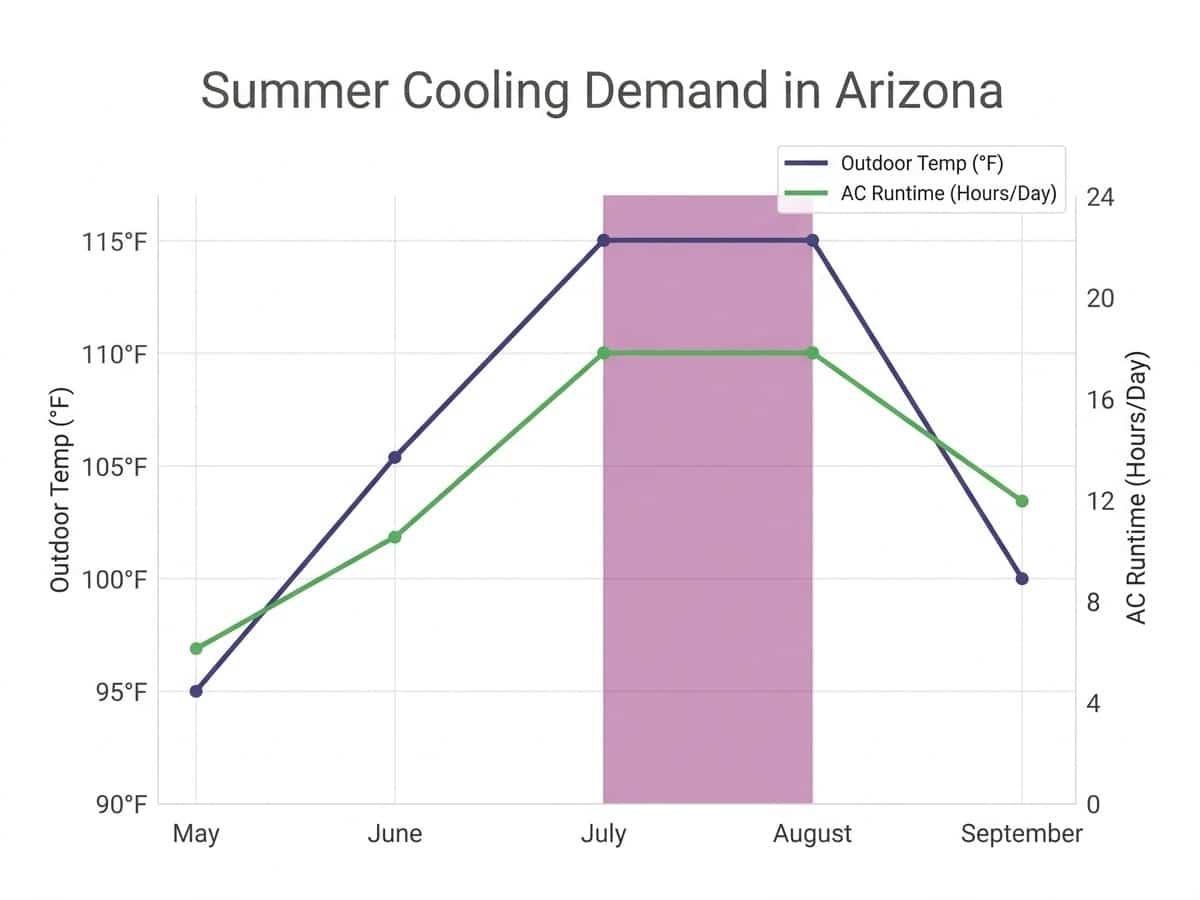
Living in the East Valley, you know how hard Arizona’s climate is on your air conditioning system. Three to four months of 110°F+ temperatures put extreme stress on every component: compressor, evaporator coil, blower motor, capacitor. This guide walks you through exactly what to do in spring, summer, and fall to keep your AC running strong, which tasks you can handle yourself in 15 minutes, and which require a licensed technician.
Schedule our spring AC tune-up service before the cooling season hits full force.
Why Seasonal AC Maintenance Matters (And What Skipping It Costs You)
A spring tune-up costs around $200. A mid-summer compressor capacitor replacement during an emergency call costs $650 or more. The difference isn’t just money. It’s the five-day wait when your house is 95°F inside and your family is sleeping in the coolest room with box fans.
Preventive maintenance catches small failures before they cascade. A dirty filter reduces airflow, which forces your blower motor to work harder, which overheats the motor, which eventually burns it out. According to a NADCA study, preventive HVAC maintenance (including coil cleaning and filter changes) boosts system efficiency and airflow, directly lowering energy bills and extending equipment life.
Arizona’s 110°F summers and 3 to 4 month cooling season put extreme stress on systems. Neglect means a mid-July breakdown when every HVAC company is booked days out. Organic searches for emergency AC repair and seasonal tune-up content both peak during summer, when homeowners realize they should have scheduled that spring inspection. The highest-value customers are the ones who catch problems early through consistent maintenance rather than waiting for catastrophic failure.
Homeowners who follow comprehensive care (half DIY tasks, half professional inspections) rarely make emergency calls. They save money, stay comfortable, and get 15 to 20 years out of equipment that neglected systems burn through in 10.
Spring AC Maintenance Checklist (March to April: Prep Before Cooling Season)
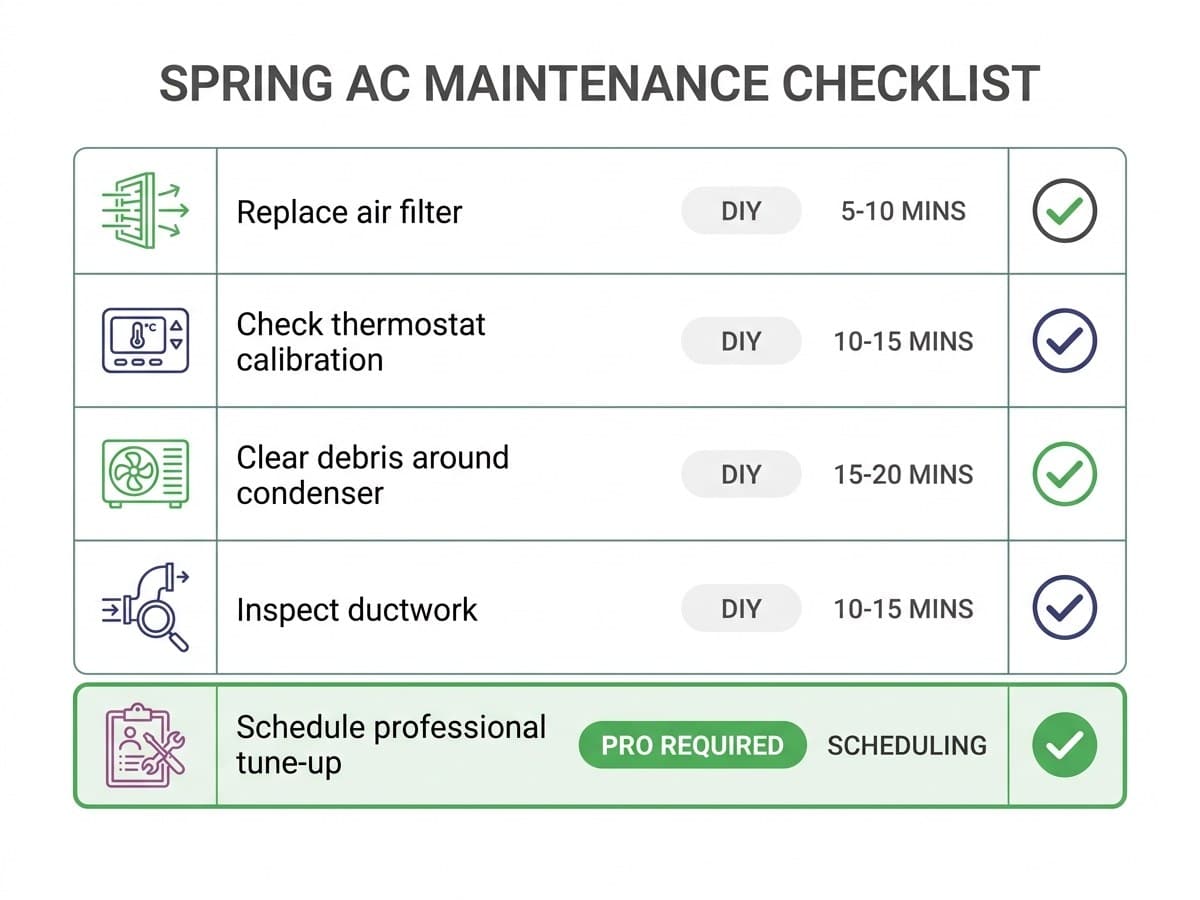
Spring is your pre-season tune-up window. These tasks prepare your system for the Arizona summer gauntlet: May through September, 110°F days, constant AC load. Half of these you can do yourself in under an hour. The other half require a licensed technician because refrigerant handling, electrical diagnostics, and safety control verification require EPA certification and specialized tools.
Replace or clean air filters
DIY task, 5 minutes, $15 to $30 per filter.
Clogged filters restrict airflow and force your blower motor to work harder, shortening its life. According to ENERGY STAR guidelines, regular filter replacement is one of the most cost-effective maintenance tasks for improving system efficiency. In Arizona’s dusty climate, check your filter monthly during cooling season. Standard 1-inch pleated filters work for most homes. If you have pets or allergies, consider a MERV 8 or MERV 11 filter for better particle capture.
Check and calibrate thermostat
DIY task, 10 minutes.
An inaccurate thermostat means an uncomfortable home and wasted energy. Test it with a separate thermometer placed next to the thermostat. If the reading is off by more than 2°F, recalibrate following your thermostat’s manual or upgrade to a programmable or smart model. Programmable thermostats let you auto-raise the temperature when you’re away, cutting cooling costs without sacrificing comfort when you’re home.
Clear debris around outdoor condenser unit
DIY task, 15 minutes.
Remove leaves, cottonwood fluff (a major Arizona spring hazard), and dirt buildup from around your outdoor unit. Maintain a two-foot clearance on all sides for proper airflow. Blocked condenser coils can’t dissipate heat, which raises head pressure, strains the compressor, and shortens equipment life.
Inspect ductwork for visible leaks
DIY visual check, 20 minutes.
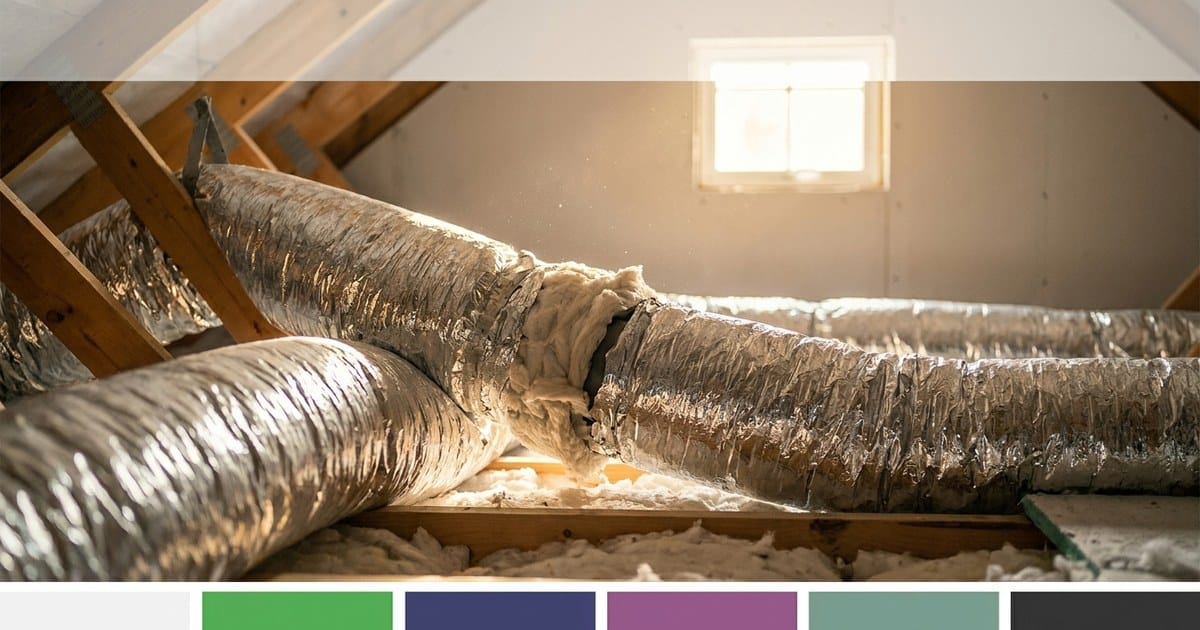
Energy.gov reports that leaky ducts can waste 20% to 30% of your conditioned air. In accessible areas like your attic or crawlspace, look for disconnected joints, torn insulation, or daylight visible through duct seams. Mark problem areas with tape or a marker so a professional can seal them during your spring tune-up.
Schedule a professional spring tune-up
Professional service required, $150 to $250, 60 to 90 minutes.
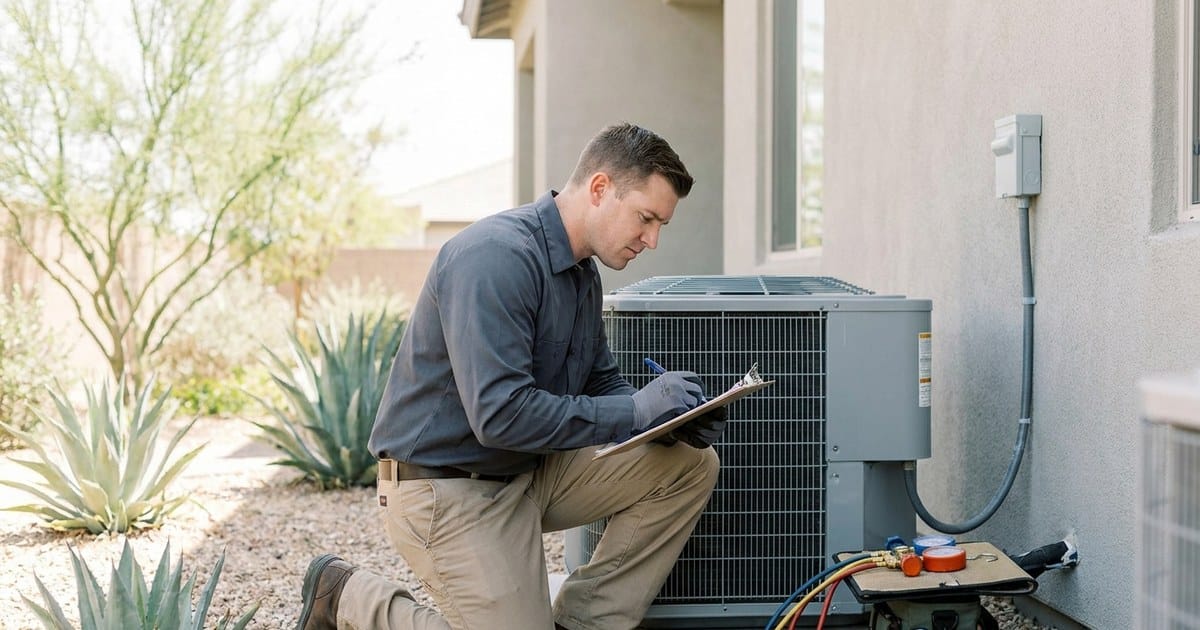
This is the task that prevents the $600+ emergency breakdown in July. A licensed technician performs a comprehensive inspection: refrigerant charge check, electrical connection tightening, evaporator and condenser coil cleaning, condensate drain line flush, blower motor lubrication, capacitor testing (capacitors are the #1 summer failure point), and safety control verification.
You’ll talk directly to Bill or one of his trained technicians (not a call center) and get a transparent quote with no hidden fees before any work starts. That’s the JLM difference: owner on the job, honest assessments, and quality workmanship you can trust. Recurring maintenance drives long-term customer value by preventing expensive failures and keeping systems running efficiently year after year. Schedule our spring tune-up before May hits.
Summer AC Maintenance Checklist (May to September: Monitor & Maintain During Peak Cooling Season)
Summer is the active-use phase. Arizona’s brutal heat (110°F+ days, three to four months of constant AC load) means your system is working harder than almost anywhere else in the country. These monthly and mid-season tasks keep your equipment running strong when failure is most expensive and inconvenient. If you notice any warning signs during summer, don’t wait for the system to quit. Call for same-day emergency AC repair immediately.
Check air filter monthly (and replace if dirty)
DIY task, 5 minutes.
During heavy use, filters clog faster. A dirty filter in July can reduce airflow enough to freeze your evaporator coil (ice buildup on the indoor unit means no cooling and an emergency service call). Pull it out, hold it up to light, and replace it if you can’t see through it clearly.
Inspect condensate drain line for clogs
DIY task, 10 minutes.
Arizona’s low humidity means less condensate than humid climates, but dust and algae still clog the drain pan and line over time. A clogged drain causes water overflow, which damages drywall, ceilings, and flooring and triggers the system’s safety shutdown. Every four to six weeks during summer, flush the drain line with a 50/50 vinegar and water solution. Locate the drain line access port (usually a PVC pipe with a cap near your indoor unit), pour in the solution, let it sit for 30 minutes, then flush with water.
Clean outdoor condenser coils
DIY with garden hose, 20 minutes (or professional deep clean, $100 to $150).
Dust, cottonwood seeds, and dirt coat the outdoor coil fins, blocking heat dissipation and forcing your compressor to work harder. Turn off power to the unit at the breaker, then gently spray the coils with a garden hose from the inside out. Use a soft stream, not a pressure washer, to avoid bending the delicate aluminum fins. For heavy buildup or if you’re uncomfortable working around electrical components, hire a professional.
Listen and watch for warning signs
DIY, ongoing.
Strange noises (grinding, squealing, banging), weak airflow from vents, ice on the indoor unit, thermostat cycling on and off rapidly, or rooms that won’t cool evenly are red flags that something is failing. A repair today prevents a compressor replacement next month. Emergency repair calls peak in summer when systems fail under maximum load. We’re available 24/7 and dispatch the same day.
Check thermostat settings and programming
DIY task, 5 minutes.
Setting your thermostat to 76 to 78°F is efficient and comfortable. Dropping it to 70°F when it’s 110°F outside makes your system run nonstop, drives your electric bill up, and wears out components faster. Federal energy efficiency programs recommend optimizing thermostat settings as a key strategy for reducing HVAC energy consumption. For more guidance on recognizing when your system needs professional attention, read our complete AC maintenance checklist.
Fall AC Maintenance Checklist (October to November: Shut Down Cooling & Prep Heating)
Fall is the transition phase. Arizona’s October and November weather is temperate (cooling demand drops and many homeowners shift to heating or enjoy the break from running HVAC constantly). These tasks clean up after summer’s heavy use and prep your system for winter or next spring’s cooling season.
Final filter change of cooling season
DIY task, 5 minutes.
Replace your air filter one last time after summer’s heavy use. Start the heating season or idle period with a clean filter to avoid circulating dust when you fire up the furnace in December.
Clean or cover outdoor condenser unit
DIY task, 30 minutes.
Spray down your outdoor unit one last time to remove summer dust and debris buildup. If you won’t use your AC again until April, consider a breathable condenser cover (not a plastic tarp; plastic traps moisture and causes rust). Arizona’s mild winters mean you likely won’t need full winterization, but keeping the unit clean and clear protects it during the off-season. If you have a mini-split system, check our guide on how often mini-splits need maintenance in Mesa for season-specific care tips.
Inspect and clean indoor vents and registers
DIY task, 20 minutes.
Vacuum dust from supply and return vents. Check that furniture, rugs, or storage boxes aren’t blocking airflow. Blocked vents force your system to work harder and create uneven heating or cooling.
Test your heating system before you need it
DIY task, 10 minutes.
Turn your thermostat to heat mode and raise the temperature 5°F above the current indoor temperature. Does warm air come out within five minutes? Burning dust on the first use is normal. A strong gas smell is NOT normal. If you smell gas, shut off the system immediately, leave the house, and call both the gas company and a licensed HVAC technician.
Schedule a professional fall heating inspection
Professional service required, $100 to $200, 45 to 60 minutes.
Before winter arrives, have a licensed technician inspect your furnace or heat pump. The inspection includes checking gas connections (if you have a gas furnace), testing the ignition system, inspecting the heat exchanger for cracks (a cracked heat exchanger is a carbon monoxide hazard and requires immediate replacement), lubricating the blower motor, and verifying safety controls.
JLM’s maintenance plan customers get priority scheduling and discounts on repairs, plus a comprehensive inspection that catches small issues before they become winter emergencies. Learn more about the benefits of our professional maintenance plans.
DIY vs. Professional: What You Can (and Shouldn’t) Do Yourself
Some maintenance tasks are straightforward: changing filters, clearing debris, visual inspections, testing your thermostat. Others require EPA certification (refrigerant handling), electrical licensing (wiring diagnostics), or specialized tools (refrigerant gauges, combustion analyzers).
You CAN safely do yourself: Filter changes, thermostat adjustments, outdoor unit debris clearing, condensate drain flushing with vinegar and water, visual ductwork inspections, vent cleaning, and basic system testing.
You SHOULD NOT attempt yourself: Refrigerant charging or leak repair (requires EPA 608 certification), electrical component replacement (capacitors, contactors, wiring), gas furnace combustion testing (carbon monoxide risk), heat exchanger inspection, ductwork sealing or modification, and compressor or evaporator coil replacement.
Handling refrigerant without EPA certification is a federal violation. Mishandling electrical components can cause fires, electrocution, or equipment damage that voids your warranty. Gas furnace repairs done wrong create carbon monoxide leaks.
When you call JLM for professional service, you’re paying for licensed, insured technicians trained on major systems, and you’ll get a transparent quote before any work starts. Bill is often on the job himself, so you’re dealing with the owner, not a corporate call center.
Common Mistakes Homeowners Make (And How to Avoid Them)
Skipping the spring tune-up because the system is running fine. Your AC might be running, but is it running efficiently? A spring tune-up catches problems when they’re small and cheap to fix. Follow our preventative maintenance tips to stay ahead of costly failures.
Using a pressure washer on condenser coils. High-pressure water bends the delicate aluminum fins, which blocks airflow and reduces efficiency. Use a garden hose with a soft stream, spraying from the inside out.
Neglecting the condensate drain until water overflows. By the time you see water pooling under your indoor unit, the drain pan is full and the system has likely shut down on the safety float switch. Check and flush the drain line every four to six weeks during summer.
Setting the thermostat to 68°F in 110°F heat. Your AC is not designed to maintain a 42-degree temperature differential. It will run nonstop, never reach the setpoint, waste energy, and wear out faster. Set your thermostat to 76 to 78°F during peak heat. If you’re noticing your system struggling, read our guide on how to tell if you need an AC maintenance service soon to catch problems early.
Keep Your AC Running Strong, Season After Season
Seasonal AC maintenance isn’t optional in Arizona. It’s the cheapest insurance against expensive breakdowns, high energy bills, and a house that won’t cool when you need it most. Follow this checklist: handle the DIY tasks monthly during summer, schedule professional tune-ups in spring and fall, and watch for warning signs year-round. You’ll extend your equipment’s life by five to ten years and avoid the stress of mid-summer emergencies.
If your AC needs a professional tune-up or you’ve noticed any of the warning signs above, don’t wait. Call JLM’s team now. We offer same-day service, transparent pricing, and honest assessments from licensed technicians who live and work in the East Valley.
Call now: 602-619-3609 to schedule your spring, summer, or fall maintenance visit. We’re here to keep your family comfortable all year long.