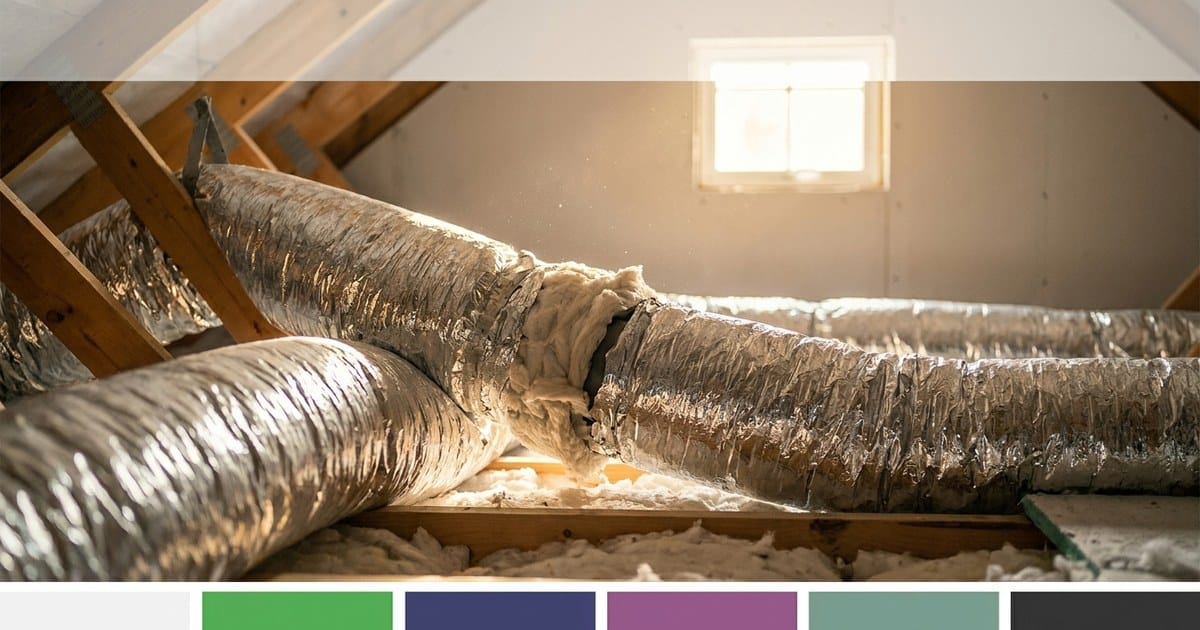
Duct sealing fixes leaks and gaps in your ductwork to stop conditioned air from escaping into attics, crawl spaces, or walls, boosting efficiency and lowering utility bills. Duct cleaning removes dust, debris, and allergens that have built up inside the ducts, improving indoor air quality and airflow. You need sealing if your system runs constantly, bills are rising, or rooms stay uneven. You need cleaning if you see visible dust around vents, smell musty odors, or have worsening allergies. Many homes benefit from both, but each addresses a different problem.
If you’ve noticed your AC running nonstop during Gilbert’s summer or dust settling on your furniture hours after you cleaned, you’ve probably asked yourself: do I need duct sealing, duct cleaning, or both? These two services sound similar, but they solve completely different problems. One fixes energy waste, the other tackles air quality. Understanding which service your home actually needs (or whether you need neither) can save you money and prevent unnecessary work.
At JLM Air Conditioning & Heating, we’ve performed 3,000+ system installs and inspections across the East Valley. We’ve seen firsthand how homeowners get confused about what’s truly needed. Drawing on extensive field data from our service database and NADCA-certified inspection protocols, here’s how to know which service applies to your situation.
What Duct Sealing Actually Does (and When You Need It)
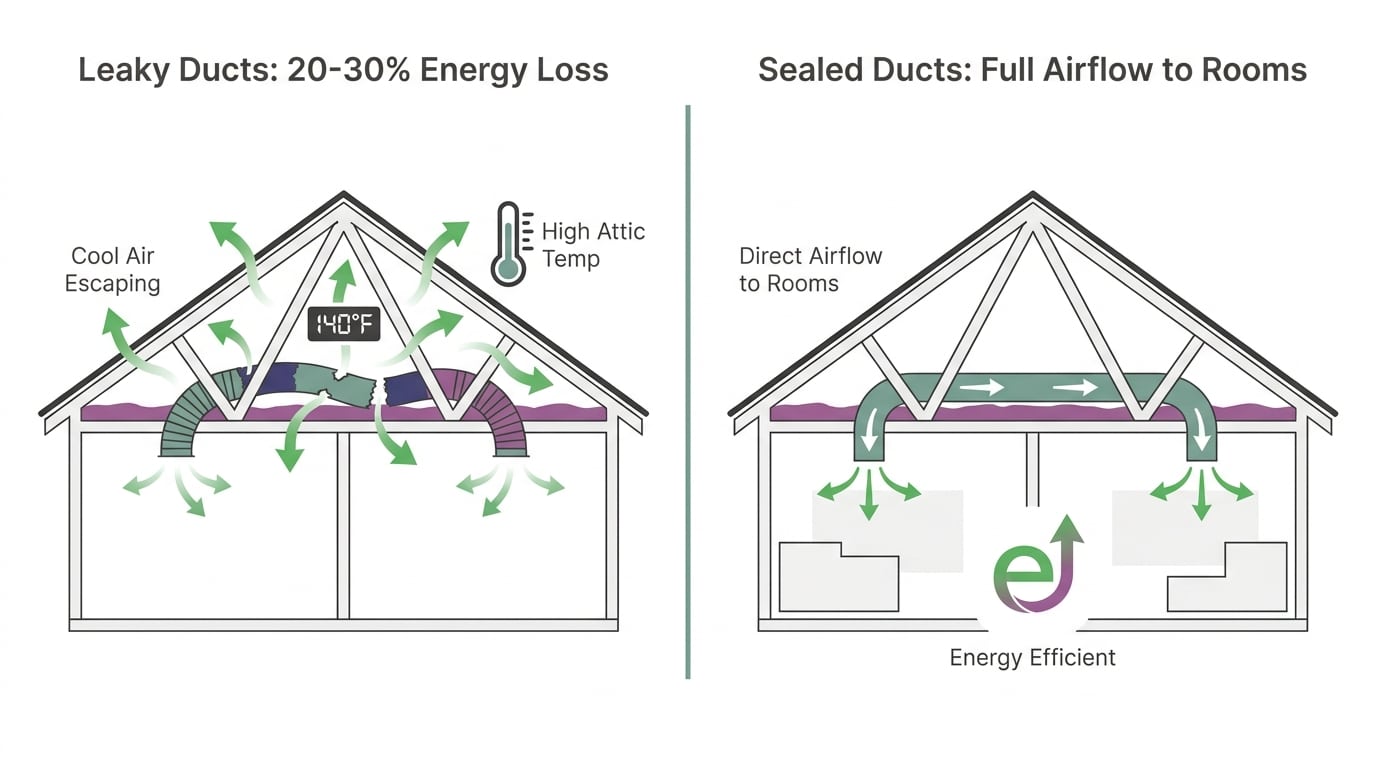
Duct sealing closes leaks, gaps, and disconnected joints in your ductwork so that conditioned air travels from your HVAC system to your rooms without escaping along the way. According to ENERGY STAR, 20-30% of the air moving through a typical duct system escapes through leaks, holes, and poorly connected ducts. That’s a significant loss, especially when you’re trying to cool a home in 110°F heat.
Professional duct sealing uses one of three methods: mastic sealant (a thick adhesive applied by hand to joints and seams), metal-backed tape (not standard duct tape, which fails quickly), or Aeroseal (an automated process that seals leaks from the inside using aerosolized particles). All three methods work, but mastic and Aeroseal are the most durable. The goal is the same: keep every cubic foot of cooled air moving where it belongs, so your system doesn’t have to work overtime replacing what leaked into your attic.
Common Signs Your Ducts Are Leaking
You don’t need a technician to spot the major symptoms of leaky ducts. Watch for these red flags:
- Persistent hot or cold spots. One bedroom stays warm while the rest of the house cools down, even with vents fully open.
- Unusually high summer bills. Your cooling costs jumped 15-20% with no change in usage or equipment.
- HVAC runs constantly. The system never shuts off because it’s struggling to reach the set temperature.
- Excessive dust despite clean filters. You replaced the filter last month, but surfaces still collect dust within a day or two.
- Visible gaps or disconnected joints. If you have accessible ductwork in the attic, garage, or crawlspace, look for sections that have pulled apart or show gaps wider than a pencil.
Any one of these symptoms suggests your ducts are leaking conditioned air where you’re not paying for it to go. Why Summer in Mesa Demands Fast AC Repair explains how extreme heat amplifies the cost of these inefficiencies.
How Duct Sealing Saves You Money
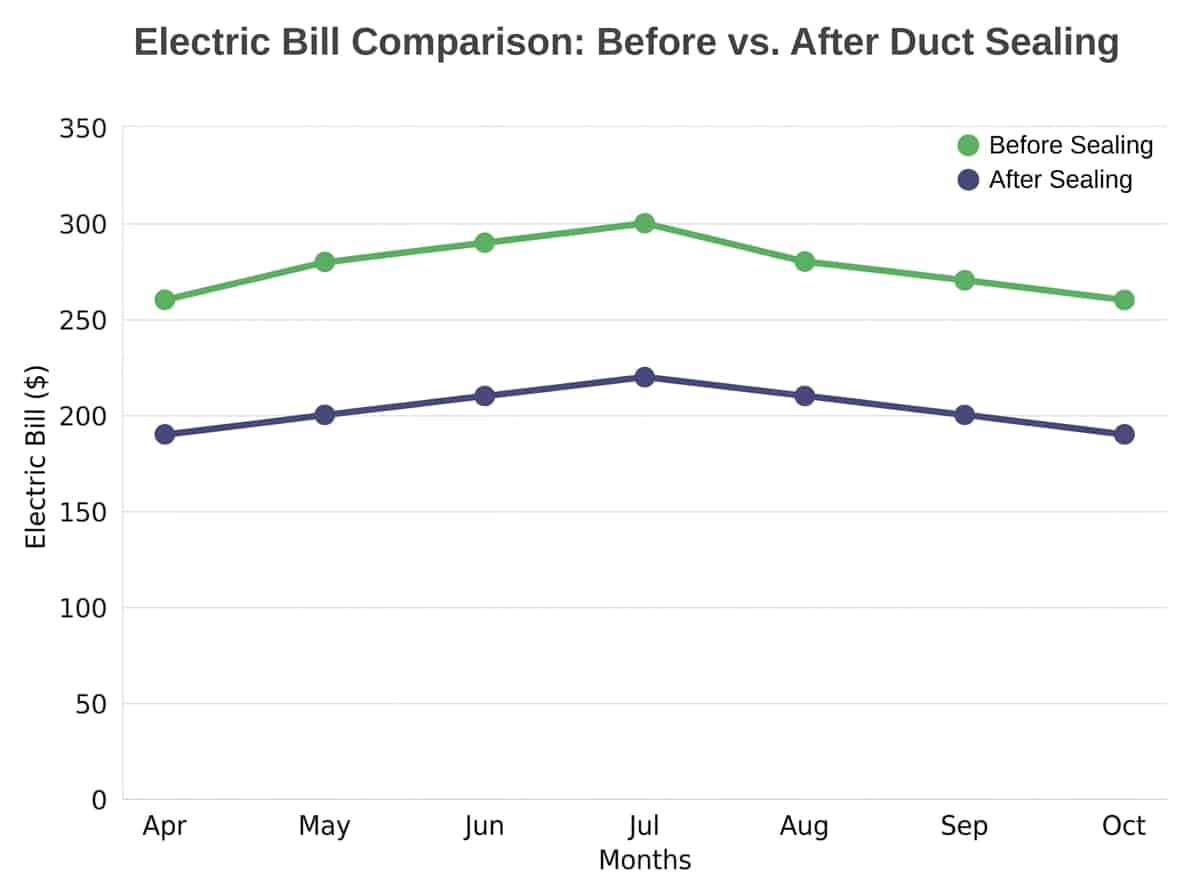
The financial case for duct sealing is straightforward: when your system stops wasting 20-30% of its output, your monthly cooling bill drops. One Hour Heating & Air Conditioning’s analysis of duct sealing benefits found that homes with sealed ducts saw cooling-system efficiency improvements of 15-20%, translating to $200-400 in annual savings for a typical East Valley household running AC from April through October.
Sealing also extends your equipment’s lifespan. An overworked AC that runs 12 hours a day because half its output leaks into the attic will fail sooner than one that runs 8 hours and delivers full airflow to living spaces. That’s fewer repair calls and a longer interval before replacement. The average whole-home duct sealing job costs $1,000-2,500 depending on system size and leak severity. Most homeowners recover that cost within two to three cooling seasons through lower utility bills and avoided repairs.
What Duct Cleaning Actually Does (and When You Need It)
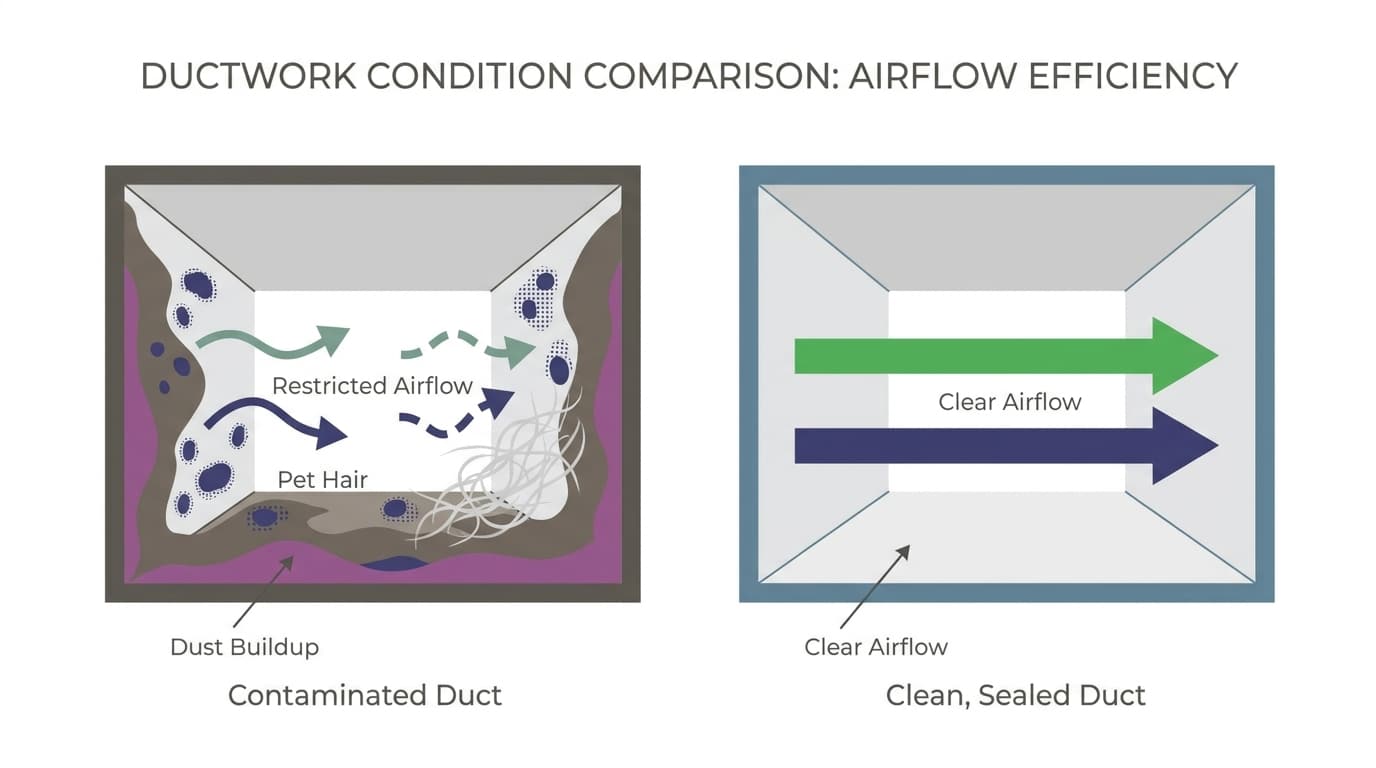
Duct cleaning is the physical removal of dust, debris, pet dander, pollen, mold spores, and construction residue that have accumulated inside your ductwork over time. A NADCA-certified technician uses specialized vacuum equipment and rotating brushes to dislodge buildup from duct walls and extract it through a high-powered collection system. This process doesn’t fix leaks or improve efficiency. It addresses what’s inside the ducts, not what’s escaping through the walls of the ducts.
The EPA’s 2024 briefing on indoor air quality is clear: cleaning is recommended when you see visible mold growth inside ducts or on HVAC components, when ducts are infested with vermin (rodents or insects), or when ducts are clogged with substantial dust and debris that gets released into the home. The EPA does not recommend routine cleaning every 3-5 years as a preventive measure unless one of those conditions exists. Cleaning makes sense when there’s a real problem, not as default maintenance.
In Arizona, dust storms, construction activity, and pet ownership can create conditions where duct cleaning genuinely helps. If you’ve lived through a haboob that coated your neighborhood in a layer of dust, or if you recently remodeled and drywall dust found its way into your return vents, cleaning removes what filtration alone can’t catch. Regular air conditioning maintenance and repairs help ensure your system handles airflow efficiently, but debris inside the ducts gets recirculated every time the blower runs.
Common Signs Your Ducts Need Cleaning
Not every home needs duct cleaning, but these symptoms indicate it’s time for an inspection:
- Visible dust puffing from vents. When the system kicks on, you see a cloud of dust expelled from registers.
- Musty or stale smell. The air smells off when the AC or heat runs, even after replacing the filter.
- Allergy or asthma symptoms worsen indoors. You feel fine outside but start sneezing, coughing, or experiencing respiratory irritation when you’re home.
- Recent remodel or construction. Drywall dust, sawdust, or insulation fibers entered the duct system during work.
- Never cleaned in 10+ years. If your home is a decade old or older and the ducts have never been inspected, accumulated debris is likely.
If none of these apply and your system runs cleanly, Do You Really Need Professional AC Repair in Mesa? might be a more relevant question than whether to clean ducts.
How Duct Cleaning Improves Indoor Air Quality
Duct cleaning directly reduces the amount of particulate matter circulating through your home. A 2020 study published in Environmental Health Insights found that improving indoor air quality starts with source control (removing or reducing pollutants at the origin) and proper ventilation. Cleaning ducts addresses the source problem when dust, mold, or debris have accumulated inside the system.
However, duct cleaning is not a cure-all. If you have poor filtration, inadequate ventilation, or ongoing moisture issues, cleaning the ducts once won’t solve chronic air-quality problems. Pairing duct cleaning with upgraded filters, regular Air Conditioning Maintenance, and humidity control delivers better long-term results. The goal is to remove what’s built up, then prevent new accumulation through better system hygiene.
The Key Differences: Side-by-Side Comparison
Here’s how duct sealing and duct cleaning differ in purpose, method, cost, and outcome:
| Aspect | Duct Sealing | Duct Cleaning | |:——-|:————-|:————–| | Problem Solved | Air leaks, energy waste, uneven temperatures | Dust/debris buildup, poor air quality, allergen circulation | | Method | Seal gaps with mastic, metal tape, or Aeroseal | NADCA vacuum + rotating brushes remove debris | | When Needed | High bills, overworked HVAC, hot/cold spots | Visible dust from vents, musty smell, allergy symptoms, post-construction | | Cost Range (avg) | $1,000–$2,500 (whole-home) | $300–$700 (typical residential) | | Primary Benefit | Lower utility bills, comfort consistency, longer equipment life | Cleaner air, reduced allergens, improved airflow | | Frequency | Once (lasts 10-15 years if done properly) | Only when debris accumulates (not routine) |
This table makes the distinction clear: sealing is an efficiency upgrade that pays for itself through lower bills and reduced system wear. Cleaning is a targeted fix for air-quality issues when contaminants have built up inside the ducts. Neither replaces the other, and not every home needs both.
Can You Do One Without the Other?
Yes. In fact, most homes need only one service, or neither. Here’s how to think through the scenarios:
Scenario 1: You only need sealing. Your home is relatively new (built within the last 10 years), you don’t have pets, and you haven’t experienced dust storms or construction activity. Your utility bills have jumped, and some rooms stay warmer than others. This is a classic leak problem. Sealing the ducts will fix efficiency and comfort without any need to clean the interior, because there’s no significant debris buildup.
Scenario 2: You only need cleaning. Your energy bills are normal, temperatures are even, and the system runs smoothly. But you see dust clouds when the AC kicks on, you recently remodeled, or your allergies flare up indoors. This is a debris problem, not a leak problem. Cleaning the ducts removes contaminants without touching the sealing work (which may already be fine).
Scenario 3: You need both. Your system is 15+ years old, bills are high, rooms stay uneven, and you’re seeing dust and smelling mustiness. Older ductwork often has both leaks and accumulated debris. In this case, we recommend sealing first (to lock in efficiency gains), then cleaning (to remove what’s built up inside the now-sealed system). Cleaning before sealing can dislodge debris into leaky joints, wasting part of the cleaning effort.
Scenario 4: You need neither. Your ducts were sealed during a recent HVAC install, your bills are stable, airflow is strong, and there’s no visible dust or odor. A professional inspection confirms everything is sound. In this case, the honest answer is: save your money. Not every home needs intervention. At JLM, we’ve walked into inspections where the homeowner expected a costly repair and we told them their system was fine. That’s how you build trust in this industry.
When in doubt, a free inspection from HVAC Services in the East Valley, AZ tells you exactly what’s needed. We’ll show you the problem areas (if they exist) and explain which service addresses them. No pressure, no upsell.
How to Know Which Service You Actually Need
If you’re still unsure whether sealing, cleaning, both, or neither applies to your home, work through this diagnostic checklist:
- Check recent utility bills. Compare your summer cooling costs from last year to this year. A 15-20% increase with no change in usage or rate structure points to efficiency loss, which often means leaks.
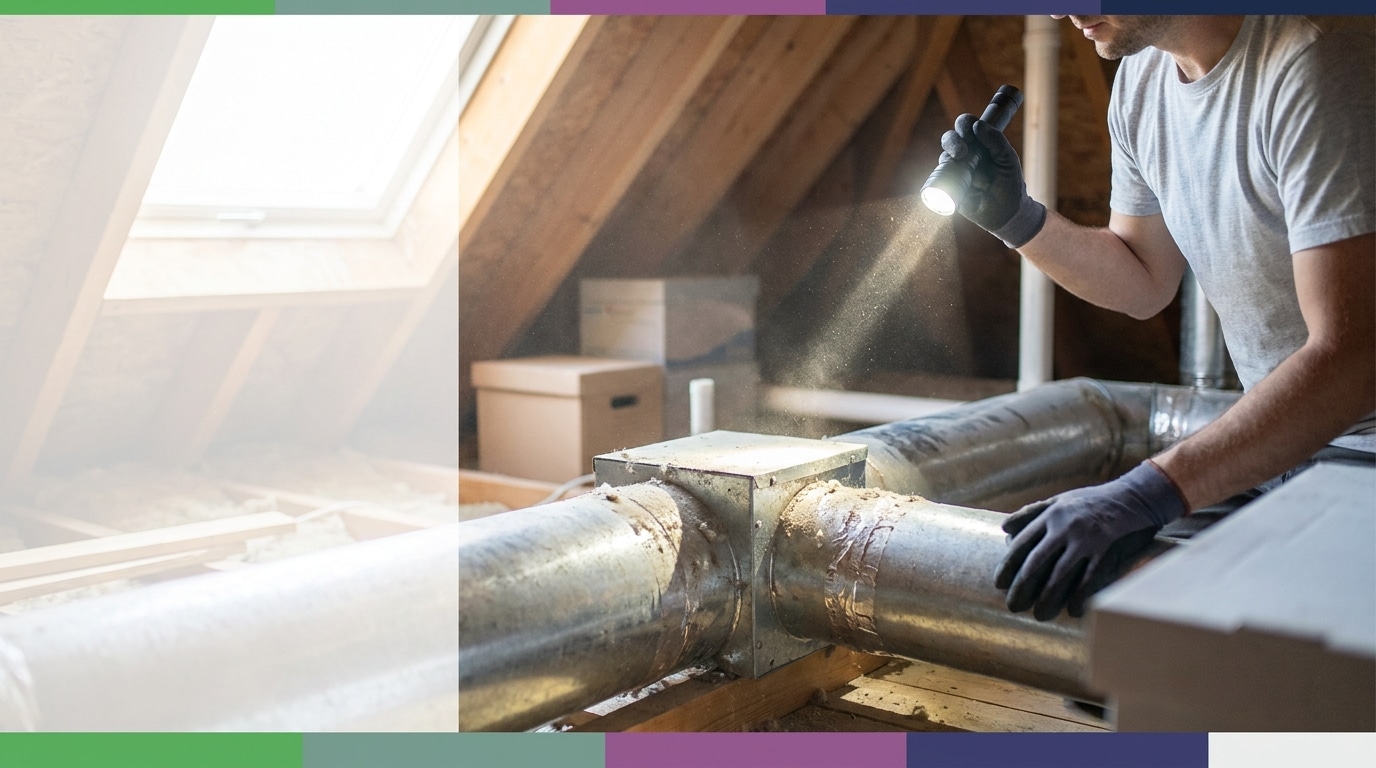
- Inspect visible ductwork. If you can access ducts in the attic, garage, or crawlspace, look for gaps, disconnected sections, or torn insulation wrap. Shine a flashlight along joints and seams. If you see daylight through a gap, that’s a leak.
- Test airflow at each vent. Hold your hand in front of every register in your home while the system runs. Weak airflow in certain rooms (while others blow strong) suggests leaks between the air handler and those rooms.
- Check vents for dust clouds. Turn the system on after it’s been off for an hour. Watch the vents closely. If you see a puff of dust when airflow starts, debris has accumulated inside the ducts.
- Note allergy or respiratory changes. If your symptoms improve when you leave the house and worsen when you return, indoor air quality is the issue. According to the World Health Organization’s air quality standards, sustained exposure to indoor particulate matter can exacerbate respiratory conditions. That points to cleaning (or filtration upgrades) rather than sealing.
- When in doubt, get a free inspection. Our team performs visual inspections, airflow tests, and leak detection at no cost. We’ll tell you what we found, what it costs to fix, and what happens if you do nothing. From there, the decision is yours.
This approach puts you in control. You’re not guessing which service to book based on an ad or a neighbor’s recommendation. You’re diagnosing the actual problem your home has, then choosing the fix that solves it. Is Spring Too Early to Plan for Arizona AC Tune-Up? addresses another common timing question that helps you stay ahead of duct issues before summer heat arrives.
What to Expect from a Professional Duct Inspection
A thorough duct inspection takes 1-2 hours and covers both efficiency and air quality. Here’s what the process looks like when JLM comes to your home:
Visual check of accessible ductwork. We inspect attic, crawlspace, and garage sections for disconnected joints, torn insulation, visible mold, or rodent activity. We take photos so you can see exactly what we found.
Airflow test at each register. We measure airflow (in cubic feet per minute) at every vent to identify rooms with weak delivery. Significant variance between rooms indicates leaks or blockages along the path.
Leak detection. For homes with suspected efficiency loss, we use a duct blaster test (pressurizing the system to quantify total leakage) or a smoke test (releasing non-toxic smoke at suspected leak points to visualize escaping air). Both methods give you objective data, not guesswork.
Debris assessment. We remove a register cover in a central location and inspect the duct interior with a camera or flashlight. If we see dust buildup thicker than a quarter-inch, mold growth, or animal debris, cleaning is warranted.
Report and recommendation. After the inspection, we explain what we found, show you the evidence, and recommend sealing, cleaning, both, or neither. We provide a written estimate with no pressure to commit on the spot. If your ducts are fine, we’ll tell you that. Our A+ BBB rating is built on doing only the work that’s truly needed.
The inspection is free because we want you to make an informed decision. You’ll know the condition of your ductwork, the cost to fix any problems, and the expected ROI before spending a dollar.
Questions to Ask Your HVAC Contractor
Not all duct-sealing and duct-cleaning services are equal. Before hiring a contractor, ask these questions to separate professionals from opportunists:
- Are you NADCA-certified for duct cleaning? NADCA (National Air Duct Cleaners Association) sets the industry standard. Certification means the technician follows best practices for debris removal and system protection.
- Do you use Aeroseal, mastic, or metal tape for sealing? Avoid contractors who use standard duct tape (which fails within months). Professional-grade materials last 10-15 years.
- What’s the estimated payback period on sealing? A legitimate contractor can estimate your savings based on current bills, system size, and leak severity. If they can’t, they’re guessing.
- Can I see before-and-after airflow data? Professionals measure airflow before and after sealing to prove the improvement. If they don’t offer measurement, you have no way to verify results.
- Will you show me the problem areas before quoting? We take photos and walk you through what we found before recommending any work. If a contractor quotes without showing you the issue, walk away.
These questions protect you from unnecessary work and inflated pricing. Healthline’s guide to air purifier effectiveness notes that improving indoor air quality requires addressing multiple factors, including ductwork cleanliness. A confident, honest contractor welcomes these questions. Visit our Blog | HVAC Tips & Updates for Gilbert, AZ Residents for more guidance on choosing the right HVAC service provider.
Why Duct Sealing and Cleaning Matter in Arizona’s Climate
Arizona’s extreme climate amplifies the cost and urgency of ductwork problems. When outdoor temps hit 110°F or higher, every cubic foot of cool air that escapes through a leaky duct is expensive to replace. According to Palmetto’s analysis of duct sealing in hot climates, homes in desert regions can cut cooling costs by 15-20% through duct sealing alone, because the temperature differential between conditioned air and attic/crawlspace air is so large.
Dust storms (haboobs) and constant wind also mean more particulate infiltration. If your ductwork has leaks, those leaks pull in attic dust, insulation fibers, and outdoor pollutants every time the blower runs. Sealing the ducts stops that infiltration at the source. And when a dust storm coats your neighborhood, the debris that made it into your return vents needs to be cleaned out, or it recirculates for months.
The EPA’s guidance on improving indoor air quality shows that homes in hot-arid climates see the highest ROI from duct sealing and insulation upgrades, because cooling loads dominate annual energy use. In the East Valley, where AC runs 6-8 months a year, leaky ducts cost more than in moderate climates. That’s why The Smart Way to Prep AC for Gilbert’s Hot Summer includes a duct inspection as a core step. You can’t afford to ignore ductwork efficiency when summer bills run $300-500 per month.
Conclusion: Start with the Right Diagnosis
Duct sealing and duct cleaning solve different problems. Sealing stops energy waste and lowers your cooling bills by closing leaks. Cleaning removes dust and debris to improve indoor air quality. Some homes need one, some need both, and some need neither. The key is knowing which applies to your situation before you spend money.
At JLM Air Conditioning & Heating, we’ve built our reputation on honest assessments. Our free duct inspection tells you exactly what’s happening in your system, what it costs to fix, and what you can expect if you do nothing. We’re not here to upsell services you don’t need. We’re here to solve the actual problem your home has, so you stay comfortable and your bills stay manageable. Whether you’re dealing with rising costs, poor air quality, or just want peace of mind, start with the right diagnosis. From there, the solution is clear.
Want to know if your ductwork is working as hard as your AC is? Schedule a free inspection, and we’ll show you what’s really going on. For more insights on keeping your system running efficiently, check out How Mini Split Installation Works from Start to Finish to understand another option for targeted cooling in problem areas. If you’re considering alternatives to ducted systems for problem zones or additions, Mini Split Installation in Gilbert AZ: What to Know First walks through how ductless solutions can supplement your main system.
Call JLM Air Conditioning & Heating today: (602) 619-3609