MERV ratings measure how well an air filter captures particles. For Arizona homes, MERV 11–13 strikes the best balance for dust, pollen, and allergens without restricting airflow in standard residential systems. MERV 8 works for basic dust control; MERV 16+ suits high-efficiency systems or severe allergies but requires professional assessment to avoid airflow problems. Choose based on your system type, filter size, and air quality goals.
If you’ve ever stood in front of the air filter aisle at Home Depot, staring at boxes labeled MERV 8, MERV 11, MERV 13, wondering which one actually matters for your home, you’re not alone. Most East Valley homeowners face the same question: which rating protects my family from Arizona’s dust storms and pollen without making my AC work harder or driving up energy bills?
The answer depends on your air quality goals, your HVAC system’s design, and Arizona’s unique climate challenges. This guide walks you through the MERV scale, explains what each rating captures, and shows you how to match the right filter to your home without guessing. We’ll also cover when to call East Valley’s trusted HVAC experts to ensure your filter choice supports system performance instead of sabotaging it.
What Is a MERV Rating? (The Basics in Plain English)
MERV stands for Minimum Efficiency Reporting Value. Think of it like SPF for sunscreen: the higher the number, the more protection you get. In this case, protection means trapping smaller particles before they circulate through your home.
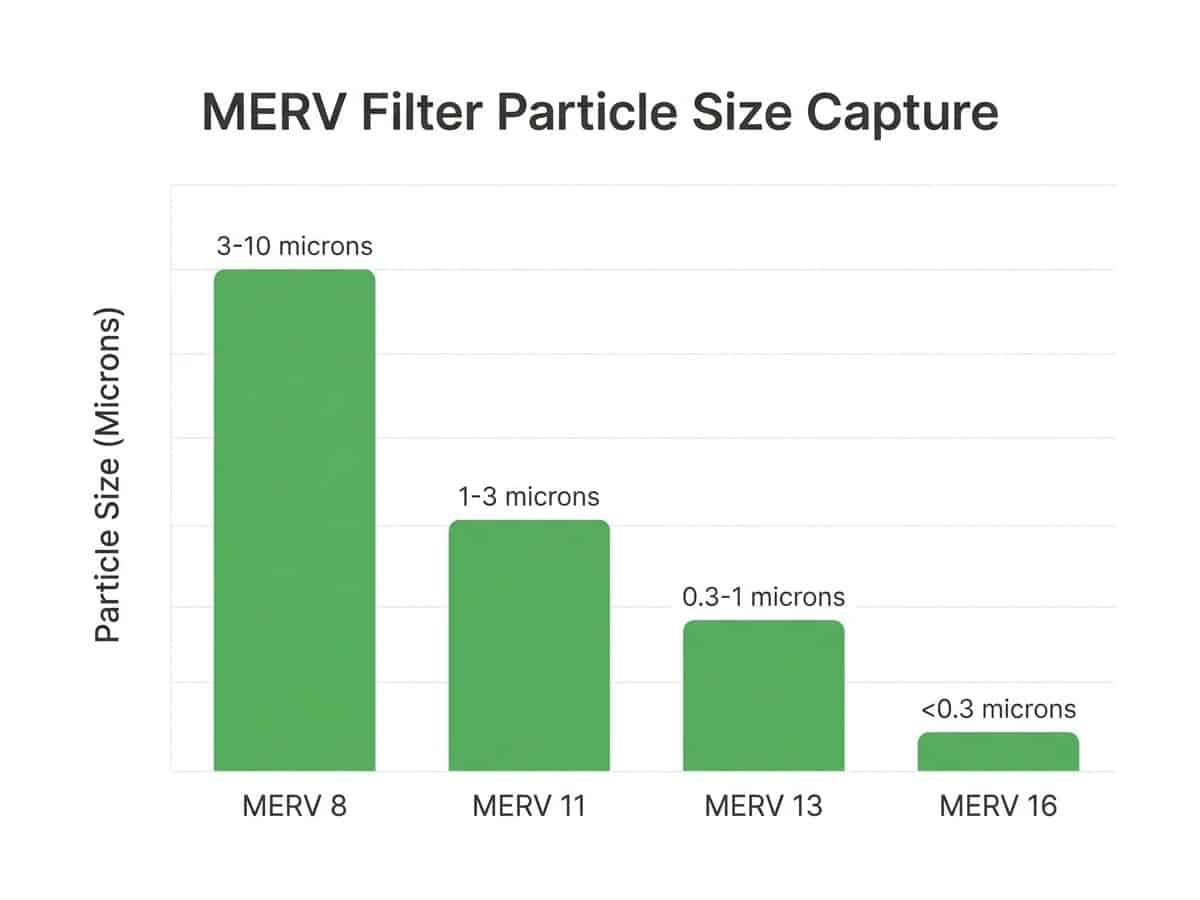
The scale runs from 1 to 20, measuring how well a filter captures particles of different sizes. A MERV 8 filter catches dust mites and pollen (particles roughly 3–10 microns). A MERV 13 filter catches bacteria and tobacco smoke (particles as small as 0.3 microns). The denser the filter media, the smaller the particles it traps, but also the more resistance it creates to airflow.
Here’s what makes MERV different from the other rating systems you’ll see on filter boxes: it’s an industry standard, not a brand-specific scale. MERV is defined by ASHRAE Standard 52.2, the same organization that sets ventilation codes for commercial buildings and hospitals. When you buy a MERV-rated filter, you’re getting tested, standardized performance, not marketing claims. For homeowners who rely on reviews and trusted sources when making decisions, this standardization matters. You can compare filters across brands knowing the rating means the same thing on every box.
Residential filters typically range from MERV 6 (basic dust control, rarely used anymore) to MERV 16 (hospital-grade filtration). Ratings above 16 are for cleanrooms and specialized commercial applications. For Arizona homes, the sweet spot is MERV 8–13, depending on your system and air quality needs.
Who Sets MERV Standards?
ASHRAE (the American Society of Heating, Refrigerating and Air-Conditioning Engineers) developed the MERV standard in the 1980s to create a consistent way to compare filters across manufacturers. Before MERV, every brand used its own testing method, making it impossible to know if a Honeywell filter performed the same as a 3M filter at the same price point.
The test measures how well a filter captures particles in six size ranges, from large (3–10 microns) to microscopic (0.3–1 micron). The results determine the MERV rating. It’s not subjective; it’s lab-tested performance that you can compare apples-to-apples across every brand sold in Arizona hardware stores.
MERV Ratings Decoded: What Each Level Captures (Comparison Table + Narrative)
Different MERV ratings target different particle sizes and use cases. Here’s what each tier captures, where it fits in Arizona homes, and the tradeoffs you’ll face.
| MERV Rating | Particle Size Captured | What It Catches | Best For | Arizona Considerations | Pros | Cons |
|---|---|---|---|---|---|---|
| MERV 8 | 3–10 microns | Dust mites, pollen, carpet fibers, mold spores | Standard residential; builder-grade systems | Handles monsoon dust but misses finer allergens | Low airflow restriction, inexpensive, most systems handle it easily | Doesn’t capture smoke, fine dust, or pet dander well |
| MERV 11 | 1–3 microns | Pollen, dust mites, mold spores, pet dander, some smog | Most Arizona homes; good balance for allergies + airflow | Ideal for East Valley dust + pollen without overloading system | Captures common allergens, widely compatible, moderate cost | Won’t catch smoke or ultrafine particles |
| MERV 13 | 0.3–1 microns | Bacteria, tobacco smoke, sneeze droplets, fine dust, cooking smoke | Allergy sufferers, asthma, homes with pets or smokers | Strong choice for severe allergies; check system compatibility first | High allergen/pathogen capture, hospital-grade filtration | Restricts airflow in older or undersized systems; needs frequent changes |
| MERV 16 | 0.3 microns and smaller | Viruses, ultrafine smoke, bacteria, all allergens | High-efficiency systems, medical need, cleanroom-level air | Overkill for most homes; professional install + system check required | Maximum filtration | High static pressure, frequent clogs, may trip safety switches or damage blower |
MERV 8: The Baseline
Builders install MERV 8 filters by default. They’ll catch the big stuff (pollen grains, dust mites, carpet fibers) but if you’re sneezing after monsoon dust storms or notice a layer of fine dust on your furniture two days after you cleaned, MERV 8 isn’t enough. It’s better than nothing, but it won’t protect against the fine particulate that blows in during summer haboobs or settles out of Arizona’s dry air year-round.
MERV 11: The Sweet Spot for Most Arizona Homes
MERV 11 captures pollen, pet dander, mold spores, and a lot of the fine dust that blows in during summer storms without choking your AC. If you have mild seasonal allergies or just want cleaner air without worrying about airflow restrictions, start here. According to research on indoor air quality, upgrading from MERV 8 to MERV 11 significantly reduces airborne allergen concentrations in residential settings, especially in climates with high outdoor particulate loads like Arizona.
This is the filter we recommend most often for East Valley homes because it captures the dust, pollen, and pet hair that most families deal with while still allowing enough airflow for older or standard-efficiency systems to run efficiently. It delivers better air quality as part of getting more from your system, rather than creating new problems. Paired with properly sealed ductwork, MERV 11 filtration becomes even more effective, ensuring that the air you’re filtering actually passes through the filter instead of leaking in through gaps.
MERV 13: Hospital-Grade Filtration
MERV 13 traps bacteria, smoke, and sneeze droplets. If someone in your home has asthma, severe allergies, or respiratory issues, MERV 13 offers meaningful extra protection. But (and this matters in Arizona) it also restricts airflow more than MERV 11. If your system is older or wasn’t designed for high-resistance filters, MERV 13 can reduce efficiency and even cause the blower motor to overheat.
Check with a pro before upgrading. We’ll measure static pressure and airflow during a maintenance visit. It takes 10 minutes and tells you exactly what your system supports. If your ductwork is properly sized and your blower can handle the extra resistance, MERV 13 is worth it for the health benefits research has documented. If not, MERV 11 plus ductwork inspection and sealing often delivers better results without the airflow penalty.
MERV 16: Cleanroom-Level (Usually Overkill)
Unless you have a high-efficiency variable-speed system or a doctor recommended it for a specific medical condition, MERV 16 will likely do more harm than good. Airflow restriction can trip safety switches, freeze your coil, or burn out the blower. If you need this level of filtration, talk to an HVAC tech about whether your system can handle it, or whether a dedicated whole-house air purifier makes more sense.
Arizona-Specific Considerations: Why MERV Choice Matters in the Desert
Arizona isn’t like the Midwest or the Pacific Northwest. Our air carries different challenges, and that affects which MERV rating makes sense for your home.
Monsoon Dust & Fine Particulate
Monsoon dust storms carry fine particulate (PM2.5 and smaller) that MERV 8 filters miss entirely. MERV 11+ captures it, but those same filters clog faster during monsoon season (July through September). The EPA identifies PM2.5 as a critical indoor air quality concern, particularly in arid climates where wind-blown dust is common. In Arizona, HVAC filtration is your first line of defense.
During monsoon months, check your filter monthly instead of waiting 60 or 90 days. A clogged filter in July forces your blower to work harder just when your AC is already running at peak load. That’s how you end up with a $400 electric bill and a frozen coil. Pair your filter upgrades with indoor air quality improvements like duct sealing to stop unfiltered air from leaking in through gaps and undermining the filtration you’re paying for. Properly sealed ductwork ensures that every cubic foot of air passing through your system actually gets filtered, which means your investment in a higher MERV rating delivers the results you’re paying for.
High Cooling Loads = Faster Filter Clogging
Arizona AC systems run six months a year or more, often at high duty cycle. More runtime means more air passing through the filter, which means faster clogging, especially if you’re running MERV 13. A filter that lasts 90 days in Minnesota might need changing every 45 days in Phoenix.
Airflow restriction from a clogged filter forces the blower to work harder, which drives up energy bills and can freeze your evaporator coil. Ice blocks airflow further, and the system shuts down. That’s a service call you don’t want in August.
Allergy Season in the Valley
Spring pollen (March through May: olive, mulberry, ash trees) and fall ragweed (September through November) drive the majority of allergy complaints we hear from customers. MERV 11+ helps, but only if your ducts aren’t leaking unfiltered air into the house through seam gaps or disconnected runs. Duct leaks are common in older Arizona homes, and they’re why some homeowners upgrade to MERV 13 and still wake up congested.
We live in Gilbert, Queen Creek, and Mesa. We breathe the same air you do. We know monsoon dust clogs filters fast, and we’ll tell you when to check yours based on the season, not a generic 90-day schedule from a filter manufacturer in Ohio.
MERV 11 vs. MERV 13: Which Should You Choose? (The Most Common Question)
This is the decision most East Valley homeowners face: MERV 11 or MERV 13? Here’s how to choose.
Step 1: Assess Your Air Quality Need
If you have mild seasonal allergies, general dust control needs, and no respiratory issues, MERV 11 is enough. It captures pollen, pet dander, mold spores, and most of the fine dust that accumulates on furniture. You’ll notice cleaner air without stressing your system.
If you have severe allergies, asthma, pets, smokers in the home, or immune-compromised occupants, MERV 13 offers meaningful extra protection. It traps bacteria, smoke particles, and sneeze droplets that MERV 11 misses. For families dealing with chronic respiratory issues, that extra filtration can reduce symptoms and improve quality of life.
Step 2: Check Your System’s Compatibility
Not every HVAC system can handle MERV 13 without losing efficiency or risking damage. Here’s what to check:
System age: If your AC is 10+ years old with a single-stage blower, MERV 11 is the safer choice. MERV 13 may restrict airflow enough to overheat the blower motor or freeze the coil. Variable-speed or ECM blowers (common in high-efficiency systems installed after 2015) handle MERV 13 better because they can adjust speed to compensate for resistance.
Duct design: If your ducts are undersized, leaky, or poorly designed, even MERV 11 can cause problems. A professional duct inspection tells you what your system can handle. Static pressure is the key measurement. If it’s already high, upgrading to MERV 13 pushes it into the red zone.
Blower capacity: Some older systems simply don’t move enough air to overcome the resistance of a MERV 13 filter. Testing airflow during a maintenance visit eliminates the guesswork. It takes 10 minutes, and it tells you exactly whether your system can handle the upgrade without losing efficiency.
Step 3: When in Doubt, Start with MERV 11
If you’re not sure, start with MERV 11. Monitor your allergies and system performance for 60 days. If allergies don’t improve, upgrade to MERV 13 and watch your energy bills and runtime. If the system struggles (longer run times, frozen coil, higher bills), drop back to MERV 11 or call us for a blower capacity test.
In our work with East Valley homeowners, we’ve found that many older systems with original ductwork perform better with MERV 11 plus sealed ducts than MERV 13 alone. Sealing duct leaks stops unfiltered air from bypassing the filter entirely, which often delivers better air quality results than upgrading the filter and leaving the leaks unfixed. For comprehensive indoor air quality services that address both filtration and duct integrity, talk to a licensed HVAC tech who can assess your whole system. This is exactly the kind of system optimization that helps homeowners get more from their HVAC investment, rather than just throwing parts at a problem without understanding the underlying performance issues.
Can a High MERV Filter Damage Your AC? (Addressing the Fear)
Yes, if the system wasn’t designed for it. Here’s how it happens.
The Mechanism: Restricted Airflow
Higher MERV ratings mean denser filter media, which creates more resistance to airflow. If your blower can’t push enough air through the filter, the evaporator coil gets too cold and freezes. Ice blocks airflow further, which makes the problem worse. The system eventually shuts down, and you’re stuck without AC until the coil thaws and someone fixes the root cause.
Blower Strain
Single-stage blowers in older systems run at one speed. If the filter restricts airflow, the blower motor works harder to maintain the same air volume. That extra load generates heat, and if the motor can’t dissipate it fast enough, it overheats and trips a safety switch, or burns out completely. Variable-speed blowers compensate better because they can ramp up to overcome resistance, but even they have limits.
Static Pressure: The Number That Matters
HVAC pros measure static pressure: the resistance in your ductwork plus the filter. If it’s too high, upgrading to MERV 13 pushes it past the safe threshold for your equipment. The fix might be larger return grilles, duct modifications, or simply sticking with MERV 11. Research on duct sealing and airflow optimization confirms that reducing static pressure through duct improvements often delivers better system performance than increasing filter density.
Prevention: Test Before You Upgrade
Have an HVAC tech measure airflow and static pressure before upgrading to MERV 13 or higher. We do this during every maintenance visit. It’s part of our inspection process. We’ve seen homeowners buy MERV 16 filters at the hardware store and install them without checking compatibility. The system freezes up within a week, and they call us for emergency AC repair. A 10-minute airflow test prevents that. For East Valley homeowners dealing with core system challenges (AC repair in Gilbert, HVAC repair in Queen Creek, AC installation in Queen Creek), understanding how every component works together, including the filter, is essential to avoiding expensive emergency calls.
If your system is already struggling (long run times, uneven cooling, high energy bills), the filter might be part of the problem, but it’s not always the whole problem. Sometimes the root cause is duct leaks, low refrigerant, or a blower that’s failing for reasons unrelated to the filter. That’s why a professional diagnosis matters. For homeowners who value trust signals and expert guidance over DIY guesswork, getting a proper assessment before making changes protects both your comfort and your wallet.
How Often Should You Change Your Air Filter in Arizona? (Maintenance Cadence)
The general rule: MERV 8 every 90 days, MERV 11 every 60 to 90 days, MERV 13 every 45 to 60 days. But Arizona-specific factors accelerate that schedule.
Baseline Schedule by MERV Rating
- MERV 8: 90 days under normal conditions
- MERV 11: 60 to 90 days
- MERV 13: 45 to 60 days
These timelines assume average use in a moderate climate. Arizona isn’t moderate.
Arizona Accelerators
Monsoon season (July through September): Check monthly. Dust storms load filters fast, especially MERV 11+. If the filter looks gray or clogged when you pull it out, change it early.
Pets: Monthly checks, regardless of MERV rating. Pet hair and dander clog filters faster than dust alone.
High pollen months (March through May, September through November): Check every 30 to 45 days. If you or someone in your household has allergies, this is when filter performance matters most.
High system run time: Arizona ACs run 180+ days a year in many parts of the Valley. More runtime = more air passing through the filter = faster clogging.
Visual Check: The Light Test
Hold your filter up to a light. If you can’t see through it, it’s clogged. Don’t wait for the calendar. Change it.
System Signals
If you notice longer run times, higher energy bills, uneven temperatures between rooms, or a frozen coil, check the filter first. A clogged filter is one of the most common causes of AC problems we see in summer service calls.
Other Filter Types: Electrostatic, HEPA, and Washable Filters (Brief Comparison)
MERV-rated disposable pleated filters aren’t the only option. Here’s a quick look at the alternatives and why most Arizona homes stick with disposable MERV 11 or 13.
Electrostatic Filters
Permanent, washable filters that use static electricity to attract particles. They’re reusable, which sounds appealing, but they typically perform at MERV 8-equivalent or lower. They require regular washing (monthly in Arizona’s dusty climate), and if you don’t clean them thoroughly, performance drops fast. For most homeowners, the maintenance hassle outweighs the cost savings.
HEPA Filters
True HEPA filters capture 99.97% of particles at 0.3 microns, which is exceptional, but they can’t be retrofitted into standard residential HVAC systems. The airflow restriction is too high for most residential blowers. If you need whole-house HEPA filtration, that requires a dedicated filtration unit installed in your ductwork, not a filter swap at the return grille. Talk to us about whole-house air purification systems if HEPA-level performance is a priority.
Washable/Reusable Filters
Hard to clean thoroughly, and they often underperform compared to disposable pleated filters at the same nominal MERV rating. Unless you’re committed to washing and drying the filter every month without fail, a disposable MERV 11 or 13 delivers better air quality with less hassle.
For most Arizona homes, disposable MERV 11 to 13 is the best value. You get tested, consistent performance without the maintenance burden of washable filters or the cost and complexity of a whole-house HEPA system. For local HVAC professionals who understand how Arizona’s climate affects every component of your system, recommending the right filter type is about matching performance to real-world conditions, not just selling the most expensive option. This is exactly the kind of practical, experience-backed guidance that homeowners in the referral-influenced, review-sensitive 35–65 demographic value.
Where to Buy MERV Filters in Arizona (And What to Avoid)
You have three main options: big-box stores (Home Depot, Lowe’s, Ace Hardware), online retailers (Amazon, FilterBuy, Nordic Pure), or direct from an HVAC company.
What to Check Before You Buy
Correct size: Measure your filter slot. The size is usually printed on the frame of your old filter (e.g., 16x25x1, 20x20x1). Don’t guess. A filter that doesn’t fit properly lets unfiltered air bypass it entirely.
Actual MERV rating: Look for a MERV number on the packaging, not MPR (3M’s scale) or FPR (Home Depot’s scale). Those are brand-specific and don’t translate directly to MERV. If the box doesn’t list a MERV rating, you don’t know what you’re getting.
Price per filter: Bulk packs online are often cheaper than buying one filter at a time from a hardware store. If you know you’ll use six MERV 11 filters over the next year, buying a six-pack saves money.
What to Avoid
Generic “allergy” or “premium” filters with no MERV rating. Marketing terms like “advanced filtration” or “allergen defense” don’t tell you anything about tested performance. If it doesn’t have a MERV number, skip it.
Filters from dollar stores or discount retailers that claim high performance at suspiciously low prices. They’re often mis-rated or don’t meet the MERV standard they claim.
When to Call a Pro: Signs Your Filter Choice Isn’t Working
Here’s when to call an HVAC tech instead of trying another filter on your own.
Red Flags
- Frozen coil: Ice buildup on your indoor evaporator coil, especially after upgrading to MERV 13. This means airflow is restricted beyond what your system can handle.
- Longer AC run times: Your system runs more often or longer than it used to, even though outdoor temperatures haven’t changed. Could be the filter, could be something else. Worth diagnosing.
- Higher energy bills: A sudden spike in your electric bill after changing filters suggests the new filter is making your system work harder.
- Uneven temperatures: Some rooms are colder than others, or the thermostat can’t maintain the setpoint. Restricted airflow from a clogged or over-spec’d filter is one possible cause.
- Allergies not improving: You upgraded to MERV 13, change it on schedule, and still wake up congested. The filter might be fine, but your ducts might be leaking unfiltered air into the house.
What We’ll Check
Airflow at the registers, static pressure in the ductwork, refrigerant charge, blower motor condition, and duct integrity. Sometimes the problem isn’t the filter at all. It’s duct leaks or an undersized return grille. We’ll diagnose the root cause and fix it, whether that’s switching to a different MERV rating, sealing ducts, or addressing a refrigerant issue.
If your AC is freezing up or your energy bill spiked after you upgraded to MERV 13, don’t wait. Call us for emergency repair. We’ll diagnose the problem the same day and get your system running safely again. For a proactive approach, schedule a consultation and we’ll assess whether your current filter setup is helping or hurting your system. And if you’ve noticed ice buildup or frozen lines, check out our guide on what to do when your AC freezes for immediate troubleshooting steps.
Choosing the Right MERV Rating Protects Your System and Your Family
Choosing the right MERV rating isn’t about picking the highest number on the shelf. It’s about matching filtration to your home’s air quality needs and your system’s capabilities. For most East Valley homes, MERV 11 delivers excellent allergen control without restricting airflow or stressing your equipment. If you have severe allergies or asthma, MERV 13 is worth exploring, but only after a pro confirms your system can handle it without losing efficiency.
Arizona’s dust, monsoon storms, and long cooling seasons make filter choice more critical here than in most of the country. The filter that works fine in Minnesota might clog in six weeks here, or the MERV 13 that a national HVAC blog recommends might freeze your coil if your ducts weren’t designed for the extra resistance.
We live here, we service systems here, and we know what works in East Valley homes. If you’re not sure which MERV rating your system supports, or if you’ve upgraded your filter and noticed performance problems, we’ll test airflow and static pressure during a maintenance visit. Ten minutes of measurement eliminates the guesswork and ensures your filter choice improves your air quality without harming your AC.
Beyond filter selection, maintaining healthy indoor air quality requires a holistic approach. If you’re concerned about allergens and dust but filters alone aren’t enough, consider pairing your MERV upgrade with smart thermostat technology that optimizes ventilation cycles and reduces energy waste while maintaining consistent comfort.
Not sure which MERV rating your system supports? Call now: 602-619-3609 for a free filter recommendation and airflow assessment. We’ll make sure your filter choice improves your air quality without harming your AC.