How do you lower cooling costs and improve energy efficiency in Arizona? Most Arizona homeowners can trim their cooling bills by stacking a few steps: set the thermostat higher while away, change filters, get the AC tuned up, seal leaky ducts, and block afternoon sun. Savings vary by home, so start with the free fixes, then address duct and equipment problems.
You open the bill in July and wince, and you worry someone will sell you a fix you don’t need.
We wrote this as your neighbors. JLM is family-owned, and the owner is on the job. For help with any step, see our AC repair, maintenance and installation services across Mesa, Chandler, Gilbert, Queen Creek and San Tan Valley. In our work with East Valley homeowners, across 3,000+ installs, we’ve found that the best way to reduce AC bills in Arizona is an honest plan. So this lower cooling costs energy efficiency guide ranks every tip by what it costs you against what it pays back: free habits first, then a tune-up, then ducts, then equipment. Sometimes the honest answer is that you don’t need to replace anything.
How can you lower cooling costs and improve energy efficiency in Arizona?
Stack small, ordered steps. Raise the thermostat when you’re out, keep filters and coils clean, seal leaky ducts, and block sun on west-facing windows. Replace equipment last, and only if the numbers justify it. Cooling takes a big share of a hot-climate home’s energy use, and the U.S. Department of Energy publishes plain-language guidance on trimming those costs.
So what does the range in our title actually mean? Treat it as a planning target for a stacked result, not what each tip delivers alone and not a figure from a single study. Your number depends on your home’s age, insulation, ducts, and habits, and no one can guarantee it. If a company promises far more, ask what the number is based on.
Why do East Valley homeowners choose JLM Heating and Air Conditioning for this kind of advice? We’re owner-led and community-proven: the owner is on the job, and neighbors send neighbors our way. We’d rather earn a good review than a quick sale. That is why we’d rather give you a ranked, honest list than a sales pitch.
Here are the ten tips at a glance, ordered from free to worth-the-investment:
- Raise the setpoint when you’re out.
- Block the sun.
- Change the filter on a schedule.
- Check your utility rate plan.
- Add a smart thermostat when you’re ready.
- Book a pre-summer tune-up.
- Keep the outdoor unit clear and know the warning signs.
- Seal leaky ducts.
- Clean ducts only when there’s a real reason.
- Replace an aging or oversized system.
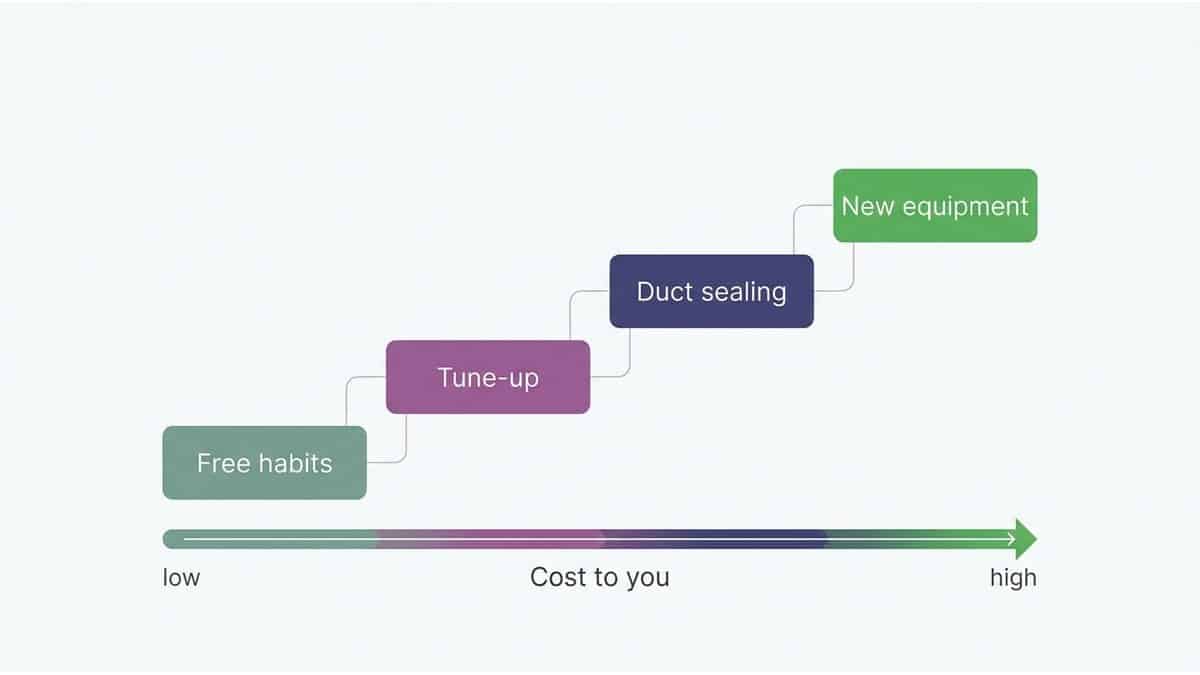
Arizona adds twists that a national list misses. Ducts run through a superheated attic. A deep thermostat setback can backfire on a 110°F afternoon. Monsoon dust clogs filters fast. Time-of-use rates change when electricity costs the most. Ducts matter on the cleaning side too, so here is what clean ducts can and can’t do for your cooling costs.
Takeaway: Work down the ladder from the cheap rungs, and skip the expensive ones until the cheap ones are done.
What are the cheapest ways to save on cooling costs?
Raise the thermostat a few degrees when you’re away, change dirty filters every one to three months, close blinds on sun-facing windows, and use ceiling fans only in occupied rooms. These cost little or nothing. You don’t need an HVAC company for any of them, and we’re happy to say so. A smart thermostat simply automates the thermostat part. Think of these as the first way to get more from your system before you spend a dollar on it.
Do them before the 110°F stretch arrives. That is when AC calls peak, and a system already working flat out is the one most likely to quit.
1. Raise the setpoint when you’re out
A setback means letting the house run warmer while nobody is home. Even a few degrees means the AC runs less. Don’t overdo it in extreme heat. If the house climbs too far on a 110°F day, the system runs flat out for hours to catch up and can struggle to get you comfortable again. Pick a modest setback and keep it consistent.
2. Block the sun
Sun through glass heats a room faster than any appliance. Close blinds or drapes on west-facing windows before the afternoon sun arrives. Shade screens, awnings, and well-placed trees help even more. This costs nothing if you already own blinds, and your AC stops fighting the sun.
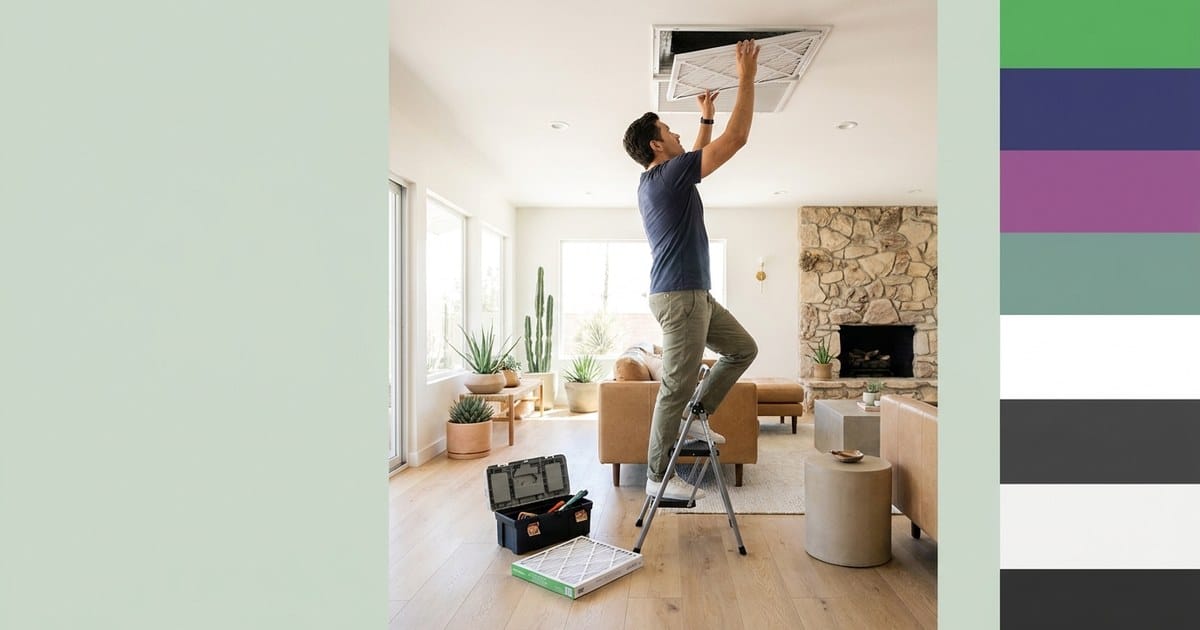
3. Change the filter on a schedule
A clogged filter restricts airflow and makes the system work harder. Monsoon season loads filters with dust far faster than a calendar suggests, so look at yours monthly in dust season. ENERGY STAR lists filter care among the basic habits that keep an air conditioner running efficiently. Write the date on the new filter so you aren’t guessing next time. A clean filter also helps indoor air quality, which is a nice bonus for the same few dollars.
4. Check your utility rate plan
SRP and APS both offer time-of-use plans, which charge more during peak late-afternoon and evening hours. If your plan is one of them, you can pre-cool the house earlier in the day and coast through the expensive window. Call your utility to confirm which plan you’re on and whether any current rebates apply. We don’t quote rates here because they change.
5. Add a smart thermostat when you’re ready
A smart thermostat learns your schedule and adjusts for you, so the setback habit happens without a reminder. It is optional. A manual thermostat you use well beats a smart one you ignore. When you’re ready, see how a smart thermostat trims summer cooling bills in Arizona. Many of our East Valley customers find it is the easiest first upgrade, and it’s one of the smart upgrades that gets more from the system you already own.
Takeaway: The first five tips cost little or nothing, so finish them before you spend on anything else.
Does AC maintenance lower your electric bill?
Yes. A dirty coil, low refrigerant, or clogged filter makes your system run longer to cool the same space. A yearly tune-up before summer catches these problems. The AC then cools with less run time, and that shows up on your bill.
6. Book a pre-summer tune-up. A good visit checks the coils, refrigerant level, drain line, and electrical connections. The FedCenter HVAC service schedule guidance outlines a regular service routine like this. Our maintenance plan includes a 50-point inspection and seasonal tune-ups. Members also get priority service. We treat it as bill control, not an upsell. The point is to catch small problems while they’re cheap. If you have a heat pump, here is what a heat pump maintenance visit should cover.
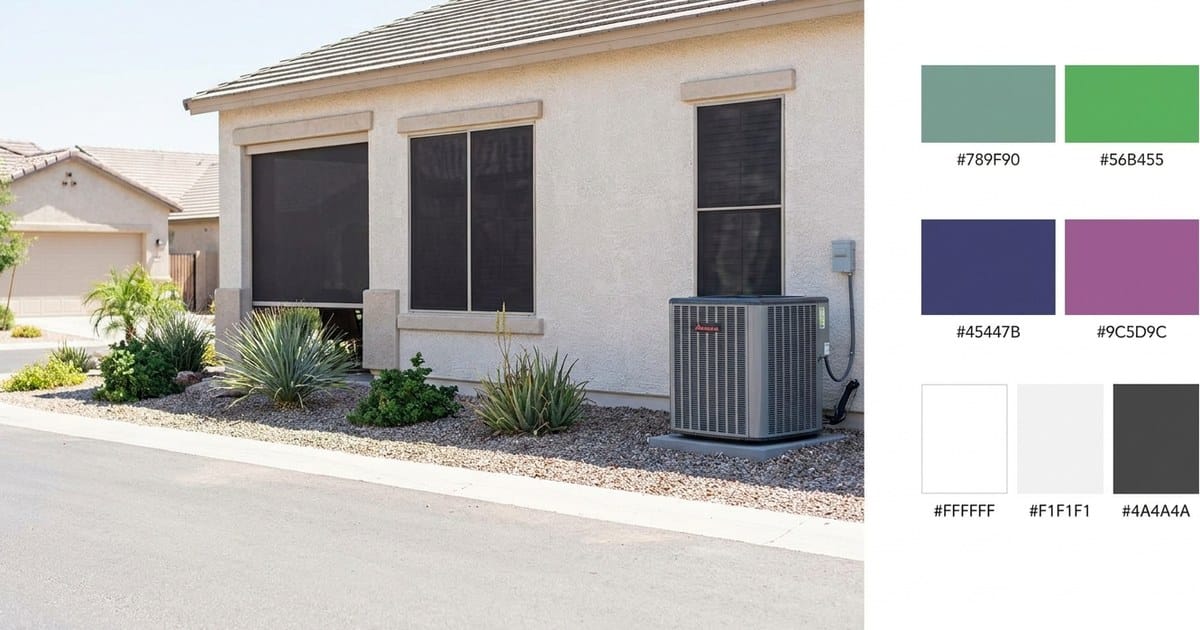
7. Keep the outdoor unit clear and know the warning signs. The outdoor unit needs room to breathe. Clear leaves, cottonwood fluff, and debris, and trim plants back. Learn the warning signs: weak airflow, warm air from the vents, odd noises, water around the unit, or ice on the refrigerant lines. If you see ice, turn the AC off and call for help. Running a frozen system can cause bigger damage.
Timing matters here. When afternoons pass 110°F, a failed AC becomes an emergency. A tune-up lowers the odds of that call, and fewer breakdowns mean fewer rushed, expensive repairs. If it does happen, we take 24/7 emergency calls, and you’ll talk to a local team that knows the neighborhood. We hold an A+ BBB rating, and families across the East Valley send their neighbors our way. We work hard to keep it that way, and we know most homeowners check reviews and ask a neighbor before they call anyone.
Takeaway: A pre-summer tune-up is bill control, because a system in good shape cools your home with less run time.
How much cooled air do leaky ducts waste?
Federal efficiency guidance, including ENERGY STAR, commonly puts the loss in a typical leaky duct system at 20 to 30 percent of airflow. In an Arizona attic, that cooled air leaks into a superheated space. You pay to cool it, and it never reaches your living room. Sealing ducts is often one of the best-value upgrades, and one of the clearest ways to get more from your system.
8. Seal leaky ducts. Most leaks hide at the joints, the connections to vents, and the plenum near the air handler. Sealing means using mastic and foil tape on those seams, and reconnecting any runs that have pulled apart. You can’t see this from the living room, so a professional inspection is the realistic way to find it. If you live in Gilbert or nearby, here is how sealing ducts stops cooled air leaking out of a Gilbert home.
Ductwork is a growing part of our work, including installing new duct runs. When we install a new system, we look at the ducts too. A high-efficiency AC pushing air through leaky ducts wastes the efficiency you paid for. Pairing the two, or bundling duct work with an install, often makes more sense than doing either alone.
9. Clean ducts only when there’s a real reason. Cleaning is not a default fix. It can make sense after a remodel, when you see heavy debris at the vents, or after a pest problem. It supports indoor air quality, but it won’t cut your bill as much as sealing will. If someone insists you need it with no reason given, get a second opinion. We would rather tell you “not yet” than sell you a service that doesn’t help.
Takeaway: Seal first, clean only with a reason, and you’ll stop paying to cool your attic.
When is a new high-efficiency AC worth it for saving money?
Consider replacement when your system is a decade or more old, needs frequent repairs, or has a low SEER rating. Higher efficiency saves more the longer it runs, and Arizona runs AC for months. A free on-site estimate shows whether payback makes sense for your home.
10. Replace an aging or oversized system. SEER2 is a seasonal efficiency score: how much cooling you get per unit of electricity over a season. Higher is better. ENERGY STAR certifies efficient AC models, which is a quick way to screen energy efficient air conditioning options. For a closer look at the numbers, see our SEER rating savings and ROI breakdown for Arizona systems.
Size matters as much as the rating. An oversized unit cools too fast, shuts off, and short-cycles. That leaves the house clammy and wastes electricity. A proper load calculation fits the system to your home, not to a rule of thumb. We install high-efficiency Amana systems, and the owner-led team will show you the return for your house in a free on-site consultation. If you want the full picture first, read a closer look at high-efficiency air conditioning and utility bill shock.
Cost is a fair worry. Financing options and extended warranty coverage are available, so the monthly picture is clear before you decide. Replacement is the last step, not the first. If your system is healthy, the honest advice is to do tips 1 through 9 and keep it.
Takeaway: Replace only when age, repairs, or efficiency say so, and let a free estimate prove the payback.
Which order should you do these in?
Work in this order and you spend only where it pays back. That is the whole lower cooling costs energy efficiency plan in three steps. This month: do tips 1 through 5, which cost little or nothing. Before next summer: book the tune-up and have the ducts checked and sealed. When the system fails or repair bills climb: price a high-efficiency replacement.
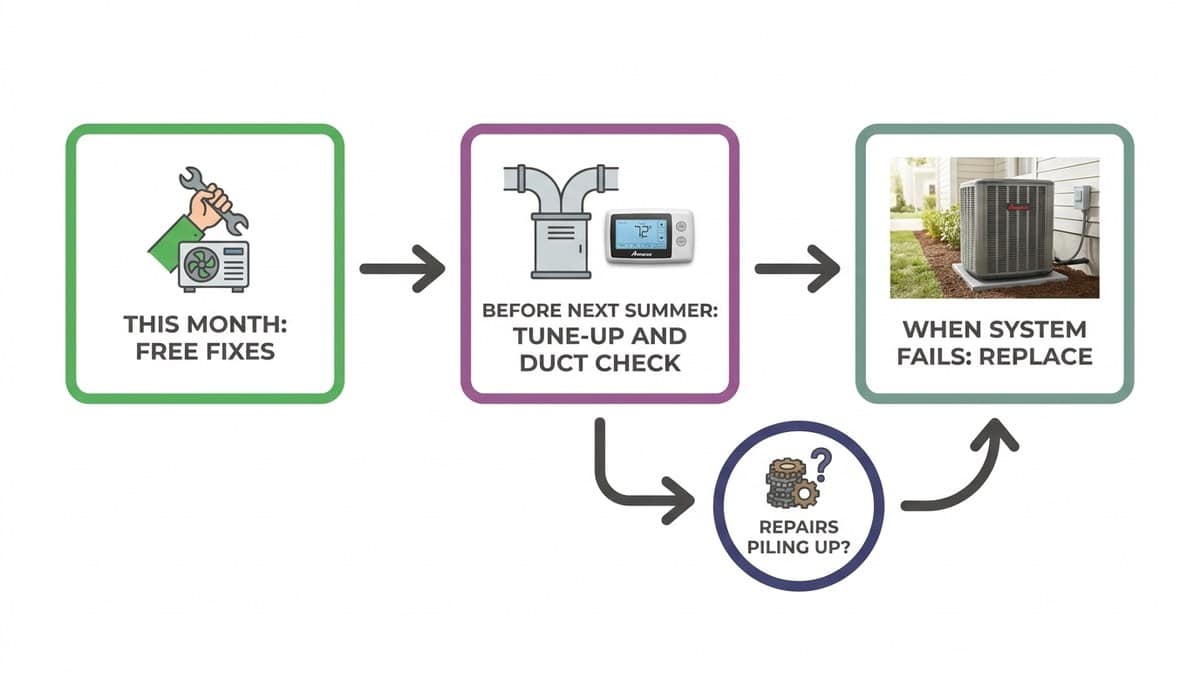
Not sure where your home sits on this list? Our free estimates give you a clear, no-pressure read on your next step, whether that’s a tune-up, a duct fix, or an install estimate down the road. If you only need a service visit, you can book that too. We’d rather match you to the right step than the biggest one.
Takeaway: Do the free things now, the tune-up and duct check next, and equipment last.
What should you do next?
A lower cooling costs energy efficiency plan doesn’t need a big check. It needs the right order. Start with the habits that cost nothing. Add a tune-up, then seal the ducts. Consider new equipment only when the system is old, failing, or inefficient. Stacked together, those steps are how you reduce AC bills Arizona homeowners can count on, without paying for things you don’t need.
We’re a family-owned team, and the owner is on the job. We’ll tell you what your home needs and what it doesn’t. Our free consultation and energy assessment can show where your house is losing money, without any pressure to buy.
Ready for a straight answer? Book your free estimate and energy assessment, or give us a call.