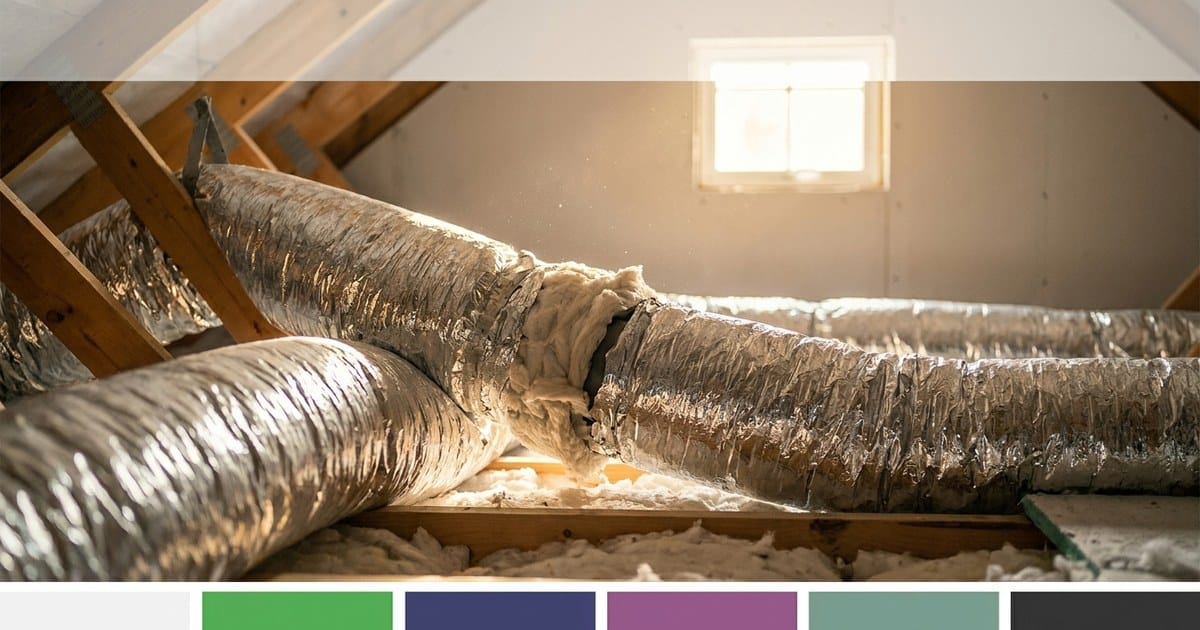
High-efficiency air conditioning systems use advanced compressors, variable-speed fans, and superior insulation to cool your home with 20–40% less energy than older units. In Arizona’s East Valley, where summer temps regularly exceed 110°F, upgrading to a high-SEER system (16+) can cut monthly utility bills by $60–$150 while delivering faster, more consistent cooling. Modern premium units also reduce repair frequency and qualify for rebates, making the upfront investment pay for itself within 5–8 years.
If you live in Gilbert, Queen Creek, Mesa, or Apache Junction, you know the drill. Your air conditioner runs nonstop from June through September, yet your home never quite reaches the temperature on the thermostat. Your utility bills balloon to $300, $400, sometimes $500 a month. Your AC repair technician has become a regular visitor. At some point, you have to ask: is it time to replace this thing, or can I limp through one more summer? Understanding your HVAC system options can help you make the right decision.
The answer often lies in how efficient your current system is. Older units (10–15 years old) typically operate at 10–12 SEER (Seasonal Energy Efficiency Ratio), while today’s high-efficiency models deliver 16–20 SEER. That gap translates into real money saved every month, faster cooling on the hottest days, and fewer breakdowns. Here’s what you need to know about high-efficiency air conditioning and whether it makes sense for your home.
What Makes an AC System “High Efficiency”?
High-efficiency air conditioners deliver more cooling per watt of electricity consumed. That improvement comes from three main upgrades: higher SEER ratings, variable-speed compressors, and better insulation and airflow design.
SEER Ratings Explained (and Why 16+ Matters in Arizona)
SEER measures how much cooling output (in BTUs) an air conditioner produces per unit of electricity (in watt-hours). A 12 SEER system uses significantly more electricity to deliver the same cooling as an 18 SEER unit. According to Department of Energy guidelines for purchasing energy-efficient residential central air conditioners, upgrading from a 10 SEER to a 16 SEER system can reduce cooling costs by 38%.
In Arizona’s desert climate, where air conditioners run nearly year-round, every SEER point matters. A system rated at 16+ SEER keeps your home comfortable without the constant energy drain of an older unit struggling at maximum capacity.
Variable-Speed Compressors vs. Single-Stage Systems
Older air conditioners use single-stage compressors that operate at 100% capacity whenever they’re on, then shut off completely when the thermostat is satisfied. That constant on-off cycling wastes energy and creates temperature swings.
Variable-speed compressors adjust their output to match your home’s cooling demand in real time. On milder days or during evening hours, the system runs at 40–60% capacity, using far less electricity while maintaining steady temperatures. When the mercury hits 115°F, the compressor ramps up to full power. For homes considering alternative systems, learning how mini split installation works can reveal another high-efficiency option.
How High-Efficiency AC Cuts Your Utility Bills
The financial case for high-efficiency air conditioning rests on two numbers: how much you save each month and how long it takes to recover your initial investment.
Monthly Savings Breakdown: Old vs. New System
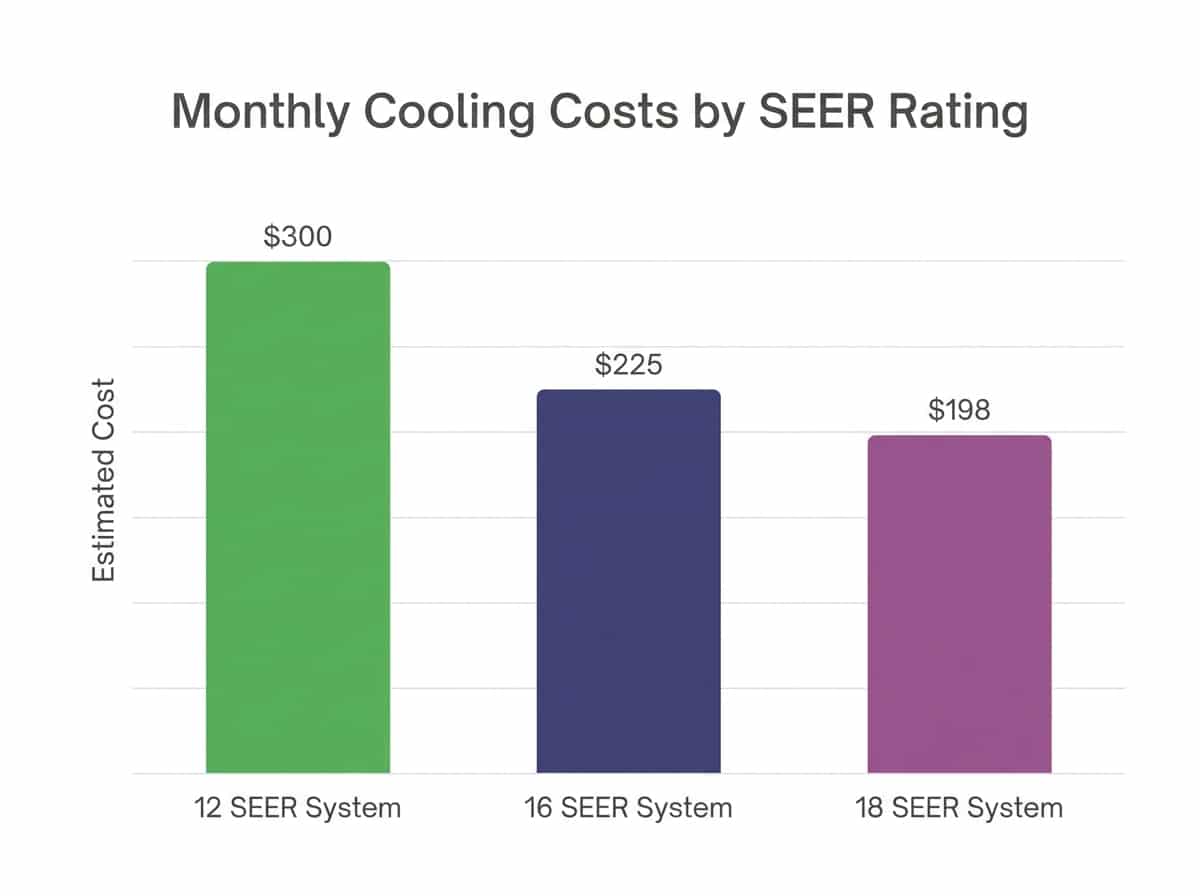
Let’s look at a real example. A 1,800-square-foot home in Gilbert with a 12 SEER system might consume 2,500 kWh per month during July and August. At current SRP rates (roughly $0.12 per kWh), that’s $300 in cooling costs alone. Upgrade to an 18 SEER system, and monthly consumption drops to about 1,650 kWh, reducing your bill to $198. That’s $102 saved every month during peak season.
In our 3,000+ installs across Gilbert, Queen Creek, and Mesa, we’ve seen homeowners save an average of $60–$150 per month switching from 10–12 SEER systems to modern 16–18 SEER units. When your AC runs for 10–12 hours a day during peak summer, that efficiency gain shows up directly on your utility bill.
Payback Period: When Does Your Investment Break Even?
A high-efficiency air conditioner costs more upfront than a baseline model. Expect to invest $9,000–$15,000 for a quality installation (the exact price depends on home size, ductwork condition, and equipment brand). Research from Lawrence Berkeley National Laboratory on trends in best-class energy efficiency shows that efficiency upgrades in hot climates typically pay for themselves within 5–8 years through reduced utility bills and avoided repair expenses.
If you’re saving $100 per month during the six-month cooling season ($600 annually) plus another $200 per year in avoided repairs, you’re looking at roughly $800 in annual savings. A $12,000 system investment would break even in about 7.5 years. After that, the savings go straight into your pocket. Most modern systems last 15–20 years, so you’re looking at a decade or more of lower bills after payback.
Beyond Lower Bills: Comfort and Reliability Gains
Energy savings matter, but they’re not the only reason to upgrade. High-efficiency air conditioning delivers real quality-of-life improvements during Arizona’s brutal summer months.
Faster Cooling When Temps Hit 110°F+
Older systems struggle when outdoor temps exceed 110°F. They run constantly but can’t keep up, leaving your home stuck at 78–80°F no matter what the thermostat says. Understanding why summer in Mesa demands fast AC repair highlights how critical system performance becomes during extreme heat. Modern high-efficiency units have larger heat exchangers, better refrigerant management, and stronger compressors. According to Amana’s technical documentation on residential cooling equipment, they’re engineered to handle extreme heat without maxing out. That means your home reaches your target temperature faster and holds it there, even during the hottest stretches of summer.
Fewer Emergency Repairs and Longer Lifespan
High-efficiency systems use better components. Premium brands like Amana build their units with reinforced compressors, corrosion-resistant coils, and higher-grade electrical parts. Those upgrades mean fewer breakdowns and longer service life.
Our data shows that proper system sizing (via load calculation) reduces customer service calls by 40% compared to installs where contractors guess based on square footage alone. A correctly sized, high-efficiency system operates within its design range rather than constantly straining at maximum capacity. That reduces wear on motors, fans, and compressors.
Choosing the Right System for Your East Valley Home
Not every high-efficiency system fits every home. Three factors determine the right match: proper sizing, equipment quality, and installation expertise.
Proper Sizing: Why Bigger Isn’t Always Better
Many homeowners assume that a larger AC will cool faster and better. That’s wrong. An oversized system short-cycles (turns on, cools the space too quickly, shuts off before dehumidifying properly, then repeats). Short-cycling wastes energy, wears out components faster, and leaves your home feeling clammy.
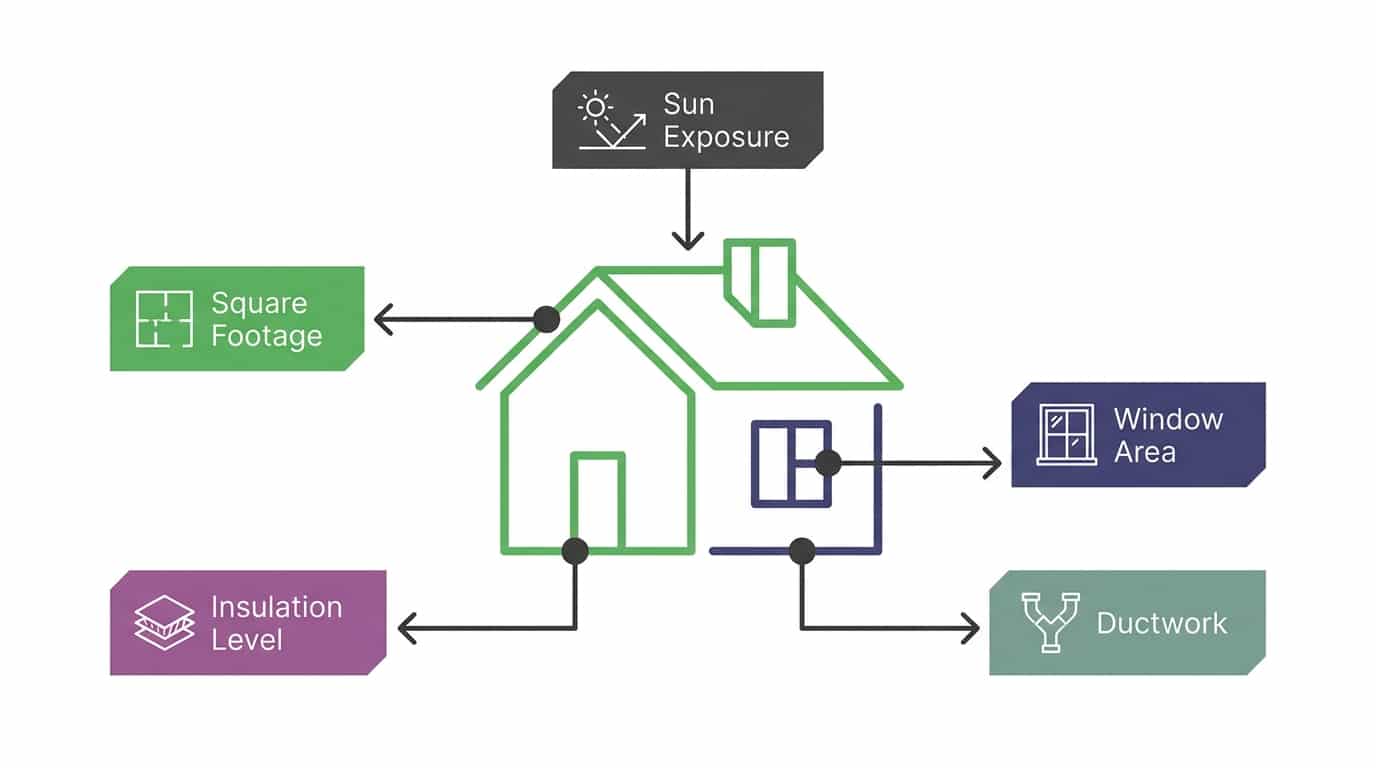
Through our free energy assessments, we’ve found that nearly 30% of East Valley homes are running oversized systems that short-cycle and waste energy. A proper load calculation accounts for your home’s square footage, insulation levels, window area, ductwork condition, and sun exposure. Correct sizing ensures your new AC runs at its designed efficiency rather than fighting against its own capacity. Following the smart way to prep AC for Gilbert’s hot summer includes verifying your system is properly sized for your home.
What to Look for in an HVAC Contractor
Installation quality matters as much as equipment quality. A premium system installed poorly will underperform and fail early. Look for these qualities:
- Licensed and insured contractors with verifiable local references
- Transparent pricing with no hidden fees or pressure upsells
- On-site load calculations (not guesses based on square footage)
- Written warranties covering both equipment and labor
- Owner involvement and direct communication (not a call center)
Choose a contractor who lives and works in your community. Look for someone who’s here year-round, not just during peak season.
What to Expect from JLM’s Installation Process
We’ve completed 3,000+ air conditioning installations across Gilbert, Queen Creek, Mesa, and Apache Junction. Bill Milbourn, our owner, personally oversees every project. Here’s how we work.
Free Energy Assessment and System Recommendation
We start with a free in-home consultation. We measure your home, inspect your ductwork and insulation, review your utility bills, and ask about comfort problems you’re experiencing. We perform a Manual J load calculation to determine the correct system size. Then we recommend equipment options (typically Amana) that fit your budget and performance needs. No pressure, no upselling, no games.
Transparent Pricing with No Hidden Fees
You receive a written estimate that breaks down equipment costs, labor, permits, and any optional upgrades (like programmable thermostats or improved duct sealing). The price you see is the price you pay. If we discover an issue during installation (like damaged ductwork), we stop and discuss options before proceeding.
Bill is licensed and personally involved in every install. You’re working with the decision-maker directly, not a salesperson reading from a script. Our comprehensive HVAC services in the East Valley, AZ cover everything from initial consultation through long-term maintenance.
Frequently Asked Questions
How much does a high-efficiency AC cost to install? Expect $9,000–$20,000 depending on system size (tonnage), SEER rating, brand, and your home’s ductwork condition. A typical 3-ton, 16 SEER system for a 1,800 sq ft home runs $11,000–$14,000 installed.
Will I qualify for rebates or tax credits? Many high-efficiency systems qualify for federal tax credits and local utility rebates. Arizona homeowners can claim up to $300 in federal credits for ENERGY STAR certified equipment, and SRP/APS sometimes offer rebates of $200–$500 for high-SEER installs. We’ll help you identify available incentives during your consultation.
How long does installation take? Most single-unit replacements take 1–2 days. If we need to modify ductwork or upgrade electrical panels, add another day. We’ll give you a timeline upfront so you can plan accordingly.
Do I need to replace my ductwork too? Not always. If your ducts are in good condition (no major leaks, properly sized, insulated), we can work with your existing system. However, homes with significant duct leaks or undersized returns should address those issues when upgrading to high-efficiency equipment. According to EPA guidance on indoor air quality and duct cleaning, leaky ducts waste 20–30% of cooled air, undermining your new system’s efficiency. Regular air conditioning maintenance can help identify duct issues before they compromise your new system’s performance.
Ready to Lower Your Utility Bills and Stay Comfortable All Summer?
High-efficiency air conditioning isn’t just about energy savings. It’s about reliable comfort during Arizona’s most brutal months, fewer emergency repairs, and transparent service from people who live in your community. Bill and our team have built our reputation on honest advice and quality workmanship through over 3,000 installations and an A+ BBB rating.
We’ll assess your home, recommend the right system for your needs and budget, and complete the installation with professional-grade tools and materials. If your current air conditioning is struggling to keep up or your utility bills are out of control, let’s talk. We’ll walk you through your options, show you real numbers on costs and savings, and answer every question you have. For additional guidance, ACEEE’s research on energy efficiency strategies and upgrades and their detailed report on residential HVAC energy consumption provide valuable insights into making informed decisions. Our blog offers additional resources on seasonal maintenance tips, system upgrades, and energy-saving strategies to help you make informed decisions year-round.
For comprehensive information on air quality improvements and system maintenance, ASHRAE’s filtration and disinfection guidelines and research on dust accumulation in ventilation ducts offer expert perspectives. For more information on cooling solutions and system maintenance, visit our air conditioning category to explore comprehensive guides and expert advice.
Schedule your free energy assessment today or call us at 602-619-3609. We’re here to help East Valley homeowners find the right solution.
JLM Air Conditioning and Heating: Trusted HVAC service for Gilbert, Queen Creek, Mesa, and Apache Junction since 2001.