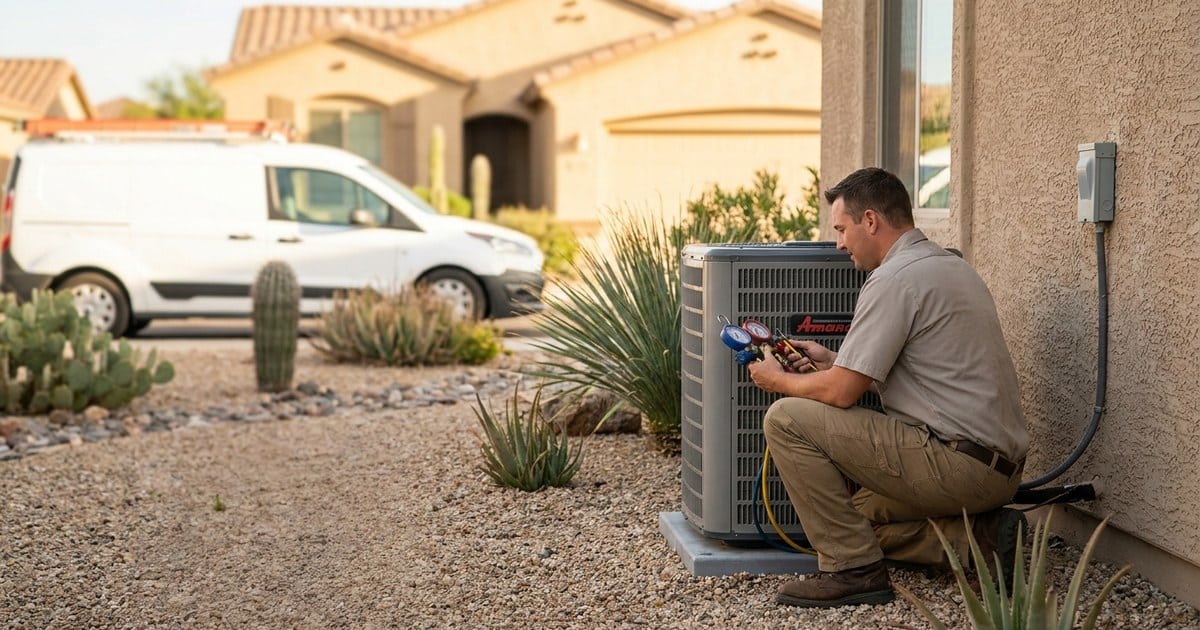
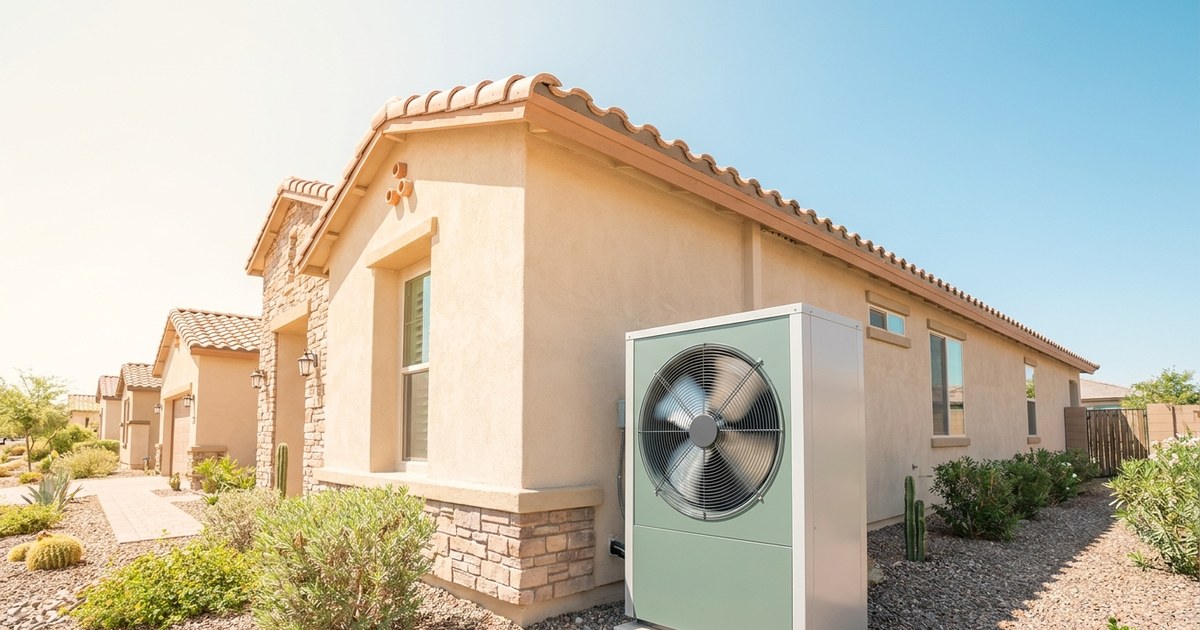
Air conditioners break down most often in July and August because extreme heat forces aging systems to run nonstop, exposing wear in compressors, capacitors, and refrigerant levels that mild spring weather never tested. When outdoor temps hit 110°F+ across the East Valley, a ten-year-old unit working overtime will fail at the worst possible moment, and so will your neighbor’s, which is why emergency repair waits stretch to days during peak season.
If you live in Gilbert, Mesa, Queen Creek, Chandler, or San Tan Valley, you already know what July heat does to your home. The question isn’t whether your AC will struggle: it’s whether it will survive. Most homeowners don’t realize that the majority of AC failures in the Air Conditioning category happen during a specific window when sustained triple-digit temperatures expose every hidden weakness in an aging system.
We’ve installed and repaired over 3,000 HVAC systems across the East Valley, and we see the same pattern every summer. Calls spike in late July, wait times stretch to three or four days at corporate shops, and families end up in hotels because their system died at 112°F and no one can get there until Thursday.
Why AC Systems Fail During Peak Summer Heat
Your air conditioner wasn’t designed to run 18 hours a day in 110°F heat for weeks on end. When outdoor temperatures stay above 105°F day after day, every component in your system is working at maximum capacity with no break to cool down.
The compressor runs continuously under extreme load. Extreme heat increases refrigerant pressure inside the system, forcing the compressor to work harder just to maintain the same cooling output. A compressor that cycled comfortably in May is running nonstop in July. That’s when a ten-year-old unit with normal wear starts to fail.
Capacitors degrade faster in high heat. These small components start the compressor and fan motors. A capacitor that worked fine in spring can burn out within days once temperatures spike above 110°F. The outdoor unit sits in direct sun, baking at surface temps while trying to start a compressor dozens of times per day.
Refrigerant leaks that were small and slow in April become critical failures in July. Higher system pressure from extreme heat widens microscopic cracks in aging coils and line connections. A system that was only slightly low on refrigerant in spring will lose enough charge during peak season to stop cooling entirely. You’ll notice the symptoms: the AC runs constantly but can’t get the house below 80°F, or ice forms on the indoor coil.
If your system is over eight years old and hasn’t had regular air conditioning maintenance, these failure modes are compounding right now. Small inefficiencies become catastrophic when the system can’t catch a break from the heat.
When your neighbor’s AC fails on the same 112°F day yours does, corporate call centers are overwhelmed. Because we’re owner-led, Bill is on the dispatch list personally. That means we can prioritize true emergencies and get someone to your home the same day. That’s the difference between spending one uncomfortable afternoon and spending three nights in a hotel. We show up when it counts.
The July-August Peak: When Everyone’s AC Breaks at Once
Summer HVAC breakdowns don’t spread evenly across summer. They cluster in late July through the first two weeks of August. This is when sustained heat, monsoon dust storms, and accumulated system wear converge.
June is hot, but most systems can handle it. Temperatures hit 105°F to 108°F, but you still get cool mornings. Your AC runs hard during the day but gets a break overnight. By mid-July, that pattern changes. High temperatures stay above 110°F for days or weeks, and overnight lows barely dip below 90°F. Your system runs 20 hours a day with no recovery time. That’s when components fail.
Monsoon season adds another layer of stress. Haboob dust storms coat outdoor condenser coils in fine desert sand, choking airflow and forcing the system to work even harder. A condenser coil covered in dust can’t reject heat effectively, so the compressor overheats and refrigerant pressure spikes even higher.
The result is predictable: everyone’s AC fails at once. When we get a heat wave (five or six consecutive days above 112°F), our emergency call volume triples. Corporate HVAC companies with call centers can’t keep up. Recent data shows that homeowners increasingly value fast response times during peak service periods, which is why they book out three to five days when demand surges.
Fast AC repair during Mesa summers isn’t a luxury, it’s a necessity. When you call JLM, you talk to someone in the East Valley who knows your neighborhood. We live here, we understand the urgency, and we don’t make you wait until the corporate dispatch queue clears.
Four System Components Most Likely to Fail in Extreme Heat
Not every AC part is equally vulnerable to extreme heat. Based on thousands of service calls across Gilbert, Mesa, and Queen Creek, we see the same four components fail again and again when temperatures stay above 110°F.
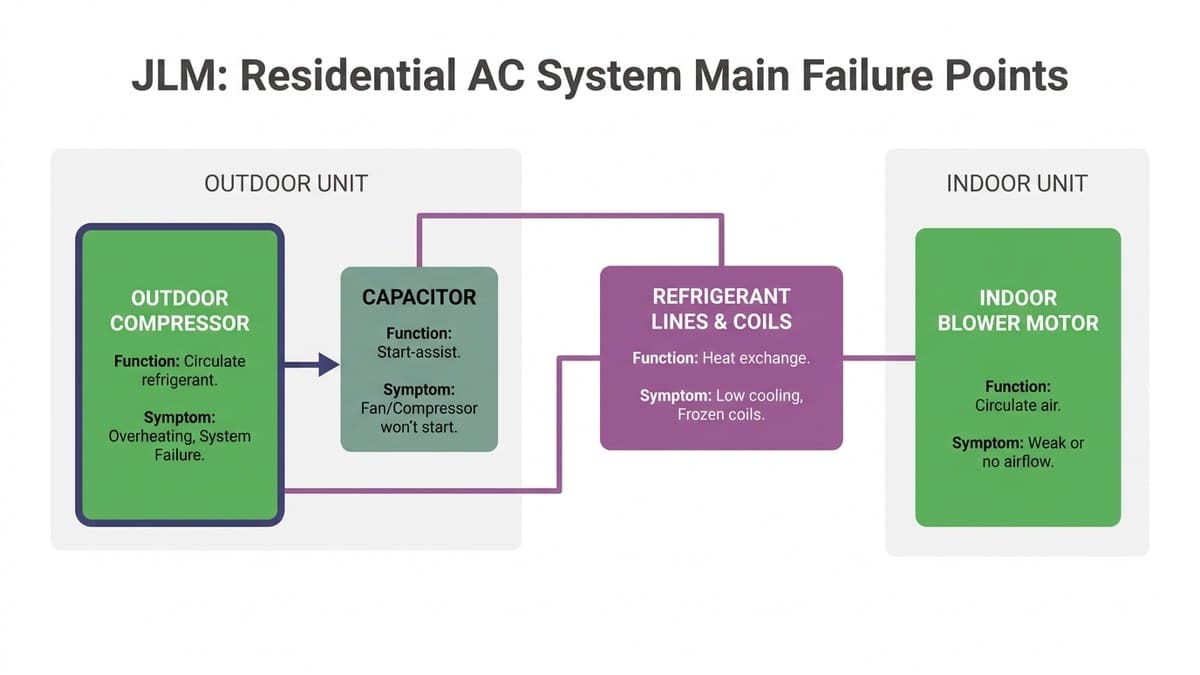
Compressor failure is the most expensive and often signals the end of a system’s life. The compressor circulates refrigerant between the indoor and outdoor units. When outdoor temps hit 110°F+, the compressor runs continuously at maximum load. If it’s already ten or twelve years old, internal wear accelerates rapidly. Symptoms: the outdoor unit won’t turn on, or it hums loudly and trips the breaker. A failed compressor on a 12-year-old system usually means replacement is smarter than repair.
Capacitor burnout is the most common failure we see in July and August, and it’s one of the cheapest to fix if caught early. Capacitors store electrical energy and release it to start the compressor and fan motors. Extreme heat degrades the electrolyte inside. Symptoms include: the outdoor unit hums but won’t start, the fan spins slowly, or the system cycles on and off repeatedly. If you hear a humming sound from your outdoor unit, that’s almost always a failing capacitor. Replacing it costs a few hundred dollars and buys you another season or two if the rest of the system is healthy.
Refrigerant leaks and low charge are harder to diagnose but equally critical. Refrigerant is the chemical that absorbs heat from your indoor air and releases it outside. Federal regulations have phased out older refrigerants like R-22, so if your system is 15+ years old and still uses R-22, a refrigerant leak tilts the repair-vs-replace decision heavily toward replacement. Heat expands refrigerant and increases system pressure, which widens small cracks in aging evaporator coils or line connections. Symptoms: the system runs constantly but can’t cool the house below 78°F or 80°F, ice forms on the indoor coil, or you notice hissing sounds near the outdoor unit.
When your AC freezes up in Mesa during summer, low refrigerant is usually the cause, and it gets worse under sustained heat.
Blower motor and fan failures round out the top four. The indoor blower motor circulates air across the evaporator coil and through your ductwork. When it runs 18-20 hours a day for weeks, bearings wear out and motors overheat. Symptoms: weak airflow from your vents, unusual noises (grinding, squealing) from the indoor unit, or the system runs but no air moves. The outdoor condenser fan is even more exposed. It sits in direct sun and runs continuously during peak heat.
We’ll tell you what failed, what it costs, and whether repair makes sense or if your system is at end-of-life. No upsell pressure. If a capacitor fix buys you two more seasons, we’ll say so. If you’re looking at the second major repair in 18 months on a 14-year-old system, we’ll walk you through the replacement math. That’s the transparent approach East Valley homeowners have come to expect.
What Homeowners Can Do Before Peak Season Hits
The best time to prevent a July breakdown is in April or May, before temperatures climb into the triple digits. Small investments in maintenance and preparation now can save you thousands in emergency repair bills and days of waiting for a tech during peak season.
Schedule a pre-season inspection. Professional air conditioning maintenance catches failing capacitors, low refrigerant, dirty coils, and worn components before they become emergencies. A comprehensive inspection includes testing the capacitor under load, measuring refrigerant pressures and temperatures, checking electrical connections, cleaning the condenser coil, and verifying that the blower motor and fan are running smoothly. Research from the Department of Energy confirms that regular maintenance extends system life and reduces the likelihood of mid-season failures.
We offer a 50-point maintenance plan. If we see red flags (a compressor that’s starting hard, refrigerant levels that are slightly low, a blower motor making noise), we’ll tell you what’s likely to fail and when, so you can plan ahead instead of reacting to an emergency.
Replace air filters monthly during summer. Most homeowners change filters every 60 to 90 days, which is fine in mild weather. But when your system runs 18+ hours a day, filters clog faster. A clogged filter reduces airflow across the indoor coil, which drops system efficiency and forces the blower motor to work harder. Set a reminder to check the filter on the first of every month from May through September.
Clear your outdoor unit of debris and dust. After a spring haboob, your condenser coil is probably coated in fine desert sand. That layer of dust acts like insulation, trapping heat and reducing the coil’s ability to reject heat. Following the ENERGY STAR heating and cooling maintenance checklist can help prevent seasonal failures. Once a month, turn off the power to the outdoor unit, then gently spray the coil fins with a garden hose from the inside out. Don’t use a pressure washer: the high pressure can bend the delicate aluminum fins.
Know the age of your system and its service history. If your AC is 12+ years old and you’ve had one or two repair calls in the last 18 months, it’s time for an honest second opinion on repair versus replacement. Older systems are less efficient and more likely to fail during peak season.
We’ll assess your system honestly, tell you if it’ll make it through summer, and explain your options with transparent pricing. No obligation, no pressure. When you call JLM, you get Bill or his team, not a script-reading dispatcher at a national call center.
When to Repair vs. Replace an Aging System
If your system is ten years old or older and struggling to keep up with East Valley heat, you’re facing a decision that affects your comfort, your budget, and your home’s value for the next decade. The repair-versus-replace calculus isn’t always obvious, but there are clear indicators.
Repair makes sense when the system is under ten years old, the repair cost is under $1,000, and your energy bills haven’t spiked noticeably. A capacitor replacement on an eight-year-old system buys you another two or three seasons. Similarly, a blower motor replacement on a seven-year-old unit is worth it if the compressor and refrigerant system are healthy. The key question: is this a one-time fix, or are you starting to see a pattern of failures? If this is your first repair call in five years, fix it. If it’s your third call in 18 months, replacement is probably smarter.
Replacement makes sense when your system is 12+ years old, the repair cost exceeds $2,000, or you’re facing a second major repair within two years. A failed compressor on a 14-year-old system almost always tips the scale toward replacement. Even if you repair the compressor, the rest of the components are the same age, and they’re all approaching end-of-life. You’ll likely face another expensive repair within a year or two, and you’ll still be running an inefficient system that costs more to operate than a modern unit.
Professional AC repair in Mesa starts with an honest diagnosis, and that means looking at the whole picture.
Energy efficiency is another factor. Systems manufactured before 2010 typically have lower SEER ratings. Modern high-efficiency systems use significantly less electricity to deliver the same cooling. If your energy bills have climbed steadily over the past few years even though your usage hasn’t changed, that’s your old system losing efficiency.
We’re your neighbors, not a corporate franchise trying to hit a sales quota. Bill is personally invested in giving you the right answer because his reputation in Gilbert, Mesa, and Queen Creek depends on it. We’ve done over 3,000 installs, and we know when a repair buys you time and when you’re throwing money at a system that won’t last.
Call us for a free on-site consultation. We’ll inspect your system, explain what’s failing and why, and give you an honest recommendation: repair, replace, or wait and monitor. No pressure, no hidden fees, just transparent guidance.
Recognizing the Warning Signs Early
Most AC failures don’t happen without warning. Systems that are headed for a breakdown in July typically show symptoms in May or early June. Learning to recognize these early warning signs gives you time to act before you’re dealing with a full emergency in 112°F heat.
Weak or inconsistent cooling is one of the earliest red flags. If your system used to cool the house to 72°F with no problem but now struggles to get below 76°F or 78°F on hot afternoons, something has changed. It could be low refrigerant, a failing compressor, a clogged coil, or ductwork issues. If your neighbors’ systems are keeping up and yours isn’t, you may need an AC repair specialist to diagnose the underlying issue.
Strange noises (grinding, squealing, banging, or clicking) often indicate mechanical wear or loose parts. A grinding noise from the outdoor unit usually means the condenser fan motor bearings are failing. Squealing from the indoor unit can signal a blower motor belt that’s slipping or worn. Clicking sounds when the system tries to start often point to a failing contactor or capacitor. None of these noises are normal.
Frequent cycling (the system turning on and off repeatedly in short bursts) is another sign of trouble. If your system is cycling every five to seven minutes, it’s short-cycling, often caused by an oversized system, a failing thermostat, a refrigerant issue, or a clogged filter restricting airflow. Short-cycling puts enormous stress on the compressor and capacitor, shortening their lifespan significantly.
Visible ice or frost on the indoor coil or refrigerant lines means your system is running below the dew point, which should never happen during normal operation. The most common causes are low refrigerant charge or severely restricted airflow. Either way, it’s a serious problem that requires immediate attention. If you see ice, turn the system off and call for service.
Recognizing these symptoms early and addressing them before peak season hits is the difference between a planned repair and an emergency replacement. Spring is the best time for scheduling Mesa AC repair precisely because you have time to diagnose, plan, and act without the pressure of living in triple-digit heat.
Don’t Wait for the Emergency
Peak-season AC breakdowns are predictable, avoidable, and expensive if you wait. Systems fail in late July and early August because extreme heat exposes every weakness in aging components. When everyone’s AC dies at once, wait times stretch to days and costs go up.
A pre-season inspection catches the problems before they become emergencies. Replacing a weak capacitor in May costs the same as replacing it in July, but in May you’re not waiting three days in 110°F heat. If your system is 12+ years old and showing symptoms (weak cooling, strange noises), get an honest second opinion now.
We show up when your AC goes down in 112°F heat (same day, no runaround) because we live in the East Valley and we understand what’s at stake. But we’d rather help you avoid that call by catching the problem in May.
Explore our full range of HVAC services, learn more about our HVAC system repairs and upgrades, or schedule a free consultation to see where your system stands and what makes sense for your home and your budget.
Call now: 602-619-3609