When you search “HVAC company near me,” you’re not just looking for a technician. You’re looking for someone who’ll show up on time, fix what’s broken, charge what they quoted, and leave your home comfortable and safe. How do I find a trustworthy HVAC company near me? Start by verifying licensing and insurance, then check online reviews and BBB ratings. Ask for detailed written estimates, confirm same-day or emergency availability, and choose a locally owned company with transparent pricing and a proven track record of installations and repairs in your area.
This guide will walk you through exactly what to verify, what questions to ask, and what red flags to avoid so you can hire with confidence today.
Why Finding the Right HVAC Contractor Matters (and What Happens When You Don’t)
Choosing the wrong HVAC contractor doesn’t just cost you time. It costs thousands in repeat repairs, voided warranties, and safety risks. An unlicensed technician might install your new AC without pulling permits, leaving you liable when code enforcement shows up. A fly-by-night operator might take your deposit and disappear. A corporate franchise might push a $12,000 system replacement when a $400 repair would have solved the problem. For insights into what professional HVAC Services in the East Valley, AZ should include, start with licensing verification.
According to the Bureau of Labor Statistics, HVAC technician employment is projected to grow 6% through 2032, driven by demand for energy-efficient systems and aging equipment replacement. That growth brings more legitimate contractors to the field but also more unlicensed operators looking for quick cash. Research from Workyard shows that HVAC system failures account for a significant portion of home service emergency calls, making contractor selection even more critical when urgent needs arise. The difference between a qualified professional and someone who’ll take your money and leave you sweating comes down to verifiable credentials, transparent pricing, and a track record you can check.
The stakes are higher in Arizona’s East Valley, where summer temperatures hit 115°F and AC failure isn’t an inconvenience: it’s a safety emergency. You need a contractor who’s licensed, insured, responsive, and accountable. This checklist will show you how to find one.
Step 1: Verify Licensing and Insurance First (Non-Negotiable)
Before you schedule a consultation, confirm the contractor holds the proper licenses and insurance. This isn’t optional due diligence: it’s the foundation of a safe, legal HVAC project. Every state regulates HVAC work differently, but Arizona requires contractors to hold a residential or commercial HVAC license issued by the state Registrar of Contractors. According to the Institute for Justice’s License to Work report, these licenses exist to protect homeowners from unqualified work that can lead to fire hazards, refrigerant leaks, and structural damage.
Ask the contractor for their license number, then verify it online through your state’s licensing board. In Arizona, the Registrar of Contractors website lets you search by name or license number to confirm active status, expiration date, and disciplinary history. A contractor with multiple complaints or a suspended license is a red flag you can’t ignore. When evaluating contractors for Mini Split Installation in Gilbert AZ: What to Know First, licensing and insurance verification should be your first step.
Insurance is equally critical. You want two types: general liability (protects your property if the contractor damages your home during the job) and workers’ compensation (protects you if a technician gets injured on your property). If a contractor doesn’t carry both, you’re personally liable for accidents. Request certificates of insurance and verify them with the insurer directly. Some contractors carry expired policies or fabricate coverage.
What to Look For on a Contractor License
A legitimate HVAC contractor license includes several key details you should verify. The license type matters: residential HVAC licenses cover single-family homes and small multi-family properties, while commercial licenses cover larger buildings. Make sure the license matches your project scope. Check the expiration date: an expired license means the contractor isn’t legally allowed to work. Review the disciplinary history section carefully. Multiple complaints, unresolved disputes, or past license suspensions signal chronic problems.
Bonding is another layer of protection. Some states require contractors to post a surety bond, which compensates you if the contractor abandons the job or fails to pay subcontractors. According to Florida’s Department of Business and Professional Regulation, homeowners should verify both licensing and bonding before signing any contract, a standard that applies universally across states.
The EPA also recommends verifying that HVAC contractors are EPA Section 608 certified to handle refrigerants, a federal requirement for anyone servicing or installing air conditioning systems. This certification proves the technician knows how to manage refrigerants safely and legally. Ask to see the certification card: it’s a small detail that separates professionals from amateurs.
Why Insurance Isn’t Optional
If an unlicensed or uninsured technician damages your HVAC system, punctures a gas line, or falls off a ladder on your property, you’re on the hook for repairs and medical bills. General liability insurance covers property damage caused during the job: a cracked foundation from heavy equipment, a drywall hole from careless maneuvering, or a flooded basement from a condensate line error. Workers’ compensation covers injuries to the contractor’s employees. Without it, an injured worker can sue you directly for medical costs and lost wages.
Verify both policies before work begins. Call the insurance company listed on the certificate and confirm the policy is active and covers the dates of your project. Some contractors let policies lapse and continue working with outdated certificates. For routine maintenance or emergency repairs, choosing a contractor with verified insurance protects your investment. Learn more about preventive service options through Air Conditioning | AC Technician Near Me.
Step 2: Read Reviews, But Know What to Look For
Online reviews are the fastest way to gauge a contractor’s reputation, but not all 5-star ratings are legitimate and not all 1-star reviews are fair. You need to evaluate review quality, not just quantity. Start with Google, the Better Business Bureau, Yelp, and Facebook. Look for consistency across platforms: a contractor with 200 glowing Google reviews and zero presence on BBB or Yelp might be gaming the system.
Recency matters. A contractor with 50 reviews from five years ago and nothing since has either stopped serving customers well or changed ownership. Look for reviews posted in the last 12 months. Detail matters even more. Generic praise like “Great service!” or “Highly recommend!” tells you nothing. Useful reviews mention the technician’s name, describe the specific problem solved, note the timeline, and explain what made the experience positive or negative.
Owner responses are a strong trust signal. When a contractor responds to negative reviews professionally, addresses the customer’s concern, and offers to make it right, that’s accountability. When a contractor ignores complaints or responds defensively, that’s a red flag. An A+ BBB rating is one of the strongest third-party trust signals available: it means the company has been in business for years, resolves disputes quickly, and maintains a complaint-free or near-complaint-free record.
For additional HVAC maintenance advice and seasonal tips from a trusted source, explore the Blog | HVAC Tips & Updates for Gilbert, AZ Residents.
Red Flags in Online Reviews
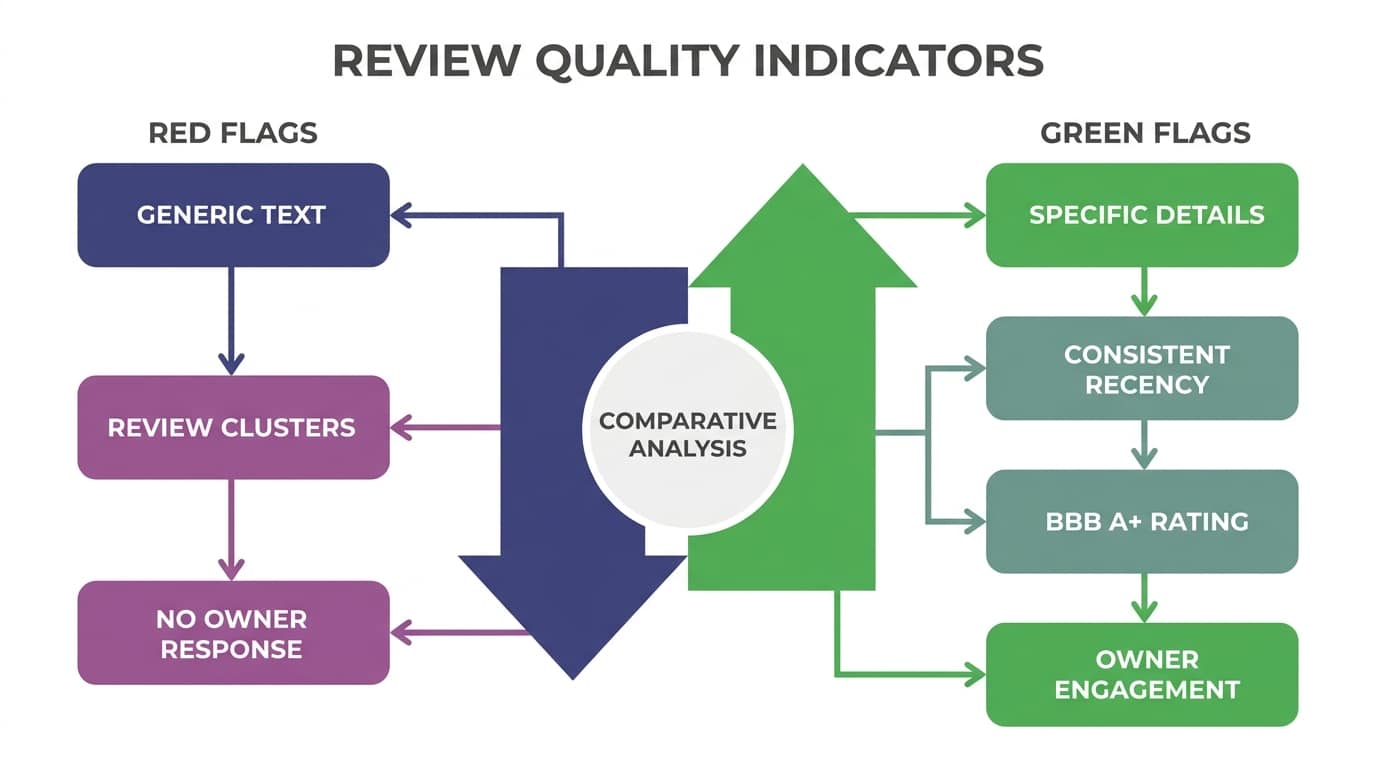
Watch for these warning signs when reading reviews. All reviews posted within a narrow time window (say, 20 reviews in two weeks, then nothing) suggests the contractor bought fake reviews or pressured recent customers to post en masse. Generic language that sounds like marketing copy (“best service ever,” “couldn’t be happier,” “exceeded expectations”) without specific details is another tell: real customers mention what broke, how it was fixed, and how long it took.
No response to negative reviews is a red flag. Contractors who ignore complaints either don’t care about customer satisfaction or lack the professionalism to address problems publicly. Overly defensive or combative responses are just as bad: they signal a contractor who blames customers instead of taking accountability. If you see a pattern of unresolved disputes (customer says the job wasn’t finished, contractor says customer didn’t pay, no follow-up), move on.
Green Flags: What Trustworthy Reviews Look Like
Strong reviews include specific details: the technician’s name, the problem diagnosed, the solution implemented, and the timeline. A review that says “Jose showed up on time, diagnosed a refrigerant leak in 20 minutes, explained the repair process clearly, and had us back up and running in two hours” is credible. A review that says “Great job!” is not.
Owner responses that address concerns thoughtfully and offer to resolve issues build trust. Repeat customers who mention multi-year relationships with the contractor are another strong signal: people don’t come back to contractors who cut corners or overcharge. An A+ BBB rating, especially one maintained over several years, shows the contractor resolves complaints quickly and operates with integrity. According to the California Contractors State License Board, checking BBB ratings and complaint history is one of the most effective ways to vet any home service contractor.
Step 3: Ask These 6 Questions Before You Book
Don’t hire based on a phone number alone. Before you schedule an on-site visit, ask these six questions to separate qualified contractors from time-wasters. These questions reveal licensing status, pricing transparency, availability, and accountability (the foundation of a trustworthy engagement).
1. “Are you licensed and insured in Arizona?” The answer should be an immediate yes, followed by the license number and insurance carrier names. If the contractor hesitates or says licensing isn’t required for small jobs, hang up. Licensing is legally required for HVAC work in Arizona, and insurance protects you from liability.
2. “Do you offer free on-site estimates?” Legitimate contractors provide free estimates for most residential jobs. If a contractor charges for estimates upfront (without explaining why), they’re either overbooked or fishing for easy money from homeowners who don’t know better.
3. “What’s included in your estimate: labor, parts, permits, disposal?” The estimate should itemize every cost: labor hours, equipment model and cost, permit fees, refrigerant disposal, old equipment removal. If the contractor says “We’ll figure that out later,” you’ll face surprise charges on the final bill.
4. “Do you have same-day or emergency availability?” Arizona summers don’t wait. A contractor who can’t respond within 24 hours during peak cooling season isn’t equipped to handle your urgency. Same-day service and 24/7 emergency response should be standard, not premium add-ons.
5. “What brands do you install, and do you warranty the work?” Ask which equipment brands the contractor stocks and installs. Premium brands like Amana, Carrier, and Trane come with strong manufacturer warranties, but the contractor’s labor warranty matters just as much. A 1-year labor warranty is standard; 2-5 years is better. If the contractor won’t warranty their work, they don’t trust their own quality.
6. “Can you provide references or recent install photos?” A contractor with 3,000+ installs should have a portfolio of recent jobs and customer references. If they can’t provide either, they’re either new to the business or hiding poor workmanship. For insights into what professional installations should include, review information on HVAC System | AC Technician Near Me.
Step 4: Get Multiple Estimates (and Know How to Compare Them)
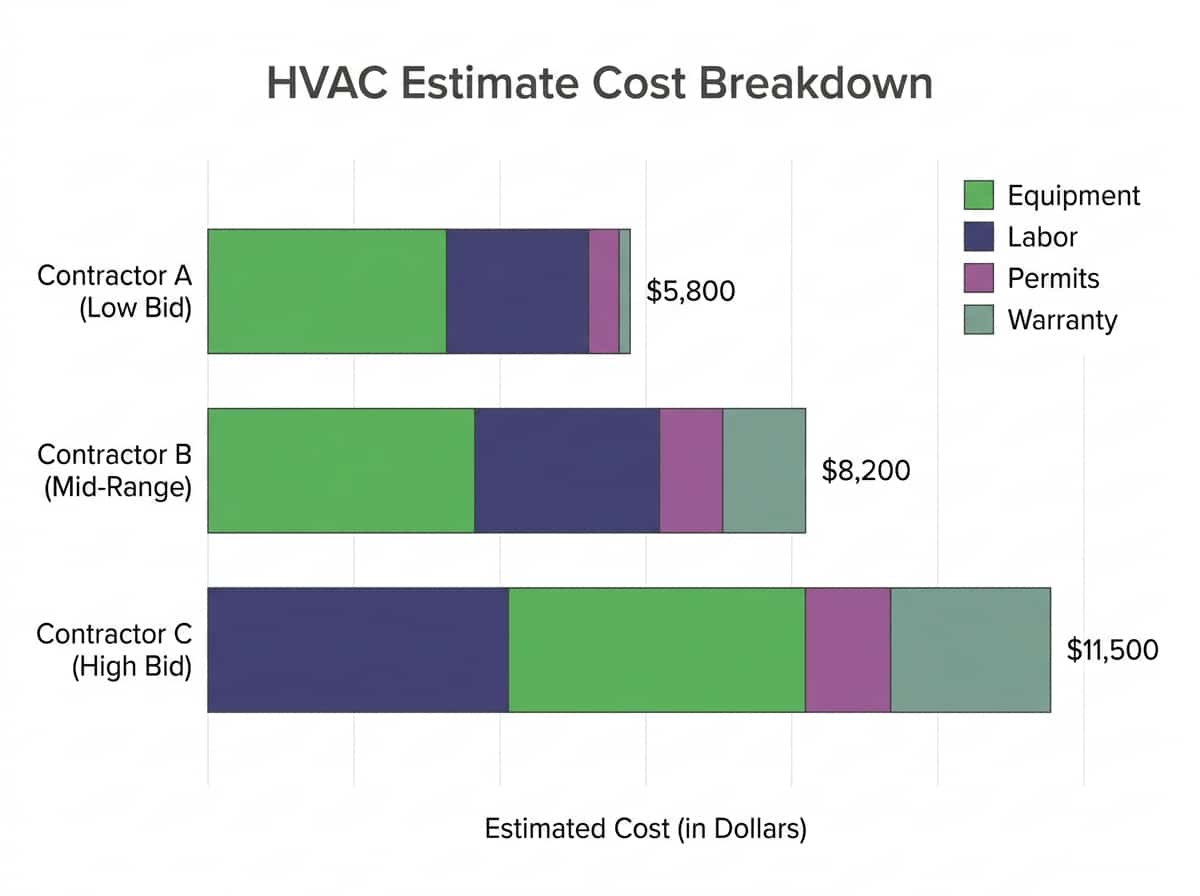
Never hire based on a single estimate. Get at least two, ideally three, written quotes for any repair over $500 or any system replacement. Multiple estimates help you spot outliers: suspiciously low bids often mean the contractor is cutting corners, using cheap parts, or planning to add fees later. Suspiciously high bids usually come from corporate franchises with layers of overhead markup.
The goal isn’t to pick the cheapest option. It’s to understand what a fair price looks like for your specific job, then choose the contractor who combines fair pricing with verified credentials and strong reviews. According to HomeAdvisor, the average HVAC repair costs homeowners $350 to $600, while full system replacements range from $5,000 to $12,000 depending on home size, equipment tier, and ductwork condition. Use these benchmarks to identify bids that fall outside the reasonable range.
When comparing estimates, don’t just compare the bottom-line number. Compare scope, equipment specs, warranty terms, and timelines. A $4,500 estimate using a 14 SEER unit with a 1-year labor warranty is not equivalent to a $5,200 estimate using a 16 SEER unit with a 5-year labor warranty and a more efficient installation method.
What Should Be on Every Written Estimate
A professional estimate includes every cost broken out in detail. You should see the equipment model number and SEER rating (for AC systems), the cost of the unit itself, labor hours or a flat labor fee, permit fees (if applicable), refrigerant type and disposal fees, old equipment removal and disposal, ductwork modifications (if needed), and warranty terms for both parts and labor.
According to the Air Conditioning Contractors of America (ACCA), quality HVAC installations follow industry standards like Manual J load calculations (to size the system correctly for your home) and Manual D duct design (to ensure proper airflow). A detailed estimate should reference these calculations or at minimum confirm that the contractor performed a load analysis before recommending equipment size. If the estimate says “3-ton unit” with no explanation of how that size was determined, the contractor is guessing.
The estimate should also specify a timeline: when work will start, how long it will take, and what happens if delays occur. Payment terms should be clear: deposit amount (10-25% is standard), payment schedule (milestones or completion), and accepted payment methods. Vague “additional fees may apply” language is a red flag. If it’s not on the estimate, you shouldn’t pay for it.
For guidance on what ongoing maintenance should cost after installation, review options for Air Conditioning Maintenance.
Pricing Red Flags to Watch For
Beware of contractors who refuse to provide written estimates and insist on verbal-only quotes. Verbal quotes are unenforceable and give the contractor room to inflate costs after the work is done. Pressure to sign the same day is another major red flag. Legitimate contractors don’t use high-pressure sales tactics. If a contractor says “This price is only good if you sign today,” walk away.
Massive upfront deposits (50% or more) are risky. Standard practice is 10-25% to reserve the job and order equipment, with the balance due on completion. If a contractor demands half the money before starting work, they may be using your deposit to finance other jobs or planning to take the money and disappear. Rheem’s HVAC business growth guide emphasizes that transparent pricing and clear payment terms are fundamental to building customer trust and long-term relationships.
Refusal to put timeline or warranty terms in writing is unacceptable. If the contractor won’t commit to a completion date or guarantee their work in writing, they’re leaving themselves an exit ramp when problems arise. Any estimate with vague “additional fees may apply” clauses should be clarified before you sign. Ask exactly what scenarios would trigger additional fees and get those scenarios added to the contract.
Step 5: Choose Local, Family-Owned Over Big Franchises (Here’s Why)
Corporate HVAC franchises have big marketing budgets, slick websites, and name recognition. But they also have layers of overhead, commissioned sales reps incentivized to upsell, and call centers that route your service request through multiple layers before a technician shows up. Local, family-owned contractors operate differently. The owner is often on the job, pricing is transparent (no corporate markup), communication is direct, and accountability is personal.
When you call a local contractor, you’re talking to someone who lives in your community, has built their reputation on referrals, and answers for their work directly. When you call a franchise, you’re routed to a call center that may be in another state, then dispatched to a sales rep who earns commission on every add-on they can sell you. That structural difference shapes every interaction.
Local contractors are also faster to respond during emergencies. A franchise might route your call through a regional scheduler and assign a tech who’s already running three other calls that day. A local contractor picks up the phone, checks the schedule, and often dispatches the owner or a senior tech within hours. When it’s 115°F outside and your AC just died, that speed difference matters. To understand what fast response looks like during peak Arizona heat, read Why Summer in Mesa Demands Fast AC Repair.
The Hidden Costs of Corporate HVAC Chains
Franchise overhead is built into every estimate. The contractor pays franchise fees (often 6-10% of revenue), national advertising fees, brand licensing fees, and corporate technology platform fees. Those costs get passed to you. The same install that costs $6,000 from a local contractor might cost $8,500 from a franchise, with no difference in equipment quality or workmanship.
Commissioned sales reps create misaligned incentives. When a technician earns 10% commission on every system they sell, they’re motivated to recommend replacement over repair, even when repair is the smarter choice. Local contractors, especially owner-led operations, focus on fixing what’s broken and building long-term customer relationships. They make money through repeat business and referrals, not one-time upsells.
Multi-layer approval processes slow service. When a franchise tech diagnoses a problem, they often need to call a regional manager for pricing approval, then route a formal estimate through corporate systems before sending it to you. That process can take 24-48 hours. A local contractor gives you the estimate on-site and schedules the work the same day if you approve. National call centers add another layer of friction: you can’t reach your technician directly; you have to go through a dispatcher who may not have the details of your job.
What Family-Owned Contractors Bring to the Table
Owner accountability is the biggest differentiator. When the owner of the business is on your job (or directly supervising it), they’re personally invested in quality and customer satisfaction. They can’t hide behind a call center or pass blame to a regional manager. If something goes wrong, you call the owner and it gets fixed. That level of accessibility and accountability is rare in corporate franchise models.
Repeat-customer relationships drive local business. We’ve built a customer base across Gilbert, Queen Creek, and Mesa that comes back for maintenance, refers neighbors, and trusts us with every HVAC need. That trust is built on transparent pricing, honest diagnostics, and doing the work right the first time. Franchise contractors rotate techs constantly; you rarely see the same person twice. Local contractors build relationships over years.
Transparent pricing is easier without corporate markup. A family-owned contractor sets their own rates based on local market conditions, equipment costs, and fair labor pricing. A franchise contractor has to fit their pricing into a corporate formula that accounts for brand fees, call center overhead, and investor returns. The result is inflated estimates that don’t reflect actual job costs.
Deep local knowledge matters. A contractor who’s lived and worked in the East Valley for years understands Arizona’s extreme heat, the HVAC demands of homes built in the 1990s vs. 2010s, local permitting quirks, and the fastest suppliers for emergency parts. A franchise tech who transferred from Ohio three months ago doesn’t have that context.
Step 6: Confirm Availability, Equipment Options, and Warranty Terms
Don’t assume same-day service or 24/7 emergency response. Ask explicitly during your first call. Arizona summers create HVAC emergencies daily, and contractors with limited staff or no after-hours availability will leave you waiting. Confirm the contractor offers same-day service for urgent repairs and 24/7 emergency response for complete system failures. If they can’t commit to either, keep looking.
Ask what equipment brands the contractor installs and whether they stock the units or order them on demand. Contractors who partner with premium brands like Amana, Carrier, or Trane can often install high-efficiency systems faster because they maintain relationships with local distributors. Contractors who install off-brand or budget-tier equipment may save you money upfront but cost you more in repairs and energy bills long-term. According to ENERGY STAR, homeowners can save up to 20% on heating and cooling costs by upgrading to high-efficiency HVAC systems and sealing ductwork properly.
Verify warranty terms before you sign. The manufacturer’s warranty covers equipment defects (typically 5-10 years for parts), but the contractor’s labor warranty covers installation quality. A 1-year labor warranty is standard. A 2-5 year labor warranty signals confidence in workmanship. If the contractor won’t warranty their labor, they don’t trust their own quality.
For a detailed look at what professional system installations should include from start to finish, explore How Mini Split Installation Works from Start to Finish.
Common HVAC Contractor Scams (and How to Avoid Them)
Awareness is your best defense. These are the most common HVAC contractor scams in residential markets, and every one is avoidable if you follow the checklist above.
Bait-and-switch pricing: The contractor quotes $4,000 over the phone, shows up, and discovers “unexpected issues” that push the cost to $7,000. Avoid this by insisting on written, on-site estimates before any work begins. Verbal quotes aren’t binding.
Unlicensed “helpers” doing the work: The licensed contractor shows up for the initial consult, then sends unlicensed helpers to do the actual install. If those helpers damage your home or make mistakes, your warranty may be voided. Ask who will be on the job and verify their credentials.
Fake urgency tactics: “Your compressor is about to explode; you need to replace the whole system today or risk a house fire.” Legitimate HVAC problems rarely require immediate replacement. Get a second opinion before agreeing to any same-day system replacement.
Disappearing after deposit: The contractor takes a 50% deposit to “order equipment,” then stops answering calls. Never pay more than 25% upfront, and verify the contractor’s license and insurance before handing over any money.
No permit pulled: Some contractors skip permits to save time and money. If code enforcement finds unpermitted work, you’re liable for fines and may have to tear out the install and redo it legally. Always confirm the contractor will pull permits where required.
For advice on proactive maintenance that prevents emergencies and reduces scam vulnerability, read Is Spring Too Early to Plan for Arizona AC Tune-Up?.
What to Expect After You Hire the Right Company
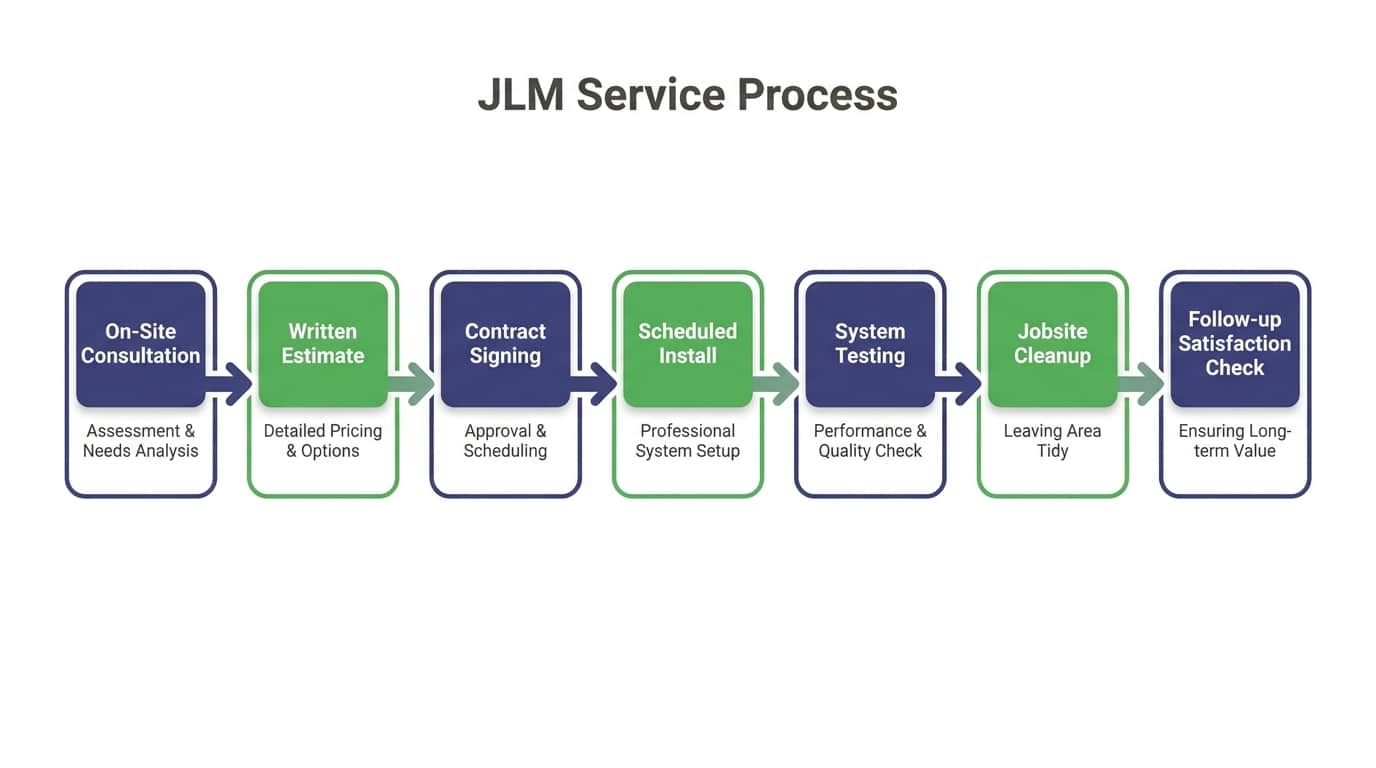
Once you’ve vetted and hired a qualified contractor, here’s what a professional engagement looks like. The contractor schedules an on-site consultation to assess your system, measure your home, and perform a load calculation. They provide a detailed written estimate with equipment specs, cost breakdown, timeline, and warranty terms. You approve the estimate, sign the contract, and pay the deposit.
Work begins on the scheduled date. The crew arrives on time, introduces themselves, and walks you through the plan. They protect your floors and work area, complete the install or repair according to code, test the system thoroughly, and clean up the jobsite before leaving. The contractor explains how to operate the new system, provides maintenance recommendations, and confirms warranty registration.
A follow-up satisfaction check happens within a week. The contractor calls or emails to confirm everything is working as expected and offers to address any concerns. They provide information about seasonal maintenance plans, filter replacement schedules, and emergency contact numbers. This is what professionalism looks like post-hire.
For diagnostic guidance on recognizing future repair needs before they become emergencies, review Do You Really Need Professional AC Repair in Mesa?.
Final Checklist: The 10-Point HVAC Contractor Vetting List
Use this scannable checklist before you hire. Every item should be verified before you sign a contract or pay a deposit.
- Verified state and local HVAC license with no disciplinary history.
- General liability and workers’ compensation insurance confirmed with carrier.
- A+ or equivalent BBB rating with recent, resolved complaint history.
- Consistent, detailed online reviews across Google, Yelp, and Facebook within the last year.
- Written estimate with itemized costs, equipment specs, labor breakdown, and timeline.
- Same-day or 24/7 emergency availability confirmed during initial call.
- Transparent pricing with no vague “additional fees may apply” language.
- Locally owned, owner-on-the-job accountability with direct communication.
- Warranty on both parts (manufacturer) and labor (contractor, minimum 1 year).
- References, recent install photos, or portfolio available on request.
Conclusion: You Don’t Have to Guess. You Have a Checklist.
You now know exactly what to verify, what questions to ask, and what red flags to avoid when searching “HVAC company near me.” The right contractor is licensed, insured, transparent, locally owned, and accountable. You don’t need to settle for pushy franchise sales reps or fly-by-night operators cutting corners. Follow this checklist, trust your instincts, and hire with confidence.
Need a licensed, trustworthy HVAC contractor in Gilbert, Queen Creek, or Mesa? JLM Air Conditioning & Heating delivers same-day service, transparent pricing, and a proven track record backed by an A+ BBB rating. Learn more about our services.
Call now: 602-619-3609