If you’ve ever wiped down a shelf only to find a fresh layer of dust the next day, you know Arizona’s air quality challenges firsthand. For families in Gilbert, Mesa, and Queen Creek, allergens, pollen, and fine desert dust don’t just settle on furniture. They circulate through your home, triggering sneezing, congestion, and restless nights. A whole-home air purifier integrates with your HVAC system to filter dust, allergens, and airborne pollutants from every room in your house. Unlike portable units that clean one space, a professionally installed system captures particles before they circulate through your ductwork, delivering cleaner air to your entire family year-round.
Why Whole-Home Air Purifiers Outperform Portable Units
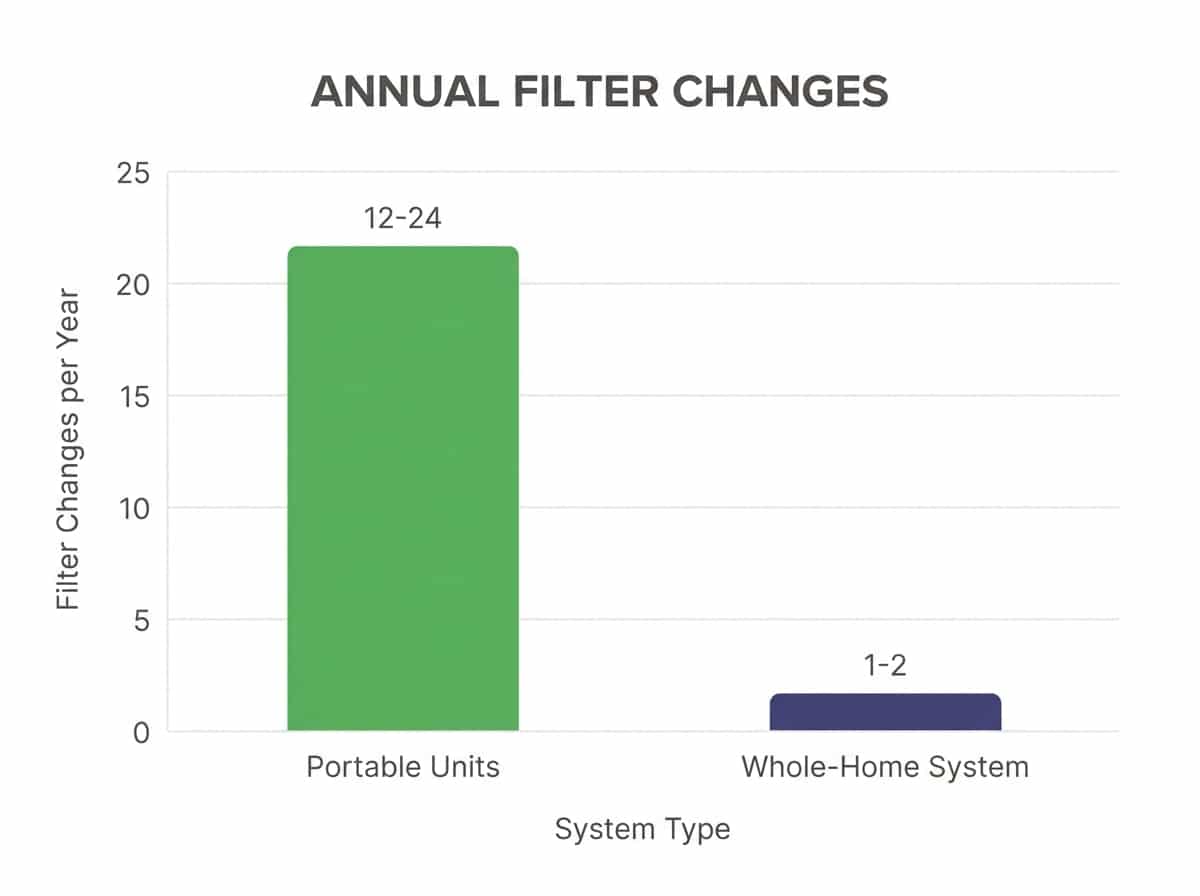
Portable air purifiers serve a single room. You’d need three or four units to cover a typical East Valley home. Even then, hallways, kitchens, and bedrooms remain unprotected. A whole-home system filters air at the source, treating every cubic foot that moves through your HVAC ductwork. It’s quieter, more convenient, and far more effective at reducing allergen loads across your entire living space.
Indoor air quality is often worse than outdoor air, especially in homes with poor ventilation or dust infiltration. Portable units miss the air moving through return vents, which means allergens recirculate. A whole-home solution stops particles before they reach your living spaces. The EPA’s guide on air cleaners and air filters confirms that air purifiers reduce allergens, dust, and airborne pollutants when used correctly.
In our work with East Valley families, we’ve seen how Arizona’s dust and allergen load impacts HVAC systems. Homeowners report fewer allergy flare-ups and less dust buildup after whole-home air purifier installation. Arizona homeowners often underestimate how quickly dust accumulates in their HVAC systems, making proactive air conditioning maintenance essential for long-term indoor air quality.
How a Whole-Home Air Purifier Works with Your HVAC System
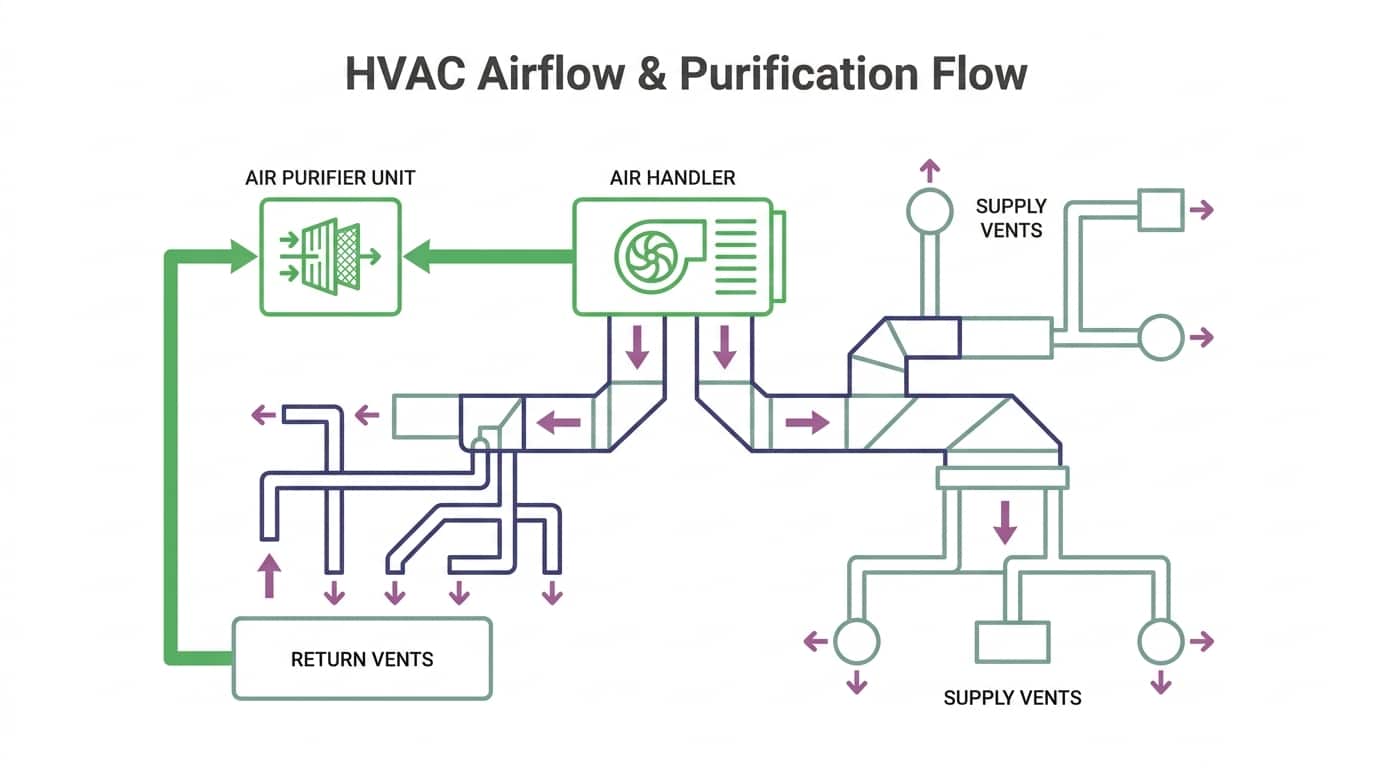
A whole-home air purifier installs directly into your existing HVAC ductwork or near your furnace and air handler. As air cycles through the system for heating or cooling, it passes through advanced filtration media that captures particles as small as 0.3 microns. Think pollen, pet dander, mold spores, and even some bacteria and viruses. The filtered air then distributes to every room through your existing duct network.
Most systems work with your current HVAC setup. An undersized filter restricts airflow and overworks your blower motor. An oversized unit wastes energy. Our team assesses your system’s capacity, measures your ductwork, and selects the right equipment for your home’s square footage and air circulation needs.
Types of Whole-Home Air Purification Technologies
Three main technologies dominate the whole-home air purification market. HEPA filters trap 99.97% of particles 0.3 microns or larger. They’re ideal for families with asthma or severe allergies.
Electrostatic filters use an electric charge to attract and trap particles. They’re washable and reusable, which reduces long-term costs. UV germicidal lights neutralize bacteria, mold spores, and viruses as air passes the bulb.
During your free consultation, we’ll walk through each option and recommend the best fit for your home’s air quality challenges. The NIEHS training resource on indoor air quality reinforces air filter types and HVAC standards that support cleaner indoor environments.
Health Benefits of Cleaner Indoor Air
Cleaner air means fewer triggers for allergy and asthma symptoms. Common benefits include fewer morning headaches, reduced sneezing and congestion, and better sleep quality. Pets shed dander year-round. Kids track in pollen from playgrounds. Cooking releases particulates. A whole-home system captures all of it.
Healthline’s analysis on air purifier effectiveness confirms that whole-home air purifiers can reduce allergen symptoms for people with asthma or allergies. For families managing respiratory conditions, the difference is immediate.
If you’re dealing with recurring dust issues or allergy flare-ups during Arizona’s intense summer months, understanding Why Summer in Mesa Demands Fast AC Repair can help you see how system efficiency and air quality are closely connected. For more insights on maintaining optimal air quality and system performance, explore our comprehensive blog covering HVAC topics.
What to Expect from Professional Installation
We start with a free consultation. During the visit, we assess your current HVAC system, measure your home’s square footage, and discuss your air quality concerns. Are you dealing with pet allergies, seasonal pollen, or excessive dust? We’ll recommend a filtration solution tailored to your needs, not a one-size-fits-all upsell.
Once you approve the estimate, installation typically takes a few hours or can be completed during the same visit as another scheduled air conditioning service. We integrate the air purifier into your ductwork, verify airflow balance, and test system performance. You’ll know exactly what to expect before we start. No hidden fees, no surprise charges.
After installation, we’ll show you how to monitor filter life and schedule replacements. Most systems need filter changes every 6 to 12 months, depending on usage and home environment. Penn Medicine’s resource on EPA air purifier guidance offers practical tips for maintaining your system.
Frequently Asked Questions
How much does a whole-home air purifier cost? Pricing varies based on system type and home size. A basic HEPA filter installation typically starts around $800 to $1,200. UV light systems and advanced electrostatic filters cost more. We’ll provide a detailed estimate during your free consultation.
Will it increase my energy bill? Not significantly. Modern whole-home air purifiers are designed to work within your HVAC system’s existing airflow capacity. Properly sized systems add minimal load to your blower motor. In some cases, cleaner ductwork and filters reduce overall energy consumption.
Do I need to replace filters often? Most whole-home filters last 6 to 12 months, depending on air quality and system usage. We’ll set a reminder schedule for you during installation. Filter replacements are straightforward and can be handled during your regular HVAC system maintenance visit.
Can it be installed in an older HVAC system? Yes. Most whole-home air purifiers are compatible with existing furnaces and air handlers. Our team will verify compatibility during the initial assessment. If upgrades are needed to accommodate the new system, we’ll discuss options and pricing upfront. The EPA’s comprehensive guide to air cleaners for the home reinforces how proper air filtration contributes to healthier indoor environments.
Breathe Easier Starting Today
Your family deserves clean, healthy air in every room. A whole-home air purifier delivers comprehensive protection against allergens, dust, and pollutants without the hassle of managing multiple portable units. Bill Milbourn and the JLM team bring 3,000+ installations, an A+ BBB rating, and owner-on-the-job reliability to every project. We live in the East Valley and serve families just like yours. No corporate call centers. No hidden fees. Just honest, professional HVAC service from people you can trust.
The archived EPA guide on residential air cleaners and CDC research on ventilation and air filtration provide additional background on how air purification systems improve indoor air quality for families like yours.
Ready to breathe easier? Call now: 602-619-3609 to schedule your free consultation and find out which whole-home air purifier is right for your family.
— By JLM