
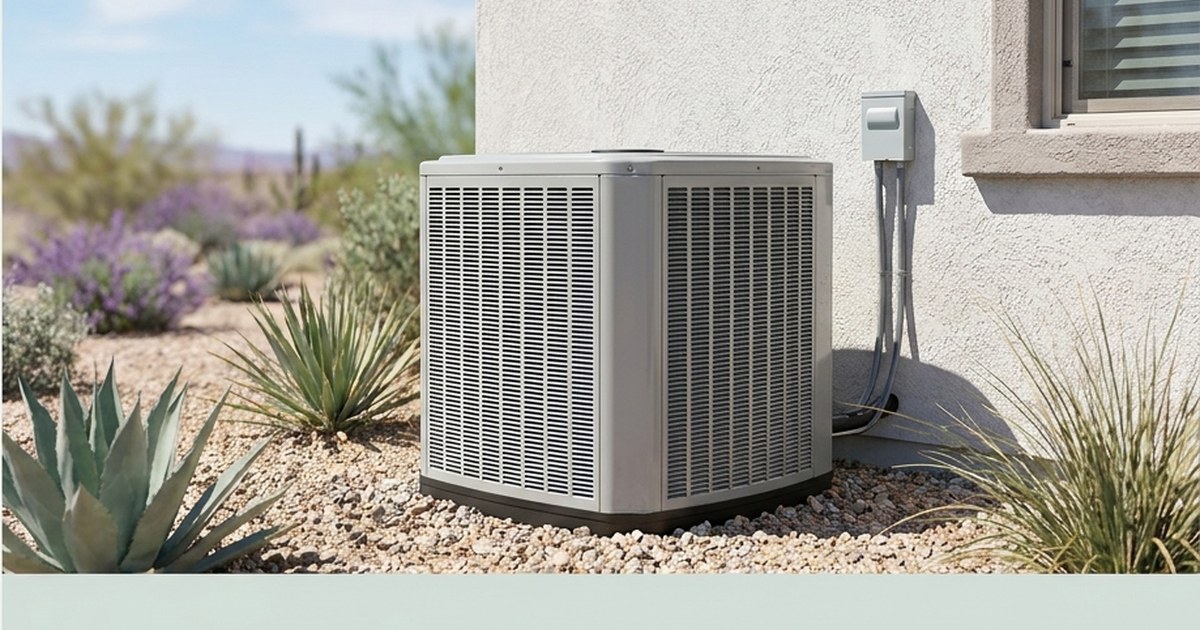
AC compressor failure prevention maintenance works by keeping the parts that stress the compressor clean and in range: coils, refrigerant charge, capacitors, electrical connections, and airflow. A tune-up before Arizona’s cooling season catches weak parts and restricted airflow early, so the compressor doesn’t overheat, overwork, or burn out.
The compressor is the most expensive part of your air conditioner. It is also the part that works hardest. In the East Valley, your system may run for most of the day through a long cooling season, and every hour adds wear.
Here is the good news. A compressor rarely fails out of nowhere. It usually gives out at the end of a slow chain of small, fixable problems. If your system is already acting strange, our guide to signs your AC needs a maintenance visit is a good first stop.
We are a family-owned East Valley company, and this guide is written the way we would explain it to a neighbor. We cover the causes, the warning signs, a prevention checklist, lifespan, and the repair-or-replace decision. We also say plainly what maintenance can and can’t do.
What causes an AC compressor to fail?
Most compressor failures trace back to heat and strain: dirty coils, low refrigerant from a leak, worn electrical parts like capacitors and contactors, restricted airflow, and plain age. Many of these build up slowly. That is why they can often be caught before the compressor itself gives out.
Some causes are not preventable. Age and the occasional manufacturing defect are real. But the list of stressors you can do something about is longer than most homeowners expect.
Heat and dirty coils
The compressor pumps refrigerant, and the outdoor coil releases the heat that refrigerant carries. When dust, cottonwood fluff, or grime coats that coil, heat has nowhere to go. The compressor runs hotter and works longer to reach the same temperature.
ENERGY STAR central AC service guidance points homeowners toward routine service by a qualified professional, and coil cleanliness is a big reason why. Arizona dust makes this a yearly issue, not an occasional one.
Low refrigerant and leaks
Refrigerant does not get “used up.” If the charge is low, there is a leak somewhere. A low charge can starve the compressor of the cooling and lubrication it relies on. Topping off without finding the leak only delays the problem, and an honest technician will tell you that.
Electrical wear: capacitors, contactors, and hard starts
A capacitor is a small part that gives the compressor motor a jolt to start. A contactor is the switch that sends power to the outdoor unit. Both wear out with heat and repeated cycling. When they weaken, the compressor can struggle to start and run hot while it tries. That strain adds up.
Restricted airflow, freeze-ups, and short cycling
A clogged filter, a dirty blower, or a blocked drain can choke airflow. The system may ice up or switch on and off in short bursts, which is hard on the compressor. If you have seen frost on the indoor unit, read Quick Solutions When Your AC Freezes Up in Mesa before you run the system again.
Takeaway: Most compressor killers are heat, strain, and neglected small parts, and that is exactly the list maintenance targets.
What are the symptoms of AC compressor failure?
Common compressor failure symptoms include warm air from the vents, an outdoor unit that hums but won’t start, loud grinding or clanking, a tripped breaker, lights dimming when the AC kicks on, and rising energy bills. Any of these deserves a technician visit, not a DIY fix.
Here is the same list in a quick-scan format:
- Warm air from the vents while the thermostat calls for cooling
- Humming or clicking from the outdoor unit that never turns into a steady run
- Grinding, clanking, or squealing from the outdoor unit
- A breaker that trips when the AC starts
- Lights that dim or flicker when the system kicks on
- Energy bills that climb with no change in how you use the AC
- Short cycling, where the system turns on and off in quick bursts
Not every symptom means the compressor is dead. A failed capacitor can mimic a failed compressor, and it costs far less to fix. That is one reason we always diagnose before we quote.
What to do first
If you notice any of these, shut the system off at the thermostat and call a technician. Don’t keep running it to “see if it clears up.” A struggling compressor can take more damage with every hour of operation, and a repair that was small can become a big one.
You do not need to wait for a convenient time. We offer 24/7 emergency service with same-day availability, and we won’t pressure you into anything. We will tell you what is wrong and what is optional. If a failed compressor turns out to be the problem, our breakdown of AC Compressor Failure: Repair or Replace? walks through the next decision.
Takeaway: Warm air, odd noises, or a tripping breaker mean you should turn the system off and call, not keep running it.
How does maintenance prevent AC compressor failure?
A pre-season tune-up reduces compressor failure risk by correcting the stressors listed above before they pile up. Technicians clean the coils, check the refrigerant charge, test the electrical parts, and confirm airflow. Maintenance cannot promise a failure-free system, but it removes the most common, preventable causes.
Think of it as a cause-and-effect map. Each maintenance task answers a specific way a compressor dies. That map is the whole case for AC compressor failure prevention maintenance: you are not buying reassurance, you are removing causes.
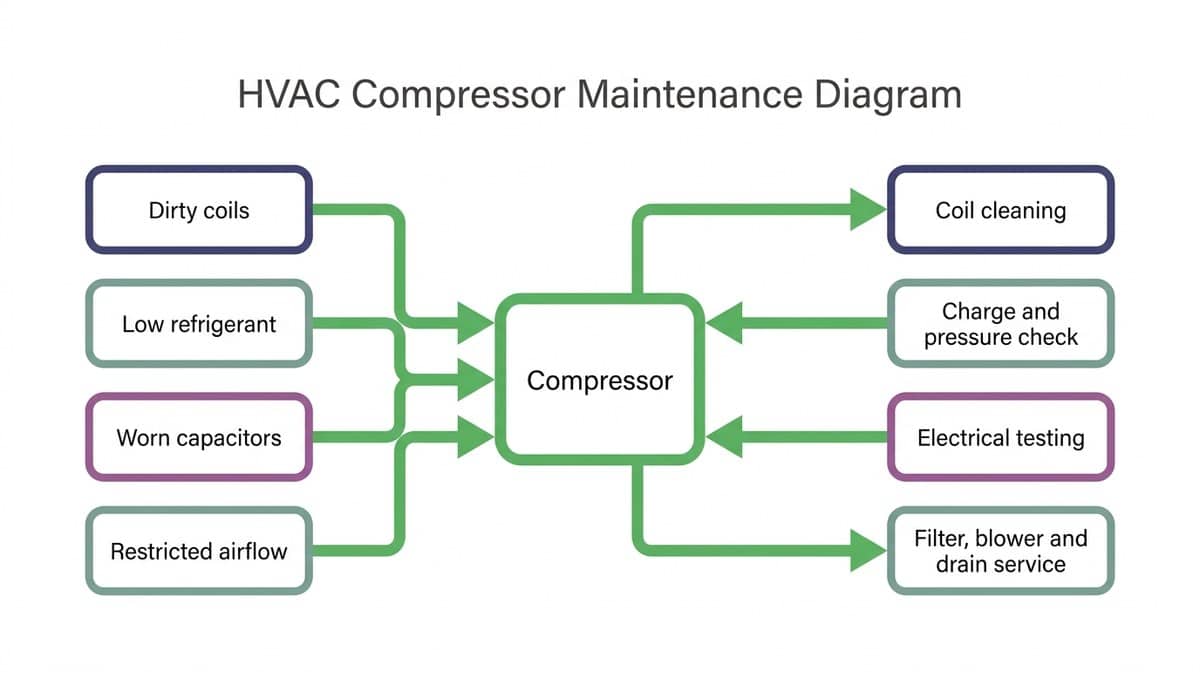
- Dirty coils are handled by coil cleaning, so heat leaves the system as it should.
- Low refrigerant is caught by pressure and charge checks, which also point to leaks.
- Worn capacitors and contactors show up in electrical testing, before they stall a motor.
- Restricted airflow is fixed by filter checks, blower cleaning, and drain service.
What a 50-point visit actually checks
Our maintenance visit covers a 50-point inspection, coil and blower cleaning, drain service, and a filtration check. You also get a system health report. That report matters because it gives you something concrete to read. You can see what we found, what is fine, and what needs attention. If a part is fine, the report says so. No hidden fees, no upsell.
For a fuller walkthrough, see our guide to HVAC preventative maintenance. The idea of caring for the system on a schedule is not unique to homes. FEDCenter lists an example HVAC service schedule that shows how routine intervals are normally set.
Why a plan beats one-off visits
Preventive care is the core of how we think about HVAC maintenance: protect your investment before something fails. Our HVAC Maintenance Plans: Prevent Breakdowns Before They Start are built for homeowners who have already paid for a system and want to keep it. A plan means each seasonal tune-up happens on schedule instead of when you remember, and enrolling is how most of our long-term customers stay ahead of summer.
Plan members also get priority scheduling and repair discounts. If something does go wrong, the people who looked after their system are first in line. That matters when a homeowner needs emergency repair on a 110-degree day and the whole valley is calling at once.
If you want the longer view, here is how professional maintenance extends AC life.
Takeaway: Every maintenance task maps to a real way compressors fail, which is why a tune-up is about removing causes and not buying peace of mind.
Compressor checklist: you vs. a technician
Some compressor protection is yours to do, and some needs a licensed technician with the right gauges and test equipment. We’d rather tell you which is which. Doing your part helps prevent compressor damage by cutting the strain on it, and a technician handles what you shouldn’t touch.
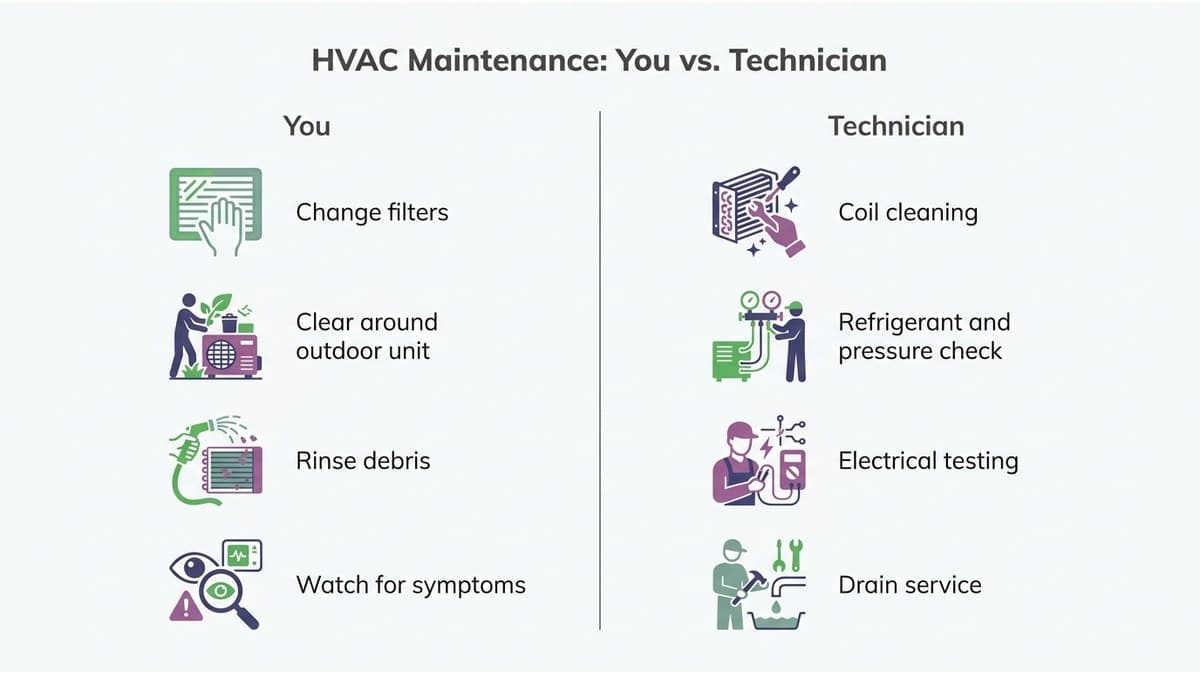
What you can do
- Replace or clean the filter on a regular basis. A clogged filter is the easiest way to choke airflow.
- Keep about two feet clear around the outdoor unit. Trim plants, and move stored items and debris away.
- Rinse light debris off the outdoor unit’s exterior after switching it off at the disconnect. Don’t use a pressure washer on the fins.
- Watch and listen. A new noise, a slower cooldown, or a higher bill is worth a call.
- Check your thermostat settings so the system isn’t running harder than it needs to.
The U.S. Department of Energy publishes guidance on keeping cooling costs under control, and clean filters and clear airflow are central to that advice.
What a technician does
- Coil cleaning inside and out, done properly so fins aren’t damaged
- Refrigerant and pressure checks to confirm the charge and spot leaks
- Electrical testing of capacitors, contactors, and wiring connections
- Drain service to prevent clogs that cause water issues and shutoffs
- Blower and filtration checks to confirm airflow is where it should be
Refrigerant handling and electrical testing are not DIY jobs. They need training and the right equipment, and mistakes can hurt you or the system.
Seasonal cadence
A good rhythm is one seasonal tune-up before cooling season and a quick check as the season winds down. Many homeowners find that two visits a year fit Arizona’s long run time. Our guide on how often your AC should be serviced lays out the schedule in more detail, and there is a full seasonal AC maintenance checklist you can print.
Booking a service visit before the heat hits is the simplest habit on this page. It is also the one that most often turns a July emergency into a non-event. Our schedule fills fast once the first triple-digit week arrives, so spring and early summer are the easy window for a same-week appointment.
Takeaway: You handle filters, clearance, and listening; a technician handles refrigerant and electrical, and both halves protect the compressor.
How long do AC compressors last in Arizona?
Most compressors last roughly 10 to 15 years in mild climates, a range consistent with the InterNACHI life expectancy chart. Long Arizona cooling seasons, dust, and skipped service can shorten that. Your own number depends on how the system was installed, how hard it runs, and how well it has been maintained.
What shortens compressor life here
- Long run times. Our cooling season is one of the longest in the country. More hours means more wear on every moving part.
- Triple-digit heat. Hot outdoor air makes it harder for the system to shed heat, so the compressor works under more load.
- Dust and debris. Dirty coils and filters force the system to strain.
- Skipped service. Small electrical and airflow problems go unnoticed until they damage something expensive.
- Poor installation. An undersized or badly set up system may run constantly and wear out early.
What extends it
Regular tune-ups, clean filters, clear space around the outdoor unit, and quick attention to early warning signs all help prevent compressor damage over the long run. So does choosing equipment suited to desert conditions when it is time to replace.
The U.S. Department of Energy discusses how cooling equipment affects household energy costs. The same long run times that raise your bill also add wear to the compressor. That is why efficiency and lifespan tend to rise and fall together.
We don’t have lifespan data of our own to publish, and we won’t invent it. For brand-by-brand context, read How Long Do HVAC Systems Last in Arizona? Lifespan by Brand & Maintenance Impact. What we can say from 3,000+ installs and service calls across the East Valley is that systems on a regular maintenance schedule tend to give their owners fewer surprises.
Takeaway: Arizona’s heat, dust, and long season can shorten compressor life, and steady maintenance is the best way to protect the years you paid for.
Should you repair or replace a failed compressor?
It depends on the system’s age, warranty status, refrigerant type, and the repair quote compared with the value of the whole system. A younger system under warranty often justifies repair. An older, aging system often points toward replacement. There is no single rule, only a set of honest questions.
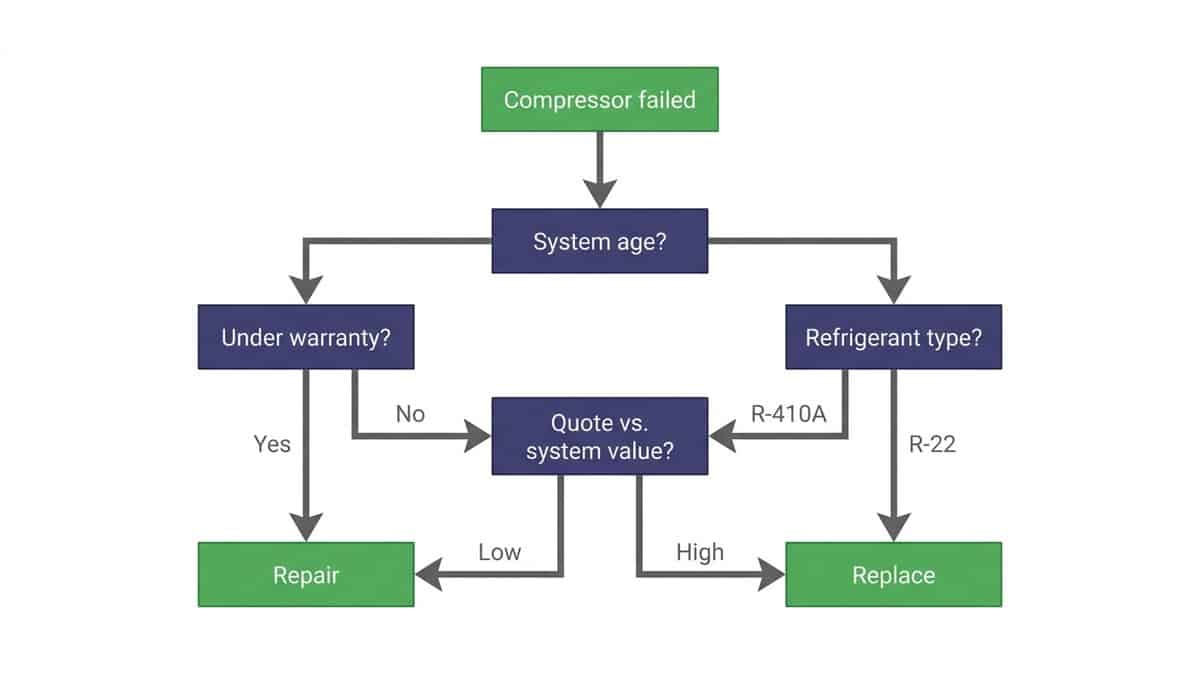
The questions that decide it
- How old is the system? A newer system with a single failed part is a different case from a system near the end of its expected life.
- Is it under warranty? Check your paperwork. Warranty terms can cover major parts for a set period, and registration or service records may matter.
- What refrigerant does it use? Older systems that use R-22, a refrigerant phased out under federal rules, can be costly to service. The U.S. EPA explains the phaseout of Class II ozone-depleting substances and why supply has tightened.
- How does the quote compare to the whole system? If the repair eats a big share of what a new system would cost, replacement deserves a close look.
- What are the energy costs? Older equipment tends to cost more to run, and the U.S. Department of Energy offers general guidance on cooling costs worth reading before you decide.
What an honest recommendation looks like
When a compressor fails in July, you may be hot, stressed, and short on time. That is the moment pushy sales happen, and it’s the moment we work hardest to avoid. For urgent calls, we offer 24/7 emergency repair with same-day availability, and the first thing we do is diagnose, so you know whether you are facing a capacitor or a compressor. For bigger decisions, we offer a free on-site consultation and a transparent quote, so you can see the choice in front of you.
If replacement is the right call, this is where the “Make the Right Decision” thinking matters. A new system should be sized for your home and matched to your ductwork. We install premium equipment such as Amana, and financing options are available if you want to spread the cost. If repair makes sense, we will say that too.
See the full list of JLM HVAC repair, replacement, and maintenance services for options.
Takeaway: Repair or replace is a judgment about age, warranty, refrigerant, and quote, and you deserve a plain-spoken answer without pressure.
Is AC maintenance worth it for compressors?
For most homeowners, yes. A tune-up costs a fraction of a compressor repair or system replacement, and it catches the stressors that shorten compressor life. It cannot promise a failure-free system, but it improves the odds and gives you a clear picture of your equipment.
We know the objection. “My AC still works. Why pay for maintenance?” And, “Is this just a way to sell me something?” Those are fair questions. Here is how we think about them.
First, a working AC is not the same as a healthy AC. Dirty coils, a weak capacitor, or a slow leak can all hide until the day the system quits. Second, the system health report from each visit gives you facts you can read yourself. If we find nothing wrong, you get a clean report and your money has bought peace of mind with evidence behind it.
Third, think about timing. A failed compressor in peak summer is the most stressful and often the most expensive moment to find a problem. The U.S. Department of Energy publishes guidance on managing cooling costs, and a well-kept system generally runs closer to the way it was designed to.
This is the heart of “Preventive Care & Maintenance Plans.” You already spent real money on your system. A plan protects that investment so you don’t have to make a rushed call about replacement. When a replacement is the right decision, you will have time to plan it, compare options, and decide without a heat emergency pushing you. That is what we mean by system replacement and installation done the right way: a properly sized system, ductwork that matches it, and a timeline that is yours. If you want to see the numbers behind that logic, read what maintenance plans save compared with emergency repairs.
We will not tell you maintenance guarantees anything. It does not. It does shrink the list of preventable causes, and for AC compressor failure prevention maintenance, that is a good trade.
Takeaway: Maintenance is worth it because it costs far less than the failures it helps you avoid, and it gives you proof of what your system needs.
Quick answers about compressor care
Can I run my AC with a bad compressor?
No. Turn the system off at the thermostat and call a technician. Running it can damage other parts and turn a repair into a bigger one.
Does a compressor warranty cover the repair?
It might. Many manufacturer warranties cover compressors for a set period, and some ask for proof of regular service. Check your paperwork, or ask us to look at it with you.
Is a hard start kit worth it?
Sometimes. A hard start kit helps certain compressors get going when they struggle to start. A technician should test the system first, because a failing capacitor can look the same. Ask whether it fits your system before you buy one.
Protect your compressor before July
Here is the short version, in three points:
- Compressors usually fail slowly. Dirty coils, low charge, worn electrical parts, and poor airflow do the damage over time.
- You and a technician split the work. You handle filters and clearance, and a technician handles refrigerant, electrical, and coils.
- Maintenance improves your odds. AC compressor failure prevention maintenance will not promise a perfect run, but it removes the most common reasons compressors die.
We are owner-led and community-proven. We live in the East Valley, our owner is on the job, and we keep our pricing honest and our estimates clear. That is why so many neighbors in Mesa, Chandler, Gilbert, Queen Creek, and San Tan Valley call us back year after year. You can read more about our Heating & Air Conditioning Services in Arizona’s East Valley.
If you noticed any symptom in this guide, or you simply want a tune-up before the next heat wave, reach out today. We will tell you what your system needs and what it doesn’t. You can also see our maintenance plans and book a seasonal tune-up online.