Yes, AC maintenance plans are worth it and deliver measurable ROI. A $200–400 annual plan prevents costly emergency repairs like compressor failures ($1,800–3,500), refrigerant leaks ($400–1,200), and blower motor replacements ($450–800). According to Energy.gov research on HVAC efficiency, scheduled maintenance reduces cooling costs by 5–15% through efficiency optimization. For a system worth $10,000+, scheduled tune-ups extend lifespan 3–5 years and eliminate most breakdowns during peak summer demand.
If you own a central AC system in Gilbert, Queen Creek, or Mesa, you’ve likely faced this decision: pay upfront for a maintenance plan or save the money and call for service only when something breaks. The logic seems simple. Your system is running fine right now, so why spend $300–400 a year on tune-ups you might not need?
The answer lies in the numbers. A well-maintained AC system costs less to operate, lasts years longer, and rarely fails when you need it most. A single compressor failure during an August heatwave can run $2,500 or more. Add in emergency service premiums, lost efficiency, and shortened equipment life, and the case for preventive maintenance becomes clear. Explore our full maintenance service offerings to see what year-round protection looks like.
This piece walks through the true cost of skipping maintenance, the ROI of scheduled service, and the scenarios where AC maintenance plans are worth it (or aren’t). We’ll ground the analysis in real East Valley numbers so you can make an informed decision about your HVAC maintenance cost savings investment.
By JLM
What’s Included in a Typical AC Maintenance Plan
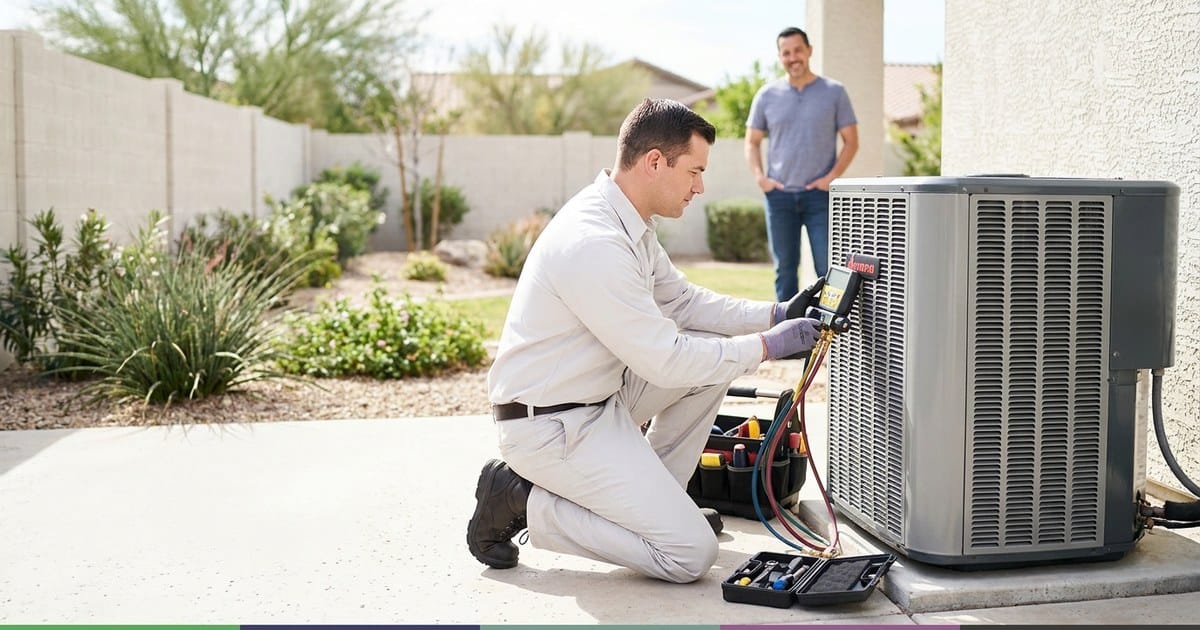
A maintenance plan isn’t a simple filter change. Most comprehensive programs include a 50-point inspection covering every critical system component. Technicians check refrigerant charge, clean condenser and evaporator coils, inspect electrical connections, test thermostat calibration, lubricate moving parts, and clear condensate drain lines.
The coil cleaning alone delivers significant efficiency gains. According to the NADCA energy study, HVAC cleaning has been proven to boost system efficiency and airflow. Dirty coils force your compressor to work harder, which drives up energy consumption and accelerates wear on mechanical components.
A quality plan also includes:
- Blower motor and fan inspection: Ensures proper airflow and identifies worn bearings before failure
- Refrigerant leak detection: Catches small leaks early, preventing expensive recharge costs and compressor damage
- Drain line service: Removes algae buildup that can cause water damage to ceilings and walls
- Electrical connection testing: Loose connections create heat, which damages contactors and capacitors
- Priority scheduling: Plan members get same-day or next-day service during peak season, not the 3-day wait that emergency-only customers face
Most plans run on a twice-annual AC tune-up cadence: a spring pre-cooling tune-up in April or May, and a fall heating system check (if you have a heat pump or furnace). For heating equipment, schedule your heating maintenance and tune-up before the November cold front arrives.
The key difference between a maintenance visit and an emergency repair call is that technicians catch problems early. A worn capacitor flagged during a spring tune-up costs $150 to replace. The same capacitor that fails in July (taking your compressor with it) can cost $2,000+ in emergency repairs.
The True Cost of Skipping Preventive Maintenance
Reactive service sounds budget-friendly until the first major failure hits. Here’s what you’re gambling on when you skip scheduled maintenance:
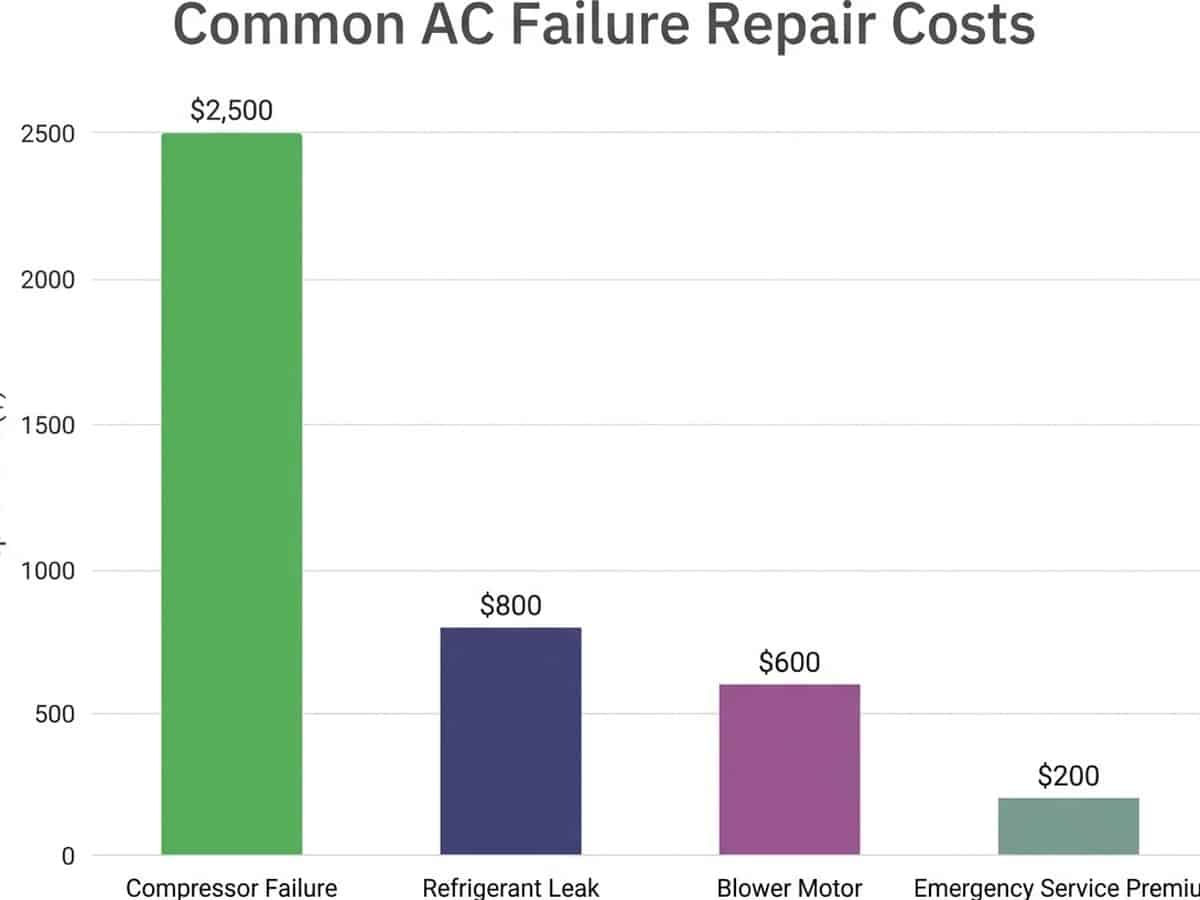
Compressor failure: The compressor is the heart of your AC system. According to RSMeans construction cost data, compressor repairs range from $1,800 to $3,500 depending on system size and refrigerant type. Many 10+ year-old systems aren’t worth repairing at that price point, forcing a full replacement.
Refrigerant leak and recharge: Based on HomeAdvisor’s national HVAC repair cost data, a slow leak that goes undetected for months can cost $400–1,200 to repair and recharge. The real damage happens when low refrigerant causes the compressor to overheat and fail, turning a $600 repair into a $2,500+ disaster.
Blower motor replacement: RSMeans data on HVAC component costs shows a dirty blower wheel or worn bearings eventually seize the motor. Replacement runs $450–800, plus the discomfort of waiting 2–3 days for parts during peak season when every HVAC contractor in the East Valley is slammed with emergency calls.
Emergency service premiums: Emergency calls typically carry premium charges over scheduled service rates. Many companies charge $150–200 just to show up, before any repair work begins.
Lost efficiency and higher cooling costs: Energy.gov’s residential energy efficiency data confirms that dirty coils and filters increase cooling costs by 5–15%. For a Gilbert home running $300/month in summer electricity bills, that’s $15–45 per month in wasted energy. Over a full cooling season (May through October), you’re looking at $90–270 in unnecessary costs.
Shortened system lifespan: Research from ACCA’s residential HVAC system longevity studies shows that deferred maintenance reduces equipment life by 30–40%. A well-maintained central AC can last 15–20 years in Arizona’s climate. A neglected system typically fails around year 10–12, accelerating the $10,000–15,000 replacement timeline by 5+ years.
If you’re not sure whether your system is showing warning signs, read our guide on how to tell if you need an AC maintenance service soon to catch problems before they become expensive failures.
The cumulative cost of skipping maintenance over 3 years can include one missed compressor failure ($2,500), three seasons of lost efficiency ($270 per season, $810 total), and accelerated replacement timelines. Much of this risk exposure can be prevented with a $300/year maintenance plan.
How Preventive Maintenance Delivers ROI
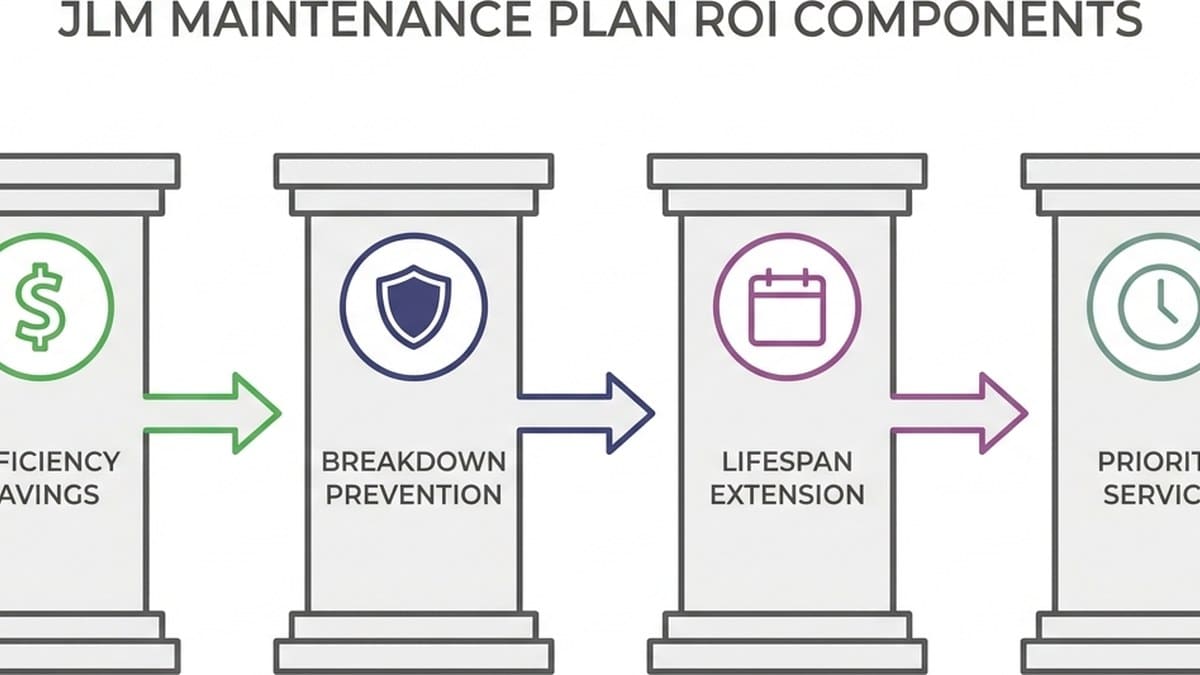
AC maintenance plans are worth it because they function as a hedge against expensive downside scenarios, with measurable upside built in. Here’s where the HVAC maintenance cost savings come from:
1. Efficiency optimization reduces cooling costs
Regular tune-ups keep your system running at peak efficiency. Energy Star documentation on HVAC maintenance confirms that proper maintenance reduces energy consumption through clean coils, calibrated thermostats, and correct refrigerant charge. For a 2,000 square foot home in Mesa spending $300/month on summer cooling, efficiency gains can save $15–45 per month during peak season. Over the six-month cooling season, that translates to $90–270 in annual savings. Over three years, proper maintenance can deliver $270–810 in efficiency savings.
2. Breakdown prevention eliminates most emergency repairs
Industry research from ACCA on preventive maintenance effectiveness shows that scheduled inspections catch worn capacitors, loose electrical connections, dirty coils, and refrigerant leaks before they cascade into system failure. The data demonstrates that regular maintenance significantly reduces the likelihood of mid-season breakdowns. One avoided compressor replacement ($2,500) pays for 6+ years of maintenance.
3. Lifespan extension defers replacement costs
Federal HVAC service schedule guidance confirms that regular maintenance extends equipment life and maintains efficiency over time. A properly maintained system in Gilbert or Queen Creek lasts 15–18 years versus 10–12 for neglected equipment. On a $12,000 system, extending life by 5 years reduces annual ownership cost by $400–600. That’s real money deferred, not abstract savings.
4. Priority service and repair discounts during peak demand
Plan members get same-day or next-day scheduling when a problem does arise, not the 3-5 day wait that emergency customers face during July and August. Many programs also offer discounts on parts and labor. A $1,200 blower motor replacement can cost less for plan members with negotiated service rates.
The ROI math is straightforward. A $300/year maintenance plan over three years costs $900. Efficiency savings can deliver $270–810. Add one avoided major repair and deferred replacement costs, and you’re ROI-positive in year one.
For homeowners managing mini split systems, check how often a mini split needs maintenance in Mesa for inspection cadence tailored to ductless equipment. For a comprehensive breakdown of what preventive care looks like across all system types, see our HVAC preventative maintenance tips and guide.
When Does a Maintenance Plan NOT Make Sense?
Honesty builds trust. There are scenarios where a maintenance plan isn’t the right investment:
Brand-new system still under manufacturer warranty: If you installed a new AC system within the past 12 months, manufacturer coverage often includes first-year service. Many plans will stack with warranty protection, but if your installer offers complimentary first-year maintenance, you may not need to enroll immediately.
Rental property where the landlord covers HVAC service: If you’re a tenant and your lease makes the property owner responsible for maintenance and repairs, investing in a personal plan doesn’t make financial sense.
System nearing end-of-life (12–15+ years old): If your AC is 13+ years old and showing signs of decline (frequent repairs, rising energy bills, uneven cooling), replacement may be imminent. In that case, allocate your budget toward a new high-efficiency system rather than extending the life of aging equipment. For guidance on how preventive care can maximize the years you do get from quality equipment, review our article on extending your AC life with professional maintenance plans.
Homeowner with HVAC technical background performing DIY maintenance: If you have professional training, own the diagnostic tools, and perform your own filter changes, coil cleaning, and refrigerant checks, a service plan may be redundant. Most homeowners don’t fall into this category, but for those who do, self-maintenance is a viable alternative.
The key question: Are you keeping this system for 3+ more years in your primary residence? If yes, the plan pays for itself. If you’re replacing next year or don’t own the home, skip it and allocate funds elsewhere.
What to Look for in a Quality Maintenance Plan
Not all maintenance plans deliver equal value. Use these criteria to evaluate JLM’s offering (and any competitor you’re considering):
Transparent scope of service: Look for a detailed inspection checklist (50+ points), not vague “tune-up” language. You should know exactly what tasks the technician performs on each visit.
Licensed, insured technicians: Verify that the company employs W-2 technicians, not subcontractors. Owner-led accountability matters. At JLM, Bill Milbourn is on jobs alongside his team, so you’re dealing directly with the decision-maker.
Priority scheduling guarantee: “We’ll try to fit you in” isn’t a guarantee. Look for a written commitment: same-day or next-day service during peak season for plan members.
Repair discount percentage clearly stated: Service discounts should be spelled out in the agreement, not buried in fine print.
No auto-renewal traps or cancellation penalties: You should be able to cancel or modify your plan without penalty if your situation changes.
Local, owner-led company vs. franchise call center: A family-owned business with 3,000+ installs and an A+ BBB rating delivers accountability that corporate franchises can’t match. When Bill’s name is on the truck, quality and service are personal commitments.
For a detailed breakdown of what a thorough inspection includes, see our essential AC maintenance checklist. If you’re preparing for seasonal transitions, reference our seasonal HVAC maintenance checklist for spring, summer, fall, and winter care.
Real East Valley Numbers: The 3-Year ROI Example
Abstract ROI claims don’t help you make a decision. Here’s a specific scenario grounded in real Gilbert costs:
Home profile: 2,000 square feet in Gilbert, 8-year-old 3.5-ton Amana central AC, $300/month cooling bills May through October.
Plan A (No maintenance, reactive service only):
- Upfront cost: $0
- Expected repair costs over 3 years (based on typical wear patterns for neglected equipment): approximately $600
- Efficiency loss from dirty coils and deferred service: $30/month extra cooling cost × 6 months × 3 years = $540 in wasted energy
- System lifespan: 12 years (typical for neglected equipment in Arizona heat based on ACCA data)
- Emergency service premiums when failure occurs: +$200 per incident
- Total 3-year cost: $600 (expected repair) + $540 (lost efficiency) + $200 (emergency premium) = $1,340
Plan B (Annual maintenance at $300/year):
- Upfront cost: $300/year × 3 years = $900
- Reduced repair probability with preventive service: approximately $100 expected cost
- Efficiency gain from clean coils and calibrated system: $15/month savings × 6 months × 3 years = $270 in energy savings
- System lifespan: 18 years (well-maintained equipment per federal guidance)
- Priority scheduling at no extra charge: $0 emergency premium
- Service discount applied to any repair: $200 repair becomes approximately $180
- Total 3-year cost: $900 (plan) + $100 (expected repair) – $270 (efficiency savings) = $730
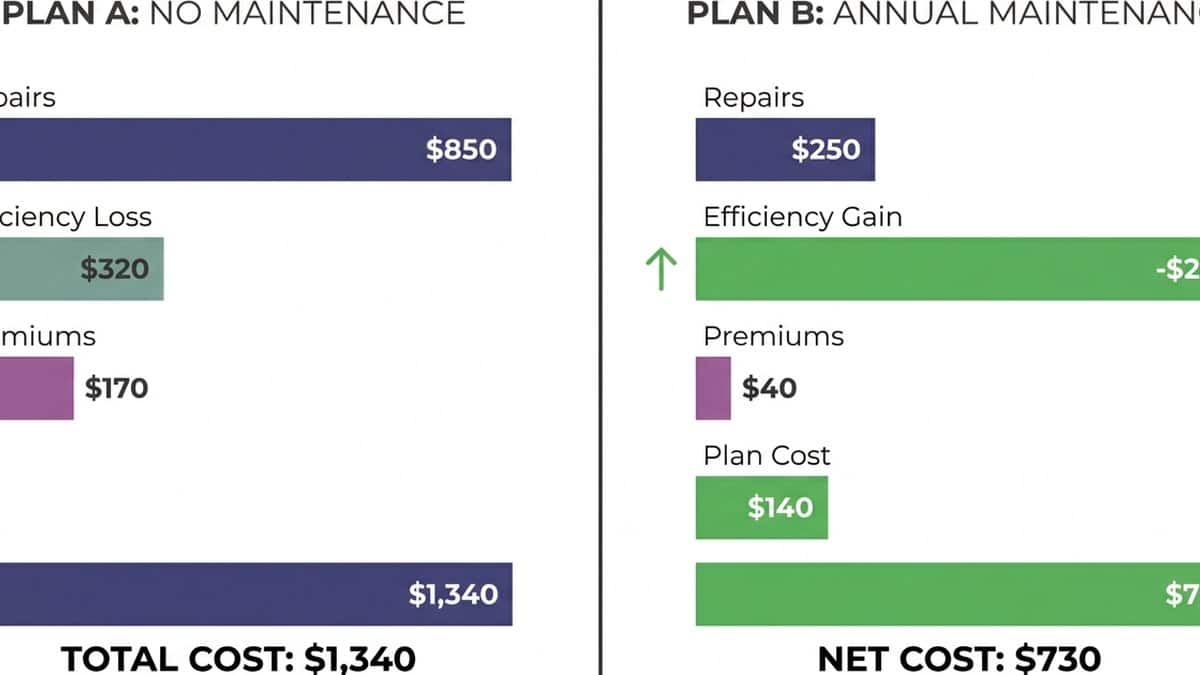
Net savings over 3 years: $610. That’s the direct, measurable benefit. The real ROI is even higher when you factor in lifespan extension: Plan B defers a $12,000 replacement by 6 years (18-year life vs. 12-year life), which reduces annual ownership cost by $500/year, or $3,000 in deferred capital expense over that extended period.
Total ROI: $900 invested, $3,610+ in avoided and deferred costs. The numbers support the case for AC maintenance plans being worth it.
Conclusion: Protect Your Investment with Preventive Service
A maintenance plan isn’t an upsell. It’s financial protection with measurable upside. For the cost of 1.5 emergency service calls, you get year-round preventive care, priority scheduling, repair discounts, and efficiency optimization. The alternative is gambling that your compressor won’t fail during the hottest week of summer, when every HVAC contractor in the East Valley is booked solid for 72 hours.
The question isn’t whether you can afford a maintenance plan. It’s whether you can afford to skip one and risk a $2,500 repair, days without AC during a heatwave, and years of wasted energy from an inefficient system.
If you own a 3+ year-old AC system in Gilbert, Queen Creek, Mesa, or Apache Junction, and you’re planning to keep it for 3+ more years, the ROI case writes itself. Preventive maintenance pays for itself in efficiency savings alone, and the breakdown protection is the real insurance value.
Ready to protect your AC investment and lock in priority service? Contact JLM Air Conditioning and Heating at 602-619-3609 to enroll in a maintenance plan or schedule your first annual AC tune-up. We serve Gilbert, Queen Creek, Mesa, and the East Valley with transparent pricing and owner-led service. No hidden fees, no pressure, just honest protection for your home comfort and budget.