Arizona homeowners face a daily paradox during winter. You wake up with a bloody nose, shock yourself on the doorknob before your first cup of coffee, and notice new gaps appearing in your hardwood floors. You’re living in the desert, yet you’re searching “whole-home humidifier” on your phone. It sounds counterintuitive: why would you add humidity in one of the driest climates in the country?
Are whole-home humidifiers worth it in Arizona? Yes, they are worth it if you’re experiencing persistent indoor dryness (cracked skin, sinus irritation, wood damage) especially during winter heating. Arizona’s outdoor humidity averages 20–30%, but indoor heating can drop it to 10–15%, causing health problems and home damage. A properly sized, maintained system can restore comfort and protect your investment. The trade-off: upfront cost ($800–$2,500 installed) and seasonal maintenance. For East Valley homeowners heating with forced air, the benefits typically outweigh the complexity.
We’ll walk through what whole-home humidifiers actually do, whether they make sense in Arizona’s climate specifically, what they cost, and how to decide if you need one. No pressure, no upsell. Just an honest assessment from a team that’s installed these systems in hundreds of East Valley homes.
By the JLM team. We’ve spent decades installing, maintaining, and troubleshooting HVAC systems throughout Gilbert, Queen Creek, Apache Junction, and Mesa. Our recommendations come from direct observation of what works (and what doesn’t) in Arizona’s unique climate. Every installation we discuss reflects real-world data from local homes, not generic advice from other climates. Do You Really Need Professional AC Repair in Mesa? explores similar questions about when professional HVAC help makes sense.
Why Arizona Homes Get So Dry (Even in the Desert)
The desert climate explains part of the story, but it’s not the whole picture. Understanding the difference between outdoor and indoor humidity is the first step to making sense of this seemingly backward problem.
Outdoor vs. Indoor Humidity in the East Valley
Arizona’s outdoor air sits around 20–30% relative humidity year-round. That’s already low compared to humid climates, but it’s within the range where most people can function comfortably outdoors. The real problem starts when you turn on your forced-air heating system.
Heating your home doesn’t create moisture. It warms the existing air, which causes relative humidity to drop dramatically. When you heat 20% humidity air to 72°F indoors, you’re often looking at 10–15% relative humidity, sometimes lower. According to EPA indoor air quality guidance and ASHRAE HVAC standards, the recommended indoor humidity range for health and comfort is 30–50%. Below 30%, you start to see measurable impacts on health and home integrity. Below 20%, those impacts accelerate.
In our work with East Valley HVAC service clients, we’ve found that most forced-air heating systems drop indoor humidity well below the 30% threshold during November through March. That’s when you start noticing symptoms.
What Happens to Your Home and Health Below 30% Humidity
Low humidity isn’t just uncomfortable. It has measurable health and structural consequences. On the health side, you’re dealing with dry mucous membranes, which means more nosebleeds, sore throats, irritated sinuses, and increased vulnerability to respiratory infections. Research published by the National Institutes of Health on indoor air quality shows that maintaining proper indoor humidity reduces airborne pathogen transmission and improves respiratory comfort.
Your home takes a hit too. Wood shrinks when it loses moisture. Hardwood floors develop gaps between planks. Trim boards crack. Cabinet doors warp. Paint and drywall develop hairline cracks. Static electricity builds up, creating annoying shocks and potentially damaging sensitive electronics. Dust particles stay airborne longer because there’s no moisture to weigh them down, which means your HVAC filters clog faster and you’re breathing more particulates.
These aren’t hypothetical problems. Walk through any East Valley home that’s been heated all winter without humidity control, and you’ll see the evidence: gaps in the flooring, cracks in the corners where walls meet, and homeowners who’ve given up on lotion because their skin dries out faster than they can moisturize.
What a Whole-Home Humidifier Actually Does
Before we discuss whether you need one, let’s clarify what we’re actually talking about. Whole-home humidifiers aren’t standalone appliances you set in the corner. They’re integrated components of your forced-air HVAC system.
How Whole-Home Systems Integrate with Your HVAC
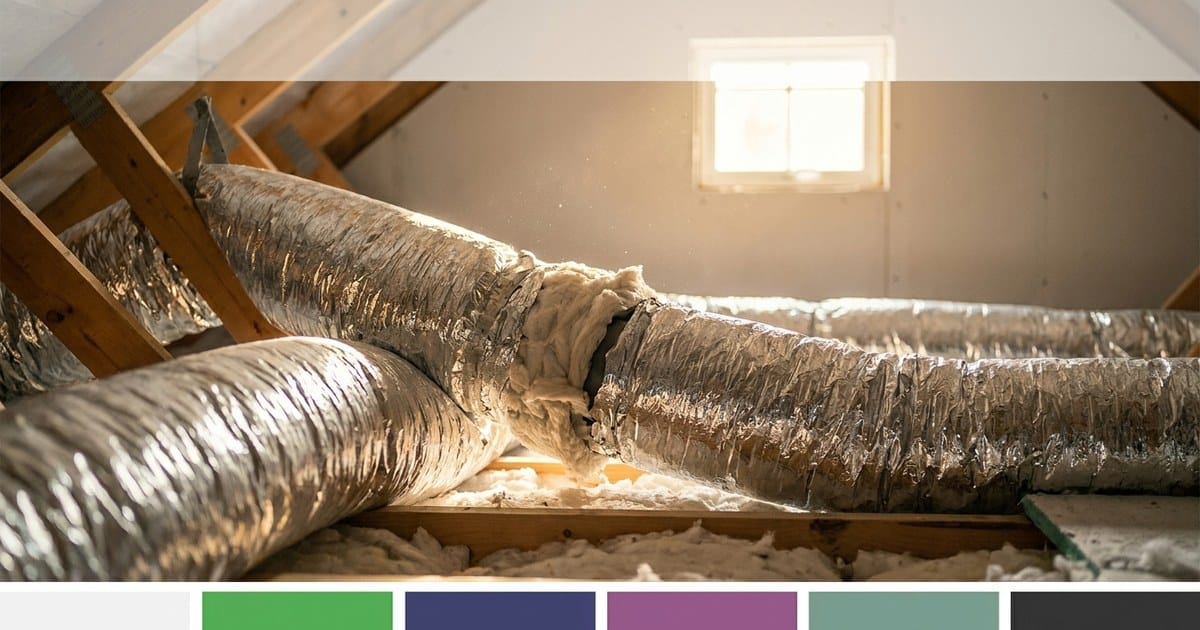
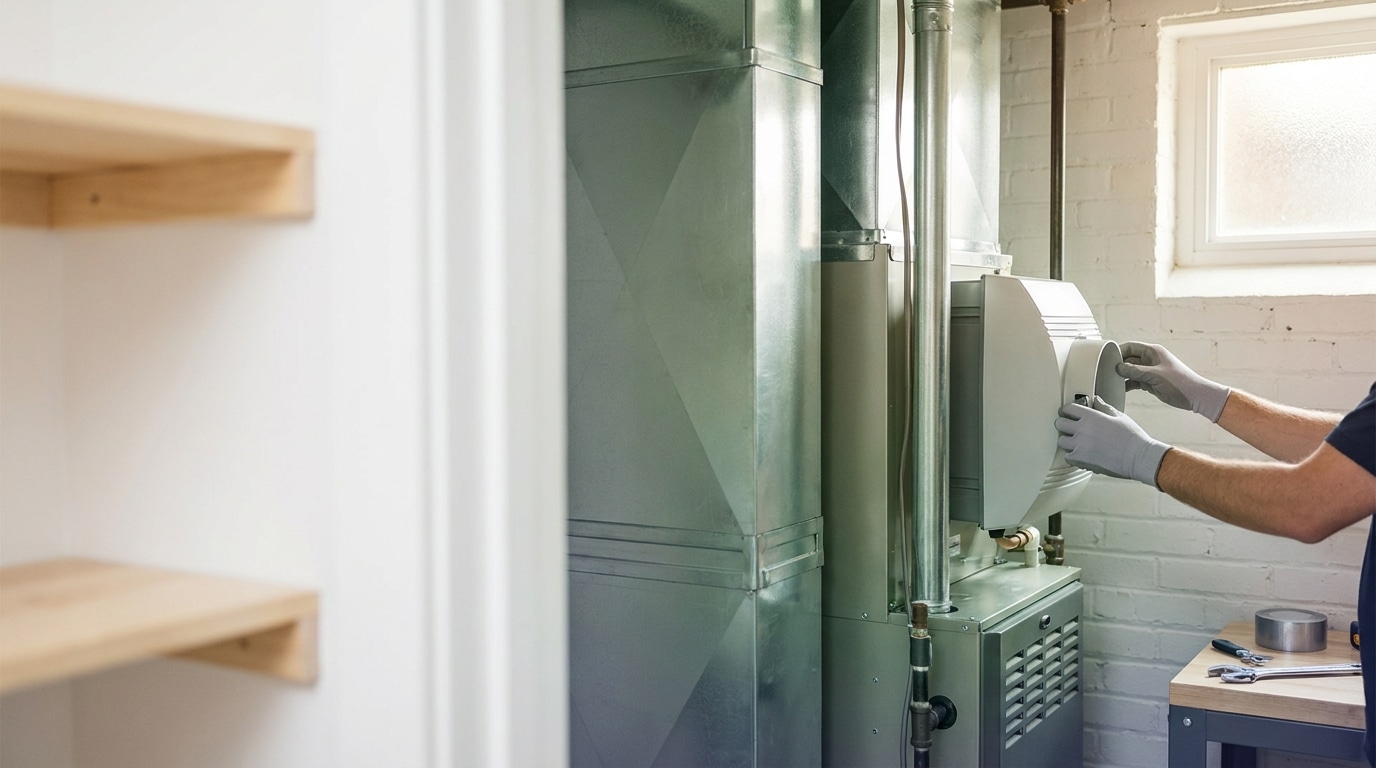
A whole-home humidifier installs directly on your furnace or air handler, typically mounted on the return or supply plenum (the large metal box where your ductwork connects). A water line taps into your existing household plumbing. When your heating system runs, air passes through the humidifier, picks up moisture, and distributes it throughout your home via your existing ductwork.
The system is controlled by a humidistat, which works like a thermostat but for humidity. You set your target humidity level (usually 35–45% in winter), and the humidifier runs automatically when needed. Crucially, it only operates when your furnace or air handler is running. No forced-air movement means no humidification.
This integration is both the strength and the limitation of whole-home systems. The strength: even humidity distribution across every room served by your ducts, automatic operation, no daily refilling. The limitation: you need a forced-air HVAC system for it to work, and it ties into your existing equipment’s runtime.
The Three Types: Bypass, Fan-Powered, and Steam
Not all whole-home humidifiers work the same way. There are three main types, each with different output capacity, cost, and complexity.
Bypass (flow-through) humidifiers are the simplest and most affordable option. They rely entirely on your furnace’s airflow to push air through a water panel (a honeycomb pad that absorbs water). As air passes through, it picks up moisture. These units cost $800–$1,200 installed and work well for smaller homes (under 2,000 square feet, single-story). The trade-off: lower output and complete dependency on furnace runtime. If your furnace isn’t running much, you won’t get much humidity.
Fan-powered humidifiers add a built-in fan to pull air through the water panel independently of your furnace’s blower speed. This increases output and makes them more effective for larger homes or two-story layouts. Installation cost runs $1,000–$1,800. They still require the furnace to be in heating mode, but they’re not limited by the furnace’s own airflow rate.
Steam humidifiers are the premium option. They boil water to create pure steam, which is injected directly into your ductwork. They deliver the highest output, the most precise humidity control, and work independently of furnace airflow (though they still tie into the HVAC system for distribution). Cost: $1,800–$2,500 installed. The downside: higher electricity consumption (boiling water takes energy) and more complex installation.
In our work with East Valley homeowners, we’ve found that bypass humidifiers handle most single-story homes under 2,000 square feet, while two-story or larger homes benefit from fan-powered or steam units.
Whole-Home vs. Portable: Why Integration Matters
You can buy a portable humidifier at any big-box store for $100–$300. It will humidify one room, require daily refilling, and need regular cleaning to prevent mold and bacteria growth. If you set it too high or forget to monitor it, you risk over-humidifying that room, which can cause condensation on windows or promote mold growth.
Whole-home systems distribute moisture evenly across your entire house, run automatically based on humidistat readings, and require seasonal (not daily) maintenance. You’re not managing water levels or moving units from room to room. The trade-off is upfront cost and professional installation, but for homeowners dealing with whole-house dryness (not just one bedroom), the convenience and effectiveness justify the investment.
Portable units make sense if you’re renting, if only one or two rooms feel dry, or if you want to try humidification before committing to a whole-home system. For homeowners with forced-air heating who are experiencing symptoms throughout the house, whole-home integration is the more effective long-term solution.
Does Adding Humidity Make Sense in Arizona’s Climate?
This is the question that stops most East Valley homeowners. We live in the desert. Humidity is the problem in summer, not the solution. Why would we deliberately add it in winter?
When You Actually Need It (Hint: Not in Summer)
Whole-home humidifiers in Arizona operate only during heating season, roughly November through March when outdoor temperatures drop below 65°F and you’re running your furnace. In summer, you’re running air conditioning, which naturally dehumidifies indoor air. The humidifier is either powered off or bypassed entirely. There is no conflict between summer cooling and winter humidification. They operate in completely separate seasons.
Modern humidistats include seasonal controls that prevent the system from running when outdoor temperatures are above a set threshold (usually 65–70°F). This ensures you’re not fighting your AC or adding unnecessary moisture during Arizona’s already-humid monsoon season (July–September, when outdoor humidity can spike to 40–60% temporarily).
The question isn’t “Should I add humidity in Arizona?” The question is “Should I restore healthy indoor humidity levels during the months when heating drops it dangerously low?” Framed that way, the answer becomes much clearer.
The Health Payoff: Fewer Sinus Issues, Better Sleep
Dry air irritates mucous membranes in your nose, throat, and lungs. When those membranes dry out, they crack and bleed (hello, nosebleeds). They also become less effective at trapping airborne pathogens, which is why low humidity is associated with increased susceptibility to colds and respiratory infections.
Restoring indoor humidity to 35–45% (the healthy range per WHO air quality standards) keeps mucous membranes moist and functioning. You breathe easier, sleep better, and spend less time dealing with dry throat and sinus irritation. This is particularly valuable for families with young children, elderly residents, or anyone with asthma or allergies.
The CDC’s ventilation guidelines emphasize proper humidity control as part of a comprehensive indoor air quality strategy. While the focus during COVID-19 was on airborne pathogen transmission, the underlying principle applies year-round: maintaining 30–50% humidity supports respiratory health and reduces irritation.
Protecting Your Home: Hardwood, Paint, and Furniture
Wood is hygroscopic, meaning it absorbs and releases moisture based on the surrounding air. When indoor humidity drops below 30%, wood loses moisture and shrinks. Hardwood flooring develops gaps between planks. Solid wood furniture joints separate. Trim boards crack. Paint and drywall crack at corners and seams.
These aren’t cosmetic annoyances. Repairing hardwood floor gaps or replacing cracked trim runs into the hundreds or thousands of dollars. Maintaining 30–50% indoor humidity keeps wood stable and prevents this seasonal expansion and contraction cycle.
Static electricity is another indicator of excessively dry air. If you’re shocking yourself on doorknobs or seeing sparks when you touch metal, your indoor humidity is likely below 20%. Static discharge can damage sensitive electronics (computers, TVs, HVAC control boards). Raising humidity to 35–45% eliminates static buildup.
Dust circulation improves too. Moisture in the air causes airborne dust particles to settle faster rather than staying suspended. This means cleaner air, less dust on surfaces, and longer intervals between HVAC filter changes.
The Downsides You Need to Know
Whole-home humidifiers aren’t maintenance-free, and they’re not right for every situation. Here’s what you’re signing up for.
Maintenance requirements: You’ll need to clean or replace the water panel (bypass/fan-powered units) or descale the boiling chamber (steam units) annually, typically in late fall before heating season starts. Neglected systems can harbor mold, bacteria, or mineral deposits that reduce efficiency and introduce contaminants into your air. Most bypass and fan-powered units are DIY-friendly for maintenance. Steam units often require professional service.
Hard water complications: Arizona has notoriously hard water (high mineral content). Those minerals deposit on humidifier components faster than in soft-water regions. You’ll replace water panels more frequently, and you may need more aggressive descaling. Some homeowners pair a whole-home humidifier with a water softener to reduce maintenance frequency.
Operating costs: Bypass and fan-powered units add $50–$100/year to your water bill. Steam units add $100–$150/year to your electricity bill (boiling water consumes energy). These are modest ongoing costs, but they’re real.
Over-humidification risk: If you set your humidistat too high (above 50%) or if the system malfunctions, you can create condensation on windows, promote mold growth, or damage drywall. Proper installation and calibration prevent this, but it’s a risk to be aware of. Monitor your system during the first few weeks of operation to ensure it’s holding at your target level without overshooting.
What It Costs (and What You Get for Your Money)
Transparency matters when you’re deciding whether to invest in home comfort equipment. Here’s what whole-home humidifiers actually cost in the East Valley, and what that money buys you.
Typical Installation Costs in the East Valley
Bypass humidifier: $800–$1,200 installed. This includes the unit itself, humidistat, water line tap into your existing plumbing, mounting hardware, and system testing. Our typical install takes 3–4 hours and includes equipment, humidistat, water line tap, and system testing. Transparent pricing, no surprises.
Fan-powered humidifier: $1,000–$1,800 installed. Slightly higher equipment cost and installation complexity due to the built-in fan and electrical wiring.
Steam humidifier: $1,800–$2,500 installed. Premium equipment, more complex installation (electrical hookup for the boiling element, precise duct integration), longer install time.
Costs vary based on home size, ductwork accessibility, and distance from the nearest water line. If your furnace is in a tight attic or crawlspace, labor time increases. If we need to run a long water line or add a dedicated electrical circuit (steam units), costs go up. A free on-site consultation gives you an exact quote with no hidden fees.
Annual Operating and Maintenance Costs
Operating cost: $50–$150/year depending on system type and usage. Bypass and fan-powered units primarily consume water. Steam units consume both water and electricity. A typical East Valley home running a steam humidifier four months a year might see an extra $10–$15/month on the electric bill during those months.
Maintenance cost: $100–$200/year. This includes annual cleaning, water panel or filter replacement (bypass/fan-powered units run $30–$60 for replacement pads), descaling (steam units), and humidistat calibration. Many homeowners handle bypass and fan-powered maintenance themselves. Steam units often benefit from professional service to ensure the boiling chamber and steam dispersion components stay clean and efficient.
Total cost of ownership over 10 years (installation plus operating plus maintenance): approximately $2,000–$4,000 depending on system type. That’s $200–$400/year averaged out.
ROI: Comfort, Health, and Home Protection
Unlike energy-efficiency upgrades, whole-home humidifiers don’t deliver measurable dollar savings on utility bills. The return on investment is comfort, health, and home protection, all of which are harder to quantify but very real.
Consider avoided costs: fewer doctor visits for sinus infections or respiratory irritation, better sleep quality (which has downstream health and productivity benefits), avoided hardwood floor repair (which can easily run $1,000+ if you need to refinish or replace damaged boards), extended HVAC filter life due to reduced airborne dust. According to research on home health and indoor air quality, maintaining proper humidity levels contributes to overall household wellness and reduces respiratory complaints.
For homeowners who feel the dryness (bloody noses, cracked skin, static shocks) or who see the damage (wood gaps, cracked trim), the ROI is immediate and ongoing. You’re solving a daily problem. For homeowners who don’t notice symptoms and whose homes aren’t showing damage, it’s a harder sell. That brings us to the decision framework.
How to Decide If You Need One
Not every East Valley home needs a whole-home humidifier. Here’s how to figure out if you’re a good candidate or if you’re better off with a simpler solution.
Signs You’ll Benefit from a Whole-Home Humidifier
☑ You run forced-air heat in winter (November–March). Without forced-air distribution, a whole-home system won’t work.
☑ You experience frequent nosebleeds, dry throat, or sinus irritation during heating season. These are direct indicators that your indoor humidity is too low.
☑ You’ve noticed gaps in hardwood floors, cracked trim, or paint peeling. This is structural evidence of low humidity causing wood shrinkage.
☑ Static shocks are a daily annoyance. If you’re shocking yourself multiple times a day, your indoor humidity is likely below 20%.
☑ You’re tired of refilling portable humidifiers or dealing with uneven humidity room-to-room. Whole-home systems eliminate the daily hassle.
If you check three or more of these boxes, a whole-home system is likely worth the investment.
When to Skip It (and What to Do Instead)
❌ You rarely run heat. If you keep the thermostat off most of winter, rely on a heat pump (which doesn’t drop humidity as drastically as a gas furnace), or live in a home with radiant or baseboard heat, the forced-air integration won’t help you.
❌ You don’t notice dryness symptoms and your home shows no wood damage. If low humidity isn’t causing problems, there’s no problem to solve.
❌ You’re on a very tight budget and can’t justify $1,000+ for a comfort upgrade. It’s an investment, not a necessity.
Alternatives: A high-quality portable humidifier for your bedroom ($100–$300) can address nighttime symptoms without the whole-home investment. Increase water intake, use lotion liberally, and seal air leaks (weatherstripping around doors and windows) to reduce dry outdoor air infiltration.
For homes without forced-air ducts, mini split systems offer zoned heating and cooling without the humidity drop. In areas not served by central HVAC, supplemental cooling options can provide comfort without whole-house integration.
These alternatives won’t solve whole-house dryness, but they can mitigate symptoms in key rooms if a whole-home system isn’t feasible.
What to Ask Your HVAC Contractor Before You Buy
What type of humidifier do you recommend for my home size and furnace type? Bypass, fan-powered, and steam units have different output capacities. A qualified contractor will size the system based on your home’s square footage, ductwork layout, and heating equipment.
How often will I need to clean or replace parts? Get a clear maintenance schedule and cost estimate for replacement pads, filters, or descaling service.
Is a water softener recommended given East Valley hard water? If your water hardness is above 10 grains per gallon (common in Gilbert, Queen Creek, and Mesa), a softener can extend humidifier component life significantly.
What’s included in the installation cost? Ensure the quote covers equipment, labor, humidistat, water line tap, and system testing. Watch for add-ons or unexpected charges.
Do you provide maintenance service, or is it DIY? Some contractors offer annual maintenance packages. Others expect homeowners to handle it. Know which model you’re committing to.
JLM’s free consultation answers all of this upfront. We’ll assess your system, your home, and your comfort needs, then walk you through your options with transparent pricing. No pressure, no upsell. Just an honest answer to whether a whole-home humidifier makes sense for your situation.
Conclusion
Whole-home humidifiers do work in Arizona, but only if you’re running forced-air heat and experiencing measurable dryness symptoms or home damage. They deliver real comfort and protection during winter months, but they require upfront investment ($800–$2,500 installed), seasonal maintenance, and proper installation to avoid over-humidification or mold risk.
For East Valley homeowners who wake up with nosebleeds, see gaps in their hardwood, or fight static shocks all winter, the ROI is clear: better health, better sleep, and a protected home. For those who don’t notice symptoms and whose homes aren’t showing damage, a portable unit or lifestyle adjustments may be enough.
The honest answer: it depends on your situation. Not every home needs one, and we won’t tell you otherwise. But for the right home with the right symptoms, a whole-home humidifier is one of the most effective comfort upgrades you can make.
According to ENERGY STAR’s guidance on duct systems, proper HVAC integration and maintenance (including humidity control) can improve both comfort and system efficiency. Industry resources like Palmetto’s guide to duct sealing and One Hour Heating & Air Conditioning’s overview highlight the importance of comprehensive HVAC maintenance for year-round comfort.
For homes where summer heat is the primary concern, timely AC maintenance becomes critical for Arizona’s extreme temperatures. If you want to explore seasonal preparation strategies, AC prep for Gilbert summers provides guidance on getting your cooling system ready. For ongoing seasonal advice and equipment insights, browse our latest HVAC articles and tips covering topics like spring AC tune-up timing and other maintenance questions.
Not sure if a whole-home humidifier is right for your Gilbert or Queen Creek home? We’ll give you an honest answer (no upsell, no pressure). Call now: 602-619-3609 to schedule a free consultation We’ll assess your system, your home, and your comfort needs, then walk you through your options with transparent pricing.