AC installation in Gilbert typically takes 1–2 days and includes a free on-site consultation, load calculation to size your system correctly, transparent up-front pricing (average $11,000 for Amana equipment), professional installation by licensed techs, and flexible financing through GoodLeap. No hidden fees, no pressure upsells, just honest service from a family-owned team.
When your air conditioner fails during a 115°F July afternoon, you need answers fast. What does installation actually cost? How long will you be without cooling? Will the new system be sized correctly, or will you end up with the same problems in three years?
This guide walks you through the entire AC installation process in Gilbert, from the moment you call for a free consultation to the day we commission your new Amana system. You’ll learn How Mini Split Installation Works from Start to Finish for specific zones, how we calculate the right tonnage for your home, what drives pricing, and how to finance the investment without depleting savings. We’ve completed 3,000+ installations across the East Valley, and we’ll show you exactly what to expect.
Why Gilbert Homeowners Choose New AC Installation Over Endless Repairs
Deciding between repairing your current system and replacing it entirely comes down to three factors: age, repair cost, and efficiency. If your AC is over 10 years old, repair bills are climbing, and your energy costs keep rising, replacement typically delivers better long-term value.
A common industry guideline suggests that if a repair costs more than half the price of a new air conditioner installation Gilbert homeowners would pay, replacement makes financial sense. For example, if a compressor replacement quote comes in at $5,500 and a full new AC system installation costs $11,000, you’re better off investing in new equipment. You get a warranty, modern efficiency, and peace of mind for another 12–15 years.
When Repair Costs Approach Replacement Value
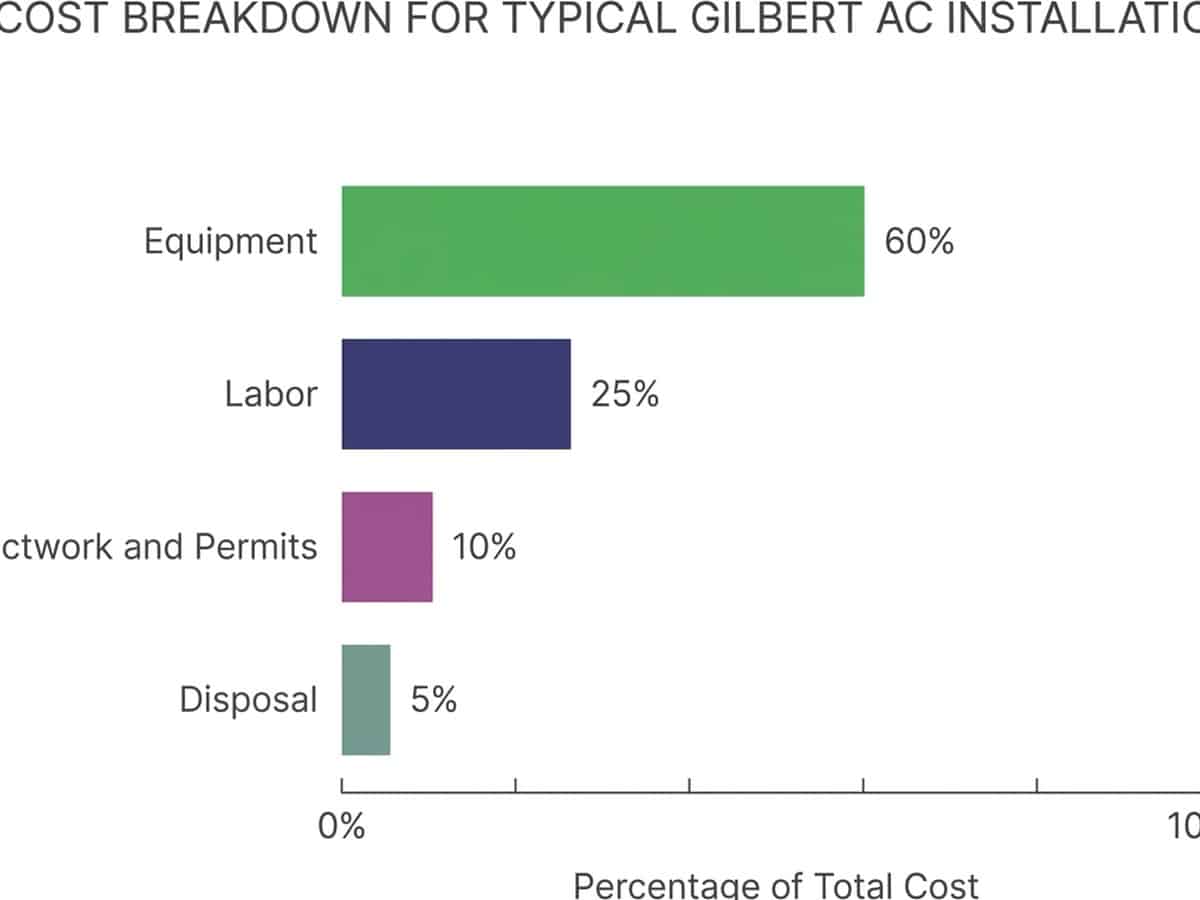
Here’s the math. A typical Amana 3-ton system installed in Gilbert runs around $11,000 (equipment, labor, permits, disposal). Major repairs like compressor or condenser coil replacement often cost $4,000–$6,000. At that price point, you’re paying nearly half the new air conditioner cost to fix a unit that’s already lived most of its service life.
Every repair on an aging system buys you time, not reliability. If you’ve already spent $2,000 on repairs in the past two years and now face another $4,500 bill, you’re throwing money at a losing investment. In our 3,000+ installations across Gilbert and the East Valley, homeowners who invest in a properly sized 16 SEER2 system typically see the upfront cost difference in energy savings within several years. The new unit runs less, cools faster, and doesn’t need constant service calls.
Equipment Age and the R-22 Refrigerant Phaseout
If your system was installed before 2010, it likely runs on R-22 refrigerant. According to the EPA, R-22 production was phased out in 2020, which means replacement refrigerant is scarce and expensive. A refrigerant recharge that used to cost a few hundred dollars now runs significantly more. Worse, R-22 systems can’t be recharged with newer refrigerants like R-410A or R-32 without replacing the entire system. The equipment is chemically incompatible.
Older systems also lack modern efficiency features. A 2005-era AC might have a SEER rating of 10 or 11. Today’s Amana systems start at 14 SEER2 and reach 18 SEER2, cutting cooling costs substantially according to ENERGY STAR. The savings compound every summer you run the old unit.
Age also affects reliability. Components like capacitors, contactors, and blower motors wear out. Once a system hits 12–15 years, breakdowns become frequent and unpredictable. Replacing before a catastrophic failure gives you control over timing and avoids emergency pricing.
How the Installation Process Works: Consultation to Commissioning
Understanding the AC system installation timeline removes uncertainty. Here’s the step-by-step process we follow on every job, from your first call to the final commissioning check.
- Free on-site consultation and energy assessment. We visit your home, inspect your existing system, measure your space, and discuss your comfort goals. No sales pitch, no pressure. We identify what’s failing and why.
- Manual J load calculation to size the system. We don’t guess tonnage based on square footage. We run a detailed Manual J calculation that accounts for insulation, windows, orientation, ductwork condition, and occupancy. This ensures you get the right-sized system, not an oversized unit that short-cycles or an undersized one that runs constantly.
- Transparent quote (equipment + labor + materials, no hidden fees). The quote itemizes everything: Amana condenser and air handler, thermostat, permits, ductwork modifications (if needed), refrigerant, electrical work, disposal of the old unit. You know the total cost before we start.
- Scheduling and prep. We inspect your ductwork for leaks and your electrical panel to confirm it can handle the new system’s load. If upgrades are needed, they’re quoted separately.
- Installation day: removing the old unit, setting the new condenser and air handler. Our licensed team removes your old outdoor condenser and indoor air handler, installs the new Amana equipment, runs refrigerant lines, connects ductwork, and ties into your electrical panel. Most jobs take 6–8 hours.
- Commissioning: thermostat setup, airflow testing, customer walkthrough. We charge the system with refrigerant, test airflow at every vent, program your thermostat, and walk you through operation and filter maintenance.
- Follow-up satisfaction check and maintenance plan enrollment. We call within 48 hours to confirm everything is running smoothly and discuss our spring/fall maintenance plans to protect your investment.
The entire process, from consultation to commissioning, typically spans 1–2 days of active work. Emergency installs (when your system dies mid-summer) can start within 48 hours if needed.
Sizing Your System Correctly: Why Tonnage and Load Calculation Matter
The most common mistake we see: homeowners replacing a 15-year-old 3-ton unit with another 3-ton system without a load calculation. Gilbert homes built in the 2000s often have added insulation or window upgrades that reduce cooling load. Many customers are surprised to learn they only need 2.5 tons, saving $1,500–$2,000 on equipment cost.
Proper sizing affects efficiency, comfort, and equipment lifespan. An oversized system cools the air quickly but shuts off before it can remove humidity, leaving your home clammy. It also short-cycles, turning on and off frequently, which wears out components and wastes energy. An undersized system runs constantly, never quite reaching your set temperature, and burns out prematurely from overwork.
Mini Split Installation in Gilbert AZ: What to Know First explains how ductless systems handle zoning differently, but the sizing principle remains the same: measure, don’t guess.
What Is a Manual J Load Calculation?
Manual J is the Air Conditioning Contractors of America (ACCA) industry standard for residential load calculation. It’s a detailed analysis of your home’s cooling needs based on:
- Square footage and room layout
- Insulation type and R-value in walls, attic, and floors
- Window size, orientation, and glazing type (single-pane vs. double-pane)
- Air leakage and ductwork condition
- Number of occupants and heat-generating appliances
- Local climate data (Gilbert’s extreme summer heat)
The calculation outputs a precise BTU-per-hour cooling requirement. We divide that number by 12,000 to determine tonnage. A home that needs 36,000 BTU/hour requires a 3-ton system. A home that needs 30,000 BTU/hour only needs 2.5 tons.
According to the ACCA Manual J, properly sized systems deliver optimal comfort and efficiency. The investment in a load calculation pays back through lower utility bills and longer equipment life.
The Cost of Guessing: Oversized vs. Undersized Systems
Oversized systems cost more upfront (a 4-ton unit costs $1,500–$2,000 more than a 3-ton), run inefficiently, and fail prematurely. Short-cycling stresses the compressor and wears out contactors. Humidity removal suffers because the system shuts off before the evaporator coil can condense moisture.
Undersized systems never catch up. On a 110°F July afternoon, a 2-ton system trying to cool a home that needs 3 tons will run 24/7 and still leave you uncomfortable. The constant runtime overheats the compressor, shortens the equipment’s lifespan, and drives up electric bills.
Planning Your Gilbert Garage Mini Split Installation Process covers how to avoid sizing mistakes in supplemental cooling projects, using the same Manual J principles.
We’ve seen homeowners spend money on an oversized 4-ton system when a properly calculated 3-ton unit would have cost less and performed better. Sizing isn’t something to guess. For a detailed breakdown of what a full system replacement costs, see All You Need to Know About New Furnace and Air Conditioner Cost.
Amana Systems: Why JLM Installs Premium Equipment
We’ve installed Amana air conditioners exclusively for the past decade because they deliver the best combination of efficiency, reliability, and warranty protection for Arizona’s extreme climate. Over 3,000 installs, we’ve tracked performance data, and Amana systems consistently outlast budget brands with proper maintenance.
Amana is owned by Daikin, the world’s largest HVAC manufacturer. The build quality shows: heavier-gauge coils, more durable compressors, better corrosion resistance. In Gilbert’s heat and dust, those details matter. A cheap unit might save you upfront but cost more in premature repairs and replacement.
Learn more about our installation approach at AC Installation in Gilbert: Premium Amana Systems, Transparent Pricing.
SEER2 Ratings and Long-Term Energy Savings
SEER2 (Seasonal Energy Efficiency Ratio 2) replaced the old SEER standard in 2023 to reflect real-world operating conditions more accurately. The number represents BTUs of cooling per watt-hour of electricity. Higher SEER2 equals lower operating cost.
Amana systems start at 14 SEER2 and go up to 18 SEER2. According to ENERGY STAR, upgrading to a higher-efficiency system can significantly reduce cooling costs. For a Gilbert home running AC from May through October, that translates to substantial annual savings.
The upfront cost difference between a 14 SEER2 and a 16 SEER2 system is typically $1,200–$1,500. The efficiency gains often pay back the investment within a few years. Over a 15-year lifespan, a high-efficiency system can deliver significant cumulative savings compared to a baseline model.
Pairing your new system with Smart Thermostat Installation Save Energy Money adds another layer of efficiency through better scheduling and remote control.
Warranty Coverage That Actually Protects You
Amana offers a 10-year parts warranty on compressors and major components, double the 5-year coverage you get with budget brands. That matters when a compressor replacement costs thousands of dollars. The warranty also transfers to a new homeowner if you sell, adding resale value.
Our workmanship guarantee covers labor for the first year. If an installation error causes a problem, we fix it at no cost. We also handle warranty registration directly, so you don’t chase paperwork.
According to ENERGY STAR, proper installation matters as much as equipment quality. A poorly installed high-efficiency system performs worse than a correctly installed mid-tier unit. Our licensed team follows Amana’s installation protocols to protect both the warranty and your investment.
What Drives the Cost of AC Installation in Gilbert
Air conditioner installation Gilbert pricing ranges from $9,000 to $20,000 depending on system size, efficiency rating, ductwork condition, and electrical requirements. Understanding what drives cost helps you compare quotes accurately and avoid lowball bids that cut corners.
Transparency matters. We itemize every component: equipment, labor, materials, permits, disposal. No line-item surprise fees. No “additional work discovered” upsells after we’ve started.
For related costs, see Thermostat Installation Service pricing.
Equipment Cost: Condenser, Air Handler, Thermostat
The outdoor condenser and indoor air handler account for the majority of total project cost. A 3-ton Amana 14 SEER2 system costs approximately $6,000–$7,500 in equipment. A 4-ton 16 SEER2 system runs $8,000–$10,000. Higher tonnage and higher efficiency both increase price.
Thermostat costs range from $150 for a basic programmable model to $500 for a smart Wi-Fi thermostat like an Ecobee or Honeywell T6 Pro. We recommend upgrading to a smart thermostat. The energy savings and convenience justify the investment.
If you’re adding a mini split for garage cooling, check Can Your Garage Handle a Regular Air Conditioner? to understand whether a dedicated ductless system makes more sense than extending your central air.
Labor, Ductwork, and Permits
Labor accounts for a significant portion of total cost. A two-person crew working 6–8 hours charges several thousand dollars depending on job complexity. Factors that increase labor cost include:
- Difficult condenser placement (rooftop installs vs. ground-level)
- Long refrigerant line runs (over 25 feet)
- Attic air handler replacement requiring crawl-space work
- Electrical panel upgrades to handle a 240V circuit
Ductwork modifications add cost. If your existing ducts leak significantly (common in homes over 15 years old), sealing or replacement improves efficiency and comfort. We test duct leakage before quoting repairs. For comprehensive duct work, see Ductwork Installation 101: Everything You Need to Know.
According to the Town of Gilbert Development Services, permits are required for HVAC replacement to ensure work meets building codes. Permit fees typically run $150–$300. Permits ensure the work passes inspection. Unlicensed contractors skip permits to save time and money, but you’re liable if something fails inspection when you sell your home.
Why the Cheapest Bid Isn’t Always the Best Value
We’ve seen homeowners accept low quotes for work we bid higher. The difference? The lowball bidder used mismatched equipment, skipped the load calculation, avoided permits, and disappeared after installation. No warranty support. No callbacks. No recourse when the system failed.
Unlicensed contractors can undercut licensed pros significantly because they don’t carry insurance, don’t pull permits, and don’t honor warranties. That’s not a bargain. It’s a liability.
Our A+ BBB rating and 3,000+ installs represent a track record you can verify. We’re bonded, insured, and accountable. If something goes wrong, you know where to find us. We live in the East Valley. Our reputation is our business.
According to ENERGY STAR, installation quality significantly impacts system performance. A properly charged system with sealed ductwork and correct airflow delivers the rated efficiency. A sloppy install leaves performance on the table, no matter how good the equipment.
Financing Your New AC System: GoodLeap and Payment Plans
The average AC installation in Gilbert costs around $11,000. Most families don’t have that sitting in savings, especially after an unexpected breakdown. Installation financing turns a lump-sum expense into a manageable monthly payment.
We partner with GoodLeap to offer flexible payment plans with terms up to 25 years and promotional 0% APR periods for qualified buyers. Approval happens in minutes, funding within 24 hours. No equity required, no second mortgage.
For a detailed installation walkthrough, see How to Install Central Air Conditioner? – A Guide.
How GoodLeap Financing Works
GoodLeap specializes in home improvement loans. You apply online or over the phone, receive a decision within minutes, and choose your term and rate. Qualifying credit scores start around 640, though higher scores unlock better rates and longer promotional periods.
Promotional 0% APR periods run 18–24 months for well-qualified buyers. If you pay off the balance within the promo period, you pay zero interest. After the promo period, standard rates apply (typically in the 6.99%–9.99% APR range depending on credit and term length).
There’s no penalty for early payoff. If you receive a tax refund or bonus and want to pay down the balance, you can do so without fees.
Monthly Payment Scenarios
Here’s what an $11,000 system might cost at different terms (rates and terms vary by credit qualification):
- 0% APR for 18 months: Higher monthly payment, zero interest if paid in full by month 18
- Standard rate for 10 years: Lower monthly payment, total interest over life of loan
- Standard rate for 15 years: Even lower monthly payment, higher total interest
- Standard rate for 7 years: Moderate monthly payment, moderate total interest
Compare monthly payments to your current electric bill. If your old system costs substantial amounts to run in summer and a new high-efficiency unit cuts that significantly, you’re saving money. The efficiency gain can offset financing costs over time.
According to research on how ENERGY STAR certified systems reduce home cooling costs, upgrading from an old inefficient system can substantially reduce cooling expenses. For a typical Gilbert home, that represents significant savings annually and thousands of dollars over the system’s 15-year life.
Same-Day Estimates and Emergency Installation (When Your AC Fails Mid-July)
AC breakdowns don’t follow a schedule. When your system dies on a 115°F Saturday, you need service now, not next week. We offer same-day estimates and can start emergency installs within 48 hours if your situation is critical.
How Fast Can You Install a New System?
Standard timeline: call today, schedule a consultation within 24–48 hours, receive a quote on-site, and book installation within 5–7 days. Most jobs take one full day (8–10 hours) from tearout to commissioning.
Emergency priority: if your AC is completely dead and temperatures are extreme, we can fast-track installation to start within 2 days. We keep Amana equipment in stock for common sizes (2.5-ton, 3-ton, 4-ton) to minimize lead time.
You’re not stuck sweltering for a week. We also offer temporary cooling solutions for customers waiting on parts or scheduling.
Our 24/7 emergency line connects you to a live person, not a voicemail. Bill or one of our licensed techs answers after-hours calls and dispatches help.
What Happens After Installation: Maintenance Plans and Warranty Activation
Installation day isn’t the end of the relationship. Protecting your investment requires ongoing maintenance, and we handle warranty registration to ensure coverage kicks in if something fails.
Why a Maintenance Plan Protects Your Investment
Spring and fall tune-ups catch small problems before they become expensive emergency repairs. During a maintenance visit, we:
- Clean condenser coils to maintain heat transfer efficiency
- Check refrigerant charge and adjust if low
- Inspect electrical connections and tighten terminals
- Lubricate blower motor bearings
- Replace air filters
- Test capacitors and contactors for wear
- Measure airflow and adjust dampers if needed
Maintenance plan members get priority scheduling, discounted service calls, and extended parts-and-labor coverage on repairs. Plans start at $180/year for two visits (spring AC check, fall furnace check).
Skipping maintenance can void some manufacturer warranties. Amana requires proof of annual service to honor warranty claims on certain components. We log every visit in our system and provide documentation if you need it.
Registering Your Warranty and What It Covers
We handle Amana warranty registration within 48 hours of installation. You receive a confirmation email with your registration number and coverage details.
Parts warranty: 10 years on compressor and major components. If a covered part fails, Amana ships a replacement at no cost.
Labor coverage: not included in the manufacturer warranty. Labor to replace a failed compressor costs substantial amounts. Our maintenance plans include discounted labor rates, and some extended coverage options bundle parts and labor.
Warranty coverage transfers if you sell your home, which adds resale value. Buyers appreciate knowing the HVAC system is under warranty and professionally maintained.
Common Questions About AC Installation in Gilbert
How long does installation take?
Most air conditioner installation Gilbert projects take 1–2 days. A straightforward replacement (same tonnage, existing ductwork in good shape, no electrical upgrades) typically finishes in 6–8 hours. Jobs requiring ductwork modification, electrical panel upgrades, or difficult access (rooftop condenser, cramped attic) can extend to two full days.
Do I need a permit in Gilbert?
Yes. According to the Town of Gilbert, permits are required for HVAC replacement to ensure work meets building codes. We pull permits as part of our service and coordinate inspections. Unpermitted work can cause problems when you sell your home, as buyers’ lenders often require proof of permitted HVAC work.
Can I keep my old thermostat?
Usually yes, but upgrading to a smart thermostat improves efficiency and unlocks remote control. Old mechanical thermostats lack the precision of modern digital models, and they can’t integrate with home automation systems. A smart thermostat upgrade pays back through better temperature control and scheduling. See our Thermostat Installation Service for options.
What if my ductwork is damaged?
We inspect ductwork before quoting. If leaks are significant, sealing or replacement is itemized separately. Leaky ducts waste conditioned air, which undermines even a high-efficiency system. Sealing costs vary depending on accessibility. Full replacement runs more for a typical home. For comprehensive guidance, visit The Ultimate Guide to Air Duct Installation.
How much can a high-SEER2 system save me?
According to ENERGY STAR, upgrading from an old low-efficiency system to a modern high-efficiency system can cut cooling costs substantially in Phoenix-area climates. For a typical Gilbert home, that represents meaningful annual savings that compound over the system’s 15-year lifespan.
Can I finance the installation?
Yes. We offer GoodLeap installation financing with terms up to 25 years and 0% APR promotional periods for qualified buyers. Approval takes minutes, and you can choose a monthly payment that fits your budget. See the Financing section above for payment scenarios.
What brands do you install?
We install Amana exclusively because of their reliability, efficiency, and 10-year parts warranty. Over 3,000 installs, Amana systems have consistently outlasted budget brands with fewer callbacks and lower long-term maintenance costs.
Ready to Replace Your AC? Here’s What to Do Next
You’ve learned how air conditioner installation Gilbert works, from load calculation and equipment selection to financing and commissioning. You know what drives cost, how to avoid oversized or undersized systems, and why proper installation matters as much as the equipment itself.
The next step: schedule your free on-site consultation. We’ll measure your home, inspect your existing ductwork, run a Manual J load calculation, and provide a transparent quote with no hidden fees. You’ll know exactly what the project costs and what you’re getting before we start.
No pressure. No upsell tactics. Just straightforward advice from a family-owned team that’s completed 3,000+ installations across the East Valley. For specialized applications like Garage Mini Split Installation, we offer the same commitment to quality and transparency. We live here, work here, and stand behind every system we install.
Call now: (602) 619-3609
By JLM