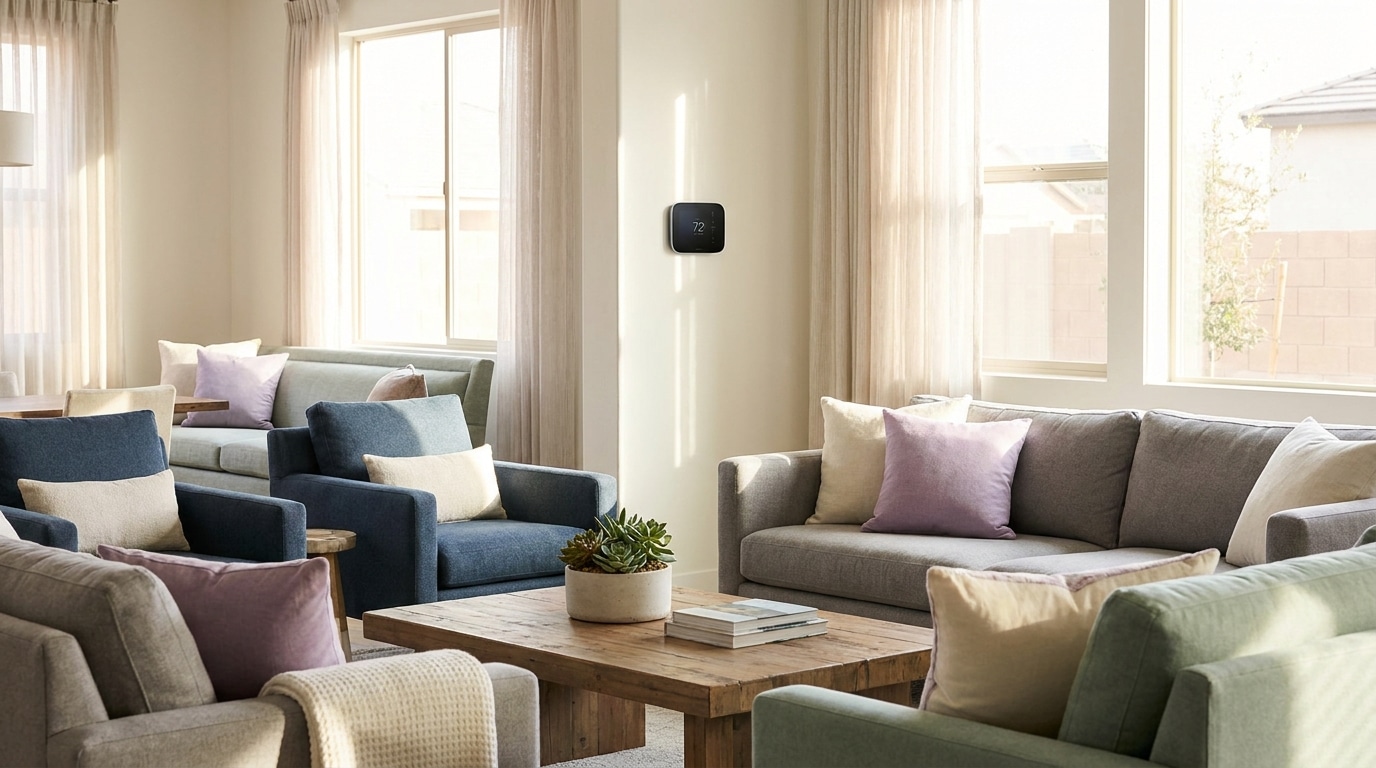
High summer energy bills and constant thermostat adjustments shouldn’t be part of homeownership in the East Valley. Smart thermostat installation replaces your old manual or programmable thermostat with a Wi-Fi-enabled device that learns your schedule, adjusts temperatures remotely, and optimizes energy use. Professional installation ensures compatibility with your HVAC system, correct wiring, and seamless setup, delivering immediate energy savings and precision climate control across your East Valley home. If you’ve been frustrated by $400 summer AC bills despite turning the thermostat up when you leave, or if rooms heat unevenly because your thermostat doesn’t reflect your whole house’s comfort needs, upgrading to a smart thermostat offers measurable relief. The technology pays for itself through lower bills, reduced HVAC wear, and the convenience of controlling your climate from your phone.
Why Upgrade to a Smart Thermostat?
Smart thermostats deliver three core benefits that matter to East Valley homeowners. You’ll see energy savings on your next bill. You gain remote access that eliminates manual adjustments. You receive HVAC health monitoring that prevents costly breakdowns.
According to ENERGY STAR’s 2023 HVAC and Smart Thermostats Summary, certified smart thermostats save the average household 8% on heating and cooling costs annually. In Arizona’s cooling-heavy climate where HVAC systems run 110+ days at temperatures above 100°F, that translates to $150 to $250 in annual savings on a typical 1,800-square-foot home.
The learning algorithms adapt to your schedule automatically. They pre-cool before you arrive home and scale back when nobody’s there. This eliminates the energy waste of heating or cooling an empty house. Beyond the dollar savings, the convenience is real. You can adjust temperatures from your phone during vacation, receive filter-change reminders before your AC struggles, and integrate with Alexa or Google for voice control.
Cut Energy Bills with Precision Control
Geofencing is the single biggest savings feature we recommend for East Valley homeowners. The thermostat detects when your phone leaves a preset radius around your home and automatically adjusts to an energy-saving setpoint. It then ramps back up before you return.
In our work with Gilbert and Queen Creek homeowners upgrading to smart thermostats, we’ve seen cooling runtime drop by 15 to 20% in the first billing cycle when geofencing and adaptive scheduling are configured correctly. That’s real money back in your pocket every month. Unlike older programmable thermostats that require manual schedule updates every season, smart thermostats learn from your behavior and adjust automatically.
Simulation-driven benchmarking by the Department of Energy demonstrates how smart thermostats optimize HVAC performance across diverse climate conditions. Industry forecasts show the smart thermostat sector is growing rapidly, with 672 million devices expected to ship by 2030, driven by energy-conscious homeowners seeking measurable cost reductions.
Gain Insight Into Your HVAC System’s Performance
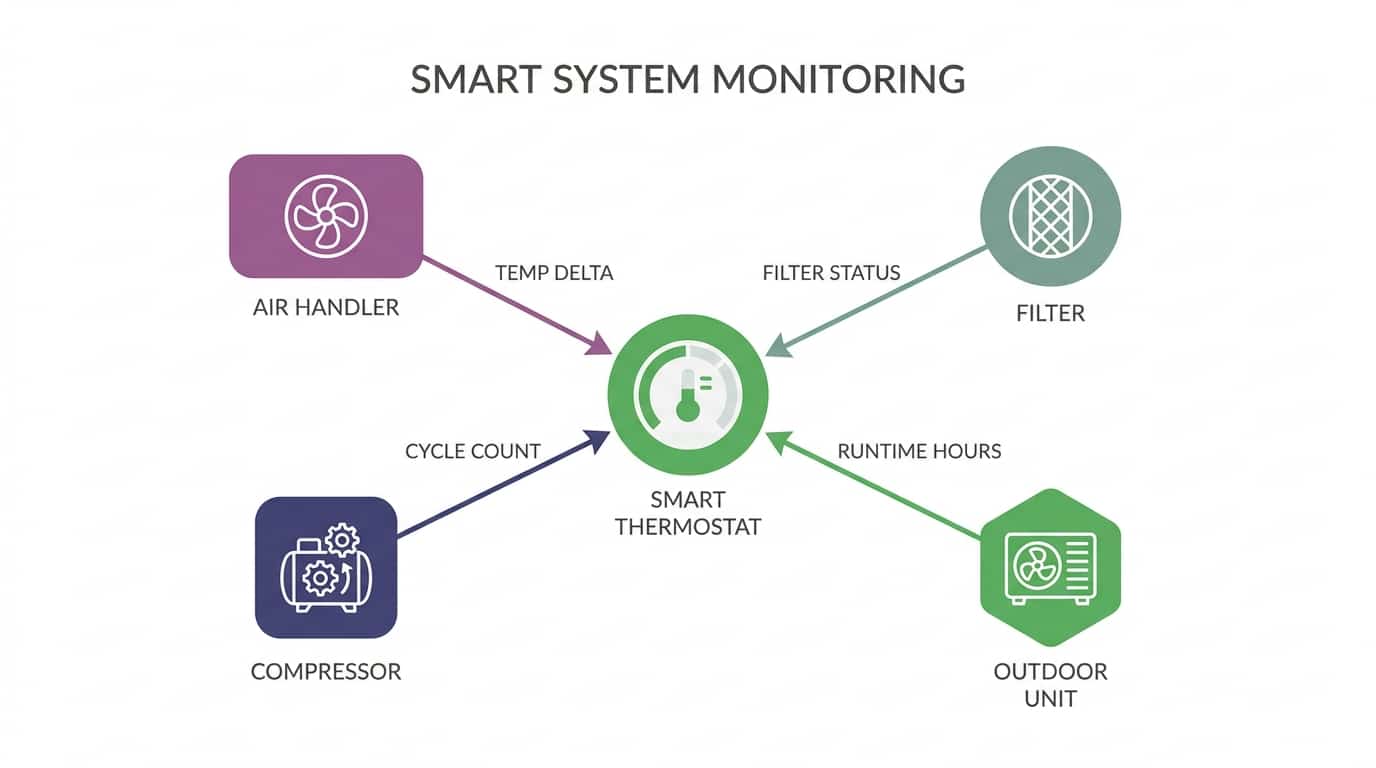
Smart thermostats track runtime, cycle frequency, and system alerts that reveal early signs of AC trouble. If your compressor is short-cycling or your furnace igniter is struggling, the thermostat flags it and sends you an alert before a full breakdown.
Many models remind you when it’s time to replace your air filter based on actual runtime hours, not arbitrary calendar dates. This visibility pairs naturally with smart heat pump maintenance plans that keep your system running efficiently year-round. When a thermostat alerts you that runtime has spiked 40% compared to last June, you can schedule preventive maintenance before the system fails on the hottest day of summer.
What to Expect During Professional Installation
Professional smart thermostat installation takes 60 to 90 minutes. It involves four steps: compatibility assessment, power shutoff and wire labeling, physical mounting, and Wi-Fi configuration.
The difference between DIY and professional install comes down to knowing which wires go where and how to handle edge cases. These include C-wire adapters, multi-stage cooling, and dual-fuel systems. We’ve seen homeowners struggle with installations where their older HVAC wiring doesn’t match the color-coded diagrams in the quick-start guide. Bill and the JLM team assess your system upfront, explain what’s needed (including any adapters or wiring modifications), and quote honestly before touching a wire. There are no surprise fees after we open your wall plate and discover your 15-year-old thermostat has unconventional wiring.
Compatibility Assessment & System Check
Not every smart thermostat works with every HVAC system. Heat pumps with auxiliary heat strips, zoned ductless mini-splits, and older systems without a common wire (C-wire) each require specific thermostat models or wiring adapters. We verify your system voltage, wire count, and heating/cooling stages before recommending a thermostat model.
If your system needs a C-wire adapter to provide continuous power to the thermostat, we install it during the same visit and include it in the quote. Older systems ran on battery power alone. That assessment prevents the frustrating scenario where you buy a $250 Nest or Ecobee online, open the box, and discover it won’t work without a $60 adapter and an electrician’s visit. Market research indicates strong demand for professional installation services as homeowners recognize the value of compatibility verification and expert setup.
Wiring, Mounting, and Wi-Fi Configuration
Installation begins with shutting off power at the breaker and removing your old thermostat. We label each wire by its terminal connection: R for power, Y for cooling, W for heating, G for fan, C for common. We take a photo for reference and disconnect them. The new thermostat base plate mounts to the same wall opening.
We reconnect the labeled wires to their matching terminals and snap the display unit onto the base. Power restoration and initial boot-up confirm the wiring is correct. The final step is connecting the thermostat to your home Wi-Fi network and pairing it with the manufacturer’s app on your phone.
We walk you through the initial setup: setting your target temperatures, enabling geofencing, and linking to Alexa or Google if you want voice control. The goal is for you to leave with a working, configured system. You won’t be stuck with a half-installed device and a 40-page PDF manual.
Smart Thermostats That Work in Arizona’s Climate
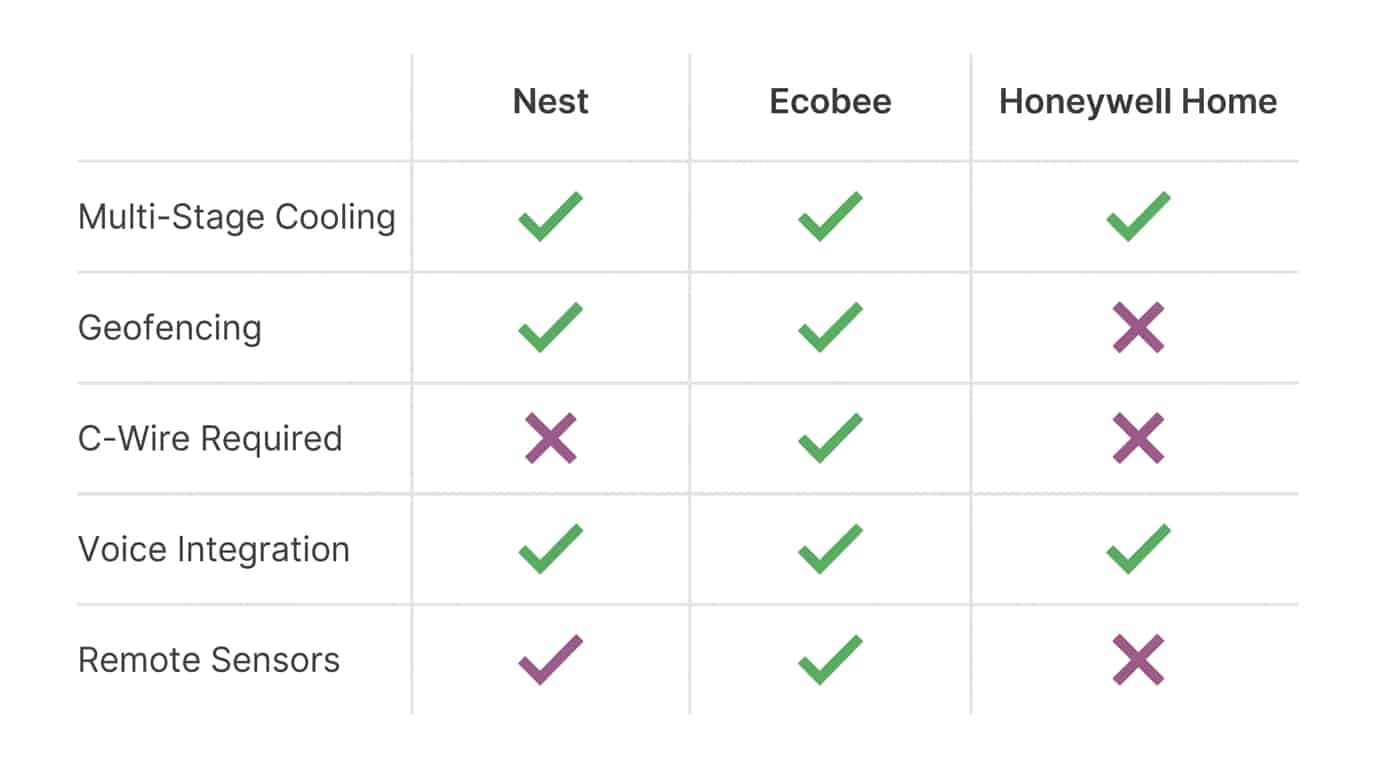
Arizona’s extreme summer heat and minimal heating demand mean your thermostat needs robust multi-stage cooling support. It also needs geofencing that responds to the East Valley’s typical daily routine (empty house from 8 a.m. to 5 p.m., pre-cool before arrival). We install Nest, Ecobee, and Honeywell Home models most frequently. These handle two-stage and variable-speed AC units common in newer East Valley homes.
If your home uses a ductless mini-split system for garage cooling or a bonus room, compatibility varies by brand. Not all thermostats support dual-fuel setups (heat pump with gas furnace backup). We match the model to your specific HVAC configuration during the assessment.
For more information on HVAC system types and maintenance needs, explore our comprehensive guides on air conditioning maintenance and repair.
Beyond Installation: Optimizing Your Smart Thermostat for Maximum Savings
Installation is step one. The ROI comes from configuring schedules, enabling geofencing, and reviewing energy reports monthly to spot inefficiencies. Start by setting a 7-day schedule that reflects your actual routine. Use cooler temps in the evening when you’re home and higher setpoints during work hours.
Enable geofencing in the app so the thermostat knows when everyone has left and automatically shifts to eco mode. Review the monthly energy report (every major smart thermostat provides one) to see which days spiked usage. Adjust your schedule accordingly.
For more tips on optimizing your HVAC system and cutting energy costs year-round, explore our HVAC blog for Gilbert homeowners. Smart thermostats can also work alongside advanced air quality features: CDC guidance on air cleanliness emphasizes proper ventilation and filtration. Upper-room UVGI systems offer pathogen control in occupied spaces, and AIHA’s fact sheet on ultraviolet germicidal irradiation explains implementation considerations. Research on UVGI effectiveness shows measurable improvements in indoor air quality when paired with optimized HVAC control.
Ready to cut your energy bills and gain precision control over your home’s comfort? JLM Air Conditioning & Heating installs smart thermostats for East Valley homeowners with honest pricing, expert wiring, and zero surprises. We assess compatibility upfront, explain exactly what’s needed, and configure your new thermostat so it delivers savings from day one.
Whether you’re upgrading from a 20-year-old dial thermostat or replacing a basic programmable model that never lived up to its promises, we’ll match you with the right device for your HVAC system and show you how to use it. When fast AC repair in Mesa becomes necessary during a heatwave, JLM can install a smart replacement the same day and restore both comfort and efficiency.
Call now: 602-619-3609 to schedule your free consultation and compatibility assessment. For related HVAC installation insights, see how mini-split installation works to understand what controls integrate best with zoned systems.
By JLM