When should you replace your HVAC system? Replace if your system is 12-15+ years old, requires frequent repairs that total more than 50% of replacement cost, or runs inefficiently (SEER below 13). Upgrade sooner if energy bills are rising, comfort is inconsistent, or a major component (compressor, heat exchanger) fails. A licensed technician can assess your system and give you an honest recommendation based on condition, not sales pressure.
If you’re a homeowner in Gilbert, Queen Creek, Mesa, or Apache Junction, you’ve probably asked yourself this question after noticing rising energy bills, uneven cooling, or another repair estimate landing in your inbox. Your system still runs, but it’s louder, less efficient, and the repair costs are adding up. One contractor quoted $11,000 for a new system; another said a $2,500 compressor fix will buy you a few more years. You’re stuck wondering which decision will cost less over the next five years, and whether you’re being upsold by a company that profits from unnecessary replacements.
JLM Air Conditioning & Heating offers HVAC services across the East Valley with transparent pricing and owner-led accountability, so you get an honest recommendation whether repair or replacement makes financial sense. We’ll walk through the framework for evaluating your system’s condition, show you the real numbers behind replacement costs and energy savings, and explain how to choose the right HVAC system without being pressured into features you don’t need.
When Should You Replace Your HVAC System?
The decision to replace isn’t about a single factor. It’s about age, repair frequency, efficiency loss, and what it costs to keep the system running versus installing a new one. Here’s the framework we use when a customer asks if it’s time to upgrade.
Age and Expected Lifespan
Most HVAC systems in Arizona last 12 to 15 years. The extreme heat stress shortens lifespan compared to milder climates, where 15 to 20 years is common. If your system is approaching or past that 12-year mark and you’re noticing performance issues, replacement usually makes financial sense. According to HVACRTrends’ 2025 William Blair survey, homeowners are deferring replacement longer, pushing average system age upward. That strategy often leads to emergency replacements during peak summer heat when availability is tightest and stress is highest.
Age alone doesn’t mean you must replace immediately. A well-maintained 13-year-old system that’s running efficiently and hasn’t needed major repairs can give you another season or two. But when age combines with rising repair costs or declining efficiency, the math tips toward replacement. Understanding when professional AC repair makes sense helps you make that call.
The 50% Rule for Repair Costs
If a single repair costs more than 50% of what a new system would cost, replacement usually makes better financial sense. Here’s the math. If your compressor fails and the repair estimate is $5,500, and a new system costs $11,000, you’re spending half the replacement cost to fix one component in an aging system that may need another expensive repair within a year. In that scenario, putting the $5,500 toward a new system with a 10-year warranty is the smarter investment.
On the other hand, if the repair is an $800 capacitor replacement or a $400 thermostat upgrade, repair is the obvious choice. That’s where honest evaluation matters. We’ve seen contractors recommend full replacement for minor fixes because it’s more profitable. We’ll tell you when repair makes sense, and if replacement saves you money long-term, we’ll show you the numbers.
Efficiency Loss and Rising Energy Bills
HVAC systems lose efficiency as components wear out. Systems installed before 2010 often run at SEER 10 to 12; modern systems hit SEER 16 to 20. SEER (Seasonal Energy Efficiency Ratio) measures how much cooling you get per unit of energy consumed. A SEER 10 system uses nearly twice the electricity of a SEER 18 system to cool the same space. In Arizona, where AC runs eight or more months per year, that difference shows up fast on your energy bill. According to Energy Star, upgrading to a high-efficiency system can reduce cooling costs by 20 to 40% compared to older equipment. Over five years, those savings can offset a significant portion of the replacement cost.
If your bills have climbed steadily over the past few years and your system is more than 10 years old, efficiency loss is likely the culprit. For example, understanding why summer in Mesa demands fast AC repair helps illustrate how declining efficiency compounds under extreme heat loads. An energy audit or load calculation can confirm it, but the pattern is clear: older systems work harder, consume more energy, and cost more to run.
Major Component Failure (Compressor, Heat Exchanger)
When a compressor or heat exchanger fails, repair costs approach or exceed 50% of replacement cost. The compressor is the heart of the system; replacing it is a major job that requires refrigerant recovery, labor-intensive removal and installation, and startup testing. Heat exchanger failure is less common in AC-only systems but critical in heat pumps or furnaces. In both cases, a technician should walk you through the options honestly: what the repair costs, what a new system costs, how much longer the repaired system will realistically run, and whether additional failures are likely in the near term. If you’re facing one of these repairs, get a second opinion if the first quote feels off. We’ve provided emergency repair to customers whose systems failed during peak summer, and in many cases the honest answer was that replacement made more sense than sinking $5,000 into a 14-year-old system with other aging components.
Why Upgrade? The Long-Term Benefits of Replacing Your HVAC System
Replacement isn’t just about fixing a problem. It’s an investment in long-term savings, comfort, and reliability. Here’s what a new system delivers.
Lower Energy Bills with High-Efficiency Equipment
A SEER 16 or higher system reduces cooling costs by 20 to 40% compared to systems rated SEER 12 or below. For a typical East Valley home running AC from April through November, that translates to $400 to $800 per year in savings. Over 10 years, you’re looking at $4,000 to $8,000 in energy cost reduction. Energy Star data backs this up with real-world savings calculations for Arizona’s climate zone. The upfront cost of a SEER 16 to 18 system is higher than a baseline SEER 14, but the payback period is typically four to six years, and you enjoy lower bills for the entire lifespan of the system.
We install Amana systems with SEER ratings in the 16 to 20 range. Customers consistently report noticeable drops in their monthly bills within the first cooling season. The difference is especially stark if you’re replacing a pre-2010 system.
Fewer Repairs and Better Reliability
New systems come with manufacturer warranties that cover parts for 10 years and, in many cases, labor for one to two years. That means you’re protected from the repair cycle that plagues aging equipment. An older system that’s out of warranty can hit you with a $1,200 repair this summer and a $900 repair next winter. With a new system, those costs disappear for a decade. You also get peace of mind: no more wondering if the AC will fail on a 110-degree day in July.
We’ve seen the stress that emergency breakdowns cause, especially for families with young children or older adults. Reliable cooling isn’t a luxury in Arizona. It’s a necessity. A new system gives you that reliability.
Improved Comfort and Consistent Cooling
Modern systems deliver better humidity control, quieter operation, and more even temperatures from room to room. Variable-speed blowers adjust airflow to match demand, so you don’t get the temperature swings that single-speed systems create. Two-stage or modular compressors run at lower speeds most of the time, which reduces noise and improves efficiency while maintaining comfort. If you’ve noticed that your bedroom is five degrees warmer than the living room, or that the system cycles on and off constantly, a new system with better airflow design and modern controls will fix those issues. Proper air conditioning maintenance keeps the new system running at peak performance year after year.
Increased Home Value and Future-Proofing
Buyers in Arizona expect modern HVAC. A new system is a selling point; an aging system is a negotiation liability. When we install a system, we provide documentation of the installation date, equipment specs, and warranty terms. That documentation adds value when you list the home. Even if you’re not planning to sell soon, future-proofing your home with efficient, reliable equipment protects your investment. A 12-year-old system is a repair risk that scares off buyers or gives them leverage to negotiate down your asking price. A two-year-old system with eight years of warranty left is an asset.
How Much Does HVAC Replacement Cost?
Pricing transparency matters. Here’s what replacement costs in the East Valley and what drives those numbers.
Average Replacement Cost in the East Valley
A typical residential HVAC replacement in Gilbert, Queen Creek, Mesa, or Apache Junction runs $9,000 to $20,000, with the average around $11,000 for a standard 3- to 4-ton system. The range depends on system size (tonnage), efficiency rating (SEER), ductwork condition, equipment brand, and labor. A baseline SEER 14 system costs less upfront; a SEER 18 Amana system with advanced features costs more. Larger homes (2,500+ square feet) often need 4- or 5-ton systems, which push the cost toward the higher end of the range. If your ductwork needs significant modifications, sealing, or insulation upgrades, that adds $1,500 to $3,000 to the total. HVACRTrends’ 2025 survey notes that replacement demand is stabilizing after a post-pandemic surge, but pricing remains elevated due to labor costs and equipment supply chain adjustments.
We provide transparent quotes that break down equipment, labor, and any ductwork or electrical upgrades needed. You’ll know the total cost before we start, with no hidden fees or surprise charges.
What’s Included in the Price?
A complete HVAC replacement includes the outdoor condenser unit, indoor air handler or furnace, thermostat (often a programmable or smart model), refrigerant lines, electrical connections, and startup testing. Labor covers removal of the old system, installation of the new equipment, ductwork modifications if needed (sealing leaks, adding returns, insulating exposed runs), permits, and customer training on system operation and maintenance. Some contractors quote equipment-only prices to appear cheaper, then add labor and material costs later. That’s not how we work. Our quotes include everything required to get your system running correctly and safely. You also get documentation of the installation for warranty purposes and future home sales. If you’re interested in exploring HVAC replacement and installation services in more detail, we walk through the full scope on our service page.
Financing Options and Rebates
We partner with financing providers like GoodLeap to offer payment plans that make upfront cost manageable. Depending on your credit, you can finance the full amount with monthly payments that fit your budget. Energy Star rebates and utility incentives sometimes apply. Arizona Public Service (APS) and Salt River Project (SRP) periodically offer rebates for high-efficiency systems (SEER 16+), though availability varies by year and eligibility criteria. We’ll check current programs when we provide your estimate and help you apply if you qualify. Between financing and rebates, many customers find that monthly payments are lower than the combined cost of their old system’s energy bills and repair expenses.
How to Choose the Right HVAC System for Your Home
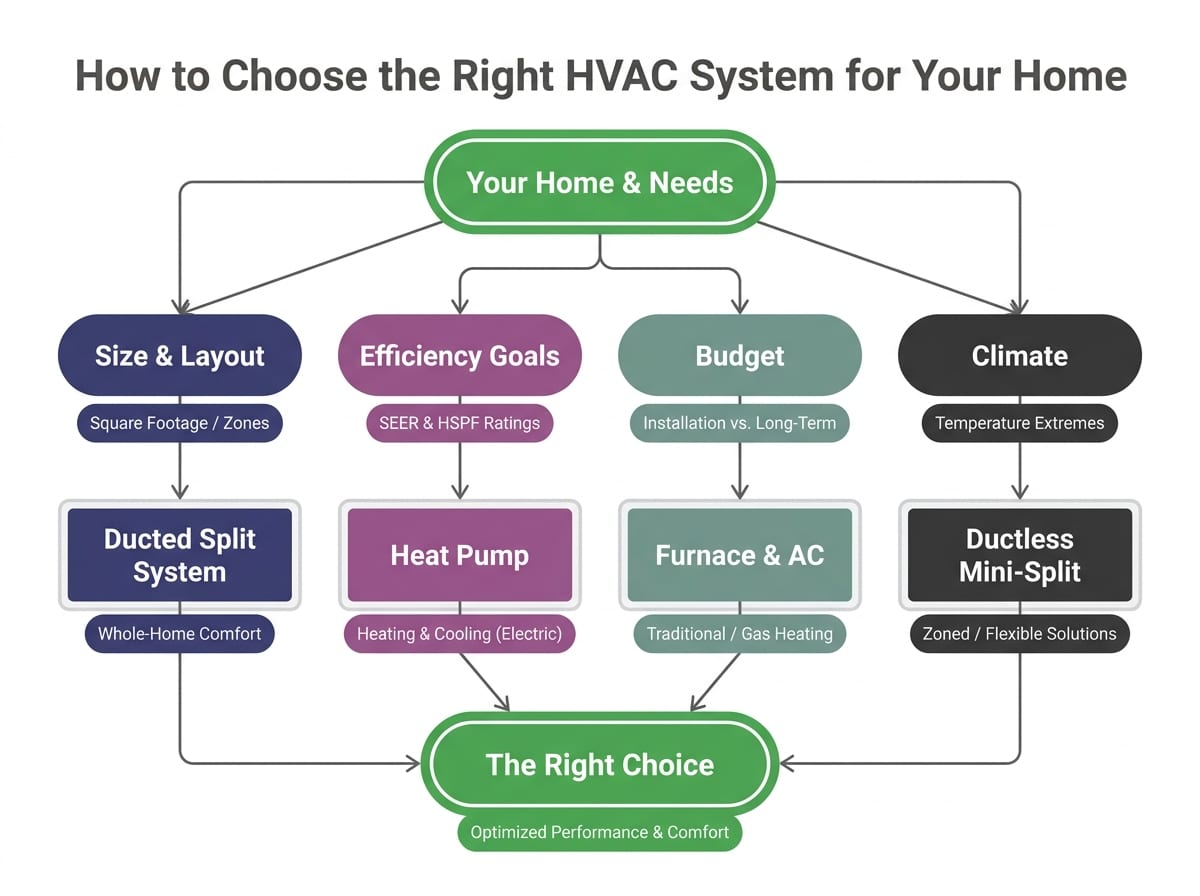
System selection isn’t about picking the most expensive model. It’s about right-sizing the equipment, choosing an efficiency level that matches your budget and usage, and selecting a brand with solid warranty support.
Sizing: Why Bigger Isn’t Always Better
Proper system sizing requires a Manual J load calculation, which factors in your home’s square footage, insulation, window area, orientation, and typical occupancy. Oversized systems short-cycle (turn on and off frequently), which wastes energy, increases wear on components, and reduces lifespan. Undersized systems run constantly and can’t keep up with Arizona’s 110-degree days. Right-sized systems run in longer, more efficient cycles, maintain consistent temperatures, and last longer. We’ve encountered homes where a previous contractor installed a 5-ton system in an 1,800-square-foot house because “bigger is better.” The homeowner paid more upfront, spent more on energy, and dealt with humidity problems because the system never ran long enough to dehumidify properly. Load calculations take about an hour and ensure the system matches your home’s actual cooling demand. If you’re considering alternative options like ductless mini-split systems, proper sizing is just as critical.
Efficiency Ratings (SEER, EER) Explained
SEER measures seasonal efficiency across a range of temperatures; EER (Energy Efficiency Ratio) measures peak efficiency at 95 degrees. In Arizona, EER matters because we spend months at or above 100 degrees. A system with a high SEER but mediocre EER may perform well in milder climates but struggle here. Look for systems with SEER 16 to 18 and EER 12 or higher. SEER 20+ systems carry a premium cost, and the efficiency gains deliver diminishing returns unless you’re in the home for 15 or more years and run the AC heavily. For most East Valley homeowners, SEER 16 to 18 is the sweet spot: significant savings over older equipment without paying thousands extra for marginal improvements. Energy Star’s home savings resources provide calculators that estimate annual savings based on SEER rating and local utility rates.
Equipment Quality and Warranty
Reputable brands like Amana, Carrier, Trane, and Lennox offer 10-year parts warranties and solid track records for reliability. Budget-tier equipment from lesser-known manufacturers may cost $1,500 less upfront but comes with shorter warranties (5 years or less) and higher failure rates. We install Amana systems because they balance quality, efficiency, and warranty support. Amana equipment is backed by both the manufacturer’s 10-year parts warranty and our workmanship guarantee. When a system fails, you want a brand that honors warranty claims quickly and has parts readily available. Cheaper equipment may save money today but cost more in repairs and downtime over the system’s lifespan.
If you’re exploring cooling options for non-standard spaces like garages or workshops, ductless installation in Gilbert offers targeted cooling without the cost of extending ductwork.
What to Expect During HVAC Replacement
Knowing what happens on installation day reduces anxiety and helps you prepare.
Free Consultation and On-Site Assessment
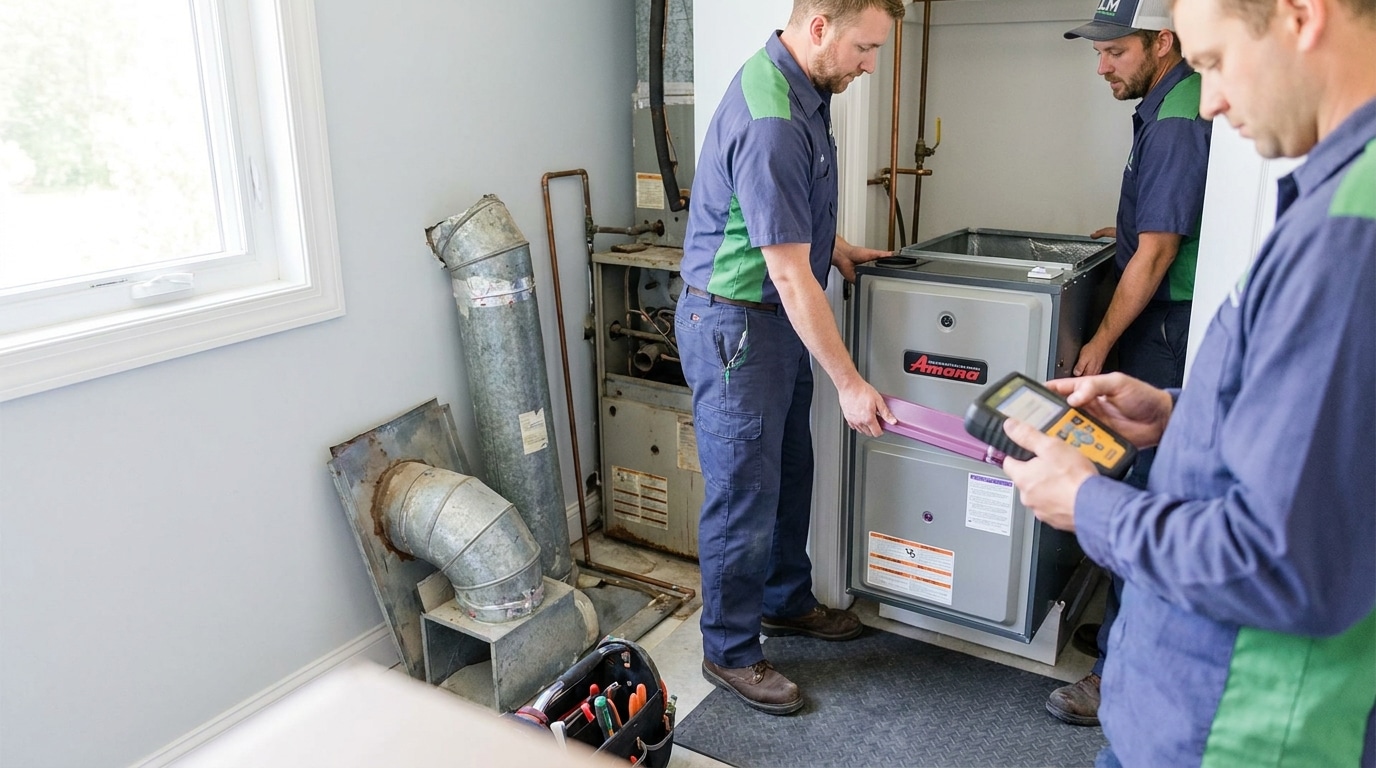
We start with a free consultation at your home. We’ll measure your space, inspect your existing ductwork, review your current system’s condition, and perform a load calculation to determine the right size. You’ll get a transparent quote that breaks down equipment, labor, ductwork modifications (if needed), and any optional upgrades like a smart thermostat or UV air purifier. We’ll walk you through the options and give you our honest recommendation. If repair makes more sense than replacement, we’ll tell you. No pressure, no upselling to hit a sales quota.
Installation Timeline (1 to 2 Days)
A straightforward replacement typically takes one day. If ductwork modifications, electrical panel upgrades, or multi-zone system installation are involved, the job may extend to two days. Here’s what happens. We remove the old equipment. We install the new condenser and air handler. We connect refrigerant lines and electrical. We modify or seal ductwork as needed. We install the new thermostat. We test the system for proper operation. We clean up all debris and haul away the old equipment. Most customers are back to normal by the end of the first day, with full cooling restored.
Testing, Startup, and Customer Training
Once installation is complete, we test refrigerant charge, airflow, and thermostat programming to ensure everything operates correctly. We’ll train you on system operation: how to adjust the thermostat, when to change filters, what sounds are normal, and when to call for service. You’ll get documentation of the installation date, equipment serial numbers, and warranty details. This paperwork is important for warranty claims and future home sales.
Post-Installation Support and Maintenance Plans
We offer maintenance plans that include seasonal tune-ups (typically spring and fall), priority scheduling, and discounts on repairs. Enrollment post-install keeps your system running efficiently and catches small issues before they become expensive breakdowns. Regular maintenance extends system lifespan and maintains efficiency. A $150 annual tune-up can prevent a $1,200 compressor repair. If you need guidance on seasonal preparation, the smart way to prep AC for Gilbert’s hot summer walks through the key steps homeowners should take before peak heat arrives.
How JLM Air Conditioning & Heating Approaches HVAC Replacement
We’re a family-owned, owner-operated company serving Gilbert, Queen Creek, Mesa, and Apache Junction. Here’s how we’re different.
Honest Recommendations, Not Sales Pressure
Bill Milbourn is a licensed technician who’s actively on jobs alongside the team. When you call, you’re talking to someone who lives in the East Valley and has a reputation to protect in the community. If repair makes sense, we’ll tell you. If replacement saves money long-term, we’ll show you the math. We don’t work on commission. We don’t have sales quotas. In our 3,000+ lifetime installs across the East Valley, we’ve seen that homeowners who wait until a major component fails often face emergency replacement during peak summer heat, when availability is tightest and stress is highest. Planning ahead saves money and reduces stress, but we’ll never pressure you into replacing a system that has useful life left.
Premium Equipment, Competitive Pricing
We install Amana systems with professional-grade workmanship and materials. Our A+ BBB rating reflects the quality of our installations and customer service. The average $11,000 replacement cost reflects quality equipment, honest labor rates, and transparent pricing, not corporate overhead or franchise fees. You’re paying for the system and the work, not layers of markup to cover national advertising budgets. According to Energy Star, investing in high-efficiency equipment pays back through lower energy bills and fewer repairs, making the upfront cost a smart long-term decision.
24/7 Emergency Service and Same-Day Availability
Arizona heat doesn’t wait for business hours. If your system fails while you’re evaluating replacement options, we offer same-day emergency repair to keep you comfortable. Our on-call team responds quickly, diagnoses the problem, and gives you an honest assessment of whether repair or replacement is the best path forward. You won’t be left sweating through the weekend while you wait for a Monday appointment.
Homeowners sometimes explore targeted cooling solutions for spaces that don’t justify extending central ductwork. If you’re considering alternatives for a converted garage or workshop, our guide to garage AC options that don’t overwhelm small spaces explains ductless mini-splits, portable units, and window installations.
For more insights on HVAC care and updates, visit our blog for Gilbert-area homeowners.
Conclusion
Replace your HVAC system when age, repair costs, and efficiency loss align. The 50% rule, rising energy bills, and major component failure are clear signals that replacement makes financial sense. A new high-efficiency system reduces cooling costs by 20 to 40%, eliminates the repair cycle for a decade, and improves comfort and reliability. Replacement costs $9,000 to $20,000 depending on size and efficiency, but long-term savings and financing options make it manageable. Choose equipment that’s properly sized, appropriately efficient for Arizona’s climate, and backed by a solid warranty.
JLM Air Conditioning & Heating gives honest recommendations, transparent pricing, and owner-led service. We’ve completed 3,000+ installs with an A+ BBB rating and a family-owned commitment to doing the job right the first time. If you’re ready for a straight answer about whether your system needs replacement or if repair makes sense, we’ll walk you through the options with no pressure.
Ready to get an honest assessment of your HVAC system? Contact JLM Air Conditioning & Heating for a free consultation and transparent quote. Call us at 602-619-3609 or visit our service page to learn more about our East Valley HVAC replacement and installation services.