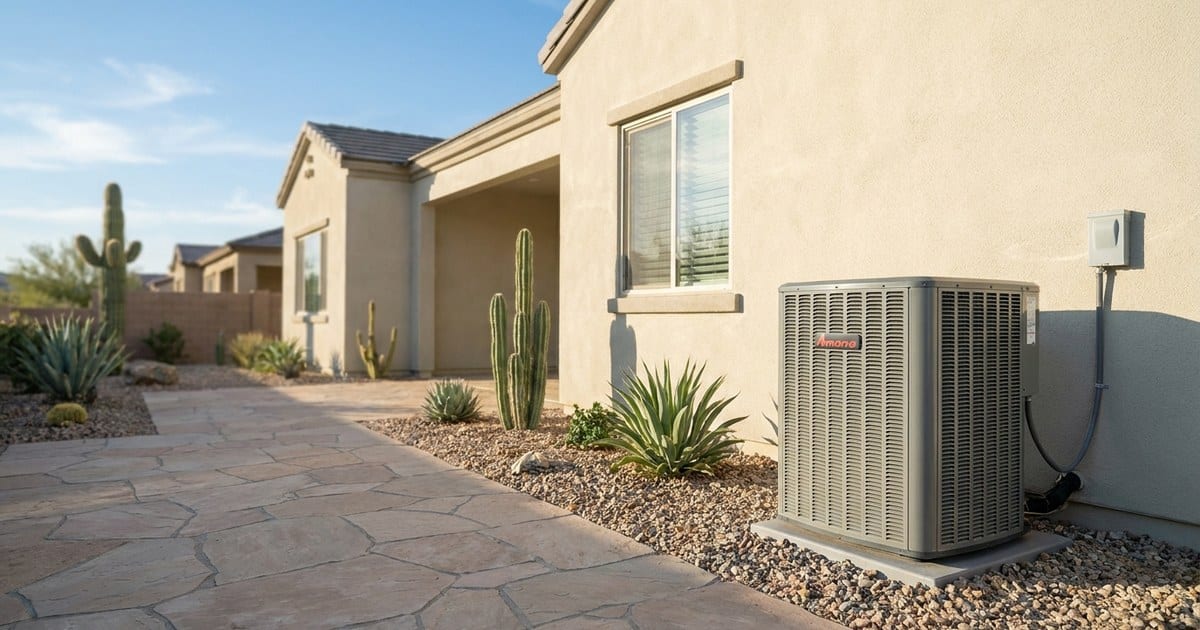

What are the main AC making noise causes? They usually fall into a few groups: loose parts (rattling), electrical wear (buzzing, clicking), a failing motor or bearing (squealing, grinding), and refrigerant or ice problems (hissing, gurgling). New, loud, or constant sounds deserve a check. Grinding, screeching, and loud bangs mean shut the system off and call a pro.
You hear something new from the AC, and it’s triple digits outside. Is it a loose panel or the start of a breakdown? In Arizona the system runs most of the year, so every odd sound feels expensive.
This guide to AC making noise causes goes sound by sound. For each one, we tell you what it usually means, how worried to be, and what to do next. It also helps to know the other warning signs your AC needs repair, because a noise rarely shows up alone.
We work on all makes and models, so this applies whatever brand sits in your yard. We also keep it honest. Some sounds are minor, and we’ll say so.
What are the most common AC making noise causes?
Most AC noises come from loose panels or screws, worn fan motors and bearings, electrical parts such as capacitors and contactors, or refrigerant and ice problems. Pitch and timing narrow it down. Anything new, loud or persistent is worth a look, even if the AC still cools.
Our standard is simple: explain the problem clearly, fix it right the first time, and never sell you something you don’t need. That shapes how we read these sounds. We would rather tell you “this one can wait” than scare you into a call.
Here are the main air conditioner noise types at a glance:
| Sound | Likely cause | Urgency |
|---|---|---|
| Rattling | Loose panel, debris, unlevel pad, loose duct screws | Can wait |
| Buzzing | Electrical parts, fan touching debris | Check soon |
| Clicking | Single click is normal; repeated clicks point to electrical parts | Check soon |
| Humming | Compressor or capacitor under strain | Check soon |
| Squealing | Dry bearings, failing motor, worn belt on older systems | Turn off now |
| Grinding | Loose blower wheel or failed bearing | Turn off now |
| Banging | Loose or broken part (a harmless duct pop is different) | Turn off now |
| Hissing and gurgling | Refrigerant leak or frozen coil | Check soon |
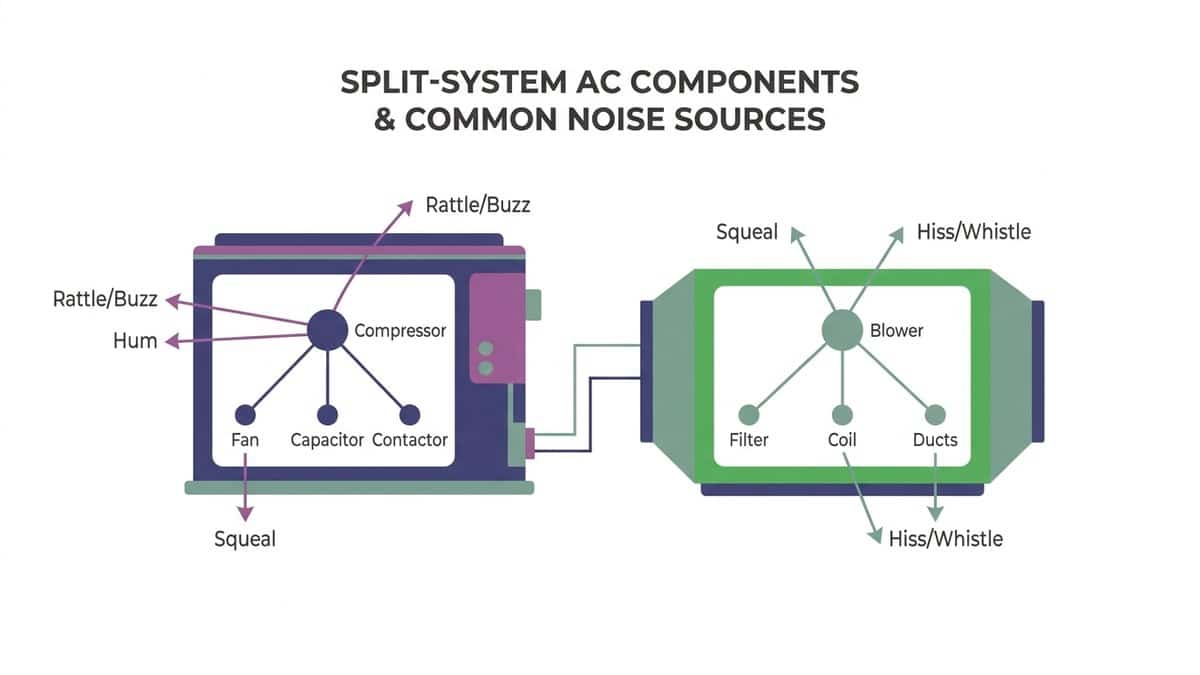
Location helps too. Sounds from the outdoor unit (the condenser) often involve the fan, compressor or electrical parts. Sounds from inside, near the air handler or vents, often involve the blower, filter or airflow. If the noise comes with weak cooling, read our guide to what could be behind an AC not blowing cold air as well.
One note on the heating side. Duct “pops” and some other noises can come from the furnace. If you ever smell gas or see soot, leave that to a pro right away.
Takeaway: Match the sound to the table of AC making noise causes, then let the urgency column decide your next move.
Which AC noises mean you should shut it off right away?
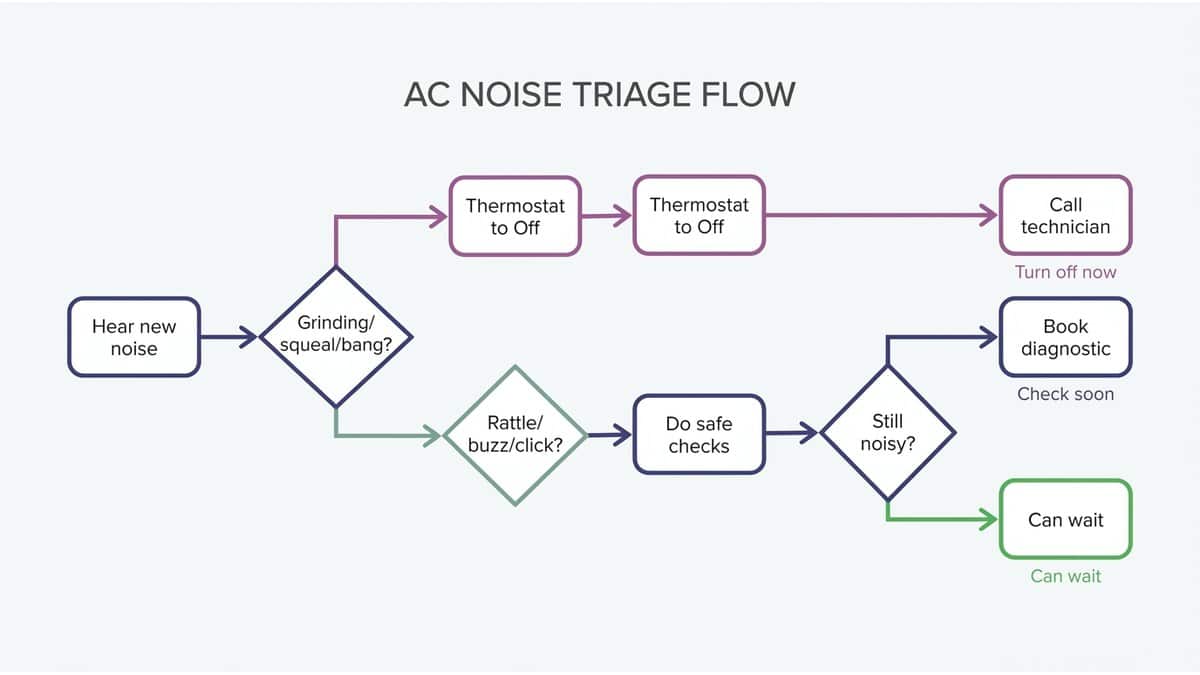
Grinding, screeching, loud banging and metal scraping mean stop running the system. Continued running can turn a small repair into a damaged motor or compressor. Switch the thermostat to off, leave the breaker alone unless you’re sure, and call a technician.
This isn’t about fear. It’s about protecting the system and your budget. Running an AC while parts are frozen or failing can damage the compressor or cause other parts to fail. The same logic applies to a failing bearing. Every extra hour it runs adds wear.
If you can’t wait for a normal appointment, Emergency AC Repair Near Me: 24/7 Same-Day Service explains how we handle urgent calls.
1. Grinding or metal scraping
Grinding usually means metal is touching metal. Common culprits are a loose blower wheel hitting its housing or a bearing that has failed. Neither one fixes itself. Turn the system off. A blower wheel that’s caught early is often a modest repair. One that keeps scraping can ruin the motor.
2. Screeching or squealing
A high squeal is never a normal operating sound. On older systems it can be a worn belt. On many systems it points to dry bearings or a motor that is starting to fail. Shut it off and have it looked at. Letting a failing motor run is how a small fix becomes a bigger one.
3. Loud bang at startup or shutoff
Stay calm here, because not every bang is serious. A hollow “pop” from the ductwork as metal warms or cools is common and harmless. A sharp bang from the equipment itself is different. It can mean a loose or broken part inside the unit. If the bang repeats or comes with other changes, turn the AC off and call.
Takeaway: Grinding, squealing and loud bangs get the system switched off first and the phone call second.
Why is my AC rattling, buzzing or clicking?
Rattling is usually a loose panel, debris, an unlevel outdoor unit or loose duct screws, and it is often not urgent. Buzzing and constant clicking point to electrical parts. A single click at startup is normal. Repeated clicking with no cooling is not.
These AC making noise causes make up the “usually not an emergency, but don’t ignore it” group. Clearing the outdoor unit is a smart DIY job. Refrigerant and electrical parts are not. Keep that line in mind as you read.
4. Rattling: AC rattling sound repair
Start outside. Leaves, twigs and the occasional rock find their way into a condenser, especially after a dust storm or monsoon. Look for a loose access panel too. A unit that has settled on an uneven pad can also vibrate against its mounting.
Indoors, a rattle near a vent often means a loose duct screw or a register that isn’t seated. For most rattles, AC rattling sound repair is a small job: clear the debris, snug the panel or screw, and listen again. If the rattle keeps going, or gets louder over a few days, something inside may be loose. Our guide on why your AC is making noise and what to do about it goes deeper.
5. Buzzing
Buzzing most often comes from electrical parts. A capacitor is a small part that gives motors the jolt they need to start. A contactor is the switch that sends power to the outdoor unit. When either wears out, you may hear a buzz. A fan blade brushing debris can also buzz.
Clear what you can see around the unit. If it still buzzes, or the AC struggles to start, stop using it and book a diagnostic. Electrical work isn’t a DIY job.
6. Clicking
One click when the system starts or stops is normal. That’s the contactor doing its job. Repeated clicking is a different story, especially when the air isn’t cooling. It suggests an electrical part trying and failing to engage. Turn the system off and have it checked.
Takeaway: Rattles can usually wait, while buzzing and repeated clicking deserve a technician soon.
What does compressor noise mean?
A compressor that is loud, hums but won’t start, or clanks is under stress. Causes include a failing start capacitor, worn internals or electrical trouble. Compressor noise should be diagnosed by a pro, since repair versus replacement depends on the system’s age and condition.
The compressor is the heart of the outdoor unit. It pushes refrigerant through the system, so we treat any change in its sound seriously.
7. Loud humming, clanking or a hard start
Here is how the common sounds break down:
- Humming without starting: often a weak start capacitor or an electrical issue. The compressor is trying and failing.
- Loud, labored running: the compressor may be working harder than it should.
- Clanking: something inside may be loose or worn. Stop the system.
Stop the AC and call. The cause decides what comes next. A weak capacitor is a very different repair from worn internals, and nobody should guess which one you have. That’s why we diagnose first and explain before work begins.
Our technicians have training and experience across installations, replacements, maintenance and repair, so we can walk you through both paths honestly. Not every compressor sound means a new system. It depends on what’s wrong and how old and worn the unit is. When you’re weighing the next step, read how to decide between compressor repair and replacement.
If a frozen coil is behind the noise, don’t keep running the unit. Running an AC while its parts are frozen can damage the compressor.
Takeaway: Compressor noise needs a diagnosis before anyone talks about repair or replacement.
What do hissing, gurgling and whistling mean?
Hissing or bubbling can signal a refrigerant leak or a frozen coil. Whistling is often restricted airflow from a clogged filter or blocked return. Check the filter first. If ice is visible, turn the AC off and let it thaw before calling.
These AC making noise causes link directly to ice and airflow, which are the most checkable causes at home.
8. Hissing or bubbling
A hiss can mean refrigerant is escaping, and a gurgle can mean the coil is icing up. Neither is a DIY repair. If you see ice on the indoor coil or the refrigerant line, switch the AC off at the thermostat and let it thaw. Then call. The thaw-and-call steps are simple: thermostat off, wait for the ice to melt, then book a visit. For more on this, see Quick Solutions When Your AC Freezes Up in Mesa.
Don’t run a frozen system to “see if it clears.” That can damage the compressor or cause other parts to fail.
9. Whistling
Whistling usually means air is squeezing through a space that’s too small. The usual cause is a clogged filter, a blocked return grille or a closed vent. Check the filter first. A dirty filter is easy to swap, and it’s the cheapest fix on this list.
Here’s our own advice, and we repeat it to every homeowner: check your AC filter every month throughout summer. East Valley heat and dust load filters fast, and a clogged one can lead to freeze-ups. A two-minute check keeps airflow healthy and protects the coil.
Takeaway: Hissing means stop and call, while whistling usually means check the filter.
What can I safely check before I call a pro?
Safe checks: swap a dirty filter, clear leaves and debris from around the outdoor unit, and tighten nothing electrical. Refrigerant, electrical parts and coil cleaning are not DIY. If a quick check doesn’t stop the noise, book a diagnostic.
Here is a simple split.
Fine for homeowners:
- Replace a dirty or clogged filter.
- Clear leaves, twigs and debris from around the outdoor unit.
- Make sure vents and return grilles are open and unblocked.
- Look for a loose outdoor panel or an obviously unlevel pad, and note it for your technician.
Leave to a technician:
- Anything involving refrigerant.
- Electrical parts such as capacitors and contactors.
- Coil cleaning.
- Any grinding, squealing or banging.
Turn the thermostat off before you clear debris near the unit. Don’t pull panels or poke around inside the equipment.
If a quick check doesn’t stop the noise, that’s your sign. We offer AC repair, installation and replacement, maintenance and tune-ups, heating repair and maintenance, and thermostat services. You can see the full list of HVAC Services for Residential & Commercial in East Valley AZ. We serve homeowners in Gilbert and commercial properties in Mesa under the same standard.
Takeaway: Filters and debris are yours to handle, and anything refrigerant or electrical belongs to a pro.
When should you get your AC checked?
Most AC making noise causes sort neatly by urgency. Get it checked when a sound is new, loud or persistent. Rattles can wait a little. Buzzing, repeated clicking, humming and hissing deserve a visit soon. Grinding, squealing and loud bangs mean shut it off now.
The cheapest repair is usually the one done before a small noise becomes a failed part. Emergency repairs tend to cost more than the maintenance that would have caught the problem. So a short listen now beats a long wait later. Not sure whether the noise justifies a visit? Do You Really Need Professional AC Repair in Mesa? helps you decide.
We’re a family-owned team providing AC and heating services in Gilbert, Queen Creek, Apache Junction and the greater East Valley. The owner is on the job, we’re honest about availability, and we’re upfront about cost before work begins.
If your AC is making a sound you can’t place, we’ll track down the AC making noise causes, explain what we find and tell you what it costs before any work starts.