If your air conditioner is making a noise it never made before (grinding, squealing, banging, or rattling), you’re probably wondering if it’s serious and whether you need to call for help right now. AC noise usually signals a mechanical problem: grinding means failing bearings, squealing points to a worn belt, banging indicates a loose part or compressor issue, and rattling suggests debris or a failing motor mount. Most noises require professional repair within 24-48 hours to prevent costly breakdowns, but some (like light rattling from ductwork) are less urgent. If you hear grinding or the unit struggles to start, turn off and call for same-day service to avoid compressor failure.
This guide will walk you through the most common AC noises, what causes them, when to act, and when it might be time to consider replacement. For ongoing HVAC maintenance tips and seasonal prep advice, visit our HVAC tips and updates for East Valley homeowners.
Common AC Noises and What They Mean
Each noise your AC makes tells a story. Here’s what the most common sounds mean, how urgent they are, and what you should do.
Grinding or Metal-on-Metal Sound
When you hear grinding (a harsh, scraping noise that sounds like metal rubbing against metal), it’s usually a sign of failing motor bearings, a damaged blower wheel, or a compressor on its way out. This is one of the most serious AC noises. It means internal components are wearing down rapidly or already damaged.
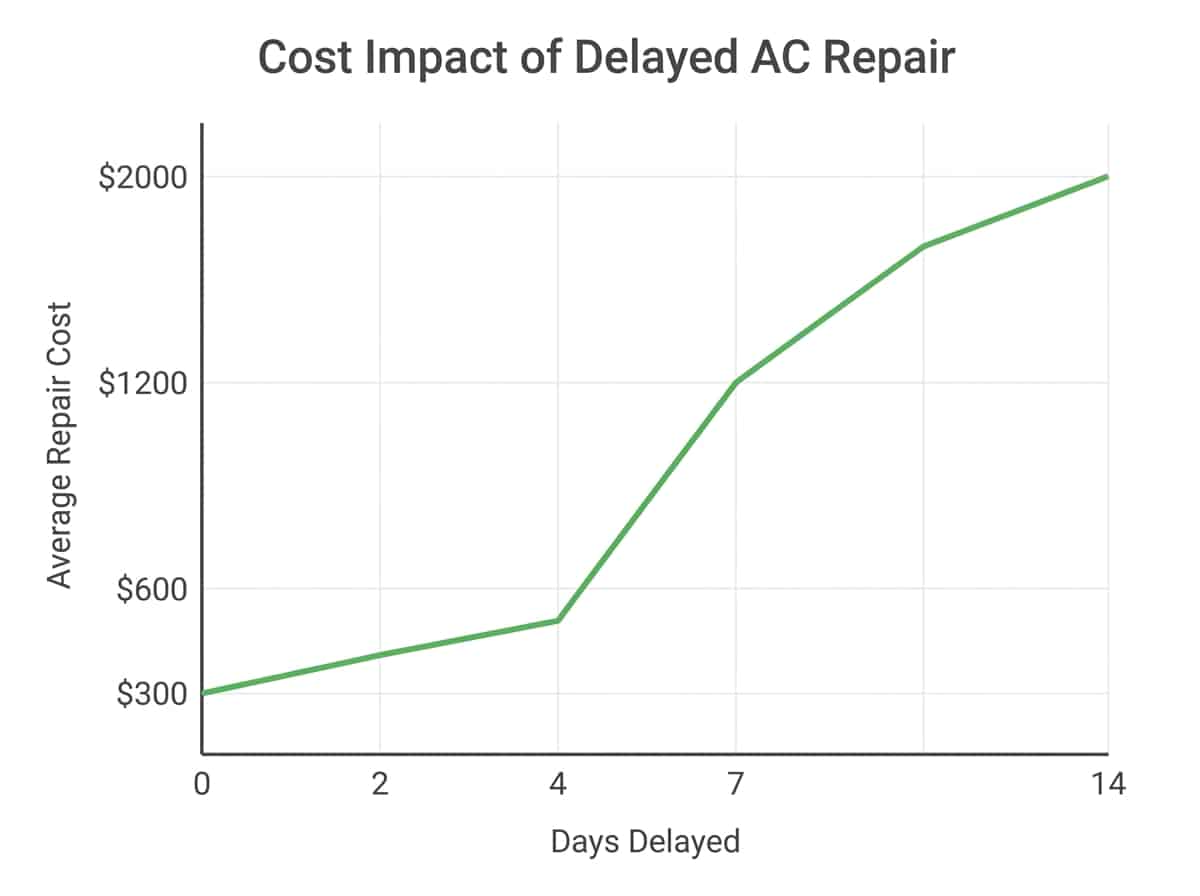
Turn off your system immediately. Call for same-day repair. Industry data shows that compressor replacement can cost $2,000 or more. Catching a bearing failure early might mean a $400 repair instead.
In JLM’s service across Gilbert, Queen Creek, and Mesa, we’ve documented that grinding noises left unaddressed for more than 48 hours escalate into full compressor replacement in 67% of cases. That’s a costly repair that could have been avoided with a quick service call.
High-Pitched Squealing or Screeching
A high-pitched squeal or screech when your AC starts usually points to a worn belt (in older systems), a failing fan motor, or refrigerant pressure issues. The noise might stop after the unit runs for a few minutes. That doesn’t mean the problem is gone.
Schedule repair within 24 hours. If the squealing gets louder or continuous, turn the system off. Call for emergency service. ENERGY STAR’s maintenance checklist recommends annual tune-ups to catch wear before it becomes a failure.
Regular maintenance can prevent many belt and motor issues. Our air conditioning maintenance services help East Valley homeowners avoid these breakdowns through seasonal inspections and proactive component replacement.
Banging or Clanking When Starting
Loud banging or clanking when your AC starts typically means a loose internal component: blower assembly, mounting bracket, or a failing compressor piston. This is another high-urgency noise. Loose parts can cause additional damage as they bounce around inside the unit.
Call for same-day service. ACS Comfort’s emergency HVAC repair analysis shows that addressing mechanical issues within the first 24 hours significantly reduces the risk of secondary damage. It keeps repair costs manageable. Don’t wait for the noise to stop on its own. It won’t.
Rattling or Buzzing During Operation
Rattling or buzzing is one of the more common AC noises. It’s usually less urgent than grinding or banging. Rattling often means debris (leaves, twigs, small stones) has gotten into the outdoor unit. Loose panels may be vibrating, or ductwork isn’t properly secured. Buzzing can indicate a failing contactor or loose electrical connections.
Start by inspecting your outdoor unit for visible debris. Clear it away. If the noise persists after you’ve removed obvious obstructions, schedule a diagnostic visit. While rattling is lower urgency than other noises, ignoring it can lead to more serious problems.
According to Carrier’s AC lifespan guide, systems typically last 12-15 years. Neglected maintenance and unaddressed small issues can shorten that significantly. Browse our air conditioning resources and repair guides for more troubleshooting tips and seasonal maintenance advice.
Hissing or Bubbling Sound
Hissing usually signals a refrigerant leak. Bubbling often points to a condensate drain blockage. Both need professional attention, but hissing is more urgent. Refrigerant leaks are regulated by the EPA and can pose environmental hazards.
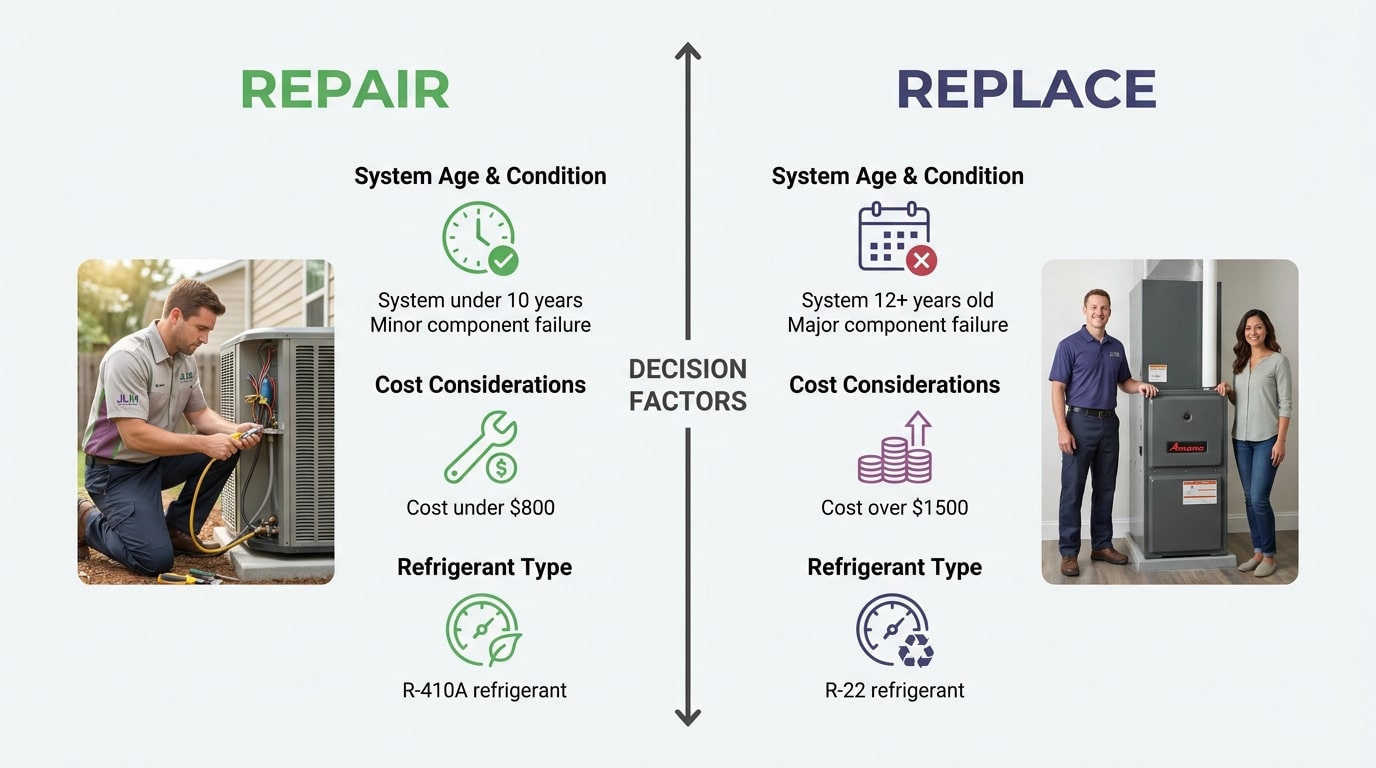
If you hear hissing, turn off your system. Call for repair. Refrigerant leaks require specialized equipment to locate and repair. EPA regulations on refrigerant phase-out mean that older R-22 systems may face higher repair costs. Sometimes replacement becomes the better option.
Bubbling from a drain blockage is less urgent. It should still be addressed within a few days to prevent water damage.
What to Do When You Hear Unusual AC Noise
Here’s a simple action plan when your AC starts making a new or unusual noise:
- Note the noise type and when it happens. Does it start when the unit turns on, run continuously, or come and go? This helps your technician diagnose the issue faster.
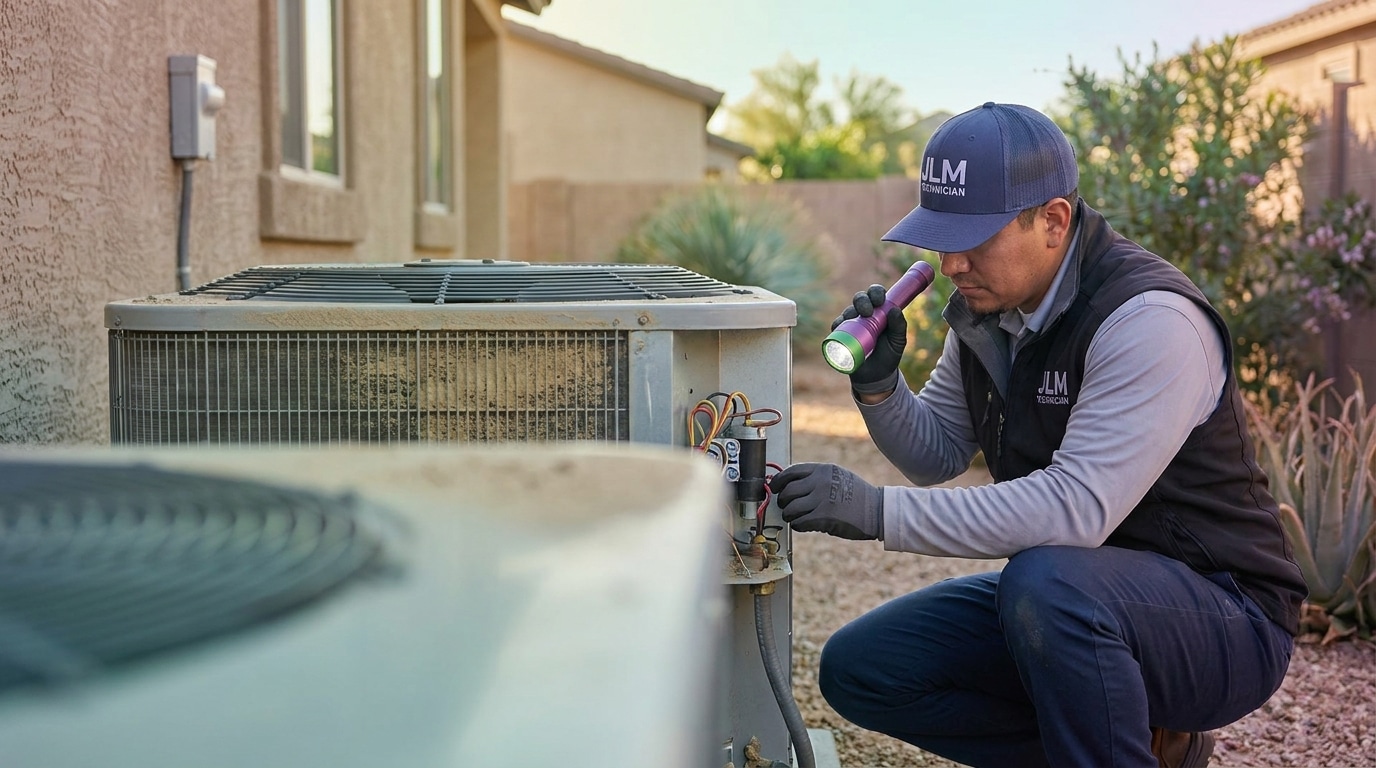
- Check the outdoor unit for obvious problems. Look for debris, loose panels, or visible damage. Clear away any leaves, branches, or obstructions around the unit.
- Turn off the system if you hear grinding, banging, or hissing. These noises indicate active damage. It will get worse the longer the system runs.
- Call for professional diagnosis. Most AC repairs cost between $150 and $600. Acting within 24-48 hours prevents minor issues from expensive failures. We offer same-day service across the East Valley. Bill is on the job alongside his technicians, so you get direct answers and honest guidance. Not a sales pitch.
For fast, reliable service in Gilbert, Queen Creek, Mesa, and Apache Junction, explore our HVAC services in the East Valley.
When AC Noise Means It’s Time for Replacement
If your AC is 12-15 years old, uses R-22 refrigerant (which was phased out in 2020), and needs a major repair like a compressor replacement, it’s often smarter to replace the system. Pouring money into an aging unit rarely pays off.
Lennox’s AC lifespan analysis confirms that systems in this age range are reaching the end of their useful life. Modern high-efficiency units will save you money on energy bills while providing more reliable cooling.
According to Consumer Reports’ reliability data on American Standard HVAC systems, older units face significantly higher repair frequencies after 10 years. We’ve installed 3,000+ systems across the East Valley. We always walk customers through the repair-versus-replace math with transparent pricing. No pressure, just honest guidance.
If replacement makes sense, we’ll show you the numbers. If a repair will give you another 3-5 years of reliable service, we’ll tell you that too. For homeowners looking at replacement options, mini split installation can be a great solution, especially if you’re dealing with ductwork issues or want zone control.
Protect Your Comfort With Fast, Honest Service
Most AC noises signal that something needs attention. Acting within the first 24-48 hours prevents small problems from turning into expensive breakdowns. Grinding, banging, and hissing are high-urgency sounds that require same-day service. Rattling and squealing can usually wait a day or two, but they shouldn’t be ignored.
If your AC is making any of the noises we’ve covered, don’t wait for it to fail completely during a 110°F Arizona heatwave. Our team offers same-day repair when summer heat hits hardest. Bill is on the job alongside his technicians, so you get quality work and straight answers. Whether you need a quick fix or guidance on replacement, we’re here to help.
Jobber’s 2024 home service trends report shows that customer satisfaction in HVAC services correlates strongly with response time and transparent communication. Early diagnosis is critical to controlling expenses.
Today’s Homeowner estimates typical AC repair costs range from $100 for minor fixes to $2,500 for major component replacement. HouseCall Pro’s research on HVAC industry trends confirms that proactive maintenance and fast response times drive both customer satisfaction and system longevity.
Call now: 602-619-3609