Your air conditioner shouldn’t sound like a jet engine, and it definitely shouldn’t blow warm air when it’s 112°F outside. But too many East Valley homeowners ignore these warning signs until their system dies on the hottest afternoon of the year. By then, you’re looking at emergency repair costs, days without cooling, and a family that’s uncomfortable and frustrated.
Your AC needs repair if you notice any of these eight red flags: warm air blowing from vents, weak airflow, strange noises (grinding, squealing, banging), frequent cycling on and off, moisture or leaks around the unit, foul odors, higher-than-normal energy bills, or the system is over 10–15 years old and struggling to keep up. Catching these signs early prevents full breakdowns and expensive emergency repairs during Arizona’s peak summer heat.
Here’s what your AC is trying to tell you when it acts up, what each symptom means, and when to call for help. We’ve installed more than 3,000 systems across Gilbert, Queen Creek, Apache Junction, and Mesa, and we’ve seen firsthand what happens when homeowners wait too long. This guide will help you spot problems early and avoid the panic of a total system failure.
1. Warm Air Blowing from Vents
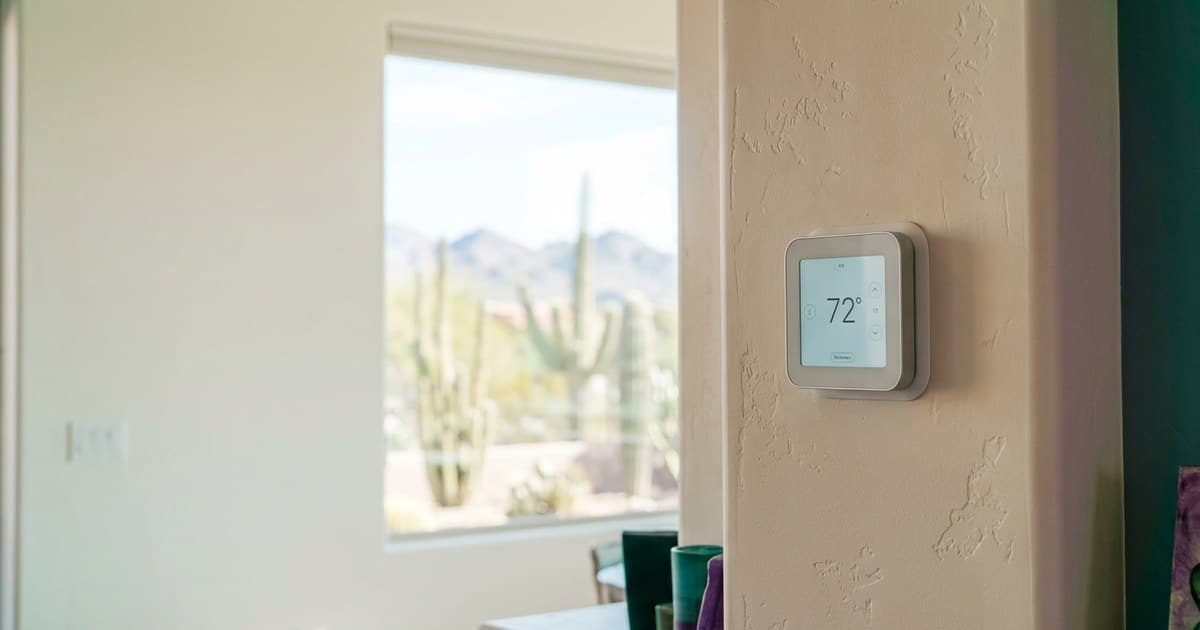
When you set your thermostat to 72°F and walk over to the register, you expect cold air. If you’re getting lukewarm or even hot air instead, your AC isn’t just underperforming. It’s signaling a serious internal problem.
What causes warm air? Usually one of three culprits. First, a refrigerant leak means your system can’t absorb heat from inside your home. Second, the compressor (the outdoor unit’s main pump) might be failing or already dead. Third, your thermostat could be misconfigured or broken, sending the wrong signals to the system.
Start by checking your thermostat. Make sure it’s set to “cool” mode (not “fan only”) and the temperature is actually lower than your current room temp. If that’s correct and you’re still getting warm air, you’re dealing with a mechanical or refrigerant issue that requires professional diagnostics.
Why it matters: warm air defeats the entire purpose of air conditioning, and when time matters most during Arizona’s summer heat, a system that can’t cool is an emergency. Refrigerant leaks also pose environmental and safety risks, and compressor failure often means you’re looking at a major repair or full replacement.
What to do: Double-check your thermostat settings first. If those are correct and the problem persists, call for diagnostics. Delaying turns a fixable refrigerant issue into a dead compressor.
2. Weak or Inconsistent Airflow
When you hold your hand up to a vent and feel barely any air moving, that’s not normal. Weak or inconsistent airflow means your system is working harder than it should to circulate conditioned air. This wastes energy and leaves some rooms too warm.
What causes weak airflow? The most common reason is a dirty air filter. If you haven’t changed yours in months, it’s restricting airflow and forcing your blower motor to strain. Duct leaks are another culprit, especially in older homes where ductwork was never sealed properly. Finally, a failing blower motor or capacitor can’t push air through the system with enough force.
According to Energy Star’s maintenance checklist, dirty filters restrict airflow and reduce system efficiency. Filters should be changed every one to three months, depending on your household. Change them more often if you have pets or allergies.
Check your filter first. If it looks gray or brown instead of white, replace it. If a fresh filter doesn’t solve the problem, you’re dealing with ductwork issues or motor trouble that requires a professional inspection.
Why it matters: Weak airflow makes your system run longer to cool your home, which spikes your energy bill. It also causes uneven temperatures from room to room, leaving some spaces uncomfortably warm. Over time, restricted airflow can overheat components and shorten your system’s lifespan.
3. Strange Noises: Grinding, Squealing, Banging
Your AC should hum quietly in the background. If it’s making mechanical noises you can hear from across the house, something inside is breaking or already broken.
What different noises mean: Grinding usually indicates worn-out bearings in the motor or compressor. Squealing points to a loose or damaged belt (in older systems) or a motor that’s failing. Banging or clanking often means debris is stuck in the fan, or an internal component has come loose and is rattling around.
None of these sounds fix themselves. Ignoring grinding or squealing accelerates wear on expensive parts like the compressor or blower motor. A loose component that’s banging can damage other parts of the system or even crack the housing.
What to do: Turn off your system immediately if you hear loud grinding or banging. Continuing to run it can cause catastrophic failure. Then call for diagnostics. Strange noises are never just “quirks.” They’re mechanical warnings that need professional attention before the problem escalates.
4. Frequent Cycling or Short Cycling
Your AC should run in steady cycles. Turn on, cool the house to the setpoint, turn off, rest for a while, repeat. If your system is turning on and off every few minutes (short cycling), it’s stressed and wasting energy.
What causes short cycling? Sometimes it’s an oversized unit that cools too quickly and shuts off before completing a full cycle. More often, it’s a refrigerant issue, a malfunctioning thermostat, or an electrical fault. Dirty coils or a clogged filter can also trigger short cycling by causing the system to overheat and shut down for safety.
Why it matters: Short cycling wears out your compressor and other components much faster than normal operation. It also spikes your energy bill because starting the compressor is the most power-hungry part of the cooling cycle. A system that cycles constantly uses far more electricity than one running steady, longer cycles.
If your AC is turning on and off every five to ten minutes, don’t ignore it. Schedule a diagnostic visit to identify whether it’s a thermostat problem, refrigerant leak, or something else.
5. Moisture, Leaks, or Ice Around the Unit
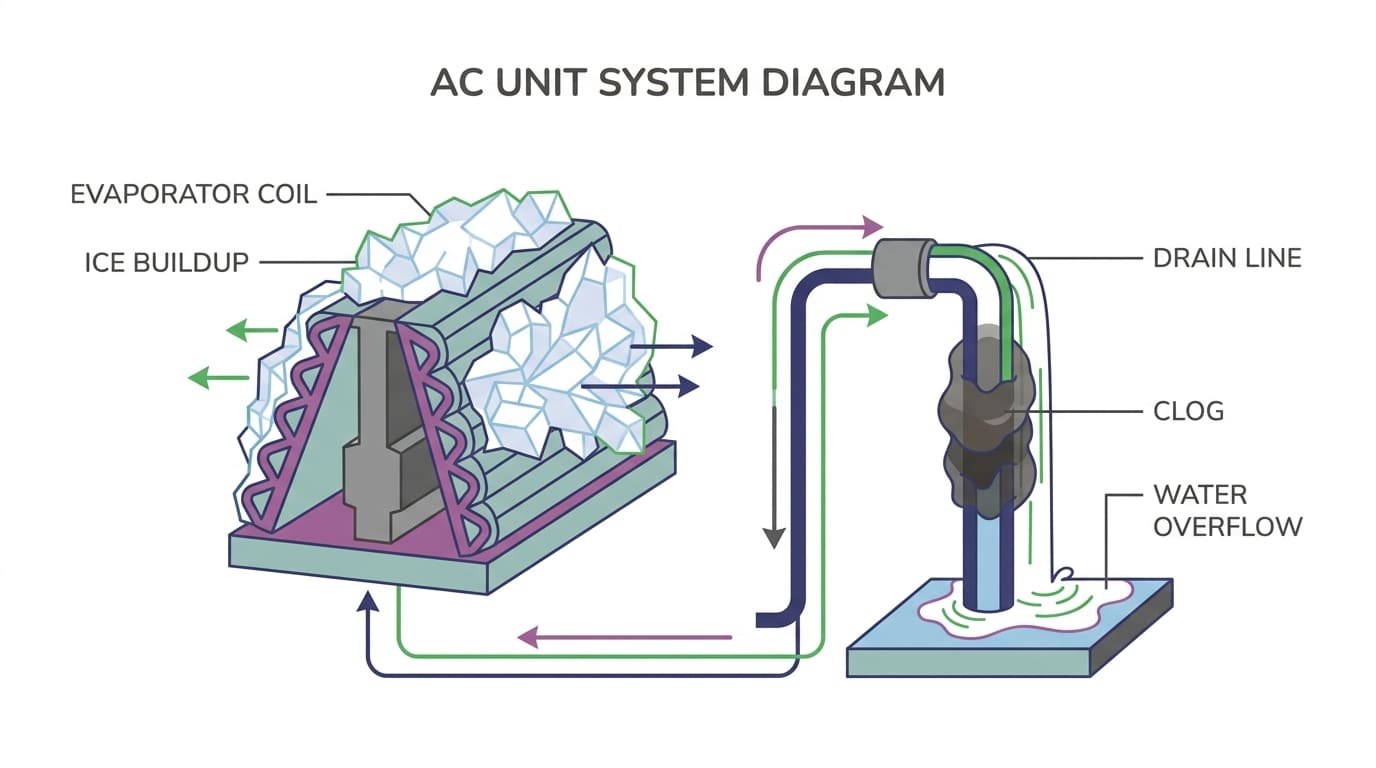
Some condensation is normal. Your AC removes humidity from the air, and that moisture drains outside through a condensate line. But if you see pooling water around your indoor unit, ice forming on the copper lines or coils, or excessive moisture where there shouldn’t be any, you have a problem.
What causes moisture issues? A clogged condensate drain line is the most common reason for indoor leaks. The water has nowhere to go, so it backs up and overflows. Ice on your evaporator coils usually signals low refrigerant or restricted airflow (often from a dirty filter). Both cause the coil to drop below freezing and form ice, which blocks airflow and makes the problem worse.
Refrigerant leaks are a more serious concern. Professional handling is required because leaks pose environmental and safety risks. If you notice a chemical smell or hissing sound near your unit, turn it off and call immediately.
What to do: Check your filter first if you see ice. Replace it if it’s dirty, then turn the system off and let the ice melt completely before restarting. If the problem returns, or if you see pooling water, you need professional attention.
Don’t ignore moisture or ice. Left unchecked, refrigerant leaks escalate into compressor failure, and water damage can ruin floors, walls, and ceilings.
6. Foul Odors (Burning, Musty, Chemical)
Your AC should blow neutral, clean air. If you smell something off when the system runs, don’t ignore it. Different odors signal different problems.
Burning smell: Usually an electrical issue. Overheating wiring, a failing motor, or a capacitor about to blow all produce a hot, acrid smell. Turn your system off immediately if you smell burning and call for emergency diagnostics.
Musty or moldy smell: Indicates mold or mildew growth in your ductwork, drain pan, or evaporator coil. This happens when moisture accumulates and isn’t draining properly. Mold spores circulate through your home every time the system runs. This is a health concern, especially for people with allergies or respiratory conditions.
Chemical or sulfur smell: Could signal a refrigerant leak or, in rare cases, a gas leak if you have a gas furnace sharing ductwork with your AC. Either way, this is an emergency. Evacuate and call both your HVAC tech and your utility company if you suspect gas.
What to do: For burning smells, turn off your system and call immediately. For musty odors, schedule a duct inspection and coil cleaning. For chemical smells, evacuate and get professional help right away. Odors aren’t cosmetic problems. They’re safety and health warnings that need immediate attention.
7. Spiking Energy Bills Without Usage Changes
Your summer electric bill is always higher than your winter bill. That’s expected. But if this year’s bill is 20% to 30% higher than last year’s and you haven’t changed how you use your AC, your system is losing efficiency.
What causes efficiency loss? Aging equipment is the most common reason. As systems age, seals wear out, refrigerant levels drop slightly, and components run less efficiently. Dirty coils (both indoor and outdoor) force the system to work harder to transfer heat. Duct leaks waste conditioned air before it reaches your living spaces. Any of these problems show up in your utility bill long before your AC stops working.
Research from the Department of Energy shows that HVAC inefficiency is a leading driver of residential energy cost increases. Even a 10% efficiency drop can add $20 to $40 per month to your bill during Arizona summers.
What to do: Compare this year’s bills to last year’s for the same months. If you see a significant jump, schedule a tune-up. Annual maintenance catches efficiency issues early. An annual tune-up costs far less than an emergency breakdown.
8. Your System Is 10–15+ Years Old and Struggling
Age alone isn’t a failure, but it’s a warning sign. Most air conditioners last 10 to 15 years with proper maintenance. Once your system crosses that threshold, efficiency drops, parts become harder to find, and repairs get more expensive.
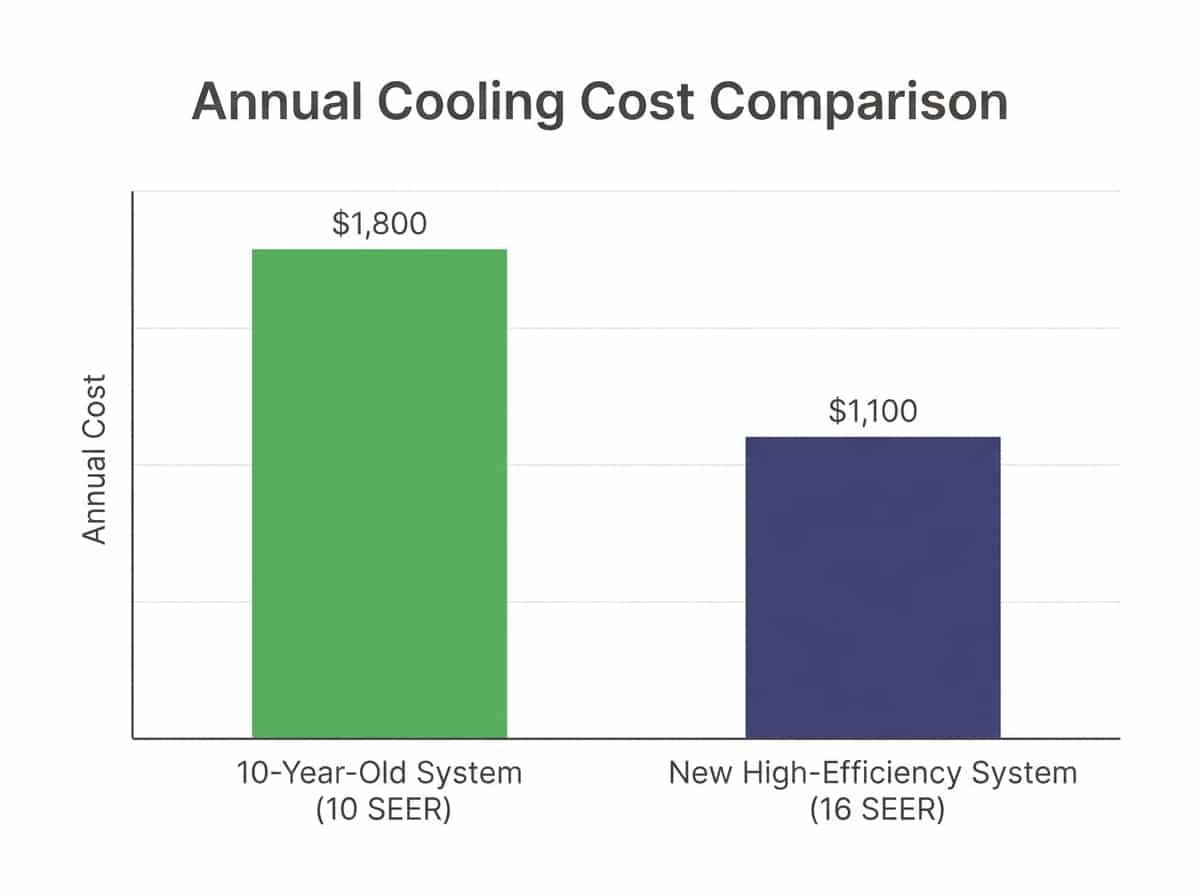
Why age matters: Older systems use outdated refrigerant (R-22, which was phased out in 2020). If your system springs a leak, you’re looking at extremely high refrigerant costs or a forced replacement. Efficiency standards have also improved dramatically in the last decade, and research confirms that top-rated brands significantly outperform older units. A 10-SEER system from 2010 costs far more to run than a modern 16-SEER or higher unit.
What to do: If your system is over 10 years old and you’re noticing any of the other red flags on this list (weak airflow, strange noises, higher bills), get a professional assessment. Compare the cost of repair vs. replacement, factoring in energy savings. Modern systems like those we install with premium Amana equipment pay for themselves through lower energy bills and fewer repairs.
Don’t wait for a catastrophic failure. Once you’re in emergency mode on a 115°F day, your options shrink and your costs go up.
What to Do If You Spot These Signs
Recognizing the red flags is step one. Acting on them is step two. Here’s how to respond when you notice any of the problems above.
1. Don’t ignore it. Small problems escalate fast in Arizona heat. A refrigerant leak today becomes a dead compressor next week. A strange noise becomes a catastrophic failure that damages other components. Acting early saves money and prevents emergencies.
2. Check the simple fixes first. Before you call, verify your thermostat is set correctly and your filter isn’t clogged. These two issues cause a surprising number of service calls that homeowners can fix themselves in five minutes.
3. Call a licensed professional for diagnostics. If the simple fixes don’t solve it, you need a trained technician with the right tools to diagnose refrigerant levels, motor condition, electrical faults, and airflow restrictions. DIY troubleshooting beyond the basics often makes the problem worse.
4. Get a transparent estimate before work begins. At JLM, we give you a clear breakdown of what’s wrong, what needs to be fixed, and what it will cost before we start. No hidden fees. No pressure to replace your whole system if a repair will do the job. Bill is on the job alongside our team, so you’re talking directly to the people who will do the work.
5. Take advantage of same-day service. If your system dies during peak heat, you shouldn’t have to wait. We offer same-day AC repair in Mesa and across Gilbert, Queen Creek, and Apache Junction. With our A+ BBB rating and 3,000+ lifetime installs, you’re working with people who know East Valley homes and the specific challenges Arizona heat creates.
The key is acting before the problem forces your hand. A planned repair on your schedule is always cheaper and less stressful than an emergency breakdown.
Get Your AC Inspected Before It Fails
Your air conditioner talks to you through the signs we’ve covered: warm air, weak airflow, strange noises, frequent cycling, moisture or ice, foul odors, spiking energy bills, and age-related struggles. Each one is a warning that something inside your system needs attention. Catching these red flags early prevents the panic of a total breakdown on the hottest day of the year and saves you money by avoiding emergency repair costs.
Don’t wait until your AC stops working completely. If you’ve noticed any of these signs, get a professional diagnostic now. We’re a family-owned, owner-led HVAC company serving Gilbert, Queen Creek, Apache Junction, and Mesa. We’ve completed more than 3,000 installs, we hold an A+ BBB rating, and we offer transparent pricing with no hidden fees. Bill is on the job, so when you call, you’re talking to someone who takes personal accountability for your comfort.
Industry data confirms that preventive maintenance significantly reduces emergency breakdowns, which is why we encourage regular inspections before peak season hits. According to comprehensive home service industry research, customer expectations for fast response times continue to rise, making same-day service increasingly critical for homeowner satisfaction.
For more insights on keeping your system running efficiently, explore our air conditioning resources and guides. You can also read our guide on how to prep your AC for Gilbert’s hot summer or learn more about spring AC tune-up timing.
Our air conditioning maintenance plans include drain line service and coil cleaning to prevent moisture issues. For specific zones or additions, consider mini split installation in Gilbert. For broader troubleshooting context, check out our HVAC system resources. And for more tips, visit our blog homepage.
Market analysis of the HVAC repair services sector confirms growing demand for preventive maintenance and emergency response capabilities, highlighting why proactive inspections protect both your comfort and your investment.
Call JLM now at 602-619-3609 or request service online to schedule your AC inspection.
By Bill Milbourn Owner/Lead Technician, JLM Air Conditioning & Heating — Arizona ROC Licensed Contractor with 15+ years serving East Valley homes