By Bill Lewis, Owner, JLM Air Conditioning & Heating
Your house is dusty because your HVAC system is circulating dust instead of filtering it out. Dirty air filters, leaky ductwork, and inadequate filtration allow dust, pollen, and debris to recirculate through your home. Upgrading your filter, sealing ducts, and adding air purification can dramatically cut indoor dust and improve air quality.
If you’re dusting your furniture every few days only to see a fresh layer the next morning, you’re not alone. Many East Valley homeowners face the same frustration. The good news? Your HVAC System plays a bigger role in dust control than most people realize. When it’s working properly, your HVAC system should capture and remove dust. When it’s not, it becomes the delivery system that spreads dust through every room. In the sections that follow, you’ll discover exactly why your house stays dusty and how smart HVAC upgrades can fix the problem for good.
The Real Reasons Your House Stays Dusty
Most people assume desert dust is the culprit. While Arizona’s dry climate contributes, the real problem often lives inside your walls: your HVAC system. When ductwork leaks, filters clog, or airflow stagnates, dust doesn’t just settle. It recirculates.
Your Air Filter Isn’t Doing Its Job
The air filter in your HVAC system is your first line of defense against dust. But here’s the catch: most homes use basic MERV 8 filters that only capture large particles like lint and pet hair. Fine dust, pollen, and microscopic allergens pass right through.
When your filter is clogged (which happens faster in Arizona’s dusty climate), airflow drops and your system works harder while filtering less. According to the ISSA’s report on CDC air ventilation guidelines, proper filtration is critical for maintaining indoor air quality, but many residential systems are equipped with filters that aren’t designed for Arizona’s particulate load.
In our 3,000+ installations across the East Valley since 2005, we’ve found that roughly 70% of homes we service are running filters that are either undersized for their dust load or haven’t been changed in over three months. A clogged filter doesn’t just reduce air quality. It forces your system to work harder, driving up energy bills and shortening equipment life.
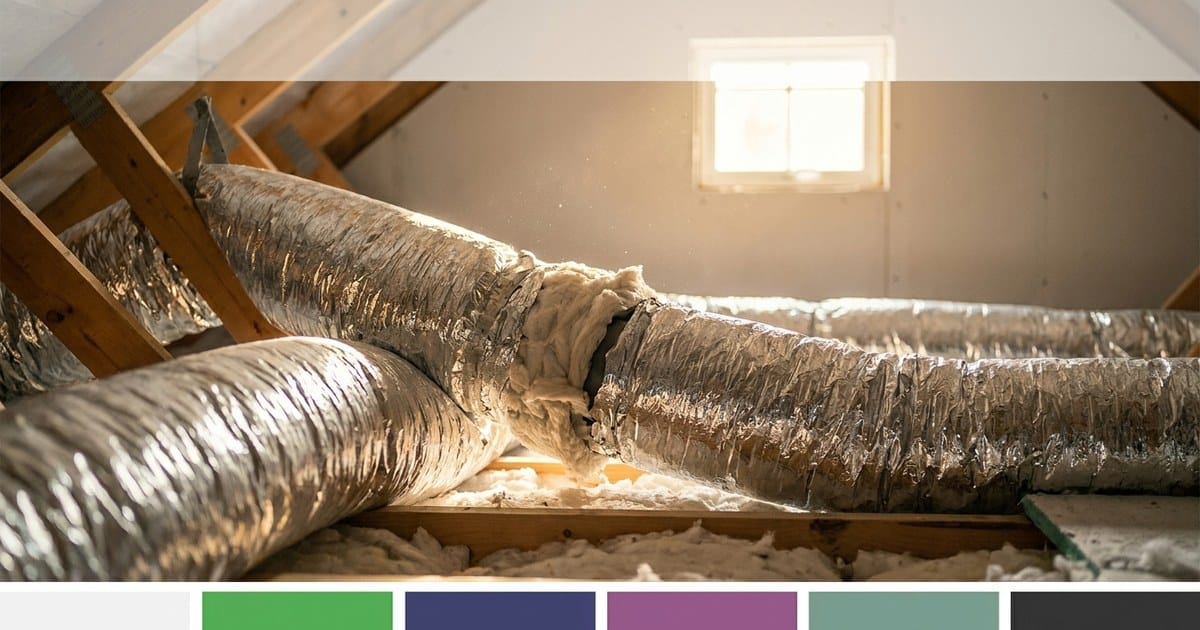
Leaky Ductwork Is Pulling in Dust from Attics and Crawl Spaces
Here’s something many homeowners don’t know: in our work with East Valley homeowners, we’ve found that homes with original ductwork from the 1990s or early 2000s often have 15 to 20 percent leakage rates. That means a fifth of your conditioned air (and your money) is escaping into the attic or crawl space.
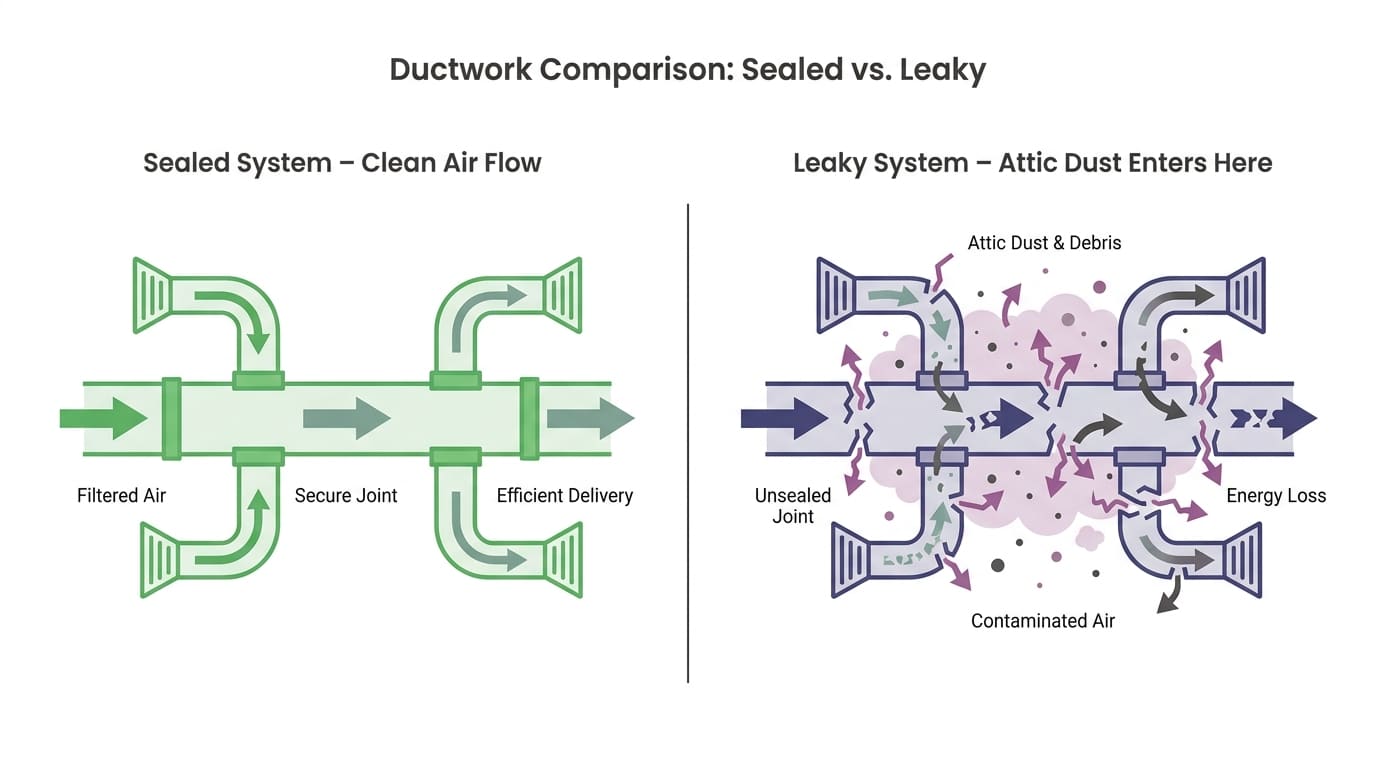
Even worse, those leaks work both ways. When your system shuts off, negative pressure pulls attic dust, insulation fibers, and debris back into your ductwork. The next time your AC kicks on, it delivers that contamination straight to your living room. Research on dust accumulation in ventilation ducts shows that even small leaks can significantly increase particulate circulation in homes.
We’ve inspected ductwork in hundreds of East Valley homes where attic dust was caked on the inside of supply ducts. After sealing those leaks, homeowners consistently report visible dust reduction within two to three weeks. The system stops pulling in contamination and starts delivering clean, filtered air.
Poor Ventilation and Air Circulation
Dead zones in your home (rooms that feel stuffy or never quite reach the thermostat temperature) signal poor air circulation. When airflow is unbalanced or return vents are inadequate, dust settles instead of being drawn back through the filter. Older homes with closed-door layouts or homes with additions often have this problem.
The ASHRAE filtration and disinfection FAQ emphasizes that proper air circulation is as important as filtration itself. Without it, even a high-efficiency filter won’t capture the dust that never makes it to the return vent.
We routinely see homes where one or two bedrooms are served by a single undersized return vent. Air circulates poorly, dust accumulates faster, and residents notice stuffiness and allergy symptoms that don’t occur in other parts of the house. Fixing the circulation problem often requires adding return vents or rebalancing duct runs, but the payoff in comfort and air quality is immediate.
How Your HVAC System Can Fix the Dust Problem
Your HVAC system isn’t just cooling or heating your home. It’s managing your indoor air quality. When you upgrade the right components, you stop treating symptoms (constant dusting) and address the root cause. Here’s what actually works.
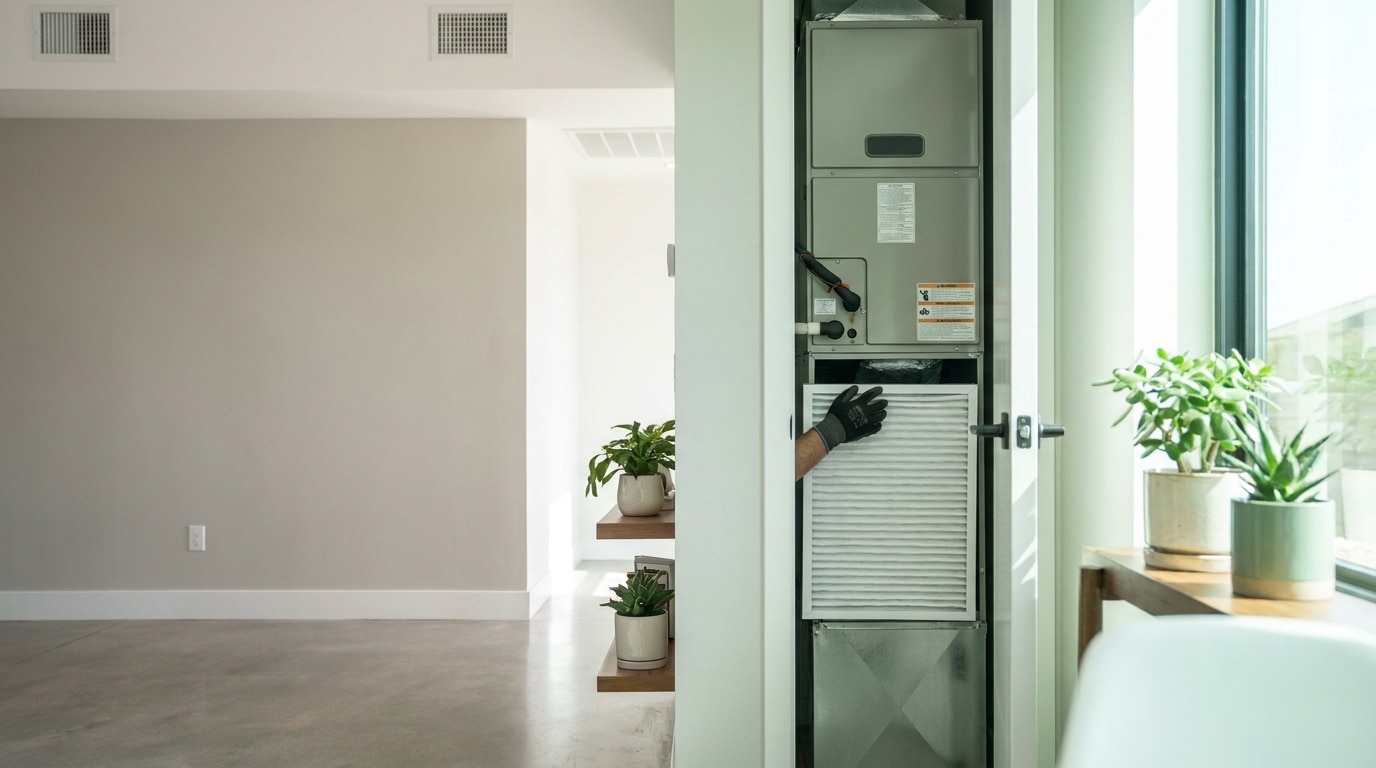
Upgrade to a High-Efficiency Air Filter (MERV 11 to 13)
MERV stands for Minimum Efficiency Reporting Value. The higher the number, the smaller the particles your filter captures. Most homes come with MERV 8 filters that catch particles larger than 3 microns. Dust mites, pollen, and fine dust are smaller than that.
A MERV 11 to 13 filter captures particles as small as 1 micron, which includes most household allergens and fine dust. According to ASHRAE standards for HVAC filter efficiency, MERV 11 to 13 filters strike the balance between capturing fine particles and maintaining airflow.
Before upgrading, check your system’s specifications. Some older units can’t handle the increased resistance of high-MERV filters without reducing airflow. If you’re unsure, an HVAC professional can measure your system’s capacity and recommend the right filter. Explore our Air Conditioning services to learn more about filter options for your system.
We recommend that homeowners with pets, allergies, or homes near construction sites start with MERV 11. If you’re managing severe allergies or asthma, MERV 13 can make a noticeable difference in symptom frequency. The key is matching the filter to your system’s capacity. Installing a MERV 13 filter on a system designed for MERV 8 can reduce airflow so much that your AC struggles to maintain temperature.
Seal and Clean Your Ductwork
Duct sealing stops the two-way leak: conditioned air stops escaping, and attic dust stops infiltrating. Professional duct sealing uses mastic sealant or metal-backed tape (not standard duct tape, which degrades) to seal joints, connections, and visible gaps. The result? Better airflow, lower energy bills, and dramatically less dust.
The EPA’s guidance on duct cleaning recommends cleaning when you have visible mold, vermin, or excessive debris. For most East Valley homes, a combination of sealing and cleaning (when warranted) delivers the best outcome.
Based on our 3,000+ installs across the East Valley, homeowners who combine duct sealing with high-efficiency filtration report noticeable dust reduction within the first billing cycle. According to ENERGY STAR’s 2023 HVAC summary, properly sealed ductwork can reduce energy bills by 10 to 15 percent while improving indoor air quality.
We’ve worked on homes where homeowners were convinced their dust problem was caused by Arizona’s climate, only to discover after duct sealing that the real culprit was a disconnected duct segment in the attic pulling in insulation fibers. Once we sealed the ducts, dust accumulation on furniture dropped by more than half.
Add Whole-Home Air Purification or UV Lights
High-efficiency filters capture particles. Whole-home air purifiers and UV lights go further. HEPA bypass systems install directly into your ductwork and capture 99.97 percent of particles as small as 0.3 microns. UV germicidal lights kill mold, bacteria, and viruses as air passes through your HVAC system.
According to the CDC’s guidance on air cleanliness, UV light air purification can significantly reduce airborne pathogens and allergens in residential HVAC systems.
The EPA’s overview of HVAC UVGI explains how these systems work and when they’re worth the investment. For homes with pets, severe allergies, or residents with asthma, these upgrades can be life-changing. For homes with chronic duct issues, ductless mini-split systems bypass leaky ductwork entirely.
We typically recommend whole-home air purifiers for families with multiple pets, residents who suffer from seasonal allergies, or homes near agricultural areas where airborne particulates are higher. UV lights work best when combined with high-efficiency filtration. The filter captures particles, and the UV light neutralizes biological contaminants that pass through. Together, they deliver cleaner air than either solution alone.
Upgrade to a Smart Thermostat with Air Quality Monitoring
Smart thermostats do more than adjust temperature. Modern models optimize run cycles to maximize filtration without wasting energy. Some include air quality sensors that adjust fan speed when particulate levels rise.
According to Strategic Market Research’s smart thermostat market report, smart thermostats can reduce HVAC energy consumption by up to 23 percent while maintaining better air quality.
The Department of Energy’s research on smart thermostat benchmarking shows that homes with smart thermostats maintain more consistent indoor air quality by preventing long periods of stagnant air. ABI Research projects that 672 million smart thermostat devices will ship by 2030, reflecting growing adoption driven by energy savings and air quality benefits.
For East Valley homeowners, smart thermostats offer another advantage: they can run the fan independently of heating or cooling. During Arizona’s mild winter and spring months, running the fan for 15 minutes every hour ensures continuous filtration without overcooling your home. This keeps dust from settling and maintains consistent air quality throughout the day.
When DIY Fixes Aren’t Enough (And It’s Time to Call a Pro)
You can replace your own air filter. You can dust more often. But if you’re dealing with leaky ducts, inadequate return vents, or a system that’s undersized for your home, DIY won’t cut it. Here’s when to call HVAC Services in the East Valley.
Signs your ducts need professional attention:
- Visible dust puffing out of supply vents when your system starts
- Uneven temperatures between rooms (one room freezing, another stuffy)
- Energy bills climbing even though you haven’t changed your usage
- Dust accumulating faster after your system runs
Portable air purifiers and big-box store filters can help, but they won’t address duct leaks or poor system design. You’ll spend money on band-aids while the underlying problem gets worse.
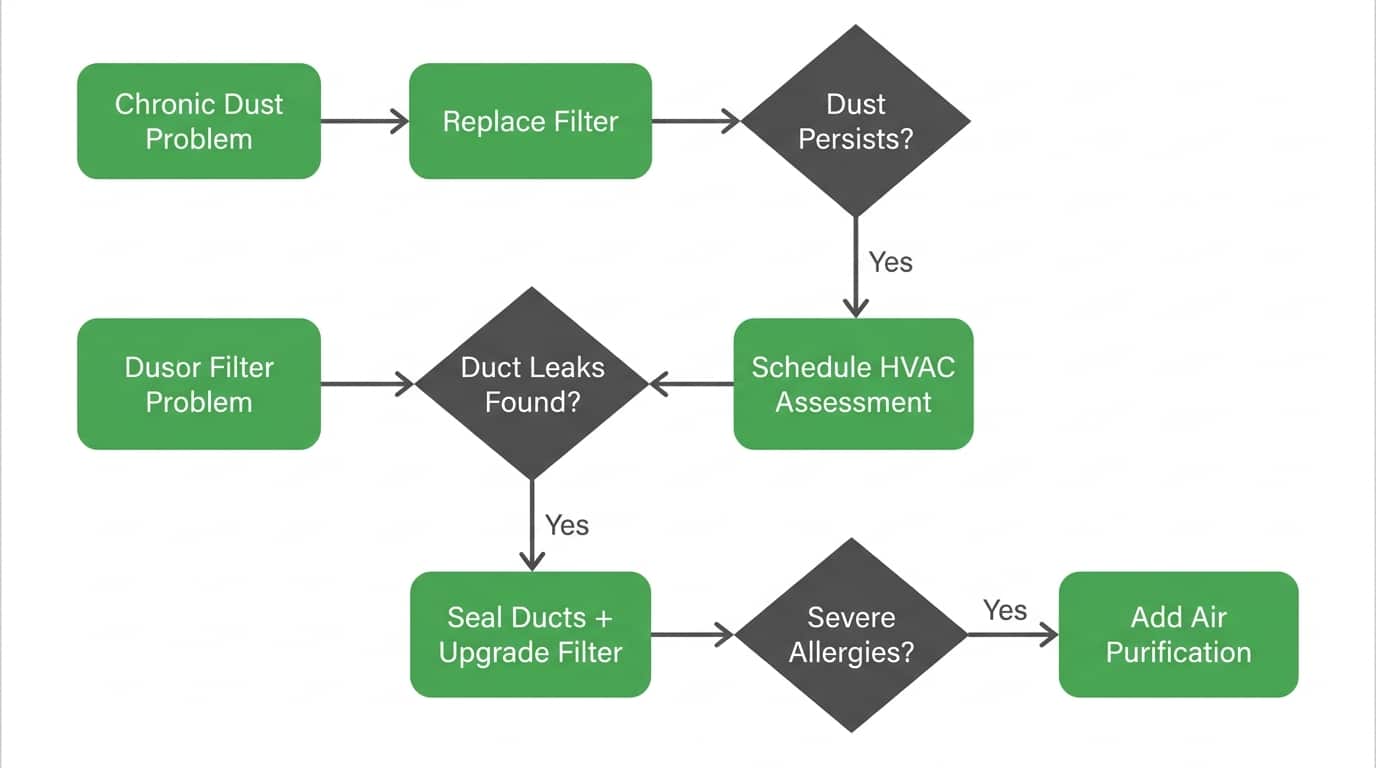
When you’re unsure whether to attempt a DIY fix or call a professional, here’s a simple test: if the problem persists after replacing your filter and cleaning your vents, it’s time for a professional assessment.
At JLM, our consultation process is straightforward. Bill and the team assess your system, explain what’s wrong, and tell you what’s needed versus what’s optional. No hidden fees. No upsells. Transparent pricing. We’ve done 3,000+ installs across the East Valley, and our A+ BBB rating reflects our commitment to honest work.
If your system is showing signs of struggle before it breaks down entirely, catching the problem early saves you money. We’ve seen too many homeowners wait until their system fails in July when a simple spring maintenance visit could have prevented the breakdown.
What to Expect from a Professional HVAC Dust Assessment
A real HVAC dust assessment isn’t a sales pitch. It’s a diagnostic process that identifies exactly where dust is entering your home and how your system is (or isn’t) filtering it out. Here’s what happens:
Visual duct inspection: We look for visible leaks, disconnected segments, and dust accumulation inside your ductwork. If your ducts are accessible (attic, crawl space, garage), we can spot problems quickly. In many cases, we’ll use a flashlight and camera to inspect hard-to-reach areas. You’d be surprised how often we find duct segments that were never connected properly during installation or remodeling work.
Filter assessment: We check your current filter’s MERV rating, replacement frequency, and whether it matches your system’s capacity. Many homeowners don’t realize their HVAC system can’t handle higher-MERV filters without airflow modifications. We measure static pressure to verify your system can support a higher-efficiency filter without performance loss.
Airflow testing: We measure airflow at supply and return vents to identify dead zones and imbalanced circulation. Poor airflow means dust settles instead of being captured. Using a manometer and anemometer, we can pinpoint which rooms are getting inadequate airflow and determine whether the problem is a duct design issue or a blocked return vent.
Transparent quote: You’ll get a detailed breakdown of what needs fixing, what’s optional, and what each upgrade costs. No pressure. No hidden fees. Same-day service is available for filter upgrades and minor repairs. We separate must-fix issues (like dangerous duct leaks near electrical wiring) from nice-to-have upgrades (like UV lights for enhanced purification).
For homeowners looking to maintain their system year-round, our maintenance plans include regular filter changes and duct inspections. Members get priority scheduling and 10 percent off repairs, which often pays for the plan within the first service call.
Real Results: How HVAC Upgrades Cut Dust in Gilbert Homes
Here’s what happens when homeowners invest in the right HVAC upgrades.
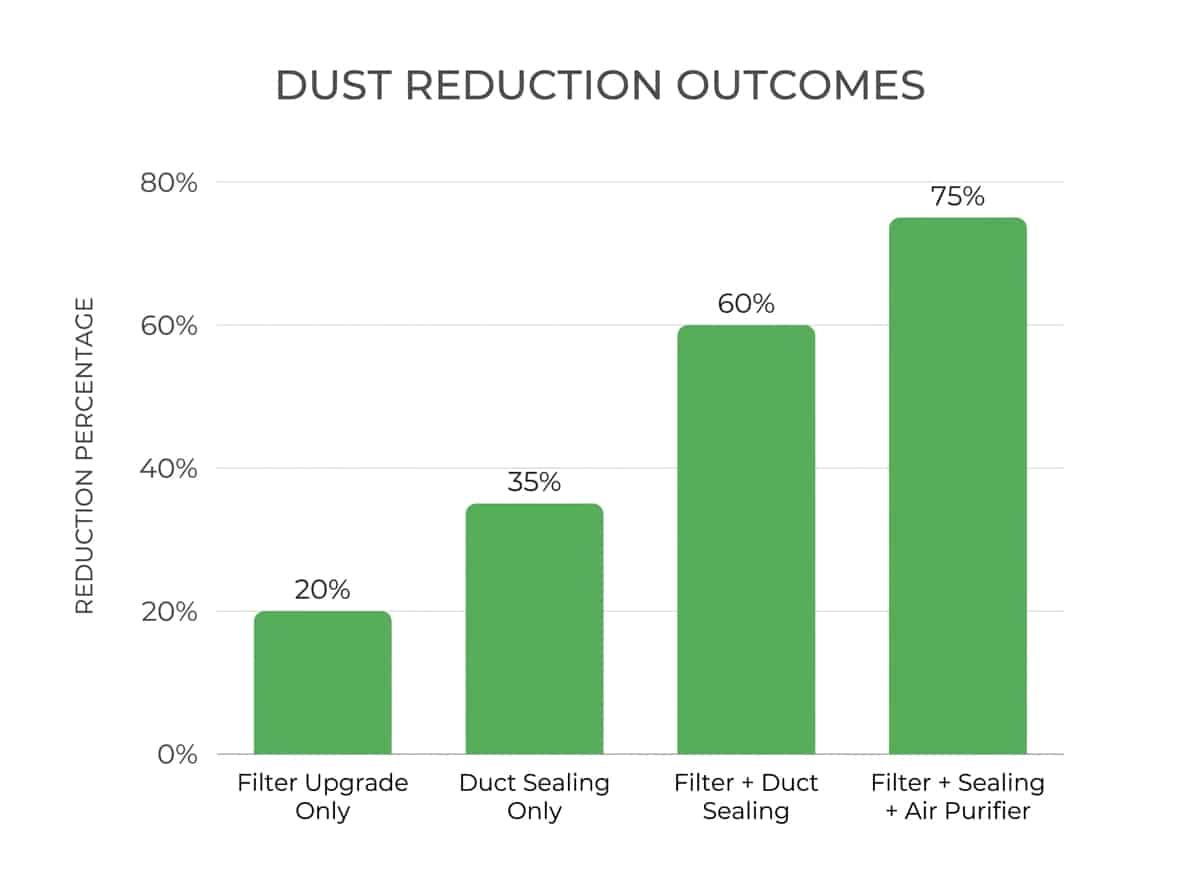
Gilbert family, 2,400 sq ft home: Original 1998 ductwork, chronic dust on furniture, family members with allergies worsening. After duct sealing, MERV 13 filter upgrade, and UV light installation: dust reduced by approximately 60 percent, allergy symptoms improved noticeably, and energy bills dropped 12 percent. The homeowner reported that dusting went from twice a week to once every two weeks. Three months later, the family’s allergy medication usage had dropped significantly.
Queen Creek family with pets and asthma: Three dogs, two family members with asthma, constant dust despite weekly vacuuming. Upgraded to a whole-home HEPA bypass system and sealed return vents. Result: dramatic air quality improvement within two weeks. Pet dander no longer triggered asthma attacks, and visible dust on surfaces dropped significantly. The homeowner’s teenage daughter, who had been using her rescue inhaler multiple times a week, went nearly a month without needing it after the upgrade.
Mesa home near construction site: New housing development across the street meant constant dust infiltration. Homeowner replaced filters monthly but dust kept returning. We discovered 18 percent duct leakage and inadequate return ventilation. After sealing ducts, adding a second return vent in the master bedroom, and upgrading to MERV 11 filtration, the home stayed noticeably cleaner even with ongoing construction nearby.
For homes needing zoned cooling or ductwork alternatives, Mini Split Installation in Gilbert offers a ductless solution that eliminates many dust infiltration points.
These aren’t outliers. Based on our 3,000+ installs across the East Valley, homeowners who combine duct sealing with high-efficiency filtration consistently report measurable dust reduction within the first month. The investment pays for itself through lower energy bills, fewer allergy medications, and less time spent cleaning.
Common Dust Myths HVAC Pros Want You to Stop Believing
Let’s clear up some misconceptions that waste money and delay real solutions.
Myth: Closing vents in unused rooms reduces dust. Reality: Closing vents creates negative pressure that pulls more dust from attics and crawl spaces through duct leaks. It also forces your system to work harder, reducing efficiency. Your HVAC system is designed to circulate a specific volume of air. When you close vents, you don’t reduce the air moving through the system. You just increase pressure, which forces more air through any existing leaks.
Myth: Duct cleaning solves dust problems permanently. Reality: Duct cleaning removes accumulated debris, which helps. But without sealing leaks and upgrading your filter, dust returns. Cleaning addresses the symptom, not the cause. We’ve seen homeowners spend $500 on duct cleaning only to have dust return within weeks because the underlying leak problem was never fixed.
Myth: Expensive portable air purifiers eliminate the need for HVAC upgrades. Reality: Portable units clean the air in one room. They can’t address duct leaks, poor circulation, or whole-home filtration. They’re a supplement, not a replacement. A $400 portable purifier in your bedroom won’t help the dust accumulating in your living room, kitchen, and hallways.
Myth: Dust is just part of living in Arizona. Reality: Yes, the desert climate contributes. But a properly maintained HVAC system with sealed ducts and high-efficiency filtration dramatically reduces indoor dust. You shouldn’t accept chronic dust as normal. Phoenix-area homes with well-maintained HVAC systems stay cleaner than homes in more humid climates with neglected systems.
Myth: Changing your filter every three months is sufficient. Reality: In Arizona’s dusty climate, most homes need monthly filter changes during peak cooling season (May through September). Homes with pets or near construction may need changes every two to three weeks. A filter that’s half-clogged isn’t filtering at its rated efficiency.
Additional Factors That Contribute to Household Dust
Beyond your HVAC system, several other factors can increase dust levels in your home. Understanding these helps you take a comprehensive approach to dust control.
Construction and remodeling activity: Recent home improvements can introduce massive amounts of drywall dust, sawdust, and construction debris into your HVAC system. If you’ve had work done, professional duct cleaning may be necessary to remove accumulated construction dust. We recommend covering supply and return vents during any remodeling project. Even small jobs like installing shelves can create surprising amounts of dust.
Carpet versus hard flooring: Carpets trap dust and release it into the air when walked on. Homes with extensive carpeting typically have higher airborne dust levels than homes with hard flooring. Regular vacuuming with HEPA-filtered vacuums helps, but upgrading to hard floors in high-traffic areas can make a noticeable difference. In our experience, families who replace carpeting in bedrooms and living areas report 30 to 40 percent less visible dust on furniture.
Pet dander and outdoor pollutants: Dogs and cats shed hair and dander constantly. Even if you vacuum regularly, pet dander circulates through your HVAC system. Similarly, Arizona’s seasonal pollen, agricultural dust from surrounding areas, and wildfire smoke during certain months all contribute to indoor dust. High-efficiency filtration becomes even more important for pet owners and during high-pollution seasons. During spring pollen season, we see filter replacement frequency double in many homes.
Humidity levels: Arizona’s low humidity causes skin cells and other organic particles to dry out and become airborne more easily. While you can’t change the desert climate, maintaining indoor humidity between 30 and 50 percent can help particles settle rather than circulate. Whole-home humidifiers integrated with your HVAC system can improve both comfort and air quality. Proper humidity levels also reduce static electricity, which attracts dust to surfaces.
Window and door seals: Gaps around windows and doors allow outdoor dust to infiltrate your home. Weather-stripping and proper sealing reduce the dust load your HVAC system has to handle. We often find homes where poorly sealed exterior doors let in as much dust as a minor duct leak. Fixing both problems delivers compound benefits.
Understanding these factors helps you prioritize which fixes will deliver the biggest impact for your specific situation. Most homeowners benefit from starting with HVAC system improvements (filter upgrades and duct sealing) because those changes address multiple dust sources simultaneously.
Your Next Steps: Getting Your Gilbert Home Dust-Free
You don’t need to overhaul your entire HVAC system to see results. Start with what’s manageable and scale up based on outcomes.
This week: Replace your current air filter with a MERV 11 to 13 rated filter. Check your system’s specifications first (your owner’s manual or the label on your air handler will indicate maximum MERV rating). If you’re not sure, call JLM and we’ll verify compatibility before you buy. Mark your calendar to check the filter again in 30 days. In Arizona’s dusty climate, filters clog faster than manufacturer recommendations suggest.
This month: Schedule a free HVAC consultation with JLM to assess duct leakage, airflow balance, and filtration efficiency. We’ll walk through your home, measure airflow, and give you a transparent quote with no hidden fees. During the consultation, we’ll also check refrigerant levels, inspect electrical connections, and verify that your system is operating safely.
Understanding the best time to schedule preventive maintenance can help you catch problems before they worsen. Spring (March through April) is ideal because it’s before peak cooling season but after winter dust storms have subsided.
This season: If ductwork is leaking or filtration is inadequate, invest in professional duct sealing and consider whole-home air purification for long-term dust control. Many homeowners see ROI within the first year through energy savings and reduced allergy-related costs. Calculate potential savings by comparing your current energy bills to post-upgrade bills. Most clients see payback within 18 to 24 months.
Year-round: Enroll in a maintenance plan to keep filters fresh, coils clean, and airflow optimized. Regular maintenance prevents the gradual decline that lets dust creep back in. Our maintenance plans include seasonal inspections and priority scheduling. Members also receive 10 percent off repairs and same-day service when available.
If you’re preparing for Arizona’s extreme summer heat, review our guide on the smart way to prep your AC for Gilbert’s hot summer. A well-maintained system not only filters better but also cools more efficiently, saving money during the expensive summer months.
You Don’t Have to Live with Constant Dust
Your HVAC system is the linchpin of dust control. When it’s working properly, it filters out particles before they settle on your furniture. When it’s not, it becomes the delivery system that spreads dust through every room. The right upgrades (sealed ducts, high-efficiency filters, whole-home air purification) can cut indoor dust by more than half and make your home healthier and more comfortable.
At JLM Air Conditioning & Heating, we’ve helped thousands of East Valley families solve chronic dust problems through honest HVAC assessments and transparent upgrades. Bill and the team are on the job, not a call center. You’ll get straight answers about what’s needed, what’s optional, and what each upgrade costs. We’ve been serving Gilbert, Queen Creek, Mesa, and Apache Junction since 2005, and our work is backed by a commitment to quality that’s earned us an A+ BBB rating and hundreds of five-star reviews.
The difference between living with constant dust and enjoying clean, breathable air often comes down to a few targeted fixes. You don’t need to replace your entire system. You need an honest assessment and a clear plan. That’s what we deliver.
For more HVAC tips and seasonal maintenance guides, visit our Blog.
Ready to find out what’s causing the dust in your home?
Call JLM Air Conditioning & Heating: 602-619-3609
Or visit jlmairconditioningandheating.com to schedule your free consultation. Same-day service available for filter upgrades and urgent repairs.