Your HVAC system is the lungs of your home. Every hour, it circulates thousands of cubic feet of air through filters, ducts, and living spaces, either removing dust, allergens, and pollutants or recirculating them. A well-maintained system with proper filtration and ventilation dramatically improves indoor air quality, reducing respiratory irritation, allergy symptoms, and long-term health risks. A neglected system does the opposite. Dirty filters, leaky ducts, and poor humidity control turn your HVAC into a distributor of contaminants. Understanding how your AC and furnace shape the air you breathe is the first step toward a healthier home.
Most homeowners think of HVAC systems purely as temperature control devices. They keep you cool in Arizona’s brutal summers and warm during chilly winter nights. Few realize the system runs continuously as the primary air circulation and filtration infrastructure of your home. What you’re breathing right now has passed through your HVAC system multiple times today. If the system is clean, properly filtered, and well-maintained, you’re breathing cleaner air than what’s outside your windows. If it’s neglected, you’re inhaling recirculated dust, allergens, and pollutants with every breath.
This article will show you how your HVAC system controls indoor air quality, what happens when it fails at that job, and what you can do to make your home healthier without expensive overhauls. You’ll learn which upgrades make a measurable difference, which maintenance habits protect your family’s respiratory health, and when it’s time to call a professional for an honest assessment.
Why Indoor Air Quality Matters More Than You Think
Indoor air quality isn’t a luxury concern reserved for people with severe medical conditions. It affects every member of your household, every day. According to the EPA’s indoor air quality research, Americans spend approximately 90% of their time indoors. Indoor pollutant concentrations are often two to five times higher than outdoor levels. In tightly sealed modern homes built for energy efficiency, that gap can be even wider.
You Spend 90% of Your Time Indoors
The average person takes about 20,000 breaths per day. If you spend 90% of your time inside your home, that’s 18,000 breaths of indoor air. When that air contains dust, pollen, mold spores, or volatile organic compounds, your respiratory system is under constant low-level stress. You may not notice the effect immediately, but over weeks and months, persistent exposure shows up as chronic symptoms. You might experience a scratchy throat, morning congestion, headaches, fatigue, or worsening allergy or asthma symptoms.
Children and elderly family members are particularly vulnerable. Kids breathe faster than adults. They inhale more air (and more contaminants) per pound of body weight. Seniors often have compromised immune systems or pre-existing respiratory conditions that poor air quality makes worse.
Common Indoor Air Pollutants in Arizona Homes
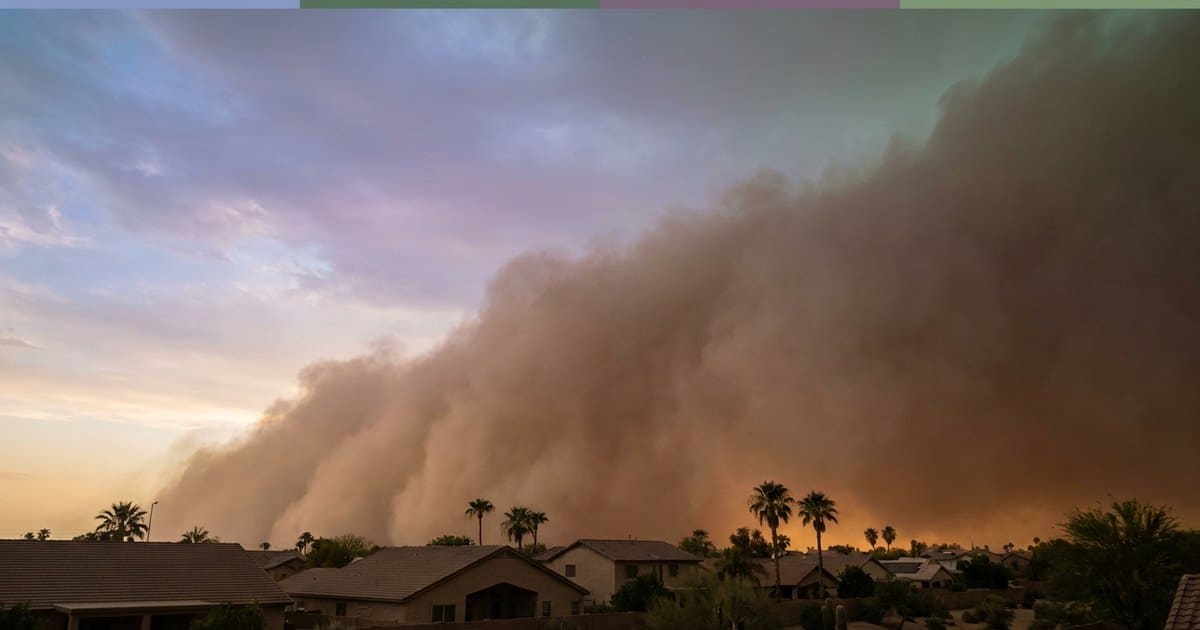
East Valley homes face a unique combination of indoor air challenges. Arizona’s desert climate means outdoor dust and pollen levels are high year-round. Spring windstorms and summer monsoons create particularly difficult conditions. When HVAC systems pull in outdoor air or ducts develop leaks in attics filled with fine desert dust, those particles infiltrate your living spaces.
Inside the home, common pollutants include:
- Dust and dust mites that accumulate in carpet, upholstery, and ductwork
- Pollen that gets tracked in on shoes and clothing and enters through windows and doors
- Pet dander (microscopic skin flakes from dogs and cats that remain airborne for hours)
- Volatile organic compounds emitted by cleaning products, furniture, paint, and air fresheners
- Mold spores (rare in Arizona’s dry climate but possible in homes with evaporative coolers, leaky plumbing, or poorly controlled humidity)
- Combustion byproducts like carbon monoxide and particulates from gas furnaces, water heaters, or fireplaces if ventilation is inadequate
These pollutants don’t just disappear. Without proper filtration and ventilation, they circulate continuously through your home.
Health Impacts of Poor Indoor Air Quality
The health consequences of breathing contaminated air in your own home range from mild discomfort to serious long-term conditions. Research published by the Centers for Disease Control and Prevention and other health authorities links poor indoor air quality to several health issues.
Poor air quality can aggravate asthma and allergies. Attacks become more frequent and severe. Medication dependence increases. You may develop chronic sinus infections and respiratory irritation with persistent nasal congestion, post-nasal drip, and coughing. Headaches and fatigue are common. These symptoms are often dismissed as stress or poor sleep, but they’re frequently tied to elevated carbon dioxide levels or volatile organic compound exposure.
Dry mucous membranes (from low humidity) make it easier for viruses and bacteria to take hold. This increases susceptibility to respiratory infections. The World Health Organization has documented links between chronic indoor air pollution exposure and long-term cardiovascular and lung disease.
This isn’t fear mongering. If your family is uncomfortable, sneezing, waking up with scratchy throats, or dealing with unexplained respiratory issues, the air in your home may be the root cause. Your HVAC system is the control point.
How Your HVAC System Controls Indoor Air Quality
Your HVAC system doesn’t just heat and cool air. It’s the engine that circulates, filters, and conditions every cubic foot of air in your home. Understanding how it works as an air quality system helps you see where problems arise and what upgrades make a difference.
Circulation Moves Air Constantly
An average residential HVAC system circulates 1,200 to 2,000 cubic feet of air per minute when the blower is running. Over the course of an hour, that’s 72,000 to 120,000 cubic feet. The entire volume of air in a typical 2,000-square-foot home passes through the system multiple times per hour.
Here’s the cycle. The return vents pull air from your living spaces into the return ducts. That air travels to the air handler where it passes through the filter. The blower then pushes the filtered air through the evaporator coil (in cooling mode) or heat exchanger (in heating mode). This conditions the air to the desired temperature. Finally, the conditioned air flows through supply ducts and out of vents into your rooms.
If the filter is clean and ducts are sealed, this cycle removes airborne particles and distributes fresh, comfortable air. If the filter is clogged or ducts are leaking, the system recirculates dust, pulls in attic contaminants, and degrades air quality with every cycle.
Filtration Is the First Line of Defense
The air filter is your HVAC system’s primary tool for removing particulates. Every time air passes through the return side of the system, it encounters the filter. The filter traps dust, pollen, pet dander, and other particles before they reach the blower and coil.
Filter effectiveness is measured by the MERV rating (Minimum Efficiency Reporting Value). This is a scale from 1 to 16 developed by the American Society of Heating, Refrigerating and Air-Conditioning Engineers. Most homes come equipped with low-efficiency filters rated MERV 1 to 4. These catch only large particles like carpet fibers and visible dust. These filters protect the equipment but do almost nothing for air quality.
Upgrading to a MERV 8 to 11 filter captures significantly finer particles:
- MERV 8 traps dust mites, mold spores, and pollen (particles down to 3 microns)
- MERV 11 adds pet dander and some smoke particles (down to 1 micron)
- MERV 13 captures bacteria, droplet nuclei, and fine smoke (down to 0.3 microns)
For most Arizona homes, MERV 8 to 11 is the sweet spot. You get meaningful air quality improvement without restricting airflow or requiring blower modifications. MERV 13 and higher filters benefit households with severe asthma, allergy sufferers, or wildfire smoke concerns. Older HVAC systems may need a blower upgrade to handle the increased static pressure.
Filter quality only matters if you replace filters on schedule. A MERV 11 filter that’s been in place for six months is worse than a fresh MERV 4 filter. Clogged filters restrict airflow, forcing the blower to work harder, reducing efficiency, and allowing particles to bypass the filter entirely.
Ventilation Brings in Fresh Air
Arizona homes are built tight for energy efficiency. Triple-pane windows, sealed attics, and modern construction techniques prevent conditioned air from escaping. They also trap indoor pollutants. Cooking fumes, cleaning product vapors, off-gassing from furniture, and even human respiration (which releases carbon dioxide) accumulate without a way to escape.
HVAC systems with ventilation controls or dedicated ventilation components introduce filtered outdoor air while expelling stale indoor air. The two most common residential ventilation solutions are:
- Energy Recovery Ventilators transfer heat and moisture between incoming and outgoing air streams. They maintain energy efficiency while bringing in fresh air.
- Heat Recovery Ventilators are similar to ERVs but focus on heat transfer without moisture exchange. This is less critical in Arizona’s dry climate.
According to ASHRAE’s ventilation standards, a typical home should introduce 15 to 20 cubic feet per minute of fresh outdoor air per occupant. Without mechanical ventilation, that doesn’t happen in a tightly sealed home. The result is elevated indoor carbon dioxide levels (which cause drowsiness and cognitive impairment), concentrated volatile organic compounds, and stale odors that never clear.
Humidity Control Is the Invisible Factor
Arizona’s desert climate means outdoor relative humidity often drops below 20% in winter. It hovers around 15% to 30% most of the year. When your furnace runs in winter without a humidifier, indoor humidity can plummet to 10% or lower. Extremely dry air causes several problems.
Respiratory irritation develops when mucous membranes in your nose and throat dry out. This makes you more vulnerable to colds and sinus infections. You may experience skin problems (cracked, itchy skin and chapped lips). Static electricity causes annoying shocks and can damage electronics. Structural damage can occur as moisture is pulled from hardwood floors, furniture, and wood trim.
Air conditioning systems naturally dehumidify air as part of the cooling process. This is beneficial in humid climates but can over-dry in Arizona’s already arid environment.
Medical experts recommend maintaining indoor relative humidity between 30% and 50% for optimal respiratory health and comfort. Whole-home humidifiers integrated into your HVAC ductwork automatically add moisture in winter. Dehumidifiers (rare in Arizona but useful in homes with evaporative coolers or during monsoon season) remove excess moisture to prevent mold growth.
What Happens When Your HVAC System Fails at Air Quality
When HVAC components are neglected or improperly maintained, the system stops being an air quality asset and becomes a pollutant distributor. Here’s what goes wrong.
Dirty Filters Create a Pollution Loop
A clogged filter restricts airflow and creates several cascading problems. First, the blower motor has to work harder to pull air through the blockage. This consumes more energy and causes faster wear. Second, reduced airflow across the evaporator coil in summer can cause the coil to freeze. This shuts down cooling. Third, a saturated filter can no longer trap incoming particles. Dust and allergens either bypass the filter through gaps in the frame or blow back into the living space when the blower cycles off.
Worse, the dust trapped in the filter becomes a breeding ground for mold and bacteria if the filter gets damp. This is common in humid climates, rare but possible in Arizona homes with evaporative coolers or poorly drained condensate lines. When the system runs, it distributes microbial contaminants throughout your home.
Leaky or Dirty Ducts Distribute Contaminants
According to research by the U.S. Department of Energy, 20% to 30% of conditioned air is lost through leaks, holes, and poorly sealed connections in typical residential duct systems. In Arizona, where ducts usually run through unconditioned attics that reach 140°F in summer, those leaks have another consequence. They pull in attic air contaminated with insulation fibers, dust, pest debris, and construction residue.
Return duct leaks are particularly problematic. When the blower creates negative pressure to pull air from living spaces, leaks in the return ductwork suck in whatever contaminants are present in the attic or crawlspace. You end up breathing air you’d never intentionally bring into your home.
Ducts that haven’t been cleaned in years (or ever) accumulate layers of dust, pet hair, pollen, and microbial growth. Every time the blower runs, it stirs up that debris and distributes it through your vents. Professional duct cleaning removes the buildup. Duct sealing stops new contaminants from entering.
Poor Humidity Control Worsens Respiratory Health
When indoor humidity drops below 30%, the mucous membranes in your nose and throat dry out. Those membranes are your body’s first line of defense against airborne pathogens. Dry membranes crack and create entry points for viruses and bacteria. You become more susceptible to colds, flu, and sinus infections.
At the other extreme, indoor humidity above 60% (rare in Arizona but possible in poorly ventilated homes with evaporative coolers) promotes mold and dust mite growth. Mold spores become airborne and trigger allergic reactions and asthma attacks. Dust mites thrive in humid environments and are a leading cause of year-round allergies.
Without humidity monitoring and control, your HVAC system swings between extremes depending on outdoor conditions and system operation. This leaves your family uncomfortable and vulnerable.
Lack of Ventilation Traps VOCs and Odors
Cooking a meal releases particulates, grease vapor, and combustion byproducts. Cleaning the bathroom introduces ammonia, chlorine, and other chemical vapors. New furniture off-gasses formaldehyde and other volatile organic compounds for months. Even human and pet respiration releases carbon dioxide, moisture, and biological odors.
In a home without mechanical ventilation, those pollutants have nowhere to go. They accumulate, concentrate, and recirculate. You may stop noticing the smell (olfactory fatigue is real), but the contaminants are still present and still affecting your respiratory system.
Opening windows helps, but in Arizona’s climate, that means bringing in 110°F outdoor air in summer or losing expensive heated air in winter. Mechanical ventilation solves the problem by exchanging stale indoor air for filtered outdoor air while recovering most of the energy used to condition that air.
HVAC Features and Upgrades That Improve Air Quality
You don’t need a complete system replacement to breathe cleaner air. Several targeted upgrades deliver measurable air quality improvements at a range of price points. Start with what addresses your specific symptoms, and expand from there.
High-Efficiency Air Filters (MERV 8 to 13)
Upgrading your air filter is the single most impactful change most homeowners can make. A MERV 11 filter captures ten times more allergens than the builder-grade MERV 1 filter your system probably came with. It costs $20 to $40 per filter.
Here’s how MERV ratings translate to real-world air quality benefits:
- MERV 8 captures pollen (10+ microns), dust mites, mold spores, and carpet fibers. This is ideal for households without severe allergies. Replace every 60 to 90 days.
- MERV 11 adds pet dander (5 to 10 microns), finer dust, and some smoke particles. This is the best general-purpose upgrade for families with pets or seasonal allergies. Replace every 60 to 90 days.
- MERV 13 captures bacteria, droplet nuclei (sneeze and cough particles), tobacco smoke, and smog particles down to 0.3 microns. This is recommended for asthma sufferers, wildfire smoke season, or households with immunocompromised members. Replace every 60 to 90 days. May require blower upgrade in older systems.
One caution: higher MERV filters are denser. This means they restrict airflow more than low-efficiency filters. If your HVAC system is older or has a marginal blower, jumping straight to MERV 13 without checking static pressure can reduce airflow, freeze the coil in summer, or overheat the heat exchanger in winter. A qualified HVAC technician can measure your system’s airflow and recommend the highest MERV rating your equipment can handle safely.
HEPA Filtration (Standalone or Whole-Home)
HEPA (High-Efficiency Particulate Air) filters are the gold standard for air purification. They capture 99.97% of particles 0.3 microns or larger. This includes viruses, fine smoke, and ultrafine dust. HEPA filtration is overkill for most households but invaluable for severe asthma, allergies, or wildfire smoke exposure.
Whole-home HEPA systems retrofit into the return duct of your HVAC and filter all circulated air. Because HEPA filters are extremely dense, they require a dedicated blower to maintain airflow. Expect to invest $1,500 to $3,000 for equipment and installation.
Standalone HEPA units (portable air purifiers) work room by room. They cost $200 to $800 depending on coverage area. They’re effective for bedrooms or home offices but don’t address air quality throughout the entire home.
UV-C Lights in the Ductwork
Ultraviolet-C light has germicidal properties. It damages the DNA of bacteria, viruses, mold, and other microorganisms. This renders them unable to reproduce. HVAC UV-C lights install near the evaporator coil (the coldest, dampest part of the system where mold is most likely to grow) and in return or supply ducts.
UV-C doesn’t remove particles. It neutralizes biological contaminants. It’s particularly effective at preventing mold buildup on coils and reducing airborne viruses and bacteria. Cost is reasonable: $500 to $800 installed, with annual bulb replacement around $100 to $150.
For families concerned about illness transmission (especially during cold and flu season), UV-C is a cost-effective layer of protection that works silently in the background.
Whole-Home Humidifiers and Dehumidifiers
Arizona’s extreme dryness makes whole-home humidifiers one of the most impactful comfort and health upgrades you can install. A humidifier integrated into your HVAC ductwork automatically adds moisture to heated air in winter. It maintains indoor relative humidity between 30% and 50%.
There are three types of whole-home humidifiers:
- Bypass humidifiers use a water panel and duct the humidified air into the main airstream. They are affordable ($300 to $500 installed) but require the furnace blower to run.
- Fan-powered humidifiers include their own fan. They deliver more moisture and work independently of the furnace cycle. Cost is $500 to $800 installed.
- Steam humidifiers boil water to create steam. They offer the highest moisture output and most precise control. Best for large homes or very dry climates. Cost is $800 to $1,500 installed.
Dehumidifiers are rare in Arizona but useful in homes with evaporative coolers (which add moisture to the air) or during monsoon season when outdoor humidity spikes. Whole-home dehumidifiers remove excess moisture and prevent mold growth while maintaining comfort. Cost is $1,500 to $3,000 installed.
Energy Recovery Ventilators (ERV) and Heat Recovery Ventilators (HRV)
ERVs and HRVs solve the ventilation problem. How do you bring fresh outdoor air into your home without losing all the energy you spent heating or cooling that air?
Both systems use a heat exchanger to transfer energy between outgoing stale air and incoming fresh air. In summer, the exchanger pre-cools incoming hot outdoor air using the cooler exhaust air. In winter, it pre-heats incoming cold air using the warmer exhaust air. The result is continuous fresh air ventilation with minimal energy penalty.
ERVs also transfer moisture, which is beneficial in very dry climates (like Arizona in winter). HRVs transfer heat only and are better suited to humid climates.
Cost is $1,500 to $3,000 installed. ERVs and HRVs are most cost-effective in new construction or major renovations where ductwork can be designed to accommodate them. Retrofitting into an existing home is possible but more expensive.
For tightly sealed modern homes where indoor air feels stale or carbon dioxide levels are elevated (you feel drowsy or have trouble concentrating), mechanical ventilation is transformative.
Duct Sealing and Cleaning
Sealing leaky ducts prevents contaminated attic air from infiltrating your HVAC system and stops conditioned air from escaping before it reaches living spaces. Professional duct sealing uses mastic or metal-backed tape (not standard cloth duct tape, which degrades quickly) to seal joints, connections, and penetrations. Studies show that proper duct sealing improves HVAC efficiency by 15% to 20% and significantly reduces dust infiltration.
Duct cleaning removes years of accumulated dust, pet hair, construction debris, and microbial growth from duct interiors. Reputable duct cleaning companies use HEPA-filtered vacuum systems and inspect ducts with cameras before and after cleaning. Industry standards recommend cleaning every three to five years. Clean immediately after renovation, pest infestation, or water damage.
Cost: duct sealing runs $1,000 to $2,500 depending on home size and accessibility. Duct cleaning costs $400 to $1,000 for a typical single-family home.
Maintenance Habits That Protect Air Quality
Upgrades improve your system’s capability, but maintenance determines whether that capability is realized day to day. These simple habits preserve indoor air quality without service calls.
Change Filters on Schedule (Every 60 to 90 Days)
Set a recurring reminder on your phone. Write the replacement date on the filter frame in permanent marker. Check the filter monthly during high-use seasons (summer cooling, winter heating). If it looks gray or clogged before the scheduled replacement date, change it early.
A $30 filter swap every two months prevents hundreds of dollars in repair costs (frozen coils, blower motor failure) and maintains air quality. Keep two spare filters on hand so you’re never tempted to delay replacement.
Schedule Annual HVAC Tune-Ups
Professional maintenance catches problems before they degrade air quality or system performance. A comprehensive tune-up includes:
- Filter inspection and replacement (if needed)
- Coil cleaning (evaporator and condenser)
- Blower motor inspection and lubrication
- Condensate drain cleaning (prevents mold growth)
- Duct visual inspection for leaks or damage
- Airflow and static pressure measurement
- Combustion safety test (for gas furnaces)
- Thermostat calibration
Schedule a tune-up in spring before cooling season and fall before heating season. Maintenance plans bundle both tune-ups at a discount and include priority service for repairs.
Keep Vents and Returns Unblocked
Furniture, drapes, and storage boxes blocking supply vents or return grilles restrict airflow. This creates pressure imbalances that force your system to work harder. Ensure six to twelve inches of clearance around all vents. Never close more than 20% of vents in your home, even in unused rooms. Closing vents doesn’t save energy (the blower still runs at the same speed) but does create back-pressure that can damage ductwork or strain the blower motor.
Control Indoor Pollutant Sources
HVAC filtration works best when the pollutant load is minimized. Small behavior changes make a measurable difference:
- Take shoes off at the door to avoid tracking in outdoor dust, pollen, and pesticides
- Use low-VOC cleaning products and open windows briefly while using harsh chemicals
- Run kitchen and bathroom exhaust fans while cooking or showering to vent moisture and odors directly outside
- Bathe pets regularly to reduce dander shedding
- Vacuum with a HEPA-filtered vacuum at least weekly (standard vacuums exhaust fine particles back into the air)
- Avoid indoor smoking or vaping (particulates and chemicals linger for hours)
Monitor Humidity
Inexpensive digital hygrometers ($10 to $20) show indoor relative humidity in real time. Place one in your main living area and one in a bedroom. If readings consistently fall below 30% in winter or above 60% during monsoon season, your HVAC system’s humidity control isn’t adequate. Low humidity causes respiratory irritation and static shocks. High humidity promotes mold growth and dust mite populations.
If humidity is consistently out of range, call an HVAC technician to assess whether a humidifier, dehumidifier, or system adjustment is needed.
When to Call a Professional About Air Quality
DIY maintenance keeps your system running well, but some problems require expert diagnosis and repair. Here’s when to pick up the phone.
Signs You Need an HVAC Air Quality Assessment
Call a professional if you notice:
- Persistent allergy or asthma symptoms that worsen at home. If family members feel better when they leave the house and symptoms return when they’re home, indoor air quality is the likely culprit.
- Visible mold around vents or on return grilles. Mold inside the ductwork or on the evaporator coil requires professional remediation and system cleaning.
- Musty or stale odors that don’t clear with cleaning. This indicates trapped moisture, microbial growth, or inadequate ventilation.
- Uneven temperatures or weak airflow in some rooms. This suggests duct leaks, blockages, or undersized ductwork.
- Excessive dust accumulation within days of cleaning. This is a sign of dirty ducts or leaky return ducts pulling in attic dust.
- Unexplained headaches, fatigue, or respiratory irritation. Elevated carbon dioxide levels (from lack of ventilation) or volatile organic compound exposure can cause cognitive impairment and discomfort.
What a Professional Inspection Includes
A thorough air quality assessment goes beyond a simple filter check. Expect your technician to:
- Visually inspect accessible ductwork for leaks, damage, and contamination (camera scoping if available)
- Check filter condition and fit (gaps around the filter frame allow bypass)
- Inspect evaporator coil and condensate drain for mold, algae, and buildup
- Measure airflow and static pressure to verify the system is moving the correct volume of air
- Test indoor humidity and compare to recommended 30% to 50% range
- Perform combustion safety testing on gas furnaces (checks for carbon monoxide leaks and proper venting)
- Provide a written recommendation report of what’s needed immediately, what’s optional, and what can wait
Why Choose an Owner-Led, Transparent Company
Corporate HVAC franchises operate on high-volume, high-pressure sales models. Technicians are often incentivized to upsell add-ons regardless of whether they’re necessary. Whole-home air purifiers, UV lights, and premium duct cleaning packages may be pushed even when they don’t address your specific air quality problem. You may end up spending thousands on upgrades you don’t need.
JLM’s approach is different. Bill is on site for consultations. You’re talking to the owner and the licensed technician, not a commissioned salesperson. The assessment starts with listening. What symptoms are you experiencing? What’s your budget? What matters most to your family? Then Bill inspects your system, explains what he finds in plain English, and recommends solutions based on what will actually improve your air quality and comfort. If a $40 filter upgrade and a duct sealing job will solve your problem, that’s what he’ll recommend. If your system needs a more comprehensive solution, he’ll explain why and give you transparent pricing with no hidden fees.
With over 3,000 installations across the East Valley and an A+ BBB rating, JLM has built a reputation on honesty and quality. When you call, you’re working with neighbors who live in your community and have a personal stake in your satisfaction.
Breathe Easier in Your Own Home
Your HVAC system circulates air 24 hours a day, 7 days a week. It’s either cleaning and refreshing that air or recirculating dust, allergens, and pollutants. Filtration, ventilation, humidity control, and regular maintenance are the four pillars of healthy indoor air. You don’t need a complete system overhaul to make a measurable difference. Start with high-efficiency filters, schedule a professional tune-up, and address duct leaks or humidity imbalances if symptoms persist.
If your family is dealing with allergies, dust, or discomfort you can’t explain, it’s time for an honest conversation with an HVAC professional who lives in your community and has your best interest in mind. Bill and the JLM team will assess your system, explain what’s needed (and what’s not), and give you a transparent plan to make your home healthier. We serve Gilbert, Queen Creek, Apache Junction, and surrounding East Valley communities with the same integrity we’d expect for our own families.
Ready to improve the air your family breathes? Schedule Your Air Quality Assessment Today or call (602) 619-3609 to speak with Bill directly.