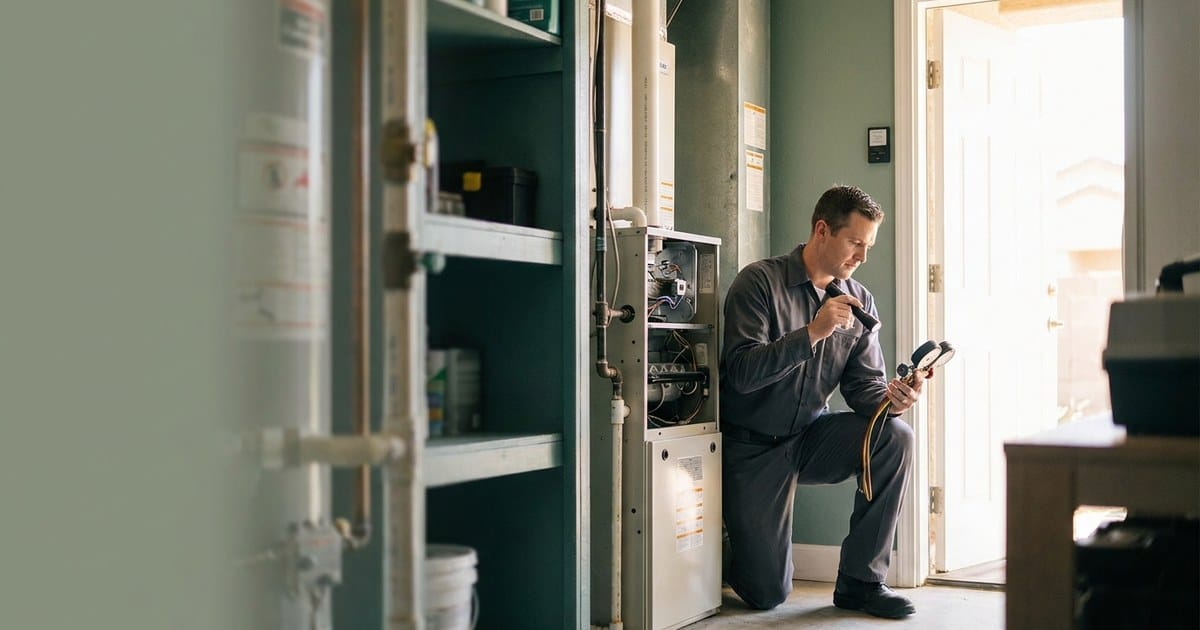
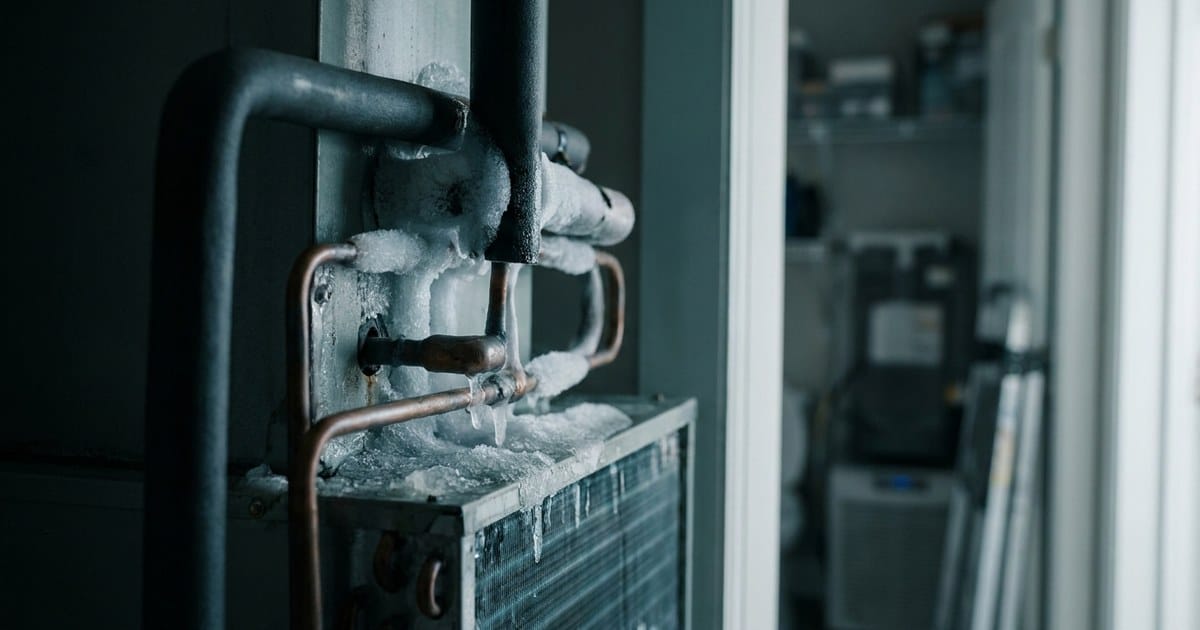
Ice on the unit. Warm air from the vents. A house that gets hotter by the hour. If that is your morning, here is the short answer.
What causes a frozen AC coil, and how do you fix it? A frozen AC coil usually comes from restricted airflow or low refrigerant. The most common causes are a dirty filter, closed or blocked vents, a failing blower motor, and a refrigerant leak. To fix it, turn the AC off, let the ice thaw fully, replace the filter, and open the vents. If ice returns, call a technician.
This is the frozen AC coil causes fix checklist we would hand a neighbor. The ice is a symptom, not the problem. Chipping it off or running the unit “one more day” usually costs more than a service call. If you live in Mesa, our guide with quick solutions when your AC freezes up in Mesa covers the local picture too.
Here is the plan: how to confirm the freeze, what to do first, the six usual causes, and when to call a pro. We wrote it evergreen, because in Arizona the AC runs hard well past summer.
Is your evaporator coil frozen? Check these signs
Look for ice or frost on the indoor coil, the refrigerant lines, or the outdoor connections. Other signs are weak airflow, warm air from the vents, water dripping around the indoor unit, and hissing or bubbling sounds. A system that runs nonstop without cooling the house is another warning.
The evaporator coil is the indoor coil that absorbs heat from your home’s air. When it is iced over, it cannot do that job. Your AC keeps running, but the heat stays in your house.
Here is a quick checklist:
- Ice or frost on the indoor unit, copper lines, or coil
- Air from the vents that feels weak, warm, or barely cool
- Water dripping or pooling near the air handler as ice melts
- Hissing or bubbling near the unit, which can point to a leak
- An AC that runs and runs but never catches up
If your air conditioner is not cooling and you see a freeze, you are in the right place. Not sure ice is the cause? Our article on other reasons your AC may not blow cold air walks through the other usual suspects.
Sometimes there is no ice at all, just warm air. Then start with what to check when your AC blows warm air. If the symptoms match the list above, keep reading.
Takeaway: Ice on the coil, weak airflow, and warm air together usually mean a freeze-up.
What to do first when your AC freezes
Turn the AC off at the thermostat, then set the fan to ON so air moves over the coil and speeds the thaw. Do not chip or scrape the ice. Thawing can take several hours. Check the filter and vents while you wait.
Why not just keep it running? Running an AC while its parts are frozen can damage the compressor or cause other parts to fail. The compressor is the heart of the system, and it is the costly part. If you wonder how a damaged one gets judged, we explain deciding between compressor repair and replacement in a separate guide. The best move is to stop the problem before it gets that far.
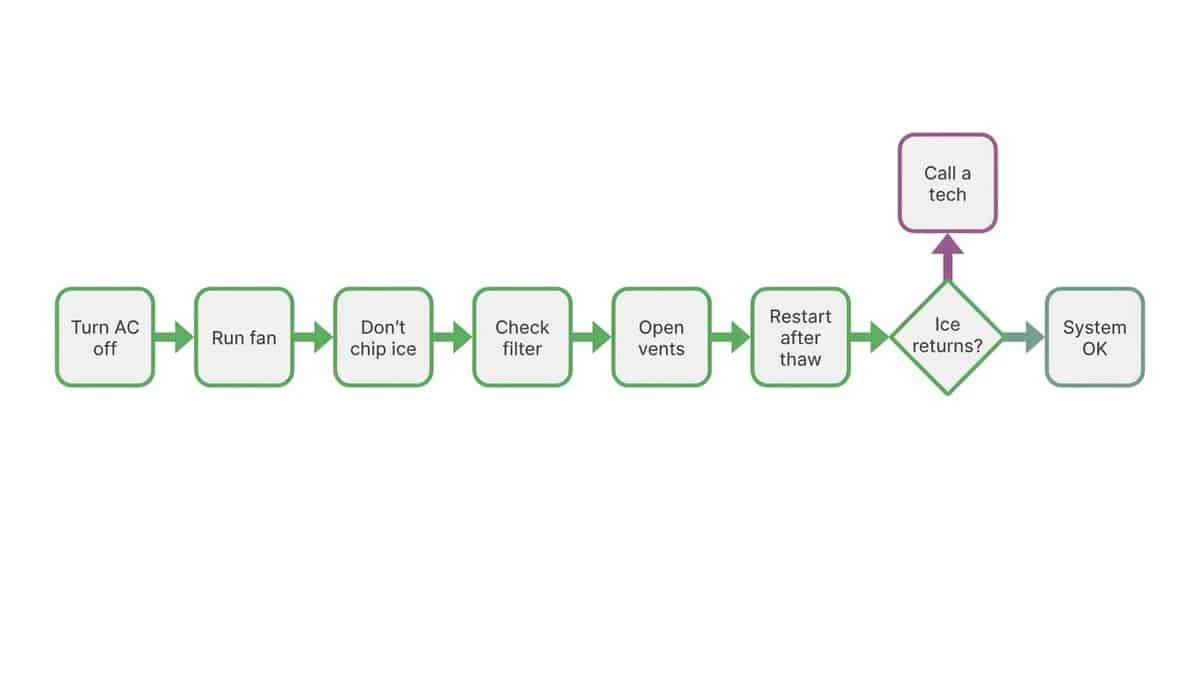
Follow these steps in order:
- Turn the AC off. Switch the thermostat to OFF so the system stops making more ice.
- Run the fan. Set the fan to ON. Moving air over the coil helps it thaw.
- Leave the ice alone. Never chip, pick, or scrape it. Coils and refrigerant lines are easy to damage.
- Check the filter. Pull it out. If it is gray and clogged, replace it.
- Open every supply vent. Walk through the house and make sure none are shut or blocked by furniture.
- Restart only after a full thaw. Wait until the ice is gone and the water has drained, then turn cooling back on.
While you wait, rule out the simple stuff. Make sure the thermostat is set to COOL, not FAN or OFF, and that the setpoint is below the room temperature. A blank display often just needs fresh batteries.
If the coil refreezes after you restart, the problem is likely a refrigerant leak (low charge causes the same freezing effect) or a failing blower motor. At that point, someone has to measure refrigerant pressure and airflow.
Takeaway: Turn it off, run the fan, leave the ice alone, and restart only after a full thaw.
What causes a frozen AC coil?
Ice forms when too little warm air crosses the evaporator coil, or when the refrigerant charge is low. Fixes range from a new filter to a licensed repair. Work down this list from the cheapest, safest check to the ones that need a pro.
As a family-owned HVAC company serving the East Valley, we see the same pattern every summer: a freeze-up that started with something small and ignored.
1. A dirty or clogged air filter
Filters packed with dust, pet hair, or debris block airflow and can cause the evaporator coil to freeze. It is the most common cause, and the cheapest fix.
How to spot it: Pull the filter out and hold it up to the light. If you cannot see through it, or it is coated in gray fuzz, it is blocking air.
The fix: Swap in a clean filter of the right size. Then check it every month while the AC runs hard. Not sure how often yours needs changing? See how often to change your air filter. Homes with pets or lots of dust may need to change filters sooner.
2. Closed or blocked vents and returns
Closing vents in rooms you do not use may seem like a smart way to save energy. It cuts the air moving across the coil, and the coil can freeze.
How to spot it: Walk the house. Check supply vents (where air comes out) and return grilles (where air goes in). Look for closed louvers, rugs, couches, or curtains in the way.
The fix: Open every supply vent and clear every return. Keep a few feet of space around them. This costs nothing, and it solves more freeze-ups than most people expect.
3. Low refrigerant from a leak
Refrigerant is the fluid that carries heat out of your house. AC systems are sealed, so a low charge is not “normal use.” It means there is a leak. Low charge causes the same freezing effect as poor airflow.
How to spot it: Hissing or bubbling near the unit, ice that comes back after you fix the filter and vents, and weak cooling that builds slowly over time.
The fix: This one is never a DIY job. Refrigerant handling requires EPA certification because it is a regulated substance. Recharging without proper credentials and equipment is illegal and dangerous. Adding refrigerant without fixing the leak only postpones failure, because the system will lose charge again. Fixing the leak is the only repair that lasts. A licensed tech finds the leak, repairs it, and recharges the system correctly. For more detail, read how refrigerant leaks are found and repaired.
Age matters too. Older systems may use R-22, a refrigerant that is no longer made. That affects which repair options make sense.
4. A failing blower motor or fan
The blower fan pushes indoor air through the system. If it is weak or dead, air stops crossing the coil, and ice builds.
How to spot it: Listen for the fan. If it is not running, or the airflow at the vents is very weak while the filter is clean, the blower is a suspect. A failing capacitor, the small part that helps start motors, can also keep a fan from starting. Clicking with no fan is a common clue.
The fix: Call an HVAC professional. A new motor or capacitor may be needed, and this is not a safe DIY repair.
5. A dirty evaporator coil
Dust that gets past the filter settles on the coil over time. A dirty coil cannot absorb heat well, and it can freeze.
How to spot it: You cannot always see it, because the coil sits inside the air handler. A freeze that returns after the filter, vents, and blower check out fine often points here.
The fix: Professional cleaning. Coil and blower cleaning is part of our maintenance visit, so a tune-up before the heat peaks catches this early. Skip home scrubbing, because coil fins bend easily.
6. Duct problems
Leaky, crushed, or undersized ducts, especially on the return side, starve the system of air. Ducts are out of sight, so this cause hides well.
How to spot it: Some rooms stay hot while others are fine, airflow is weak at several vents, or you see a damaged or kinked duct in the attic or crawlspace.
The fix: A technician checks airflow and finds the weak spot. We work on ductwork as well as the units themselves, so one visit can look at the whole path the air takes.
Takeaway: Start with the filter and vents, and call a pro for refrigerant, blower, coil, or duct problems.
When should you call a technician?
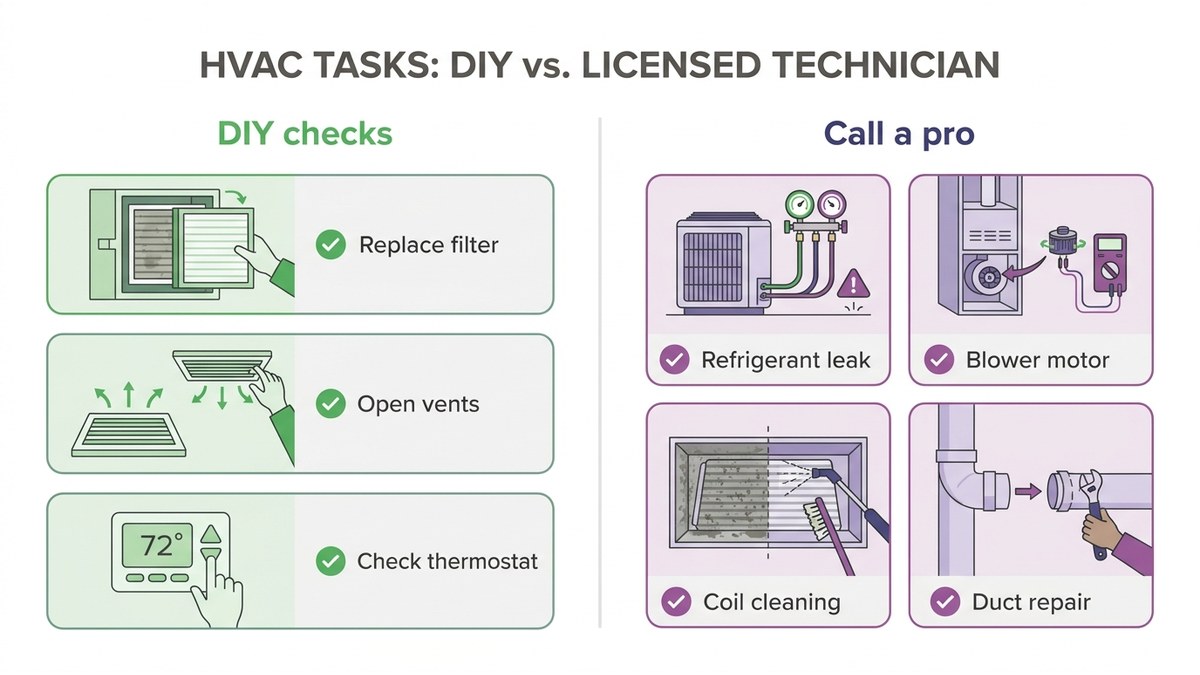
Call a pro if the coil refreezes after you changed the filter and opened the vents. Also call if you hear hissing, suspect a leak, or the blower will not run. Those point to refrigerant or motor problems that need gauges and certified handling.
Here is the honest triage:
- You can handle it: a dirty filter, a closed vent, a thermostat on the wrong setting.
- Call us: repeat freezing, hissing or bubbling, a blower that will not start, ice on the outdoor connections, or no clear cause.
A technician will measure refrigerant pressure and airflow. That tells us whether the problem is air or refrigerant. Guessing at it, or topping off refrigerant, is how a small repair turns into a big one.
We say this plainly because you should not worry about being upsold. We commit to showing up on time, explaining problems clearly, fixing issues right the first time, and not upselling services you do not need. We work on all makes and models of air conditioning and heating systems. You can see everything we do in our residential and commercial HVAC services.
When your AC is struggling in desert heat, waiting makes things worse. We offer 24/7 on-call service and same-day availability for urgent issues. Read why summer in Mesa demands fast AC repair if you are weighing how long to wait.
Takeaway: If the ice comes back, or refrigerant or the blower is involved, it is time to call.
How do you stop AC icing up again?
Check the filter every month through summer, keep supply vents and returns open and clear, and book regular maintenance before the heat peaks. Coil and blower cleaning and an airflow check catch most freeze-ups before they start.
Here is our advice to East Valley homeowners, and we tell everyone the same thing: check the filter monthly. It takes a minute. It is the simplest way to keep AC icing up from ever starting.
A simple routine looks like this:
- Every month: Check the filter and replace it if it looks dirty.
- Any time you rearrange rooms: Make sure furniture is not blocking vents or returns.
- Before the heat peaks: Book a tune-up. A good visit covers coil and blower cleaning, drain service, and an airflow check.
- All season: Listen for new sounds. Hissing, bubbling, or a fan that sounds different is worth a call.
Our AC maintenance and tune-ups in the East Valley are built around these checks. As a local company serving homeowners across the area, we want to catch the small stuff early, so you never see ice on your unit.
Takeaway: A monthly filter check and one tune-up before the heat peaks prevent most freeze-ups.
Ice on your AC? Call us
An iced-over AC is stressful, but most causes are simple. Turn it off, let it thaw, check the filter and vents, and call us if the ice returns or you suspect a leak.
Ice on your AC and warm air in your house? We’ll tell you what we find and what it needs, nothing more.