Heat pump vs furnace Arizona: which is better? For most East Valley homes, a heat pump is often the better fit. Our winters are mild, so it heats efficiently, and it also cools your home through our long summers. A gas furnace still makes sense for some homes, especially ones already set up with gas and ducts built for hot air.
We are JLM, a family-owned HVAC company based in Gilbert. Our team works on all makes and models of heating and cooling equipment, including heat pumps. You can see our heating and cooling services across the East Valley if you want the full picture.
The East Valley has an odd split. Cooling season is long, and winter is short and mild. That split is why the usual national advice on heat pump vs furnace Arizona questions often misses the mark here. This guide gives you the decision rule we use with neighbors.
Heat pump vs furnace Arizona: which fits best?
For many East Valley homes, a heat pump fits best. It heats and cools with one system, and our winters stay mild. A gas furnace fits homes with existing gas service, ducts built for hot air, or a strong preference for fast, high-temperature heat.
Here is the simple difference. A heat pump is your air conditioner and your heater in one outdoor unit. A gas furnace is a heating-only system that sits beside a separate AC. One system means one set of maintenance and one piece of equipment to keep running.
Heat pumps also work by moving heat instead of burning fuel to make it. The U.S. Department of Energy's heat pump guide notes that even geothermal versions use the steady temperature of the shallow earth to heat and cool efficiently.
Age matters too. If your current equipment is near the end of its life, check how long HVAC systems last in Arizona before you decide whether to repair or replace.
We also hold a firm view on equipment. Installation quality, duct condition and correct sizing matter more than the name on the unit. A well-installed system of either type will beat a poorly installed one every time.
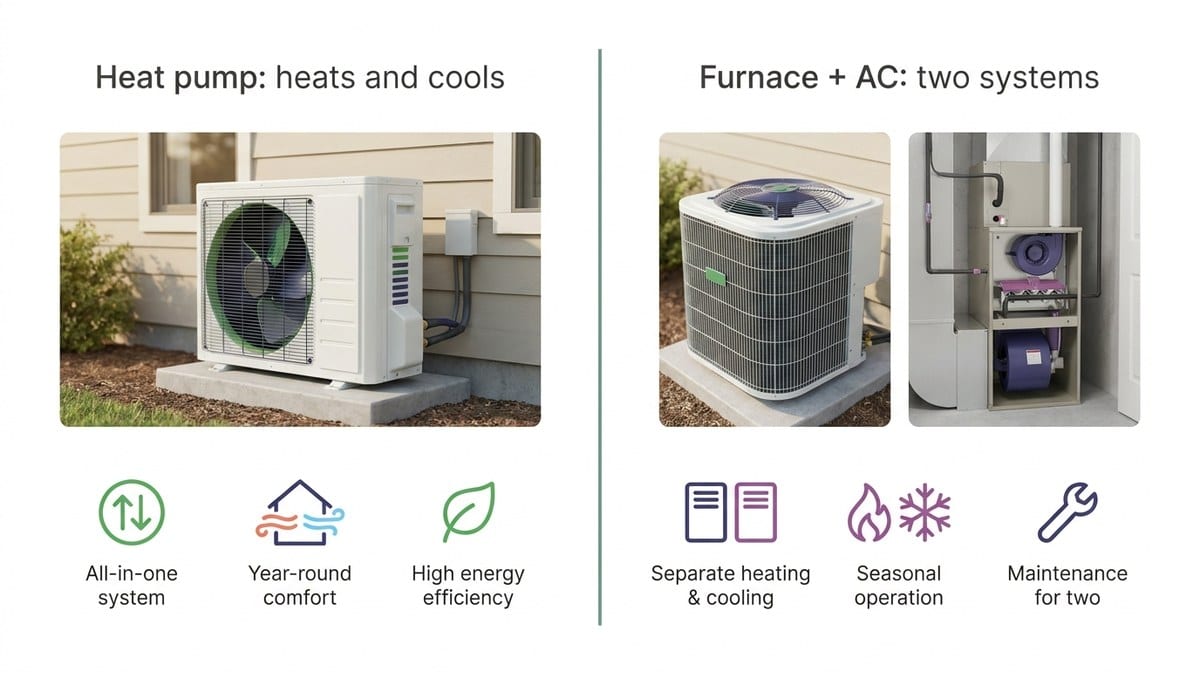
Takeaway: a heat pump replaces two systems with one, and installation quality matters more than the nameplate.
Can a heat pump handle East Valley nights?
Yes, for typical East Valley winters. Heat pumps lose some heating capacity as temperatures drop, but our lows rarely stress a properly sized system. The real risk is an undersized unit, not the weather.
Researchers at Pacific Northwest National Laboratory describe this capacity drop in their technical report on heat pump performance. Cold weather does reduce output. In a mild desert winter, that reduction is small next to the load your home puts on the system.
Think about the whole year. Arizona’s heat is hard on equipment from May through October, and your system cycles almost nonstop to keep the house comfortable. A heat pump does most of its work as an air conditioner. The same machine that carries you through a 110°F summer then handles our short winter.
That is a real plus. A system built and sized for sustained desert heat is already a tough, well-matched machine.
Sizing is where heat pump installs go wrong. An undersized unit struggles on the coldest mornings. An oversized unit cycles on and off and wastes energy. A proper load calculation fixes both problems.
If you already own a heat pump and it blows cold air or struggles in winter, we can help. Read about the winter heat pump problems we fix in Gilbert to see what usually causes it.
Takeaway: in the heat pump vs furnace Arizona debate, a properly sized heat pump handles our mild winters, and the same unit does the heavy lifting all summer.
Heat pump or furnace: which costs more?
Price depends on your home’s ducts, electrical panel, system size and equipment line. Running costs depend on your APS or SRP rate plan and how much you use heat. We give a clear, written quote after a free on-site visit, with no surprise fees.
We do not publish guessed prices, because a guess helps nobody. Two houses of the same size can have very different quotes. One may have good ducts and a modern panel. The other may need duct work or an electrical upgrade. A real number comes from looking at your home.
Up-front price is one piece. Running cost is the other. Your APS or SRP rate plan, and how much heat your family uses, shape the monthly bill. A short winter means heating is a small slice of the year, so your summer cooling bill usually matters more.
On incentives, the federal tax credit that once helped with heat pump installs has ended for new installs. Utility rebates from APS and SRP are real, but they are modest. Verify current amounts before you buy, so you do not budget around money that is not there.
For a closer look at pricing, here is what drives new furnace and AC pricing. Cost is a big part of any heat pump vs furnace Arizona decision, and it is the part guesses get wrong most often.
When you compare quotes, ask what the warranty covers and whether it needs registration. Long parts coverage often does. Ask who you call if something fails in July.
Takeaway: the honest cost answer comes from a free on-site estimate, and a written quote tells you what you will actually pay.
Will my ducts and electrical panel cope?
Often, but we check first. Heat pumps blow warm air that feels cooler than furnace air, so ducts need good airflow. Some older homes also need electrical work. A free on-site look settles both questions before you commit.
In our work with East Valley homeowners, the system choice is rarely the hard part. The ducts and the electrical panel are usually the real questions.
Start with ducts. Furnace air comes out hot, so a weak duct system can still make a house feel warm. Heat pump air is gentler. If the ducts are leaky, crushed or too small, you will feel it as lukewarm air and uneven rooms. Good airflow fixes that feeling.
Next, the panel. A heat pump needs a dedicated circuit. Many newer homes have room for one. Some older homes need panel work first, and we tell you that up front.
Sizing ties it together. Here is why a proper load calculation matters before any equipment is chosen.
If your ducts are poor and fixing them would cost too much, ductless is an option. Compare ductless options for homes with weak ducts with a central system before you decide.
Once it is installed, regular care keeps a heat pump efficient. Our guide to smart heat pump maintenance for energy savings covers what to do each season.
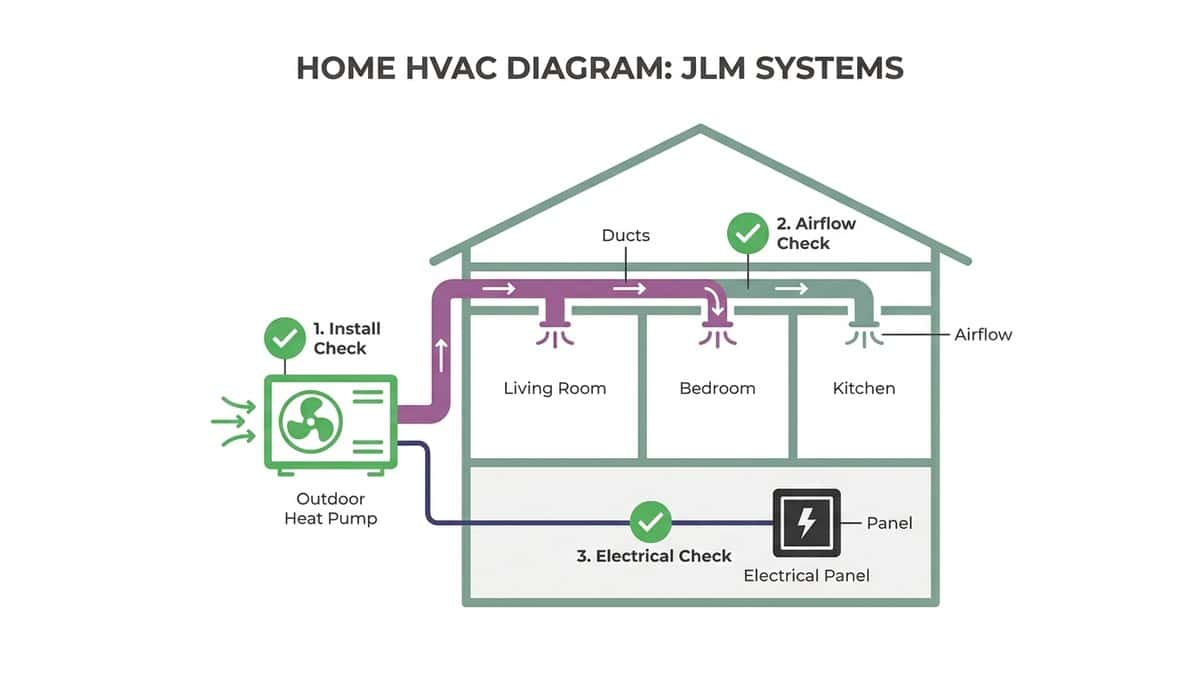
Takeaway: check the ducts, sizing and panel first, and the equipment choice gets much easier.
When does a gas furnace still make sense?
A gas furnace makes sense when your home already has gas service and the ducts and equipment are in good shape. It also suits homeowners who want strong, hot heat on cold mornings and do not want to change their setup.
We would rather tell you the truth than sell you the pricier option. If your house is already built around gas, with good ducts and a furnace that has years left, switching may not pay off. Keeping what works is a fine answer, even in a heat pump vs furnace Arizona comparison.
A furnace also suits anyone who simply likes that quick blast of hot air. That is a comfort preference, and it is a fair reason to stay with gas.
Before you replace anything, make sure the furnace actually needs replacing. Many no-heat calls turn out to be small problems. Try these troubleshooting steps for a furnace that won't heat first. If the fix is beyond a simple check, give us a call.
If you are curious about a setup that pairs both types of heat, ask us at your estimate. We will tell you plainly whether it fits your home.
Takeaway: keep a gas furnace when the home is set up for it and the equipment is sound.
Heat pump vs. furnace FAQ
Is a heat pump cheaper to run than a gas furnace in Arizona?
It depends on your APS or SRP rate plan and how much heat your home uses. Our winters are short, so heating is a small part of your yearly bill. A free estimate gives you a home-specific view, and we explain any numbers in plain words.
Do heat pumps work when it gets cold in the East Valley?
Yes, for typical East Valley winters. Heat pumps lose some capacity as it gets colder, but our lows rarely stress a properly sized unit. Correct sizing is the key. An undersized system is the real risk, which is why we measure your home before we recommend anything.
Can I switch from a gas furnace to a heat pump?
Often yes, after we check your ducts, system size and electrical panel. Some homes need small upgrades first. Read what to expect in our guide to heat pump replacement, then schedule a free on-site look so you know before you commit.
Takeaway: most heat pump questions come down to sizing, ducts and your rate plan, and we can answer them at your home.
Not sure which is right for your home?
The best next step is a free estimate. We look at your ducts, your panel and how you use your home, then give you a clear written quote with no surprise fees. If a gas furnace is the right call, we will say so. That is how we handle every heat pump vs furnace Arizona question.
JLM is family-owned, owned by Bill and Tamara Milbourn, and based in Gilbert. Our ROC number is #329152. See our residential and commercial HVAC services for everything we handle across the East Valley.
Not sure which one fits your home? Our free on-site estimate gives you a clear quote with no surprise fees.