
Is a whole home air purifier worth it? For most Arizona families with allergies, asthma, pets or heavy dust, yes. For everyone else, it’s optional. The whole home air purifier cost ROI isn’t a dollar payback. The return is cleaner air, less dust and a protected system, weighed against an installed price we quote after a free on-site look.
We’re JLM, a family-owned HVAC company, and this is an honest cost-versus-benefit look, not a pitch. In our work across 3,000+ installs in the East Valley, we’ve learned that some homes gain a lot from whole-home air cleaning and some don’t need it. We tell customers which is which.
Arizona makes the question real. Dust blows in, and your AC runs most of the year, so air moves through your system almost nonstop. If you want the background first, read about how Arizona dust and monsoon season affect your indoor air. Below, we cover price, the alternatives, the allergy question, and when to skip a purifier.
What does air purifier installation cost?
Air purifier installation cost depends on three things: your system size, the type of purifier or filtration, and whether your ducts need work. We give you a firm quote after a free on-site look, so you know the number before we start. No hidden fees.
Here is what moves the price:
- System size and type. A larger home with a bigger system is a bigger job than a small one.
- Purifier or filtration type. Different technologies come at different price levels, and the right one depends on what’s bothering your family.
- Duct condition. Leaky or dirty ducts can limit what a purifier does. Sometimes the ducts need attention first.
- Scope. A stand-alone add-on is one job. A purifier paired with a system replacement or new ductwork is another.
That last point matters. If you’re already planning a system replacement or an air duct installation, adding air cleaning in the same project can make sense, because the work overlaps. We suggest it only where it fits your home. If you’re curious how we approach every job, see our Heating & Air Conditioning Services in Arizona’s East Valley.
Why no price list here? Because a number without your home attached is a guess. A small house with sound ducts and a large house with leaky ducts are very different jobs. We’d rather say that plainly than print a figure that may not fit you. Our owner is on the job, so the person who looks at your home is the person who answers your questions about the quote.
If cost is the main worry, tell us your budget up front. We’ll show you the smallest step that addresses your actual complaint.
Takeaway: Your air purifier installation cost, the first half of the whole home air purifier cost ROI question, comes down to system size, purifier type and duct condition, and you’ll see a firm number before any work starts.
Whole-home purifier vs. filters, UV and portable units
A better filter is the cheapest first step. A whole-home purifier treats air in every room through your existing ducts. Portable units clean one room at a time. Duct cleaning and sealing fix a different problem: dirt and leaks in the ducts themselves. The right choice depends on your symptoms, your system and your budget.
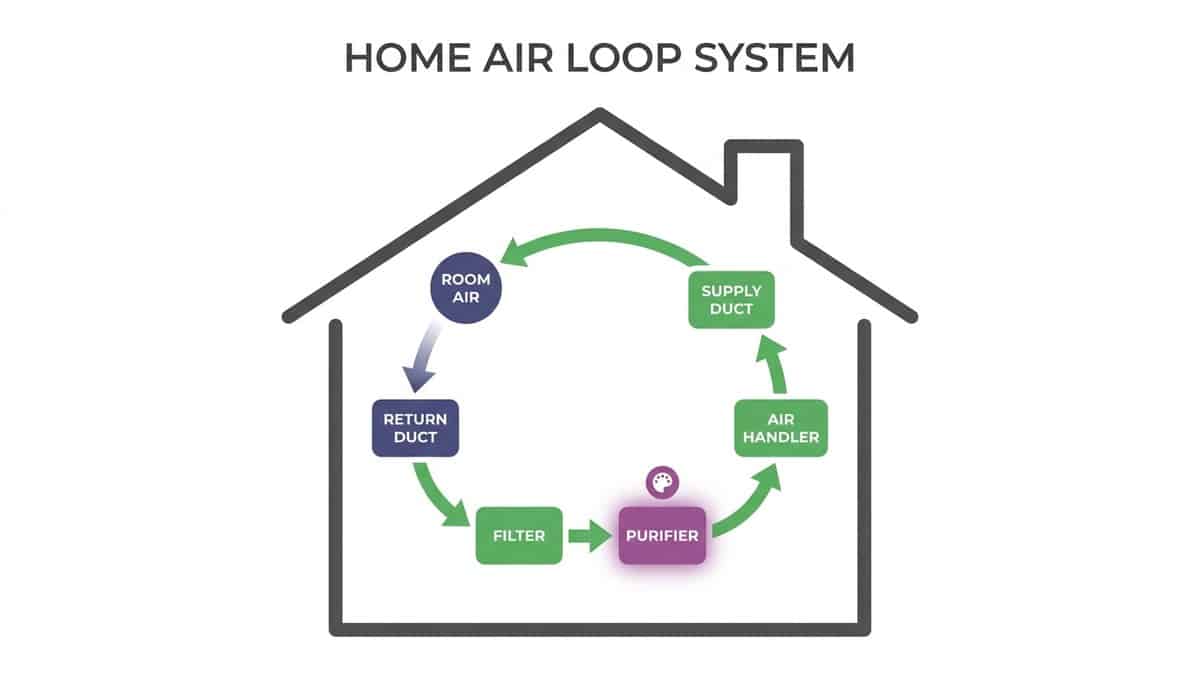
Our view on whole home air purifier cost ROI is simple: start cheap, and add only what your home needs. Here is how the options compare.
| Option | What it does | Best for | Limits | Cost level |
|---|---|---|---|---|
| Upgraded filter (higher MERV) | Traps more dust and particles as air moves through your system | Every home, as a first step | Must suit your system and be changed on schedule | Low |
| Portable room purifier | Cleans the air in one room | A bedroom or home office | Treats one room only | Low to moderate |
| Whole-home purifier | Treats air in every room through existing ducts | Allergies, pets or dust across the whole house | Needs a compatible system and sound ducts | Higher |
| UV light | Works on the air handler side of your HVAC system | Homes with specific concerns inside the system | Does not clear dust or pollen on its own | Moderate |
| Duct cleaning and sealing | Removes dirt from ducts and closes leaks | Older, dusty or leaky duct systems | Fixes the ducts, not the air in the rooms | Moderate |
Start with the filter
Most homes should look here first. A properly sized filter, changed on schedule, does a lot of the work. Higher is not always better, though. A filter that’s too dense for your system can restrict airflow. Our guide to MERV Ratings Explained: Which Air Filter Is Right for Arizona Dust & Allergies helps you pick one that fits.
Check the ducts before the purifier
A purifier can’t fix a duct problem. If your ducts are dirty or leaking, that’s a separate job, and we do duct cleaning and sealing as well as ductwork installation. Because we handle both sides, we can recommend the right fix rather than the biggest product. That is what we mean by getting more from the system you already own: indoor air quality, ductwork and smart upgrades work together.
Where portable and UV units fit
Portable units are a fair choice for one bedroom. They just don’t reach the rest of the house. UV can suit specific concerns, but it’s an add-on, not a replacement for good filtration. If any device you’re considering produces ozone or other by-products, ask the installer about it before you buy. A good installer will answer plainly.
Takeaway: Filter first, ducts second, and a whole-home purifier only when symptoms or household needs call for treating every room.
Allergy relief HVAC: will it actually help?
It can reduce airborne dust, pollen and dander moving through your home, and many allergy sufferers notice that. It is not a cure and not medical treatment. The U.S. EPA’s Guide to Air Cleaners in the Home explains what air cleaners can and can’t do. Results depend on your triggers, your filter, your ducts and how often your system runs.
That last factor works in your favor here. Your AC runs most of the year in the East Valley, so a purifier tied into your ducts treats air that is already moving through every room. A portable unit only treats the room it sits in.
Think of it as allergy relief HVAC can support, not guarantee. In whole home air purifier cost ROI terms, the health side is real but modest, so weigh it honestly. Here’s what we tell families:
- It works best as part of a stack. A good filter, sound ducts and a purifier each do a different job. Indoor air quality improvement usually comes from the combination, not one gadget.
- Triggers matter. Dust, pollen and pet dander travel through the air. Some triggers, like things on surfaces or in bedding, need cleaning, not filtration.
- Run time matters. Air only gets treated while it moves through the system.
Your HVAC system shapes the air your family breathes more than most people realize. We cover the connection in Indoor Air Quality: How HVAC Systems Impact Your Health.
If you want the mechanics of the equipment itself, we explain them in Whole Home Air Purifier: Clean Air for Your Family. This piece sticks to cost and decision-making.
One more thing, said plainly: if anyone in your home has asthma or serious allergies, talk to your doctor. A purifier can be part of the plan. It shouldn’t replace medical advice or treatment. We won’t promise symptom relief, and you should be wary of anyone who does.
Takeaway: A whole-home purifier can cut the dust, pollen and dander circulating through your home, but it supports your doctor’s plan and doesn’t replace it.
Whole home air purifier cost ROI: worth it?
Think of the return in three parts: air you can feel (less dust, fewer allergy flare-ups), less strain on your system from cleaner airflow, and fewer cleaning chores. A whole-home air purifier does not pay for itself in energy savings. If nobody in your home has air-quality complaints, you may not need one.
So the whole home air purifier cost ROI question is really: what is cleaner air worth to your household, compared with what it costs? Only you can weigh that. We can help you see the cost clearly. Use this four-question self-check:
- Does anyone in your home have allergies or asthma? If yes, a purifier moves up the list.
- Do you have pets? Dander is a steady source of airborne particles.
- Is your home dusty despite regular cleaning? That can point to filters, leaky ducts or both.
- Are you planning a system replacement or ductwork project soon? Then it’s a natural time to price air cleaning alongside it.
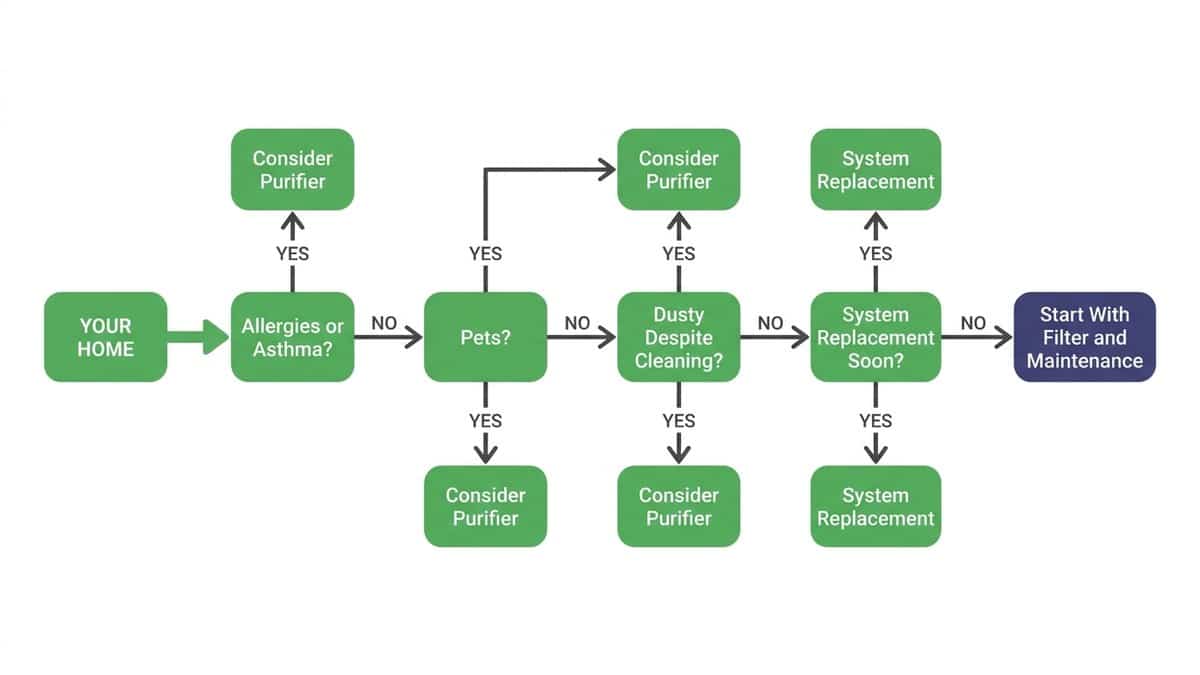
Zero yeses means a filter upgrade and a maintenance visit will likely do. One or two yeses mean it’s worth a conversation. Three or four mean a whole-home system deserves a real look.
Notice what’s not in the list: scare tactics. Your home’s air isn’t an emergency. It’s a comfort and household-health choice, and the decision is yours.
You may also be wondering about dry desert air. That’s a separate comfort question with its own answer, covered in Whole-Home Humidifiers: Are They Worth It in Arizona? Don’t let a purifier pitch get tangled up with a humidity problem.
Bundling is the other piece of the picture. If you’re already looking at air duct installation or replacing your system, pricing air cleaning in the same project lets you see the full whole home air purifier cost ROI picture once, instead of in pieces.
Takeaway: The whole home air purifier cost ROI is cleaner air, less dust and fewer chores, not energy savings, so your four answers should drive the decision.
When you probably don’t need one
You can likely skip it if no one has allergy or breathing problems, your ducts are in good shape, and a properly sized filter changed on schedule keeps dust under control. In that case, start with filter upgrades and a maintenance visit. Revisit a purifier only if symptoms persist.
We say this out loud because it’s true, and because it’s the opposite of upsell pressure. Plenty of homes don’t need whole-home air cleaning. Selling one to a family that won’t notice a difference doesn’t help them. It costs them money and trust.
Before you buy anything, make sure the basics are covered:
- The filter is the right size and gets changed on schedule.
- Return vents and registers aren’t blocked or caked with dust.
- Your ducts are clean and sealed.
That last item is the one people skip. If your ducts are the source of the dust, no purifier fixes it. Our guide to Ductwork Cleaning & Indoor Air Quality: How Clean Ducts Improve Your Home’s Air shows how to tell.
Notice that you can do most of this without calling anyone. If symptoms continue after those steps, then it’s time to talk about a purifier.
Takeaway: If nobody has symptoms and your filter and ducts are in good shape, skip the purifier and put your money elsewhere.
What a JLM air quality visit looks like
It starts with a free consultation, and we can pair it with a maintenance visit if you’d like. Here’s how it goes:
- We listen. You tell us what you’re noticing: dust, allergy symptoms, stuffy rooms, pets.
- We look. We check your system, your filter and your ducts on site.
- We recommend the smallest fix that works. Sometimes that’s a better filter. Sometimes it’s duct work. Sometimes it’s a whole-home purifier.
- We quote it in writing. You get a firm number, with no hidden fees.
You decide on your own time. Our owner is on the job, and you deal with the same local team from first visit to finished work. That’s why homeowners who value referrals and reviews tend to call us, and why we’ve kept an A+ BBB rating across 3,000+ installs.
We also do much more than air quality. See our full range of HVAC Services for Residential & Commercial in East Valley AZ.
Takeaway: A JLM visit is a free on-site look, a plain-English recommendation and a written quote, with no pressure to buy.
Which option fits your home?
Here is the decision in three plain lines:
- No symptoms, solid ducts: upgrade your filter and keep up with maintenance.
- Symptoms in one room: a portable unit may be enough.
- Allergies, pets or dust across the whole house: price a whole-home purifier, and check your ducts first.
Whatever you choose, make sure someone looks at your home before quoting, and weigh the whole home air purifier cost ROI against your four answers. Call us for a free on-site look and a straight answer on what your home needs.